 Lynden Siding
 Windows Built for What Sumas Actually Deals With
Sumas sits right up against the Canadian border in the Sumas Prairie, at the mouth of what locals and meteorologists both call the Sumas Gap — the low point in the hills where cold air from the Fraser Valley pours south into Whatcom County during winter. That means Sumas gets a version of our regional climate with an extra edge: the same driving rain, humidity, and moss-friendly gray stretches that the rest of Whatcom County lives with, plus gusty, cold outflow wind events that push straight through anything that isn't sealed tight. A window that performs fine in a more sheltered spot can still leak air and feel drafty in a Sumas living room during one of those cold snaps.
Energy-efficient windows aren't just about a lower power bill, though that's part of it. In this area they're also about keeping wind-driven rain out of the wall cavity, keeping condensation off the glass and out of the frame, and keeping a house comfortable when the temperature swings hard between a damp 40-degree afternoon and a dry, biting outflow night. Get the product and the install right and a set of windows will do all of that quietly for decades. Get either one wrong and you'll know it by the first hard winter.
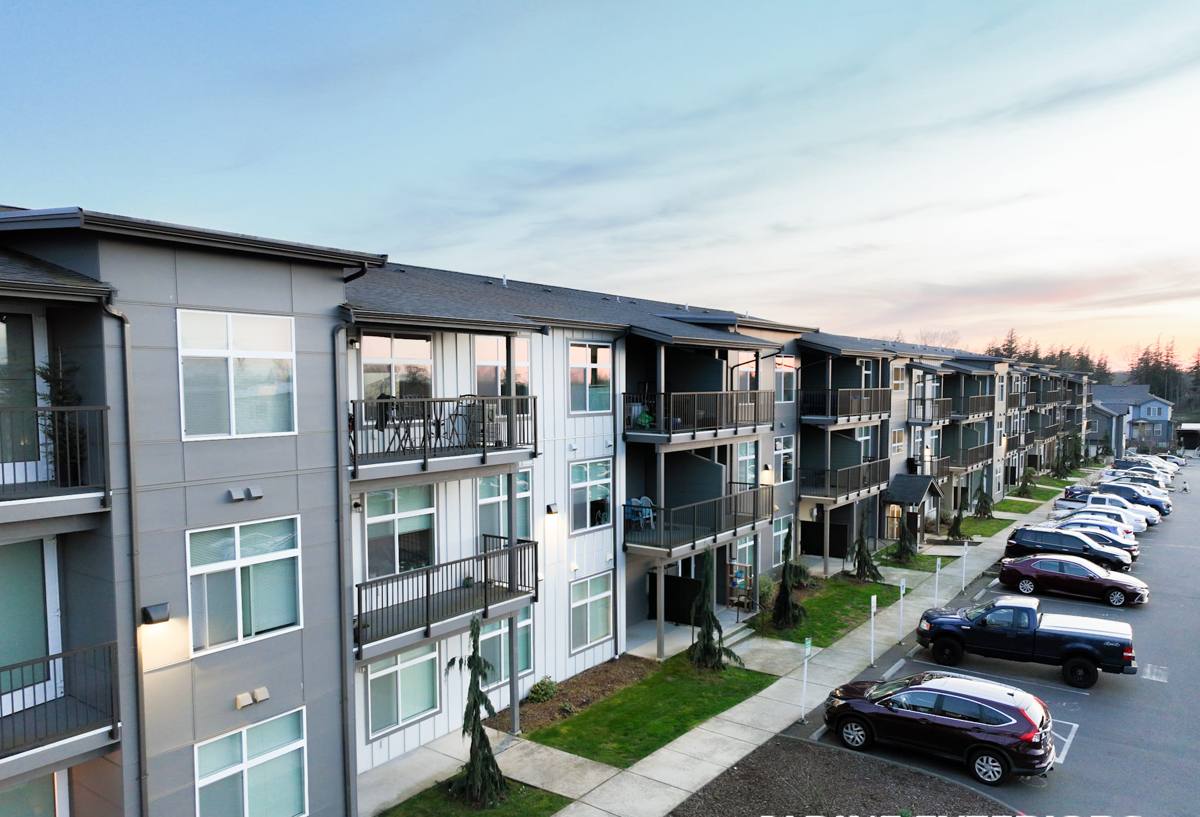
What This Climate Does to Windows Over Time
Older homes around Sumas — a fair number of them farmhouses or homes built well before current energy codes — often still have original single-pane wood or early aluminum-frame windows. Aluminum in particular conducts cold straight through the frame, which is why those windows sweat on the inside during cold, humid stretches. That condensation runs down into the sill, sits there, and eventually feeds the same moss and mildew problems homeowners here fight on their siding and roofs.
Even newer double-pane windows aren't immune. If the seal between the glass panes fails, you'll see permanent fogging between the panes that no amount of cleaning fixes. If the frame wasn't flashed correctly when it went in, wind-driven rain works its way behind the trim and into the wall over years, not weeks — which is why window problems in this area often show up as soft trim or a stained wall well before anyone notices the window itself is the cause.
Signs It's Time to Look at Replacement
- Visible fog or moisture trapped between the glass panes
- Condensation forming on the inside of the glass or frame during cold weather
- Windows that feel drafty or let in noise noticeably more than they used to
- Wood trim or sills that are soft, discolored, or holding moss/mildew
- Windows that are difficult to open, close, or lock properly
- A noticeable difference in comfort near the window compared to the rest of the room
What "Energy-Efficient" Actually Means
The term gets used loosely, but for a real window it comes down to a handful of measurable ratings, all listed on the NFRC label that should come with every legitimate replacement window:
- U-factor — how well the window resists heat flow. Lower is better for our winters.
- SHGC (Solar Heat Gain Coefficient) — how much solar heat passes through. Matters more on south- and west-facing walls.
- Air leakage rating — how much air passes through the assembly. This is the number that matters most during a Sumas outflow event.
- Low-E coatings — a microscopically thin coating that reflects heat while still letting light through.
- Gas fill — argon or krypton between panes, which insulates far better than plain air.
A window can look identical to another on the shelf and perform very differently once you compare these numbers. We walk homeowners through the actual label rather than sales language, because in this climate the air leakage and U-factor numbers matter more than almost anything else on the spec sheet.
Frame Materials: What We Recommend and Why
Frame material affects insulation, maintenance, and how the window holds up to years of Whatcom County moisture. Here's how the common options compare for a home in a climate like this one:
| Frame Material | Moisture Behavior | Maintenance | Typical Fit |
|---|---|---|---|
| Vinyl | Won't rot; handles wind-driven rain well | Low — no painting or sealing | Best value for most Sumas homes |
| Fiberglass | Excellent — very stable in temperature swings | Low | Higher upfront cost, longer service life |
| Wood-clad | Good if cladding stays intact; interior wood needs protection | Moderate to high | Homes prioritizing a traditional wood interior look |
| Aluminum | Poor — conducts cold, prone to interior condensation | Low | We generally don't recommend it for this climate |
We don't push aluminum-frame replacements here, not because the product is inherently bad everywhere, but because in a climate with this much cold, damp air, an aluminum frame will condense on the interior far more than vinyl or fiberglass will — and that condensation is exactly the kind of moisture that causes callbacks down the road. Our standard is to spec what holds up in this specific climate, not whatever is cheapest to stock.
Double-Pane vs. Triple-Pane: What's Worth It in Sumas
Triple-pane windows get marketed hard, and they do have a lower U-factor than double-pane. But the honest trade-off is cost and weight versus real-world benefit. For most Sumas homes, a quality double-pane window with Low-E coating and argon fill gets you the vast majority of the efficiency gain at a meaningfully lower cost. Triple-pane starts to make more sense on a north-facing wall that takes the brunt of winter outflow wind directly, or on a home where the owner is also chasing sound reduction from road or livestock-adjacent noise. We'll tell you honestly when triple-pane is worth the upcharge and when it isn't for your specific walls and budget — it's not a blanket answer.
What a Correct Installation Actually Involves
The window itself is maybe half of the performance equation. The other half is the install, and this is where a lot of energy loss and moisture problems actually originate — not from a bad window, but from a window that wasn't set, flashed, and sealed correctly.
- Removing old windows without damaging surrounding framing or siding
- Inspecting the rough opening for hidden rot or moisture damage before the new unit goes in
- Installing flashing in the correct order (sill pan, sides, then top) so water sheds outward, not into the wall
- Shimming the unit square and plumb so it operates smoothly and seals evenly for its full life
- Using the correct insulation in the gap around the frame — not so much that it bows the frame, not so little that it leaves an air gap
- Sealing and caulking the exterior with a product rated for our wet climate, not a generic caulk that'll fail in a season or two
- Finishing interior and exterior trim so the whole assembly looks and performs like it belongs there
Skip or rush any one of those steps and you can end up with a top-rated window that still drafts, still fogs, or still lets water into the wall — which is why we treat installation as a craft, not a step you get through quickly to move to the next house.
Our Process for a Sumas Window Project
- On-site assessment — we look at your existing windows, framing condition, sun exposure, and wind exposure for your specific lot before recommending anything.
- Honest product recommendation — we walk you through frame material, glass package, and real cost trade-offs based on your home, not a one-size pitch.
- Accurate measurement and ordering — precise measurements matter more in older, sometimes slightly out-of-square farmhouse openings common in this area.
- Removal and inspection — old units come out carefully, and we flag any hidden rot or moisture damage in the opening before proceeding.
- Correct installation — proper flashing, shimming, insulation, and sealing, done to hold up against wind-driven rain and outflow wind alike.
- Finish work and cleanup — trim finished inside and out, site cleaned up, debris hauled away.
- Final walkthrough — we test operation and locking on every window with you before we call the job done.
Why Hire a Crew That Already Works in Sumas
A crew that only occasionally works this far north can miss things that are second nature to a crew that's regularly in Sumas and the surrounding Whatcom County towns. That includes knowing how exposed a given lot is to outflow wind, recognizing the moisture patterns typical of older farmhouse framing in this area, and understanding what actually holds up here versus what a manufacturer's brochure claims for a milder climate. Lynden Siding Contractors is based just up the road in Lynden, so getting to a Sumas job site, sourcing materials locally, and coming back for a warranty check isn't a special trip — it's normal territory.
Cost Factors to Expect
We don't quote sight-unseen, but these are the main variables that move the price of a window project up or down:
| Factor | Why It Affects Cost |
|---|---|
| Frame material | Vinyl generally costs less than fiberglass or wood-clad |
| Glass package | Double-pane vs. triple-pane, Low-E coating, gas fill options |
| Number of windows | Whole-house projects typically have a lower per-window cost than one-off replacements |
| Opening condition | Rot or framing repair found during removal adds labor |
| Access and height | Second-story or hard-to-reach windows take more time and equipment |
| Trim and finish work | Matching existing interior trim can add finish labor |
We'll break all of this down clearly during your in-home estimate rather than handing you a single number with no explanation behind it.
If your Sumas home has windows that fog, draft, sweat, or just feel like they're not keeping up with our weather anymore, we're happy to come take a look. The estimate is free, there's no pressure to move forward, and you'll leave the visit knowing exactly what your options and honest costs actually are — just fill out the form below to get started.