 Lynden Siding
 Storm Damage in Aldergrove, BC: What Local Roofs Are Up Against
Aldergrove sits in a part of the Fraser Valley where Pacific storm systems roll through with real force. Homes here deal with a mix of problems that roofs in drier climates never see: salt-laden coastal air that accelerates corrosion on fasteners and flashing, driving rain that gets pushed sideways under wind gusts instead of falling straight down, and a moss season that can run most of the year in shaded, north-facing sections of a roof. None of these things cause dramatic damage on their own most of the time. They cause slow, quiet damage — until a windstorm or a heavy rain event exposes a weak point that's been building for a while.
That's the pattern we see most often on storm calls in this area: the storm didn't create the problem, it exposed it. A ridge cap that was already loosening from wind-driven moisture finally lifts off. A section of moss that's been holding water against the shingles finally works its way under the mat. Understanding that distinction matters, because it changes what a "correct" repair looks like — patch the visible damage and you'll likely be back out in a year; find and fix what let the storm in, and the repair actually holds.
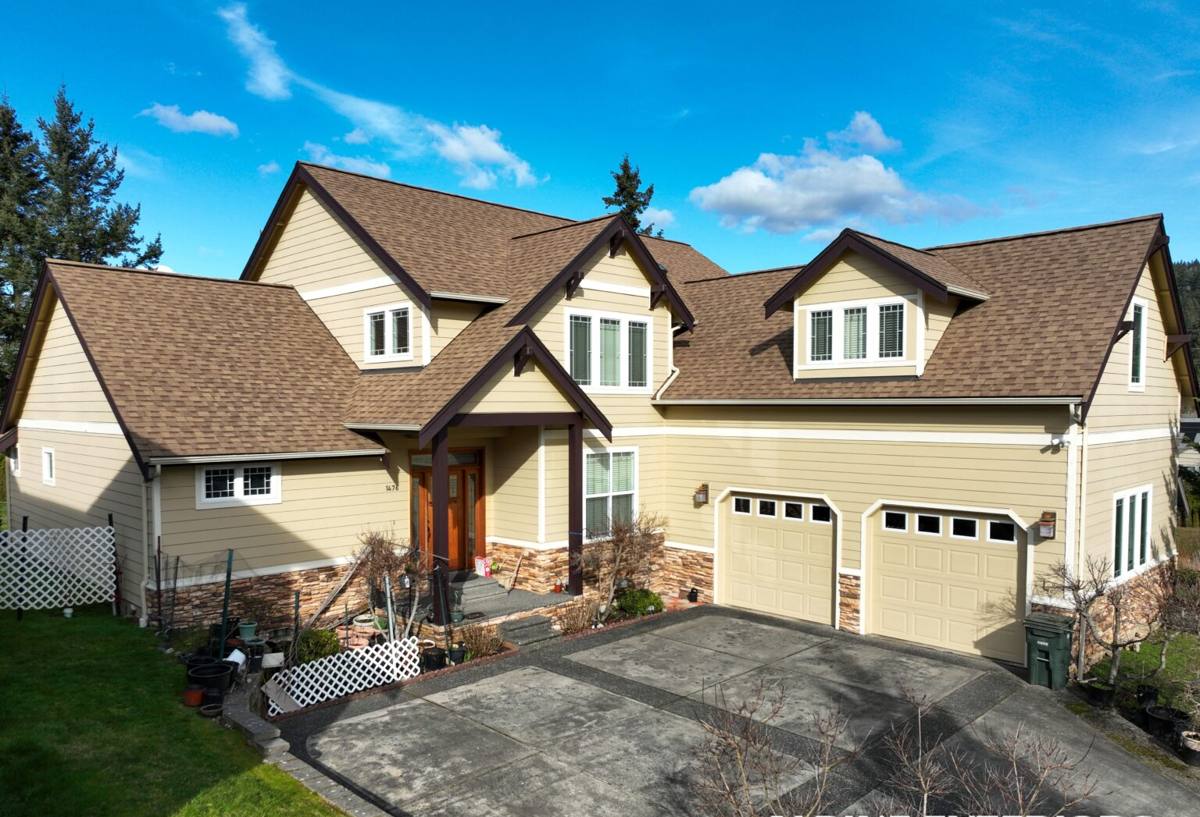
Signs Your Roof Has Storm Damage
Some storm damage is obvious from the ground. A lot of it isn't. After any significant wind or rain event, it's worth doing a quick visual check before assuming everything's fine.
- Shingles that look curled, cracked, or are missing granules (often shows up as dark, bald-looking patches)
- Any shingles on the ground, in gutters, or blown into the yard
- Lifted or missing ridge cap pieces along the peak of the roof
- Flashing that's bent, pulled away, or visibly separated around chimneys, vents, or skylights
- Water stains on interior ceilings or upper walls, especially after a rainstorm
- Sagging or soft-feeling spots when walked (a sign of trapped moisture in the deck)
- Heavier-than-normal moss buildup in valleys or shaded slopes, which holds water against the roofing material
- Gutters pulling away from the fascia or overflowing during rain
If you see any of these, the roof needs a proper look — not necessarily a full replacement, but an honest assessment of what's actually happening under the surface.
What a Correct Storm Damage Repair Actually Involves
Inspection Before Anything Else
A repair is only as good as the inspection behind it. We check the obvious storm-facing slopes, but also the leeward side, valleys, penetrations (vents, skylights, chimneys), and the attic from the inside when accessible. Wind damage and wind-driven rain intrusion don't always show up where you'd expect — a gust can lift shingles on one slope while the actual water entry point is somewhere else entirely, following a path along the deck before it drips through.
Matching the Repair to the Roof
Storm repair isn't one-size-fits-all. A localized wind event that tore off a dozen shingles calls for a targeted shingle and flashing repair. Damage that's spread across multiple sections, or that reveals rot in the decking underneath, needs a different scope. We tell you which one you're actually dealing with — not the more expensive option by default, and not a patch job that won't hold if the underlying deck is compromised.
Flashing and Sealant Work
A large share of storm-related leaks in this region trace back to flashing, not shingles. Wind loosens the metal at joints, and driving rain finds the gap. Correct flashing repair means re-securing or replacing the metal itself, not just running a bead of sealant over the problem — sealant is a short-term patch, not a fix.
Emergency Response vs. Permanent Repair
When a roof is actively leaking or has an open section after a storm, the priority is stopping water intrusion — not necessarily doing the final repair the same day. That usually means a tarp or temporary weatherproofing to protect the interior and the decking while materials are sourced and a proper repair is scheduled. Trying to rush a permanent fix in the middle of continued bad weather, or onto a wet deck, tends to trap moisture and create problems later. We separate the two steps intentionally: stabilize first, repair right second.
Repair Cost Factors
Every storm repair is different, but the price generally comes down to a handful of factors. This isn't a quote — it's meant to help you understand what moves the number up or down before we're out there giving you a real figure.
| Factor | Why It Matters |
|---|---|
| Extent of shingle/material loss | A few shingles vs. a full slope changes labor and material scope significantly |
| Decking condition underneath | Rotted or soft plywood needs to be cut out and replaced before new roofing goes on |
| Flashing involved | Chimney, skylight, and valley flashing repairs take more time than open-field shingle work |
| Roof pitch and access | Steeper roofs and limited access add labor and safety equipment time |
| Material match availability | Older or discontinued shingle colors may require a wider repair area to blend properly |
| Moss or debris removal needed | Heavy moss buildup often has to be cleared before the actual damage can even be assessed |
Insurance Claims: What Homeowners Should Know
Wind and storm damage is often covered under standard homeowner's insurance policies, but coverage details and deductibles vary by insurer and policy. If you're planning to file a claim, a documented inspection matters — photos of the damage, a written scope of what's needed, and a clear description of what the storm caused versus pre-existing wear. We provide that kind of documentation as part of the inspection, which you're free to bring to your adjuster. We're not a public adjuster and won't claim to negotiate your policy for you, but we'll give you an honest, accurate account of the roof's condition so you're working from real information when you talk to your insurer.
Why Moss and Salt Air Complicate Long-Term Roof Health
Moss doesn't just look bad — it holds moisture against the roofing surface long after a storm has passed, which slows drying and speeds up granule loss and mat deterioration underneath. In shaded valleys and north-facing slopes around Aldergrove, moss can become a near-permanent resident if it's never addressed, and it's often the reason a roof that "should" have more life left starts leaking earlier than expected. Salt-influenced coastal air adds a second, quieter factor: it accelerates corrosion on exposed fasteners, flashing edges, and metal drip edge over time, which is part of why storm repairs sometimes reveal more deterioration at the metal joints than the shingles themselves. A storm repair is a good moment to address both — clearing moss and checking flashing condition while the roof is already open, rather than treating them as separate future projects.
Our Process From Call to Completion
1. Initial Contact and Scheduling
We get a description of what happened and what you're seeing, and get a technician out to inspect — sooner if there's active water intrusion.
2. On-Site Inspection
We assess the roof, document the damage with photos, and check for related issues (flashing, decking, moss buildup) that a quick glance from the ground would miss.
3. Honest Scope and Written Estimate
You get a clear explanation of what's actually needed, what it involves, and what it costs — before any work starts.
4. Stabilization if Needed
If the roof is actively exposed, we address that first to protect the interior of the home.
5. Repair
The actual repair work, matched to the scope we identified — no upsell to a full replacement if a targeted repair is the honest answer.
6. Final Walkthrough
We show you what was done and answer any questions, including anything worth keeping an eye on going forward.
Why a Crew That Already Works Aldergrove Matters
Storm damage repair isn't generic work. A crew that's already familiar with how wind moves through this part of the Fraser Valley, which roof orientations tend to take the worst of a given storm system, and how moss and coastal moisture behave on local roofs over a season isn't guessing at any of that — they've seen the pattern before. That familiarity shows up in small but real ways: knowing to check a specific valley for trapped moisture before it's visible from the ground, or recognizing that a flashing failure at a chimney is a coastal-corrosion issue rather than an installation defect. It also means faster response after a storm, since we're not driving in cold from outside the area to figure out local conditions on the fly.
If your roof took a hit in a recent storm — or you're just not sure whether what you're seeing is a real problem — we're happy to come take an honest look. The estimate is free, there's no pressure attached to it, and you'll get a straight answer either way. There's a short form below if you'd like to get that scheduled.