 Lynden Siding
 Siding Replacement in Ferndale: Built for a Salt-Air, Rain-Soaked Corner of Whatcom County
Ferndale sits close enough to the water and the marine air that moves through Whatcom County that its homes take a different kind of beating than siding fifty miles inland. Between the salt-laden air, the long stretches of driving rain that come off the Strait, and a moss season that seems to start earlier and last longer every year, siding here has to do more work than a spec sheet usually accounts for. When we replace siding in Ferndale, we're not just swapping old panels for new ones — we're addressing the specific ways this climate attacks a wall system, and building something that will still be doing its job in twenty years, not five.
This page is about one service, in one place: siding replacement for Ferndale homes. If you're weighing whether it's time, what a correct job actually involves, and why the crew you hire matters as much as the material, this is written for you.
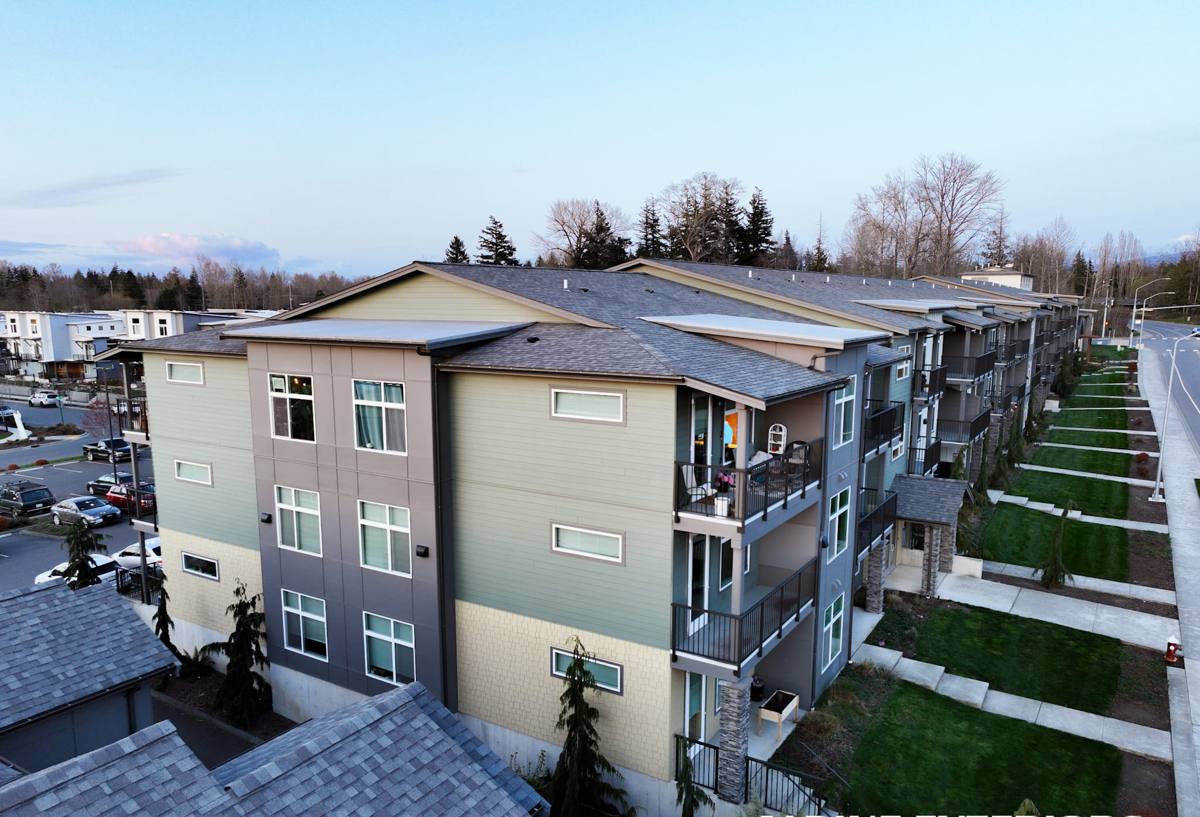
Why Ferndale's Climate Is Harder on Siding Than It Looks
On paper, Whatcom County doesn't sound extreme — no hurricanes, no desert heat, no deep freezes most winters. But siding doesn't fail from single dramatic events nearly as often as it fails from years of low-grade, constant exposure, and that's exactly what Ferndale delivers.
Salt Air
Proximity to Bellingham Bay and the Strait of Georgia means airborne salt is a real factor here, not a coastal cliché. Salt-laden moisture accelerates corrosion on fasteners, trim flashing, and any metal component in the wall assembly. It also breaks down cheaper paint films and coatings faster than inland exposure would, leaving siding chalky, faded, or peeling well ahead of schedule.
Driving Rain
Rain in this part of Washington doesn't just fall — a lot of it arrives sideways, pushed by wind off the water. Driving rain finds every gap, every under-caulked seam, and every place where flashing was skipped or shortcut. Siding that's merely "water-resistant" in a lab test can still let moisture in when it's hit at an angle, repeatedly, for months at a time.
Moss Season
Shade, moisture, and mild temperatures are a perfect recipe for moss and algae growth on north-facing walls and anywhere airflow is poor. Moss holds moisture directly against the siding surface far longer than open air would, which is exactly the condition that rots wood-based products and stresses paint films on anything not built to handle sustained dampness.
None of these factors alone is dramatic. Together, over years, they're why siding in Ferndale often shows its age faster than the same product would forty miles inland — and why the material and installation choices matter more here than in a lot of places.
Signs Ferndale Homeowners Should Be Watching For
Siding failure is usually gradual, which means it's easy to miss until repairs get expensive. On a Ferndale home, we pay particular attention to these signs during an inspection:
- Soft, spongy, or visibly swollen siding, especially near ground level or under windows
- Persistent moss or dark streaking on north- or shade-facing walls that won't wash off and comes back within weeks
- Paint that's chalking, peeling, or bubbling faster than expected, particularly on walls facing prevailing wind and rain
- Rust staining below nail heads or metal trim, a sign of salt-accelerated fastener corrosion
- Gaps, warping, or cupping at panel seams and butt joints where driving rain has repeated access
- A musty smell or soft drywall on interior walls that back up to exterior siding — often the first indoor sign of a moisture problem that's been building outside for a while
Any one of these is worth a look. Several at once usually means the siding has been losing the fight with this climate for a while and a full replacement is more cost-effective than continuing to patch it.
What Correct Siding Replacement Actually Involves
Replacing siding isn't just removing old panels and nailing up new ones. In a climate like Ferndale's, the parts you don't see matter as much as the finished look.
Tear-Off and Inspection
Once the old siding is off, we inspect the sheathing and framing underneath for rot, soft spots, or existing moisture damage — problems that are invisible until the wall is opened up. Any compromised sheathing gets addressed before anything new goes on. Installing new siding over hidden rot just buries the problem.
Water-Resistive Barrier and Flashing
A correctly lapped weather-resistive barrier, properly integrated window and door flashing, and correct kick-out flashing at rooflines are what actually keep driving rain out of the wall assembly — the siding itself is the second line of defense, not the only one. This is the step that's easiest to shortcut and the most consequential to get right in a wind-driven-rain climate.
Ventilation and Rainscreen Detailing
Where wall assemblies allow for it, a rainscreen gap behind the siding lets any moisture that does get past the cladding drain and dry out instead of sitting against the wall — which matters directly for moss- and algae-prone walls that stay damp longer through the year.
Fastening and Trim
Corrosion-resistant fasteners, correct nailing patterns, and properly caulked or capped trim joints are what stand between a clean install and the rust streaking and seam failures that show up in salt air within a few seasons if lesser hardware is used.
Why We Install James Hardie Fiber Cement — and Nothing Else
We install James Hardie fiber cement siding exclusively. We don't install vinyl, LP SmartSide, primed spruce, cedar, or other fiber cement brands like Cemplank or Allura. That's a deliberate standard, not a limitation of what we're capable of installing, and it matters most in a climate like Ferndale's.
Fiber cement is non-combustible and dimensionally stable — it doesn't expand, contract, warp, or absorb moisture the way wood-based or engineered-wood siding products can, which matters directly in a place with this much sustained rain exposure. Hardie's ColorPlus factory-applied finish is baked on under controlled conditions rather than field-painted, which gives it better adhesion and fade resistance against the salt air and UV exposure than most site-applied paint jobs achieve. Hardie also engineers specific product lines (HZ5 for this climate zone) for the moisture and temperature conditions of the Pacific Northwest specifically, rather than selling one generic panel everywhere.
We're not going to tell you every other siding product is worthless — vinyl and engineered wood have real advantages in the right applications, mainly upfront cost. But we've made a professional call: in a market with this much wind-driven rain and salt exposure, we'd rather stand behind one product system we trust completely than offer a menu of options with very different long-term outcomes. Hardie's transferable warranty and track record in coastal Pacific Northwest climates are why it's the only thing that goes on a wall we install.
Comparing What Matters for a Coastal Whatcom County Home
| Factor | Why It Matters in Ferndale | How Hardie Fiber Cement Performs |
|---|---|---|
| Moisture exposure | Driving rain hits walls directly and repeatedly | Dimensionally stable, doesn't swell or warp when wet |
| Salt air | Accelerates coating breakdown and metal corrosion | Factory-baked ColorPlus finish resists fading and chalking |
| Moss and algae | Shade and moisture create long-term damp conditions | Non-organic material doesn't feed rot the way wood-based siding can |
| Fire exposure | Dry summer stretches still bring regional wildfire risk | Non-combustible material |
| Long-term cost | Repainting and repair costs add up over a 20+ year hold | Long-life finish and material reduce recoat and repair frequency |
Our Process for Ferndale Siding Replacement Projects
Every project starts with a walk-around inspection of the current siding, trim, and any visible trouble spots, plus a look at how the home is oriented relative to prevailing wind and rain. From there we put together a scope that covers tear-off, any sheathing repair that's needed, water barrier and flashing detail work, and the Hardie product line and profile that fits the home. We give you a clear, written estimate before any work starts — no surprise change orders for things we could have identified up front. Once work begins, the sequence is tear-off, sheathing inspection and repair, barrier and flashing installation, then Hardie panel or lap installation with correct fastening and trim work throughout.
Why Hiring a Crew That Already Works Ferndale Matters
Installation quality is what determines whether siding performs the way its manufacturer intended, and installation quality depends heavily on whether the crew understands the specific conditions they're building for. A crew that mostly works drier, inland conditions may not weight flashing detail, rainscreen gaps, or fastener corrosion resistance the way a crew that works Whatcom County's coastal exposure every week does. We see the same failure patterns repeatedly in this specific area — driving-rain intrusion at trim and window flashing, moss buildup on shaded walls, salt-accelerated fastener rust — and we build against those specific risks as a matter of habit, not as a special add-on.
There's also a practical local-service advantage: a crew based near Lynden and working Ferndale regularly can be responsive if a question or warranty item comes up after the job, rather than being a one-time crew that's hard to reach months later.
A Straightforward Checklist Before You Hire Anyone
- Ask what siding product they install and why — and whether they install more than one brand or system
- Ask specifically how they handle flashing at windows, doors, and rooflines, not just the siding panels themselves
- Ask whether they inspect and repair sheathing before installing new siding, not just over it
- Ask about fastener material and corrosion resistance, given salt air exposure
- Get a written, itemized estimate before work starts, not a rough verbal number
- Ask how they handle warranty claims if something needs attention after the job is done
A good contractor will answer all of these plainly and without hesitation. Vague or dismissive answers to any of them are worth taking seriously as a warning sign.
Ready to Talk About Your Ferndale Home?
If your siding is showing wear, moss you can't keep ahead of, or you're simply planning ahead for a home in this climate, we're happy to take a look and give you an honest read on where things stand. Request a free, no-pressure estimate using the form below, and we'll walk the property, answer your questions, and lay out what a correct Hardie fiber cement installation would look like for your home.