 Lynden Siding
 Why Birch Bay Siding Wears Differently
Birch Bay sits right on the water, and that changes what siding has to deal with compared to a house a few miles inland in Lynden or Everson. Homes here take a steady mix of salt-laden air, wind-driven rain coming straight off the bay, and long stretches of gray, damp weather that never really lets siding dry out completely between storms. Add Whatcom County's moss season, which can run from fall through spring most years, and you've got a building envelope that's under near-constant low-grade attack. None of this is dramatic on its own. It's cumulative. A siding product or installation detail that's "fine" for five years in a drier climate can start failing at year five or six out here.
Salt air is the piece homeowners most often underestimate. It doesn't just affect metal fasteners and flashing — it accelerates the breakdown of paint films, softens caulk joints faster, and speeds up wood decay wherever moisture gets trapped. Combine that with wind-driven rain that gets pushed sideways into laps, corners, and trim, and you have a recipe for hidden moisture intrusion long before anything looks wrong from the curb.
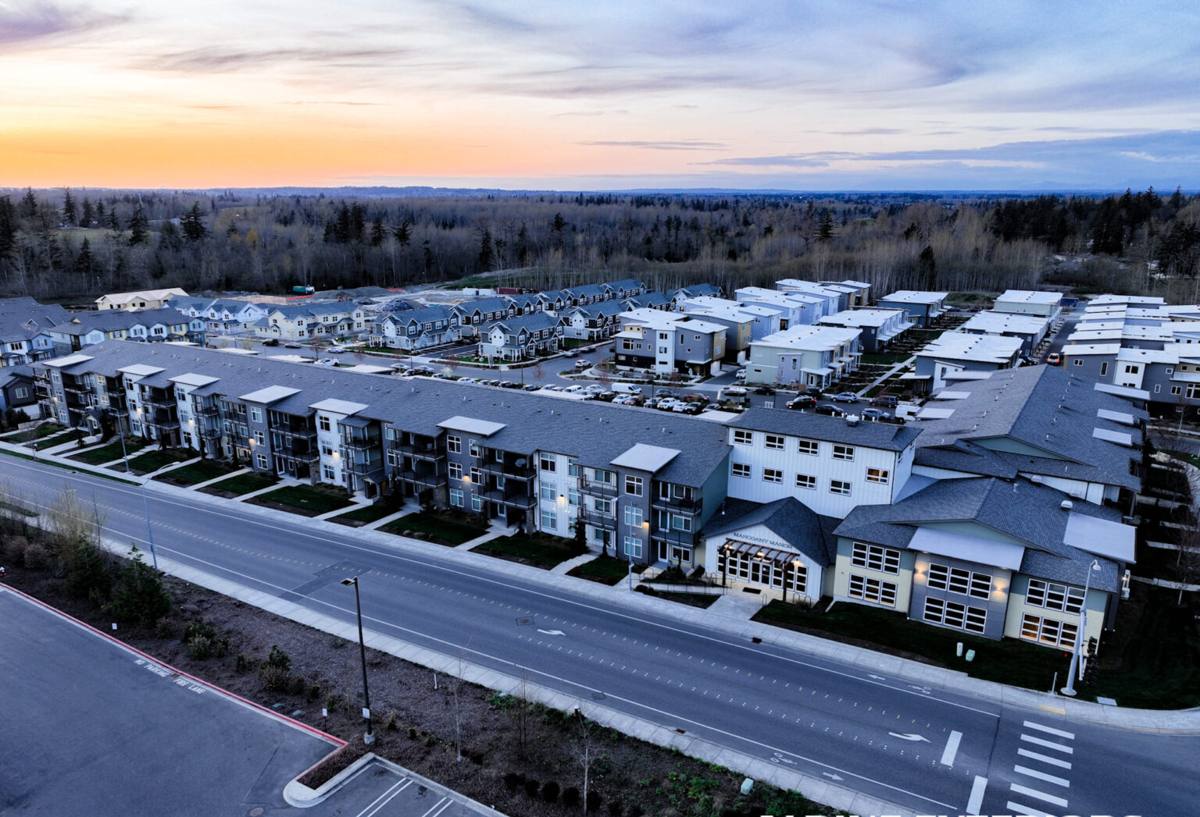
What Driving Rain and Salt Air Actually Do to Siding
It helps to be specific about the failure paths we see in Birch Bay and other shoreline-adjacent parts of Whatcom County, because it explains why product choice and installation detail matter more here than in a typical inland neighborhood.
- Wind-driven rain forces water uphill. Ordinary lap siding sheds water downward under gravity. Storms off the bay push rain sideways and even upward under eaves and around corners, finding gaps that would never see water in a calmer climate.
- Salt accelerates corrosion. Fasteners, flashing, and hardware that aren't rated for coastal exposure corrode faster, and once a fastener fails, the siding panel it's holding starts moving, which opens joints wider.
- Constant dampness feeds moss and algae. Moss doesn't just sit on the surface — its root structure holds moisture against the siding and, over time, against the wall assembly behind it, especially on north-facing walls and shaded sides of the house.
- Paint and caulk break down faster. UV exposure combined with salt and humidity shortens the life of field-applied paint and caulking, which means more frequent maintenance cycles just to keep water out.
- Wood-based products are the most exposed. Any product with exposed wood fiber — cedar, primed spruce, or engineered wood siding — is the most sensitive to this combination, because once moisture gets past the surface finish, the substrate itself can swell, rot, or delaminate.
What a Correct Siding Replacement Involves Here
Replacing siding in a location like Birch Bay isn't just swapping old panels for new ones. The parts of the job that don't show — the water-resistive barrier, flashing details, and fastening — matter more here than almost anywhere else in the county.
Tear-off and sheathing inspection
Once old siding comes off, we inspect the sheathing underneath for soft spots, staining, or rot, particularly around windows, doors, and any place where past flashing was inadequate. Coastal-exposure homes more often have hidden moisture damage than homes further inland, simply because they've absorbed more wind-driven rain over the years. Any compromised sheathing gets replaced before new siding goes on — covering a wet or rotted substrate just locks the problem in.
Water-resistive barrier and flashing
A correctly installed weather-resistive barrier, properly lapped and taped, is the actual first line of defense — siding is the second. Flashing at windows, doors, decks, and roof-to-wall intersections has to be detailed to shed water outward, not just installed as a formality. This is where driving rain finds its way in if corners get cut.
Fastening and gaps
Fastener type, spacing, and depth all need to match the manufacturer's installation instructions, especially in coastal exposure zones. Panels also need the correct expansion gaps at joints and trim so the material can move with temperature and moisture swings without buckling or pulling fasteners loose.
Trim and caulking details
Every point where two materials meet — siding to trim, trim to window, trim to roofline — is a potential water entry point. These joints get sealed with exterior-grade sealant rated for the movement and exposure involved, not just whatever's on hand.
Why We Install Only James Hardie Fiber Cement
We don't install vinyl, LP SmartSide, Cemplank, Allura, primed spruce, or cedar. That's a deliberate standard, not a lack of options, and it matters more in a place like Birch Bay than almost anywhere else we work.
James Hardie fiber cement is a cement-and-cellulose composite, not a wood product, which means there's no wood fiber for salt-laden moisture to swell, rot, or delaminate. It's non-combustible, which matters given Whatcom County's dry summer wildfire risk even in a generally wet region. It comes with a factory-applied ColorPlus finish baked on under controlled conditions, which holds up to UV and salt air significantly better than field-applied paint that has to be reapplied on a maintenance schedule. And Hardie's HZ5 product line is specifically engineered for climate zones with more moisture exposure, which is a real fit for coastal Whatcom County rather than a marketing label.
We're not going to claim any of the products we don't install are "bad." Cedar has genuine appeal and a long track record when it's maintained rigorously. Vinyl is inexpensive and low-maintenance in mild climates. LP SmartSide and other engineered wood products perform reasonably well in drier regions. The trade-offs we're not willing to accept are specific to this climate: wood-based products need more frequent, more expensive maintenance to keep moisture out in a salt-air, high-rain environment, and when that maintenance lapses — which it often does — the failure mode is rot or delamination that's expensive to fix. Fiber cement removes that failure mode from the equation.
Comparing Common Siding Options for a Birch Bay Home
| Material | Moisture/Salt Resistance | Maintenance Needed | Fire Rating | Do We Install It |
|---|---|---|---|---|
| James Hardie Fiber Cement | Excellent — cement-based, engineered for wet climates | Low — factory finish, occasional cleaning | Non-combustible | Yes |
| Cedar | Fair — depends entirely on upkeep | High — regular refinishing and sealing | Combustible | No |
| Primed Spruce/Wood | Fair to poor in coastal exposure | High — painting cycle, moisture watch | Combustible | No |
| LP SmartSide / Engineered Wood | Good in dry climates, more sensitive to sustained moisture | Moderate | Combustible | No |
| Vinyl | Good against moisture, but flexes and can crack in wind | Low | Combustible, can deform in heat | No |
What This Means for Curb Appeal and Home Value
Homes near Birch Bay's shoreline are visible from the water and the road, and siding condition shows up fast in a climate like this — moss streaking, faded paint, and warped boards all read as neglect even when the rest of the home is well kept. A correctly installed Hardie system holds its color and profile far longer, which matters both for day-to-day pride of ownership and for resale, since buyers in this market are increasingly aware of what coastal exposure does to lower-grade siding.
Our Process for Birch Bay Projects
- On-site assessment. We walk the exterior, check current siding condition, and look for signs of moisture intrusion around windows, doors, and roof lines.
- Sheathing and substrate check. Where old siding comes off, we verify what's underneath before pricing final scope — hidden rot changes the job.
- Product and color selection. We walk through Hardie's plank, panel, and shingle profiles and ColorPlus palette suited to the home's style and exposure.
- Written scope and timeline. A clear plan covering tear-off, sheathing repair (if needed), weather barrier, flashing, and installation sequence.
- Installation to manufacturer spec. Fastening, gapping, and flashing detailed for coastal wind and rain exposure — not just a standard inland install.
- Final walkthrough. We review the completed work with the homeowner before calling the job done.
Signs a Birch Bay Home May Need Siding Replacement Soon
- Persistent moss or algae growth that returns quickly after cleaning
- Soft, spongy spots when you press on siding, especially near the bottom courses or under windows
- Visible warping, cupping, or gaps opening at panel joints
- Peeling or bubbling paint that keeps recurring in the same spots
- Rising heating bills that suggest the wall assembly isn't sealing the way it should
- Visible rust streaking from corroding fasteners
Why Local Experience Matters for This Job
A crew that mostly works drier, inland projects may not think twice about fastener spacing near the coast, or may treat flashing details as optional in areas where rain rarely comes in sideways. Whatcom County's shoreline communities, including Birch Bay, need installers who already understand how wind-driven rain behaves against a wall, how fast moss establishes itself in shaded, damp corners, and which details actually matter versus which are just extra steps. That's not something you can fully compensate for with a better product alone — the product and the installation both have to be right for the exposure.
If you're weighing a siding replacement for a home in Birch Bay, we're happy to take a look, walk you through what we're seeing, and put together a straightforward estimate — no pressure, no sales script, just a clear picture of what your home needs.