 Lynden Siding
 Siding Installation Built for Deming's Terrain
Deming sits up the Mount Baker Highway corridor along the Nooksack River, in the wooded foothill country east of Bellingham. It's a different environment than the open farmland closer to Lynden proper — more tree canopy, more shade, more standing moisture that doesn't burn off until well into the afternoon. Homes here deal with less direct salt air than the coastal parts of Whatcom County, but they make up for it with heavier moss pressure, prolonged dampness under the canopy, and driving rain that runs sideways off the foothills during fall and winter storms. Siding that isn't built and installed for that combination fails in ways that aren't always obvious until the damage is already behind the wall.
This page covers what siding installation actually means for a home in Deming — not a generic overview, but the specifics of what the terrain, tree cover, and moisture cycle demand from the material and the crew putting it on.
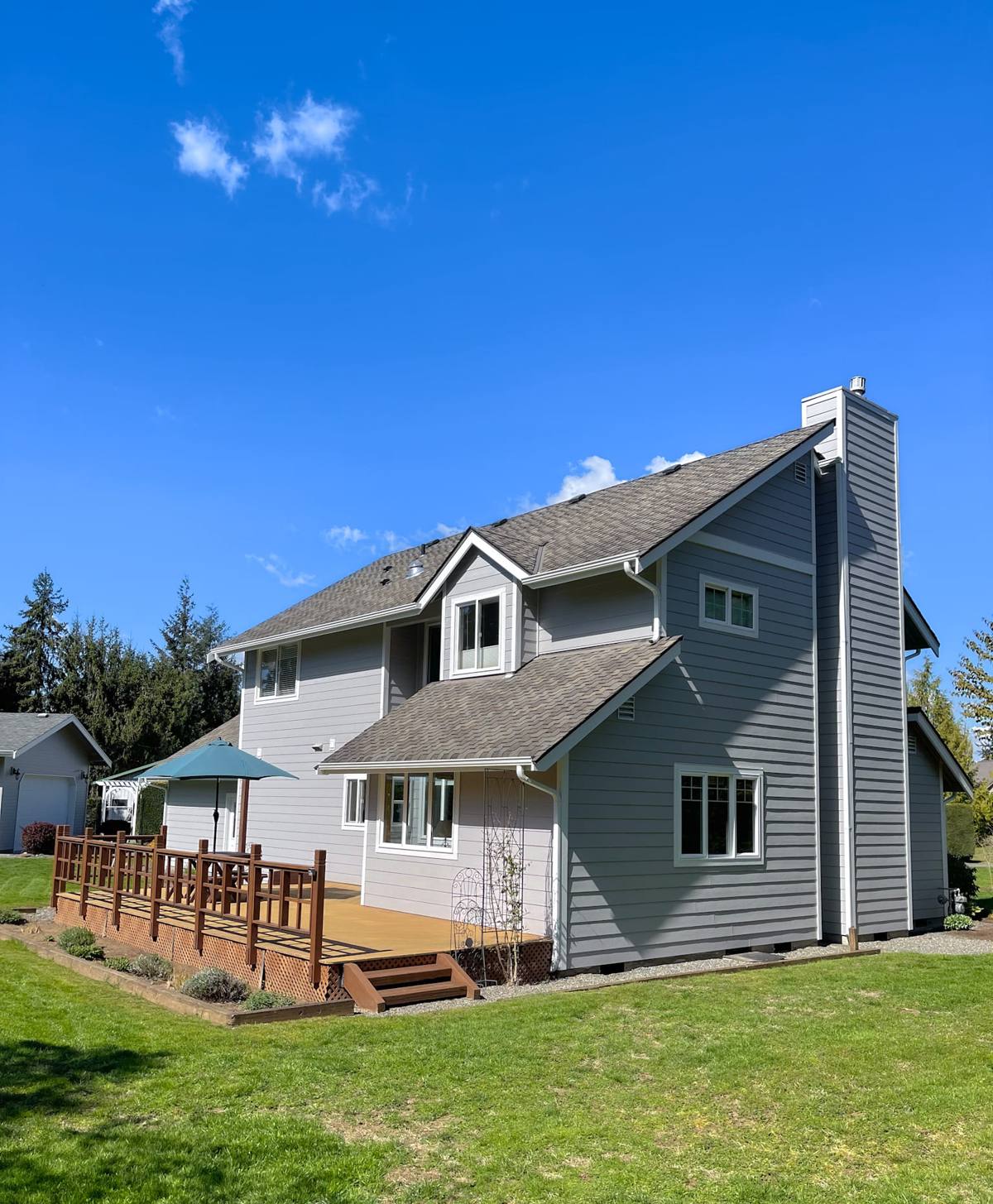
What Deming's Climate Does to Siding Over Time
The problems we see repeating on Deming homes aren't random. They track directly to a few local conditions:
- Persistent shade and moisture retention — dense fir and cedar cover keeps siding wet longer after rain than it would stay in an open lot, which is exactly the condition moss, algae, and mildew need to establish.
- A moss season that runs longer than in town — where a Lynden home in the open might see moss mainly on the north side, a shaded Deming property can have it creeping across multiple elevations, holding moisture against the surface year-round.
- Driving rain off the foothills — wind-driven rain during fall and winter storms pushes water sideways into laps, seams, and trim intersections, not just straight down.
- Debris load — needles, cones, and leaf litter collect in gaps and behind loose boards, holding moisture right against the substrate.
None of this is unique to any one product. It's a test of installation quality and material stability, and it's why the two matter equally on a home like this.
Why the Installation Matters as Much as the Material
A siding product is only as good as the details behind it. On a shaded, moisture-heavy lot like a typical Deming property, the failure points are almost always the same regardless of what material was used: water getting behind the cladding through a gap, a missed flashing detail, or fasteners driven wrong. Correct installation is what keeps water moving down and out instead of finding its way into the wall assembly. That includes:
- A continuous, correctly lapped weather-resistive barrier behind the siding — the actual waterproofing layer, not the siding itself.
- Properly flashed windows, doors, and any penetration (vents, hose bibs, light fixtures) so water sheds outward rather than tracking inward.
- Correct fastener type, spacing, and depth — overdriven or underdriven fasteners are one of the most common causes of early siding failure.
- Proper clearance at the bottom of the wall, at grade, and at roof-to-wall transitions, so splash-back and runoff don't sit against the bottom course.
- Caulking and sealant only where the manufacturer specifies it — sealing the wrong joints traps moisture instead of releasing it.
We've seen plenty of siding — of every brand — fail years early not because the material was defective, but because one or two of these details were skipped. That's the piece a homeowner can't inspect from the ground, and it's the reason who installs your siding matters as much as what you choose.
Why We Install Only James Hardie Fiber Cement
We don't install vinyl, LP SmartSide, or other fiber cement brands, and that's a deliberate standard, not a lack of options. On a property with the shade and moisture load Deming sees, the trade-offs of those alternatives show up faster and cost more to manage over time — vinyl can warp and doesn't stop moisture at the seams, engineered wood products are more sensitive to sustained dampness at the edges, and appearance-grade differences become obvious once moss and mildew take hold.
James Hardie fiber cement is non-combustible, dimensionally stable in wet-dry cycling, and doesn't feed mold or moss the way wood-based products can. Hardie's HZ5 and HZ10 product lines are engineered specifically for wetter, more humid climate zones — which fits the Nooksack corridor better than a generic siding spec. The factory-applied ColorPlus finish is baked on under controlled conditions, so it holds color and resists the fading and touch-up patchwork that comes with field-applied paint on a shaded lot where surfaces stay damp longer. Combined with a strong transferable warranty, it's the product we're willing to put our name behind on homes in this kind of environment.
What Correct Installation Looks Like With Hardie Specifically
Hardie's own installation instructions are more detailed than most siding manufacturers' — gaps at butt joints, minimum clearances at roofing and grade, specific fastener patterns, and painting requirements for cut edges are all spelled out. Skipping those steps doesn't just risk a warranty claim, it undermines the exact moisture-management performance the product is designed to deliver. This is a large part of why we run our own crews rather than subcontracting installation out — the spec only works if it's actually followed.
Cost Factors for Siding Installation on a Property Like This
| Factor | Why It Affects Deming Jobs |
|---|---|
| Home size and elevation count | More wall area and more corners/dormers means more cutting, flashing detail, and labor time. |
| Existing siding removal | Older wood or vinyl siding, especially with moss or rot damage, adds tear-off and disposal time. |
| Substrate condition | Sheathing damaged by long-term moisture intrusion under shaded siding sometimes needs repair before new siding goes on. |
| Access and site conditions | Wooded, sloped, or gravel-drive lots common around Deming can affect staging, scaffolding, and material delivery. |
| Trim and detail work | Window/door count, soffit and fascia condition, and existing trim style all factor into labor scope. |
| Color and profile selection | ColorPlus finish and plank profile (lap width, texture) affect material cost but not installation labor. |
We give a real, itemized number after walking the property — anything quoted sight-unseen is a rough guess, not a bid.
Our Installation Process
- On-site assessment — we walk the exterior, check for existing moisture or rot damage (especially at shaded elevations and grade lines), and measure the full scope.
- Substrate check and repair — any water-damaged sheathing or framing gets addressed before anything new goes over it. Covering a wet or compromised substrate just hides a bigger problem.
- Weather-resistive barrier installation — a continuous, correctly lapped barrier goes down first; this layer does the actual waterproofing work, with the siding as the outer shell.
- Flashing at every penetration — windows, doors, vents, and fixtures get flashed to shed water outward before siding goes on around them.
- Hardie panel or plank installation — installed to manufacturer spec: correct fastener pattern, proper gaps at joints, correct clearance at grade and roof lines.
- Trim, caulk, and touch-up — sealant applied only where specified, cut edges properly sealed, and factory finish touched up as needed.
- Final walkthrough — we go over the finished job with the homeowner before calling it done.
Signs a Deming Home May Need New Siding
- Moss or algae that keeps returning within months of cleaning, especially on shaded elevations.
- Soft spots, bubbling, or visible warping, particularly near the bottom courses or under downspouts.
- Paint that's peeling or bubbling rather than just fading — often a sign moisture is trying to escape from behind the siding.
- Gaps opening up at butt joints, corners, or trim edges.
- Visible water staining on interior walls near exterior corners after heavy rain.
- Siding that feels spongy or gives slightly when pressed — a sign of substrate damage underneath.
Any one of these is worth a closer look. Several together usually means moisture has already gotten behind the cladding, not just on top of it.
Why a Crew That Already Works Deming Matters
Deming isn't downtown Lynden. Properties are more spread out, lots are often wooded and sloped, and driveway access can be gravel, long, or steep. A crew that regularly works this part of Whatcom County already knows how to stage a job on that kind of lot, what the permitting process looks like for a rural property versus an in-town one, and what moisture patterns to expect based on tree cover and orientation before they even start the walkthrough. That local familiarity translates into fewer surprises mid-project and a bid that reflects the actual site conditions from the start, not a generic in-town estimate.
If your siding is showing moss that won't quit, soft spots near the bottom courses, or paint that's failing faster than it should, it's worth having someone look at it before it turns into a bigger repair. We'd be glad to walk the property and give you a straight, no-pressure estimate — free, with no obligation to move forward.