 Lynden Siding
 Siding Built for the Abbotsford–Lynden Climate
Homes on both sides of the Whatcom County–Fraser Valley border deal with the same weather pattern for most of the year: long stretches of steady, driving rain, damp marine air moving in off the Salish Sea and Georgia Strait, and short winter days that don't give wet siding much chance to dry out. That combination is exactly what wears siding down — not one big storm, but months of moisture sitting against the wall while moss and algae get a foothold in every shaded, north-facing corner.
If you own a home near the Abbotsford, BC line or in Lynden itself, your siding isn't dealing with an occasional rough season. It's dealing with a climate that stays cool and wet for six to eight months a year, then swings into warm, dry summers that stress whatever caulking and finish held up over the winter. Siding installed for a drier climate, or installed without attention to drainage and gaps, tends to show problems here years before it would somewhere with less rain and less moss pressure.
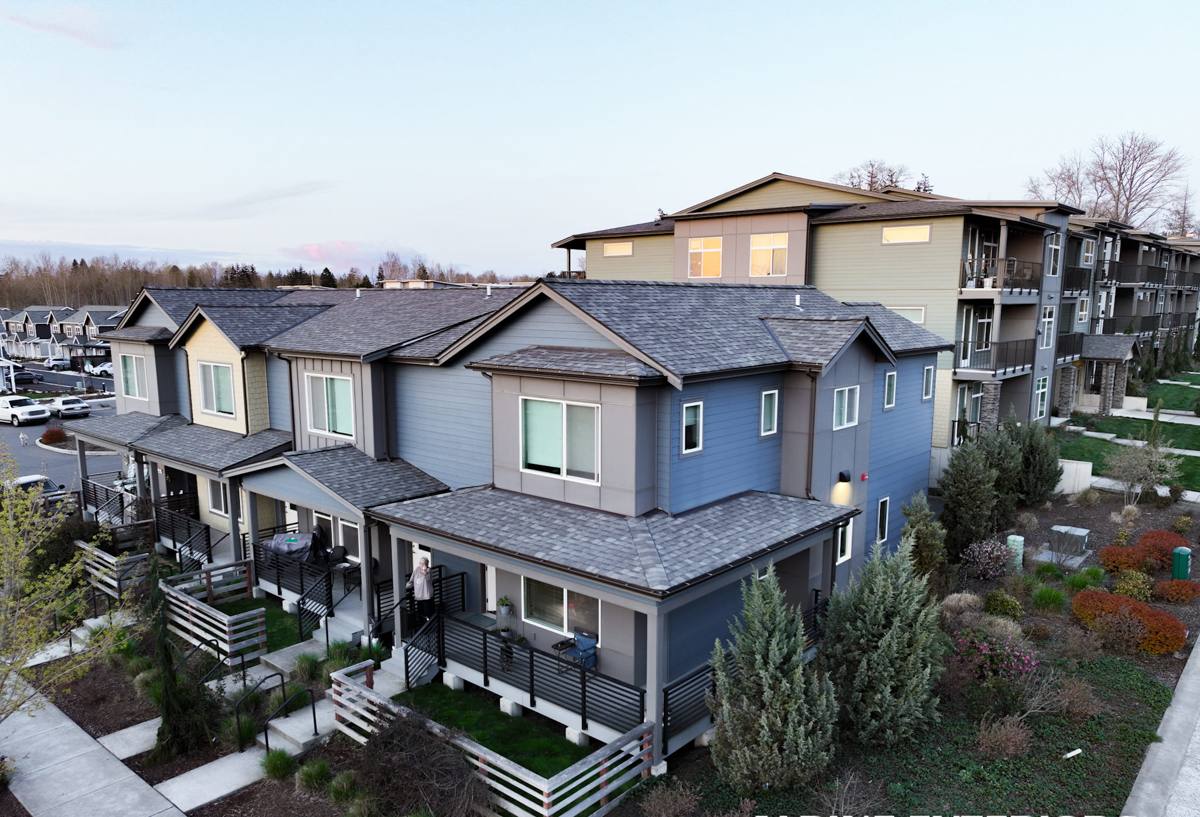
What "Correct" Installation Means in This Region
A siding job can look fine from the driveway and still be wrong underneath. In a climate like ours, the details that don't show — flashing, gaps, fastener placement, drainage — are the details that decide whether the siding lasts 10 years or 40. Correct installation in Abbotsford and Lynden means:
Drainage Behind the Siding
Siding is not the waterproofing layer — it's the first line of defense. Behind it needs to be a proper water-resistive barrier and, ideally, a drainage plane (rainscreen gap or drainable house wrap) that lets any moisture that gets behind the siding run down and out instead of sitting against the sheathing. With the amount of driving rain this region sees, skipping this step is one of the most common causes of hidden rot we find behind old siding.
Flashing at Every Penetration
Windows, doors, hose bibs, light fixtures, deck ledgers — every place something interrupts the siding is a place water can get behind it if flashing isn't done correctly. Caulk is not flashing. Caulk fails; properly lapped flashing sheds water even after the caulk eventually cracks.
Clearance and Gaps
Siding needs a gap where it meets roofing, decks, patios, and grade — generally a minimum clearance so the bottom edge isn't sitting in standing water or snowmelt. It also needs consistent gapping at butt joints and around trim so the material can move with seasonal humidity swings without buckling or cracking its finish.
Fastening to Spec
Fiber cement siding has a manufacturer-specified nailing pattern, fastener type, and embedment depth. Over-driven or under-driven nails, wrong fastener spacing, or fastening into the wrong layer all shorten the life of the installation regardless of how good the material itself is.
Why We Install Only James Hardie Fiber Cement
We don't install vinyl, LP SmartSide, primed spruce, cedar, or other fiber cement brands. That's not a marketing position — it's a standard we hold because of what this climate does to siding over time.
Vinyl softens, warps, and can crack in cold snaps; it also has seams and expansion joints that give moss and grime somewhere to collect over a wet winter. Wood-based products like LP SmartSide and cedar depend on an intact factory or field-applied finish to keep moisture out of the substrate — once that finish is compromised at a cut edge, a nail hole, or a scratch, the wood-based core is vulnerable to swelling and rot, and our climate doesn't give those edges much time to dry between rain events. Primed spruce needs regular repainting and careful caulk maintenance to hold up at all.
James Hardie fiber cement is cement, sand, and cellulose fiber — it doesn't rot, it isn't a food source for the moss and algae that thrive in this climate, and it's non-combustible. Hardie's HZ5 product line is engineered specifically for freeze-thaw, high-moisture regions like the Pacific Northwest, and the factory-applied ColorPlus finish is baked on and warranted well beyond what field-applied paint or stain typically holds up to under our rain load. It's the product we're willing to put our name behind on homes in this region.
Our Installation Process
- On-site assessment: we look at your current siding, sheathing condition, trim, and any problem areas — especially north- and west-facing walls where moss and driving rain do the most damage.
- Tear-off and sheathing check: old siding comes off and we inspect the sheathing underneath for rot or soft spots before anything new goes up. Damaged sheathing gets repaired, not covered over.
- Water-resistive barrier and drainage plane: a new weather barrier goes on correctly lapped, with a drainage gap where the wall assembly calls for it.
- Flashing: windows, doors, and all penetrations get flashed before siding installation begins.
- Hardie installation to manufacturer spec: correct fastener pattern, gapping, and clearances, following James Hardie's published installation requirements for our climate zone.
- Trim, caulking, and final detail work: the finish work that determines how clean the job looks and how well it sheds water at every joint.
- Walkthrough: we go over the finished work with you before calling the job done.
Signs Your Current Siding Is Losing the Battle
Because siding failure in this climate is gradual, a lot of homeowners live with early warning signs for years before addressing them. Watch for:
- Persistent moss or dark green-black streaking on north- or shade-facing walls that comes back within weeks of cleaning
- Soft or spongy spots when you press on siding, especially near the bottom courses or below windows
- Paint that's peeling or bubbling in a pattern that follows seams or nail heads, rather than general wear
- Visible gaps, warping, or buckling at butt joints
- Cracked or missing caulk at trim and window edges
- A musty smell inside near exterior walls, which can mean moisture has already reached the sheathing
- Siding that was installed tight to a deck, patio, or grade with no visible gap
Any one of these on its own isn't necessarily an emergency, but if you're seeing two or three together, it's worth getting a professional look before winter rains make it worse.
What Affects the Cost of a Siding Installation Here
| Factor | Why It Matters in This Climate |
|---|---|
| Home size and wall complexity | More corners, dormers, and roof lines mean more flashing and cut work — all critical in a high-rain region |
| Condition of existing sheathing | Rot from years of moisture intrusion has to be repaired before new siding goes on, not hidden behind it |
| Tear-off vs. install over existing siding | We generally recommend tear-off here so the drainage plane and sheathing can actually be inspected and corrected |
| Hardie product line chosen | Lap siding, shingle-style panels, and board-and-batten all install differently and carry different material costs |
| Trim and accessory work | Window and door trim, corner boards, and fascia detailing add labor but are where water intrusion most often starts |
| Access and site conditions | Steep lots, tight setbacks, and multi-story walls affect scaffolding and labor time |
We give a firm, itemized quote after seeing the home in person — not a phone estimate — because so much of the real cost in this region comes from what's happening behind the old siding, not just the square footage in front of it.
Why It Matters That We Already Work This Border Area
Lynden sits close enough to Abbotsford, BC that a lot of families, tradespeople, and material suppliers move back and forth across that border regularly, and the housing stock on both sides deals with the same weather. A crew that already works this specific corridor understands the moss patterns on north-facing walls in this valley, knows how the wind-driven rain off the Fraser Valley and Whatcom lowlands tends to find the weak points in a wall assembly, and isn't learning the region's quirks on your project. That local pattern recognition — knowing which walls fail first and why — is worth more than a general contractor's siding experience from a drier or milder climate.
Serving both Lynden and the Abbotsford, BC area also means being upfront about logistics: cross-border projects can involve different permitting requirements and material import considerations depending on where the home sits. We'll walk you through exactly what applies to your address before any work starts.
Maintenance After Installation
James Hardie siding installed correctly is low-maintenance, not no-maintenance. In this climate, a periodic rinse to keep moss and organic buildup from taking hold — especially on shaded walls — goes a long way. Check caulking at trim and penetrations every year or two, since caulk is the one component that wears out faster than the siding itself. Beyond that, ColorPlus finish is designed to hold its color and resist the fading and chalking that field-applied paint struggles with under this much annual rainfall.
Get a Free, No-Pressure Estimate
If your siding is showing signs of wear, or you're planning ahead for a replacement before another wet season sets in, we're happy to take a look and give you a straight answer about what your home actually needs. There's no pressure and no obligation — just an honest assessment from a crew that works this exact climate. Fill out the form below to schedule your free estimate.