 Lynden Siding
 Roofing in Sumas: A Job the Local Climate Doesn't Let You Skip
Sumas sits at the edge of the Nooksack lowlands, close to the Canadian border, where marine air off the Salish Sea keeps things damp for most of the year. That combination of driving rain, cool temperatures, and long stretches without direct sun is hard on a roof in ways that don't show up overnight. Shingles granulate and curl faster than the manufacturer's chart suggests. Moss finds a foothold in shaded valleys and north-facing slopes and doesn't let go. Flashing that was installed a little loose starts to leak two or three winters later, not on day one. A roof replacement here isn't just about swapping old material for new — it's about building a roof system that's matched to what this specific stretch of Whatcom County throws at it, season after season.
We've replaced roofs on homes throughout Sumas and the surrounding county, and the patterns repeat: north-facing roof planes that never fully dry out, valleys that collect moss and needle debris, and attics that were never given enough airflow to handle the moisture load. A good replacement addresses all of that, not just the shingles you can see from the street.
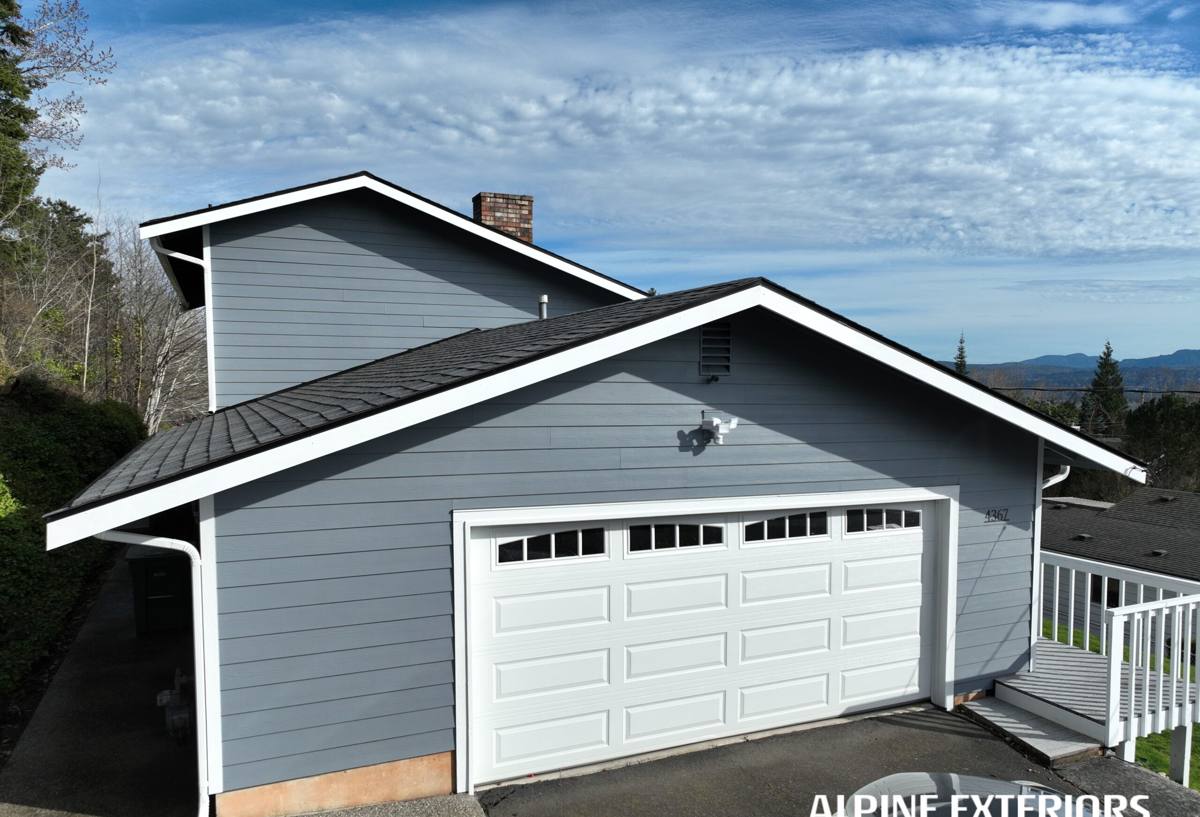
Signs a Sumas Roof Needs Replacement, Not Another Repair
Not every roof problem calls for a full tear-off. But there's a point where patching becomes throwing money at a roof that's already lost the fight against the climate. Here's how we tell the difference on a walk-through:
- Granule loss heavy enough that shingles look blotchy or bald in patches, especially on south- and west-facing slopes
- Shingles that are cupping, curling at the edges, or cracking when you press on them
- Moss or algae covering more than a small section, particularly in shaded valleys or under overhanging trees
- Soft spots in the decking you can feel underfoot or see sagging from the ground
- Daylight visible through the attic roof boards, or insulation that's damp or matted
- Repeated leaks in different spots after the same roof has already been patched two or three times
- A roof that's simply reached the end of its material's realistic service life for this climate
If a roof is showing one or two of these in isolation, repair is usually still the honest recommendation. Once several of them show up together, that's a roof that's failing as a system, not in one spot, and replacement is the responsible call.
What a Correct Roof Replacement Actually Involves
Tear-Off and Deck Inspection
We remove the old roofing down to the deck rather than layering over it. That's the only way to actually see the condition of the sheathing underneath — soft, delaminated, or water-stained boards get replaced before anything new goes down. Roofing over rot just hides the problem for another owner to find later.
Underlayment Built for Wet Weather
In a climate that sees extended wet stretches, the underlayment matters as much as the shingle on top of it. We use synthetic underlayment across the field and self-adhered ice-and-water membrane in the vulnerable zones — eaves, valleys, and around every penetration — so that wind-driven rain that gets past the surface layer still has a second line of defense before it reaches the deck.
Flashing That's Actually Sealed
Most roof leaks trace back to flashing, not the shingles themselves. Chimneys, skylights, sidewalls, and vent pipes all need step flashing, counter-flashing, or boots that are properly lapped and sealed, not just caulked over. We replace flashing as part of a roof replacement rather than reusing the old pieces, since bent or rusted flashing is one of the most common causes of a "new roof that still leaks."
Attic Ventilation
A roof that traps moisture in the attic ages faster from underneath than from the weather hitting it from above. We check intake at the eaves and exhaust at the ridge and correct the balance where it's inadequate — this is often the single most overlooked part of a roof replacement, and it directly affects how long the new roof will actually last in a damp climate like this one.
Choosing a Roofing Material for a Sumas Home
There's no single "best" roofing material — there's the material that fits your home's roof pitch, your budget, and how much long-term maintenance you're willing to take on. Here's how the common options actually compare for this climate:
| Material | Typical Lifespan | Moss/Moisture Behavior | Maintenance |
|---|---|---|---|
| Architectural asphalt shingle | 25–30 years | Good with proper underlayment and ventilation; needs periodic moss treatment | Low to moderate |
| Standing seam metal | 40–50+ years | Sheds moisture fast; moss struggles to gain a foothold on the smooth surface | Low |
| Cedar shake | 20–30 years with upkeep | Attractive but absorbs moisture; needs regular treatment to resist moss and rot in this climate | High |
| Synthetic composite shingle | 30–50 years | Doesn't absorb water like wood; holds up well in wet, shaded conditions | Low |
We install architectural asphalt and standing seam metal most often on Sumas homes, largely because they hold up well against sustained moisture without asking the homeowner to keep up with heavy maintenance. Cedar shake still has a place on homes where the look is a priority, but we're upfront that it's a bigger ongoing commitment in a climate this wet — that's a trade-off worth discussing honestly before you commit to it, not a knock on the material itself.
How We Approach a Roof Replacement
1. On-Site Inspection and Honest Assessment
We walk the roof, check the attic, and look at flashing, ventilation, and decking condition — not just the shingle surface. You get a straight answer on whether you need a replacement or whether a repair still makes sense.
2. Written Scope and Estimate
Before any work starts, you get a written scope that spells out the materials, underlayment, flashing work, and ventilation changes included — no vague line items, no surprise add-ons once the tear-off starts.
3. Tear-Off, Deck Repair, and Install
Most residential roof replacements in this area run one to three days depending on size and roof complexity, weather permitting. We protect landscaping and gutters during tear-off and do a magnetic sweep for nails before we leave each day.
4. Final Walk-Through
We walk the finished roof with you, confirm the work matches the scope, and go over what to expect from the new roof — including how it will handle the wet season compared to what you had before.
Why Hiring a Crew That Already Works in Sumas Matters
A roofer who mostly works drier inland climates will size ventilation and underlayment differently than a crew that replaces roofs in western Whatcom County every week. We already know which roof planes in this area tend to hold moss longest, how much intake ventilation a typical Sumas attic actually needs, and which flashing details fail first under sustained driving rain. That local pattern recognition is the difference between a roof that's technically installed to code and one that's actually built for the weather it's going to face for the next few decades.
It also matters for something more basic: being reachable. If a valley starts leaking in the middle of a February storm, you want a crew that's local, knows your roof, and isn't three counties away.
Cost Factors Homeowners Should Understand
Roof replacement pricing varies by roof size, pitch, number of layers being removed, decking condition, and material choice, so we won't quote a number without seeing the roof. What we can tell you honestly is what tends to move the price:
- Steeper roofs and multiple roof planes take longer to install and require more safety setup
- Decking replacement adds cost but is not optional where the old sheathing is soft or rotted
- Extended ice-and-water membrane in valleys and at eaves costs more upfront than skipping it, and it's not a place we cut corners in this climate
- Metal roofing carries a higher upfront cost than asphalt but a longer service life and lower long-term maintenance
- Complex flashing details — multiple chimneys, skylights, dormers — add labor time regardless of material
We'd rather walk you through these factors on your specific roof than quote a generic number that doesn't hold up once we're actually up there.
A Quick Checklist Before You Call a Roofer
- Note where you've seen leaks or water stains inside, even if they seem minor
- Check the attic yourself (or ask us to) for daylight, damp insulation, or musty smell
- Look for moss or heavy algae from the ground on shaded or north-facing roof slopes
- Have a rough idea of your roof's age or when it was last replaced
- Decide whether you're open to a material change (like moving from shingle to metal) or want a like-for-like replacement
- Ask any contractor you're considering how they handle underlayment and ventilation, not just shingle brand
Keeping a New Roof Sound Through Moss Season
A properly installed roof still benefits from basic upkeep in this climate. Keep gutters and valleys clear of needles and debris so water has somewhere to go, trim back overhanging branches that keep a roof plane shaded and damp, and have moss growth treated before it spreads rather than after. None of this is heavy maintenance, but skipping it is how a roof that should last decades starts showing problems early. We're happy to point out anything we notice on your roof during the final walk-through so you know what to watch for going forward.
If your roof is showing its age or you just want a second opinion before winter, we're glad to come take a look. The estimate is free, there's no pressure attached to it, and you'll get a straight answer either way — use the form below to get started.