 Lynden Siding
 Roof Replacement in Acme: Built for What Whatcom County Actually Throws at a Roof
Acme sits in the rural stretch of Whatcom County east of Lynden, in the foothill country where the weather off the Sound still reaches you even though you're not on the water. That means salt-tinged marine air, long stretches of driving rain, and a moss season that can run most of the year in the shaded, tree-covered lots common out here. A roof in Acme isn't fighting the same battle as a roof in a dry inland climate — it's fighting moisture that never fully lets up, and it's fighting that moisture for months at a stretch, not just a few storms a year.
That climate reality is exactly why roof replacement here has to be approached differently than a generic "tear off and re-shingle" job. The materials, the ventilation, the flashing details, and the underlayment choices all need to account for constant dampness, shade-driven moss growth, and wind-driven rain that finds every gap a roof gives it. Get those details right and a roof holds up for decades. Get them wrong and you're looking at rot, leaks, and premature failure well before the shingles themselves wear out.
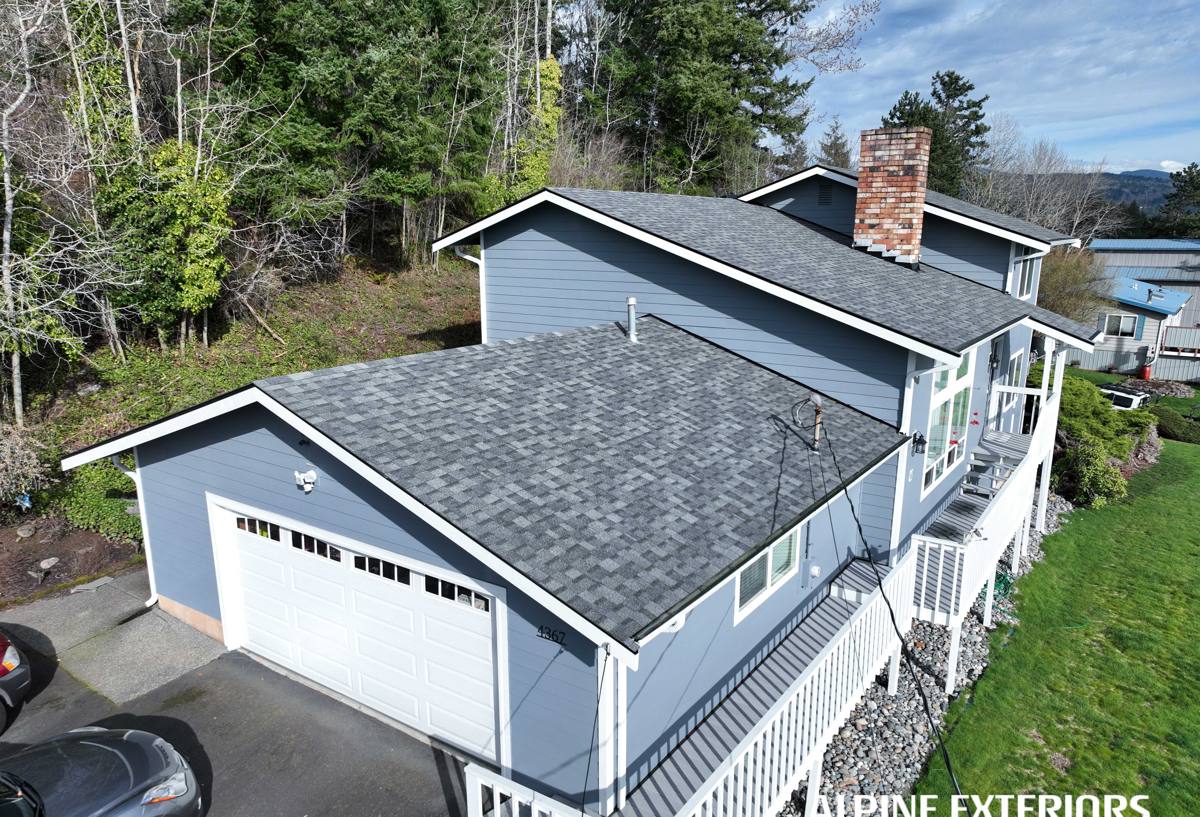
Signs an Acme Roof Is Due for Replacement
Most homeowners don't wake up one day and decide they need a new roof — the signs build slowly, and in a wet, moss-prone climate they're easy to write off as normal wear. Here's what actually signals it's time to stop patching and start planning a full replacement:
- Moss and algae streaking that comes back within a season or two of cleaning
- Shingles that are cupping, curling, or losing granules in visible patches
- Soft spots or sagging when walked on, especially near valleys or eaves
- Daylight visible through the attic decking, or damp insulation below the roof deck
- Flashing around chimneys, skylights, or vent pipes that's rusted, lifted, or caulked-over repeatedly instead of properly repaired
- Granules collecting in gutters after every rain — a sign the shingles are past their protective life
- A roof that's 20+ years old on asphalt composition, even if it "looks fine" from the ground
Any one of these on its own might just need a repair. Several at once, especially combined with an aging roof, usually means replacement is the more honest answer than another round of patchwork.
What a Correct Roof Replacement Actually Involves
A roof replacement is more than swapping old shingles for new ones. In a climate like Whatcom County's, the layers underneath the shingles matter as much as the shingles themselves. Here's what a properly done job includes:
Full Tear-Off, Not Overlay
We remove the existing roofing down to the deck rather than layering new shingles over old. Overlaying traps moisture, hides deck damage, and voids most manufacturer warranties. It also adds weight the structure wasn't necessarily built to carry twice over.
Deck Inspection and Repair
Once the old roofing is off, we inspect the plywood or plank decking for rot, delamination, or soft spots — common in this area wherever a roof has been quietly leaking under old flashing or clogged valleys. Any compromised decking gets replaced before anything new goes down, because new shingles over a bad deck just buys you a few years before the same problem resurfaces.
Underlayment Built for Wet Climates
We use synthetic or ice-and-water-shield underlayment at eaves, valleys, and other vulnerable spots rather than the bare minimum. In a region where wind-driven rain can push water sideways under shingles, this layer is often what actually keeps a roof dry, not the shingles themselves.
Flashing Done Right
Chimneys, skylights, vent pipes, and roof-to-wall transitions are where the vast majority of leaks start — not out in the open field of the roof. Correct flashing means new metal, proper step-and-counter-flashing where a roof meets a wall, and sealant used as a backup, not as the primary defense.
Ventilation That Matches the Climate
Intake and exhaust ventilation need to be balanced so the attic can actually dry out between rain events. In a persistently damp climate, under-ventilated attics are one of the biggest drivers of hidden rot and premature shingle failure from the underside.
Drip Edge and Gutter Integration
Metal drip edge at eaves and rakes, tied in correctly with the gutter system, keeps water from wicking back under the shingles or running down the fascia. It's a small, inexpensive detail that gets skipped more often than it should.
Material Options for Acme Homes
There's no single "best" roofing material — the right choice depends on budget, roof pitch, how much shade and moss exposure the roof gets, and how long you plan to own the home. Here's an honest breakdown of what we install most often in this area:
| Material | Typical Lifespan | Moss/Moisture Behavior | Best Fit |
|---|---|---|---|
| Architectural asphalt shingles | 25–30 years | Good with proper ventilation and zinc/copper strips; needs periodic moss removal in shaded lots | Most Acme homes — balance of cost and durability |
| Metal (standing seam or panel) | 40–50+ years | Sheds moisture fast, resists moss growth on steeper pitches | Steeper roofs, long-term owners, wildfire or storm-conscious buyers |
| Synthetic/composite shingles | 30–40 years | Consistent moisture resistance, less granule loss than asphalt | Homeowners wanting shake or slate appearance without the maintenance |
| Basic 3-tab asphalt | 15–20 years | Wears fastest under constant moss and moisture exposure | Budget-limited projects or short-hold properties |
Our standard recommendation for most Acme properties is a mid-to-upper grade architectural shingle with proper ventilation and moss-resistant strips, or metal where the roof pitch and budget support it. We don't push a single brand as the answer for every roof — we size the material to the roof's exposure, pitch, and how long the owner plans to stay in the home.
What Actually Affects Your Roof Replacement Cost
Roof replacement pricing varies more than most homeowners expect, and not always for obvious reasons. Rather than quote a number that doesn't mean much without context, here's what actually moves the price up or down:
| Cost Factor | Why It Matters |
|---|---|
| Roof size and number of facets | More valleys, dormers, and cut-up rooflines mean more labor and flashing detail per square |
| Pitch and access | Steep or hard-to-access roofs require more safety equipment and slower, more careful work |
| Deck condition | Rotted or delaminated decking found during tear-off adds material and labor to replace it |
| Material choice | Basic asphalt vs. metal vs. synthetic composite spans a wide cost range |
| Layers being removed | Tearing off two layers of old roofing costs more in disposal and labor than one |
| Ventilation upgrades | Adding proper intake/exhaust venting where none existed is a worthwhile add, not a hidden padding cost |
We break these out clearly in every estimate so you know what you're actually paying for, rather than getting a single lump-sum number with no explanation behind it.
Our Process, Start to Finish
- On-site inspection. We walk the roof and attic, not just look from the ground, and photograph problem areas so you can see what we see.
- Written estimate. A clear breakdown of material, labor, and any deck repair contingencies — no vague allowances.
- Scheduling around the weather. Given how much rain this area sees, we plan tear-off days around forecasts and keep the roof dried in at every stage so a job is never left exposed overnight.
- Tear-off and deck inspection. Old roofing comes off, decking is inspected, and any repairs are confirmed with you before we cover it back up.
- Underlayment, flashing, and ventilation. The parts that don't show but do the real work of keeping water out.
- Shingle or panel installation. Installed to manufacturer spec so the material warranty actually applies.
- Cleanup and magnetic nail sweep. Job site and yard cleared of debris and stray fasteners before we consider the job done.
- Final walkthrough. We go over the finished roof and attic ventilation with you directly.
Ventilation and Moss: The Long Game for Whatcom County Roofs
A lot of roofing conversations focus on shingles, but in this climate the quieter issue is what happens underneath them. Moss doesn't just sit on the surface — its roots work into shingle granules and hold moisture against the roof surface longer than open air would. Combined with a shaded lot and a long wet season, that's a slow but steady path to premature failure if a roof isn't set up to dry out between rain events.
Proper attic ventilation, the right underlayment, and moss-inhibiting strips at the ridge aren't optional upgrades in Whatcom County — they're the difference between a roof that lasts its full rated lifespan and one that needs premature repair. We treat these as standard parts of a correct installation, not add-ons to upsell.
Why a Crew That Already Works Acme Matters
Acme isn't a dense subdivision — it's a spread-out, tree-covered rural community, and that changes how a roofing job actually runs. Steep driveways, longer material staging, septic and well locations to work around, and heavier tree cover overhead all factor into how a crew plans a tear-off day. A crew that's worked this area before knows to check drainage patterns around the house, knows how shaded lots behave differently than open ones in town, and doesn't have to learn those lessons on your roof.
We work Acme alongside Lynden and the rest of Whatcom County regularly, which means local material suppliers know us, we're not guessing at typical lot layouts, and we can usually schedule and staff a job without the delays that come from a crew unfamiliar with the area.
Roof Replacement Checklist for Acme Homeowners
- Confirm the contractor tears off down to the deck rather than overlaying
- Ask specifically about underlayment type at eaves and valleys, not just shingle brand
- Confirm attic ventilation will be assessed and corrected if inadequate
- Get flashing details in writing — chimney, skylight, and wall transitions especially
- Ask how deck repairs, if found, are priced and approved before work continues
- Confirm cleanup includes a magnetic nail sweep of the yard and driveway
- Check that the estimate is itemized, not a single unexplained total
- Confirm who handles permitting, since Acme is unincorporated and permits typically route through the county
A roof replacement is one of the largest single investments most homeowners make in a property, and in a climate this consistently wet, doing it right the first time matters more than doing it fast or cheap. If you're weighing a repair against a full replacement, or just want an honest read on what your roof actually needs, we're glad to come out, walk it with you, and give you a straight answer. Reach out for a free, no-pressure estimate using the form below.