 Lynden Siding
 Roof Repair Built for Wiser Lake's Weather
Homes around Wiser Lake sit in a part of Whatcom County that takes a real beating from the weather most of the year. Salt-laden air moves in off the Sound, driving rain comes sideways during fall and winter storms, and the tree cover that makes this area so pleasant to live in also means shade, damp, and a moss season that can run eight months or longer. A roof out here isn't just shedding water in a straight-down rain — it's dealing with wind-driven moisture working sideways and upward under shingle edges, and organic growth that holds moisture against the roof deck long after a storm passes.
That combination is why roof repair in this neighborhood is a different job than roof repair on a dry, sun-exposed roof in another part of the state. The fixes have to account for how water actually behaves on a shaded, moss-prone roof near the lake, not just patch the spot where a stain showed up on the ceiling.
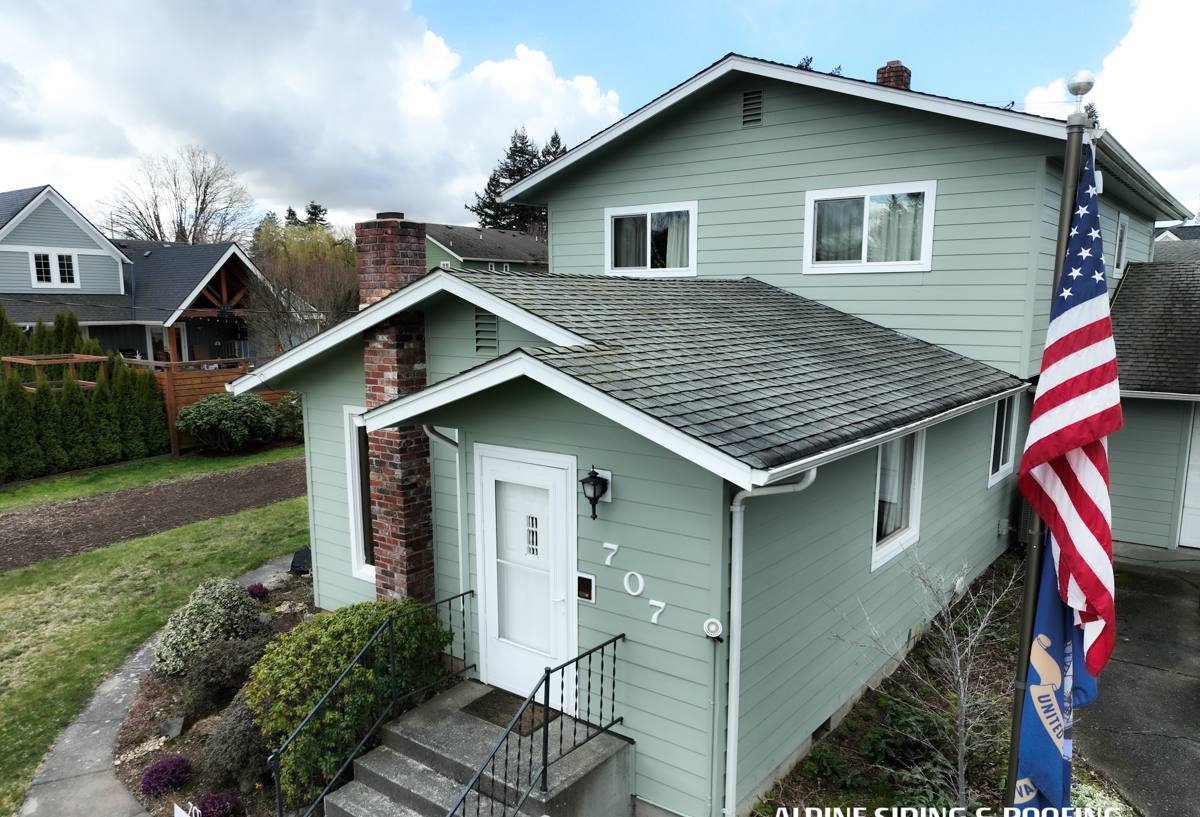
Signs a Wiser Lake Roof Needs Repair
Moss and Algae Damage
Moss doesn't just look bad — it lifts shingle edges as it grows, holds water against the roofing material, and works its way under the shingle tabs where it keeps the deck wet for days after the rain stops. Left alone, that constant moisture breaks down the shingle's mat and adhesive strip well before the shingle's rated life is up. On heavily shaded lots near the lake, we see accelerated wear on the north- and west-facing slopes years ahead of the sunnier sides of the same roof.
Wind-Driven Leaks
Driving rain off the water doesn't fall straight down — it pushes sideways under shingle tabs, around chimney flashing, and into any gap where two roof planes meet. A leak that only shows up during a hard storm, and not during a steady light rain, is almost always a wind-driven intrusion point rather than a simple worn shingle. These are some of the trickiest leaks to track down because the water often travels along the underlayment before it drips through the ceiling, so the stain inside can be several feet from the actual entry point.
Flashing and Valley Failures
Flashing around chimneys, skylights, and roof valleys is usually where an older roof fails first, long before the field shingles wear out. Sealant dries and cracks, metal corrodes, and nail heads back out over time. In a wet climate like this one, a failed flashing joint can pour water into a wall cavity for months before anyone notices — which is why we always check flashing condition even when the homeowner's complaint is about a specific room, not the whole roof.
What a Proper Roof Repair Actually Involves
A repair done right is more than swapping out a few visibly damaged shingles. Here's what we actually check and do on a repair call:
- Find the real entry point — not just the ceiling stain, but where water is actually getting in, which can be several feet away.
- Check the decking — soft, delaminated, or rotted plywood under the damaged area has to be cut out and replaced, or any new shingles laid over it will fail again.
- Inspect and replace underlayment — the felt or synthetic layer beneath the shingles is the roof's real waterproofing; damaged sections get replaced, not just covered.
- Rebuild flashing details — valleys, chimneys, vent boots, and wall step-flashing get re-sealed or replaced with new metal and proper laps, not just a bead of caulk over the old joint.
- Match materials correctly — new shingles need to tie into the existing roof's exposure and nailing pattern so the repair sheds water the same way the rest of the roof does.
Skipping any of these steps is how a "fixed" leak comes back within a year or two, usually worse than before because the underlying rot has had more time to spread.
Repair or Replace? How We Make the Call
Not every leak means a new roof, and not every roof is worth patching again. We look at the whole picture — age, how many prior repairs are already on it, and how much of the roof is actually affected — before recommending either path.
| What We Find | Usually Points to Repair | Usually Points to Replacement |
|---|---|---|
| Age of roofing | Under 15 years, one problem area | Nearing or past the shingle's rated life |
| Moss coverage | Isolated patches, deck still sound | Widespread moss with soft or rotted decking underneath |
| Leak history | First or second repair in this spot | Same area repaired multiple times already |
| Flashing condition | One or two failed details | Flashing failing across most penetrations |
| Shingle granule loss | Localized to the damaged section | Widespread, roof looks uniformly worn |
When the numbers say repair, we repair — a full tear-off isn't the honest answer just because it's the bigger job. When the roof has multiple issues stacking up, we'll tell you that plainly and explain why, rather than patching something that's going to keep costing you money in small repairs.
Our Process, Start to Finish
We keep this straightforward on purpose. A homeowner should know what's happening at every step, not just get a bill at the end.
- Inspection. We get up on the roof (not just a look from the ground) and check the decking, underlayment, flashing, and shingle condition around the problem area and anywhere else moss or wear suggests trouble.
- Written estimate. You get a clear scope of work and price before anything is scheduled — what's being repaired, what materials we're using, and why.
- Scheduling around the weather. Roof repair needs a dry work window. We plan around the forecast rather than rushing a repair into a wet deck, which never holds up.
- The repair itself. Decking replaced where needed, underlayment and flashing rebuilt, shingles matched and tied in properly.
- Cleanup and walkthrough. Magnetic nail sweep of the yard and driveway, debris hauled off, and a walkthrough so you can see exactly what was done.
Materials and Methods We Rely On
For repairs, we match the existing roof's shingle type and exposure whenever a compatible product is available, since mixing incompatible shingle profiles can create its own leak points at the tie-in line. Where a full match isn't possible, we use the closest equivalent and locate the repair on a less visible slope when the homeowner has a preference.
On valleys and any area with a documented history of moss or wind-driven water, we install self-adhered ice-and-water membrane underneath the shingles rather than standard felt alone — it's a step up in labor and material cost, but it's the detail that actually stops leaks in the spots that fail most often in this climate. For moss-prone slopes, we'll also talk through zinc or copper strip installation at the ridge, which lets metal ions wash down the roof with the rain and slow regrowth — it's a maintenance aid, not a substitute for keeping the roof clear of debris and overhanging branches.
What Affects the Cost of a Roof Repair
Every repair is different, but the price generally comes down to a handful of factors. We'd rather you understand these going in than be surprised by them on an invoice.
| Factor | Why It Matters |
|---|---|
| Decking condition | Rotted plywood found once we open up the area adds material and labor beyond the original quote |
| Roof pitch and access | Steeper roofs and limited ladder access take longer and require more safety setup |
| Extent of flashing work | Rebuilding a valley or chimney flashing detail is more involved than a shingle swap |
| Shingle availability | Older or discontinued shingle lines can be harder to match, sometimes requiring a wider repair area |
| Moss and debris removal | Heavily mossed roofs need careful clearing before the actual repair can even be assessed |
We'll flag any of these on-site before we proceed, not after the work is done.
Moss Season Maintenance Checklist
Between repairs, a little maintenance goes a long way toward keeping a Wiser Lake roof out of trouble. Homeowners who stay on top of these items call us far less often for emergency leaks:
- Clear overhanging branches so shaded areas of the roof get at least some sun and airflow.
- Have gutters cleaned at least twice a year — clogged gutters back water up under the shingle edge.
- Check for moss buildup each fall before the wet season sets in, not after it's already established.
- Have flashing around chimneys and skylights inspected every few years, since sealant fails quietly.
- Look at ceilings and attic spaces after any hard windstorm for early signs of a wind-driven leak.
- Avoid pressure-washing moss off shingles yourself — it strips protective granules and can shorten shingle life faster than the moss itself.
Why a Crew That Already Works Wiser Lake Matters
Roofing problems here follow patterns that aren't the same as what a roofer sees in a drier part of the state, or even in a more open, less wooded part of Whatcom County. Knowing which slopes on a typical Wiser Lake lot hold moss the longest, which flashing details tend to fail first under wind-driven rain off the lake, and how long a repair actually needs to sit dry before it's weathertight in this climate all comes from doing the work here repeatedly — not from a general roofing checklist. That local pattern recognition is often the difference between a repair that solves the problem and one that just delays it.
It also matters for practical things like permitting and scheduling: knowing typical dry-window stretches for this area lets us plan repairs so the work isn't rushed into a closing rain system, and familiarity with the area means less time spent on the front end just figuring out access and layout.
If you've got a leak, a mossy patch that's starting to worry you, or just want an honest opinion on what your roof actually needs, we're glad to take a look. Fill out the form below for a free, no-pressure estimate.