 Lynden Siding
 Roof Repair Built for Ferndale's Weather, Not a Generic Climate
Ferndale sits close enough to the water that salt air is part of daily life, and that changes what a roof actually needs to survive here. Add in Whatcom County's long stretch of driving rain from fall through spring, plus a moss season that can run most of the year on shaded, north-facing slopes, and you have a combination that wears roofs down faster than most manufacturer warranties assume. A roof repair done right in Ferndale accounts for all three of those factors at once — not just the leak you can see, but the conditions that caused it and will keep working on the repair after we leave.
We're a Lynden-based siding and exteriors crew that also handles roof repair work throughout Whatcom County, including Ferndale. We're not a national franchise dispatching whoever's available that week — we're local, we already know this stretch of coastline and the neighborhoods behind it, and we come back if something isn't right.
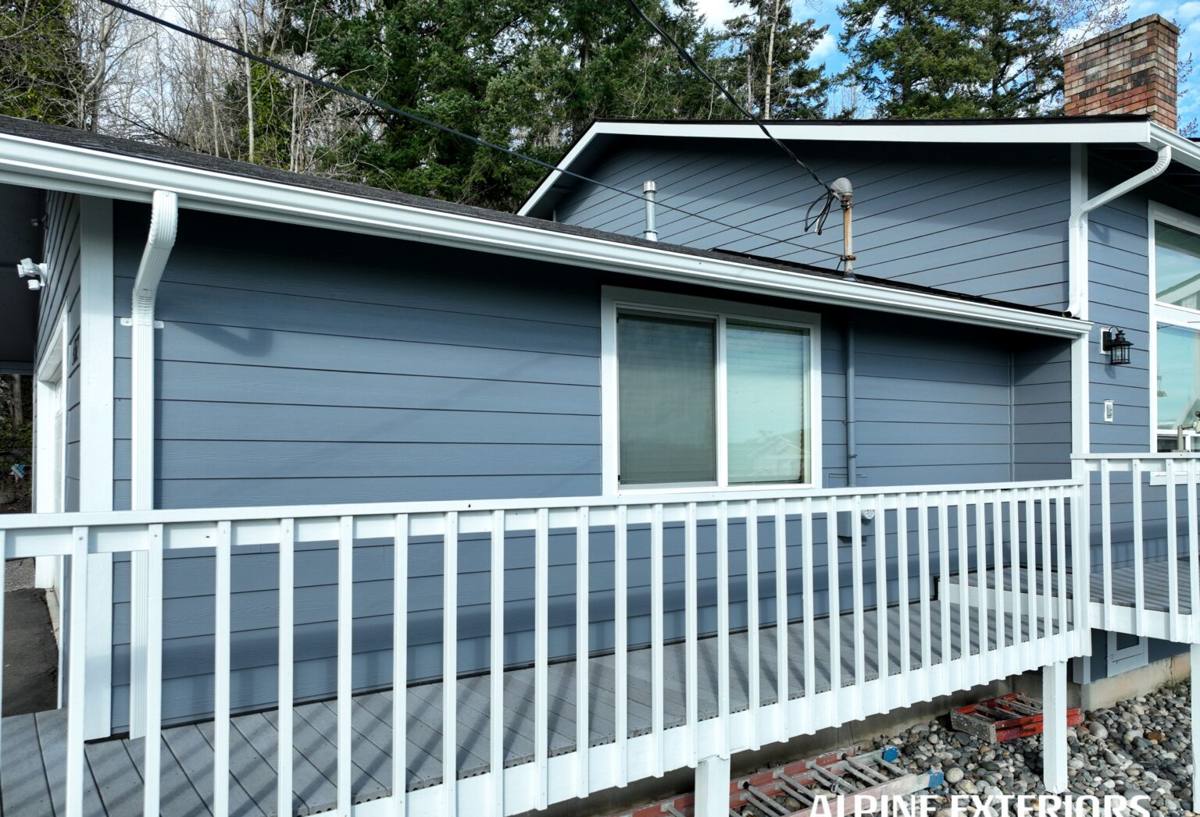
Why Ferndale Roofs Fail Differently Than Inland Roofs
Salt Air and Metal Fatigue
Salt-laden air corrodes exposed metal faster than it does even a few miles inland. Flashing, fasteners, gutter hardware, and vent caps all take the hit first, usually well before the roofing material itself is due for replacement. A lot of "roof leaks" we get called out for in Ferndale trace back to corroded flashing or fastener heads that have lost their seal, not failed shingles.
Driving Rain and Wind-Driven Water
Rain that comes in sideways off the water finds weaknesses that vertical rain never would. Water gets pushed up under shingle tabs, sideways through poorly lapped flashing, and into any gap around penetrations — vent pipes, skylights, chimneys. A repair that only addresses the spot where water is dripping inside, without checking the upstream path the water actually traveled, tends to come back within a season or two.
Moss and Trapped Moisture
Whatcom County's damp, mild climate is close to ideal for moss growth on roofs that get any shade at all. Moss doesn't just look bad — it holds moisture against the roofing material, lifts shingle edges as it grows, and channels water sideways instead of letting it run off. Left alone, a moss mat can turn a small, dry leak point into a chronic wet spot that damages decking underneath.
What a Correct Roof Repair Actually Involves
A proper repair isn't just patching the spot where a stain showed up on the ceiling. It's a sequence:
- Find the real entry point. Water often travels along rafters or decking before it drips somewhere visible, so the stain and the leak source are frequently not in the same spot.
- Check the surrounding material, not just the failure. If moss or salt corrosion caused the failure, the same conditions have likely started degrading the material around it.
- Address flashing and fasteners, not just shingles. Most leaks near chimneys, vents, and roof-wall intersections are flashing failures, and swapping a shingle without fixing the flashing underneath just delays the same call.
- Check the decking for soft spots. Sustained moisture intrusion can rot the wood underneath; a repair over compromised decking won't hold.
- Reseal and match materials correctly. Mismatched or incompatible materials can create new weak points, especially where old and new roofing meet.
Skipping any of these steps is how a homeowner ends up paying for the same repair twice.
Our Process for Ferndale Roof Repair Calls
| Step | What Happens | Why It Matters |
|---|---|---|
| Inspection | We look at the interior damage, then trace it to the exterior source — checking flashing, fasteners, moss coverage, and material condition | Treats the cause, not just the symptom |
| Written scope | You get a clear explanation of what's failing, what needs repair versus what's just cosmetic, and an honest cost range | No surprise add-ons mid-job |
| Repair | We fix flashing, fasteners, decking, and roofing material as needed, using materials suited to salt air exposure | Addresses the actual failure point, built to hold up in this climate |
| Moss and drainage check | We flag areas prone to moss buildup or poor drainage so you know what to watch | Prevents the same failure from recurring in a different spot |
| Follow-up | We stand behind the work and come back if something isn't right | You're not stuck chasing down whoever showed up that day |
Repair or Replace? Honest Cost Factors
Not every roof issue needs a full replacement, and not every repair is a good long-term value. Here's how we think about it with homeowners:
- Age of the roof: A repair on a roof with several years of life left is usually the right call. A repair on a roof already near the end of its expected lifespan often just delays an inevitable replacement.
- Extent of moss and decking damage: Isolated moss on one slope is manageable. Widespread moss with soft decking underneath often means the damage has spread further than the visible leak suggests.
- Number of prior repairs: A roof that's had several patch jobs in different spots is usually telling you the underlying material is failing broadly, not just in isolated places.
- Salt air exposure: Roofs closer to the water corrode and degrade faster, which can shift the math toward replacement sooner than an inland home of the same age.
- Your timeline and budget: A well-done repair can buy several more years of service life at a fraction of replacement cost — that's a legitimate option, not a compromise, when the roof structure underneath is sound.
We'll tell you honestly which situation you're in. We don't make more money by upselling you into a replacement you don't need, and we're not interested in a repair that we know won't hold.
Why It Matters That We Already Work Ferndale
Roofing crews that don't regularly work this part of Whatcom County sometimes underestimate how fast salt air and moss come back, and price or spec the repair for a drier, inland climate. That shows up later as premature failure. Because we already work in Lynden and the surrounding Whatcom County communities, we know which materials and fastener types hold up near the coast, which roof orientations in this area collect moss fastest, and how driving rain off the water behaves differently than a straight-down rainstorm. That local knowledge changes how we diagnose and repair a roof — it's not an abstraction, it changes what we actually recommend.
We're also not disappearing after the invoice clears. If a repair doesn't hold, or a related issue shows up nearby a year later, you're calling a crew that's still local and still accountable, not chasing down a company that was only in the area for one job.
Signs You Likely Need a Roof Repair Call
- Water stains on interior ceilings or upper walls, especially after a heavy rain event
- Visible moss buildup on any roof slope, particularly shaded, north-facing sections
- Curling, cracked, or missing shingles, or granules collecting in gutters
- Rust streaks or visibly corroded flashing around chimneys, vents, or skylights
- Daylight visible through the roof deck from inside the attic
- Soft or spongy spots when walking the roof (a sign for a professional to check, not a DIY inspection)
- Gutters pulling away from the fascia or showing signs of water backing up under the roof edge
Maintenance That Extends the Life of a Repair
A good repair lasts longer with a little upkeep, especially in a climate that pushes moss and moisture this hard. Keeping gutters clear so water actually drains instead of backing up under shingle edges makes a real difference. Periodic moss treatment on shaded slopes, done before it establishes a thick mat, is far cheaper than dealing with the moisture damage that follows. Trimming back branches that overhang the roof reduces both shade — which slows moss — and debris buildup that traps moisture against the surface. None of this is complicated, but it's easy to skip, and skipping it is usually what turns a small repair into a bigger one down the line.
Get a Free, No-Pressure Estimate
If you're dealing with a leak, visible moss, or damaged flashing on a Ferndale roof, we're happy to take a look and give you a straight answer about what's going on and what it'll take to fix it. There's no obligation and no pressure — just an honest assessment from a crew that already works this area. Fill out the form below to get started.