 Lynden Siding
 Asphalt Shingle Roofing Built for the Nooksack Area
Nooksack sits close enough to the Salish Sea to catch salt-laden air, far enough inland to see real winter cold snaps, and squarely in the path of the long, wet Whatcom County shoulder seasons that keep roofs damp for weeks at a time. That combination is hard on asphalt shingles that weren't installed with this climate in mind. We install and repair asphalt shingle roofing for homes in and around Nooksack, and we build every roof around what actually happens here: driving rain that hits shingles sideways, moss that colonizes anything shaded or north-facing, and salt air that speeds up the breakdown of cheap flashing and fasteners.
This page covers what a correctly built asphalt shingle roof needs to hold up in Nooksack, how we approach the job from tear-off to final inspection, and what to look for if you're comparing bids from local contractors.
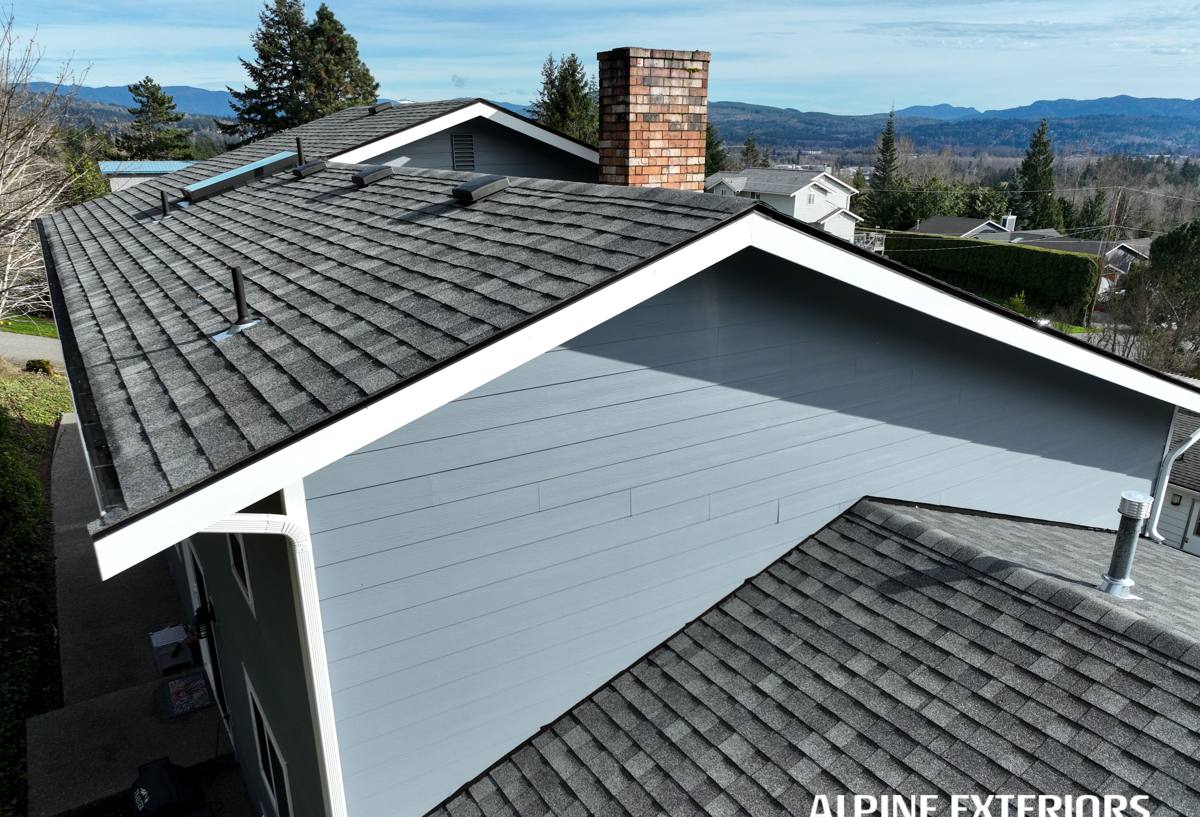
Why Nooksack's Climate Is Hard on Shingle Roofs
Salt Air and Metal Fatigue
Homes closer to the water deal with airborne salt that accelerates corrosion on exposed metal — flashing, drip edge, nail heads, and vent boots. A shingle roof is only as good as its metal work; once flashing starts to rust and pit, water finds a way underneath the shingles even if the shingles themselves look fine.
Driving Rain
Whatcom County storms don't always fall straight down. Wind-driven rain pushes water up under shingle tabs and around penetrations — plumbing vents, chimneys, skylights — that a fair-weather installation might get away with. Underlayment quality and proper shingle overlap matter more here than in drier climates.
Moss and Sustained Moisture
Shaded roof sections and north-facing slopes in this area stay damp for long stretches, especially from late fall through spring. Moss doesn't just look bad — its root structure lifts shingle edges, holds water against the roof deck, and shortens the life of the shingle mat itself. A roof that isn't detailed to shed water quickly, and isn't maintained to keep moss in check, ages faster than the shingle warranty suggests it should.
What a Correct Asphalt Shingle Job Includes
A shingle roof is a system, not a single product. Skipping any one layer is where most premature failures start.
- Tear-off and deck inspection — old roofing removed down to the deck so soft, rotted, or delaminated sheathing gets found and replaced, not covered up
- Ice-and-water shield at vulnerable areas — eaves, valleys, and around penetrations, where wind-driven rain and ice damming are most likely to force water backward
- Synthetic underlayment across the full deck — a water-resistant layer that backs up the shingles if wind or moss lifts a tab
- Corrosion-resistant flashing — proper step flashing at walls and chimneys, and new drip edge at eaves and rakes, sized and fastened for a salt-air environment
- Correct nailing pattern — hand- or gun-nailed to the shingle manufacturer's spec, not just "enough to hold," since under-nailed shingles are the most common cause of wind lift
- Balanced ventilation — intake at the soffits and exhaust at the ridge, so the attic can dry out between wet spells instead of trapping moisture against the deck
- Ridge cap and final detailing — the small parts that keep water moving off the roof instead of pooling or wicking sideways
Shingle Choice: What We Recommend and Why
Standard three-tab shingles are the least expensive option, but their thinner mat and simpler nailing zone give them the least margin for error in a wind-driven-rain climate. For Nooksack homes we typically recommend architectural (laminated) shingles: they're heavier, have a wider nailing target, and their layered design sheds water and resists wind uplift better. The tradeoff is cost — architectural shingles run higher than three-tab — but the difference in wind rating and expected service life is real, not cosmetic. We'll walk you through both if budget is a factor, and we're upfront when a lower-tier option isn't a good fit for a particular roof's exposure.
| Factor | 3-Tab Shingle | Architectural Shingle |
|---|---|---|
| Typical wind rating | Lower | Higher |
| Mat thickness / weight | Thinner | Heavier, layered |
| Moss resistance options | Limited | Available with algae-resistant granules |
| Upfront cost | Lower | Higher |
| Fit for shaded/damp slopes | Marginal | Better long-term performance |
Moss: Prevention Beats Removal
Once moss is established on a roof, scraping it off can do more damage than leaving it, since the root mat is often already gripping the granule surface. The better approach is preventing heavy growth in the first place:
- Algae-and-moss-resistant shingles (copper- or zinc-infused granules) on shaded or north-facing slopes
- Zinc or copper strips near the ridge on roofs with a history of moss, so rain carries trace metal down the slope
- Keeping gutters and valleys clear so water doesn't sit against the shingle edge
- Trimming back overhanging branches that keep sections of roof shaded and damp longer than the rest
None of this replaces a correctly installed roof — it's maintenance on top of a good installation, not a substitute for one.
Repair, Recover, or Full Replacement?
Not every roof problem in Nooksack needs a full tear-off. We look at three things before recommending a scope of work: the age and condition of the shingles themselves, the condition of the deck underneath (which you generally can't see without removing shingles), and how much of the roof is actually affected.
When Repair Makes Sense
Localized wind damage, a failed pipe boot, or isolated flashing failure on an otherwise sound, reasonably young roof is usually a repair — patch the affected section with matching shingles and correct the underlying flashing or fastening issue.
When Full Replacement Makes Sense
Widespread granule loss, shingles that are curling or cracking across multiple slopes, a roof past its expected service life, or any sign of deck rot found during inspection point toward full replacement. Covering a failing deck with new shingles just hides the problem until it's worse and more expensive.
Our Process on a Nooksack Roofing Project
- On-site inspection — we walk the roof (or use a drone when pitch or access makes that unsafe) and check the attic from inside, since moisture problems often show up there first
- Written estimate — a clear scope covering tear-off, underlayment, flashing, shingle type, and ventilation, with pricing broken out so you know what you're paying for
- Scheduling around weather — asphalt shingle roofs need a dry deck to install correctly, so we plan around Whatcom County's wetter stretches rather than rushing a job onto a damp deck
- Tear-off and deck check — old material off, deck inspected and any bad sheathing replaced before anything new goes down
- Installation — underlayment, flashing, shingles, and ventilation installed to manufacturer spec, not shortcut spec
- Final walkthrough — we cover what was done, what to expect from the new roof, and any maintenance (like moss treatment) worth doing going forward
What This Runs, in Broad Terms
Every roof is different — square footage, pitch, number of penetrations, layers of old roofing to remove, and deck condition all move the price. As a general guide, a straightforward architectural shingle replacement on an average Nooksack-area home tends to land in the moderate five-figure range for a full tear-off and reroof; simple repairs are far less. We won't give you a real number without seeing the roof, but we also won't pad an estimate with vague line items — every quote spells out what's included.
Questions Worth Asking Any Roofer Before You Sign
- Is the bid for a full tear-off, or is it a layover on top of existing shingles?
- What underlayment and ice-and-water shield are included, and where will they be installed?
- Is flashing being replaced or reused?
- What's the plan for attic ventilation — is it being addressed at all?
- What's the manufacturer's wind and material warranty, and what's the workmanship warranty separate from that?
- Are they licensed and insured to work in Washington, and can they show proof?
Why a Crew That Already Works Nooksack Is Worth Having
A roofing crew that regularly works Whatcom County has already seen how these roofs actually fail — which slopes hold moss, which flashing details let water in during a sideways rainstorm, which shingle lines hold up near the salt air corridor and which don't. That's not something you get from a national roofing outfit passing through on a storm-chasing route. We're local, we're accountable to the same community we work in, and if something comes up after the job's done, we're not hard to find.
If you're weighing a repair against a full replacement, or just want an honest read on what your roof needs, we're happy to take a look. Use the form below to request a free, no-pressure estimate — we'll tell you what we actually see, not just what sells a bigger job.