 Lynden Siding
 Metal Roofing Built for Custer's Weather, Not Just Any Weather
Custer sits close enough to the water that salt air is a real factor in how a roof ages, and it sits under the same wet, gray Whatcom County sky that dumps rain on Lynden for months at a stretch. A metal roof installed here has to handle three things at once: airborne salt that accelerates corrosion on the wrong metals and fasteners, driving rain that finds every weak seam and lap, and a moss season that runs long enough to do real damage if the roof wasn't detailed to shed water and debris cleanly. A metal roof that would be perfectly fine in a dry inland climate can underperform in Custer if it wasn't specified and installed with this exact combination of conditions in mind.
That's the difference between a metal roof that looks right on install day and one that's still performing correctly in fifteen years. The metal, the fasteners, the underlayment, and the detailing all have to be chosen for this specific environment.
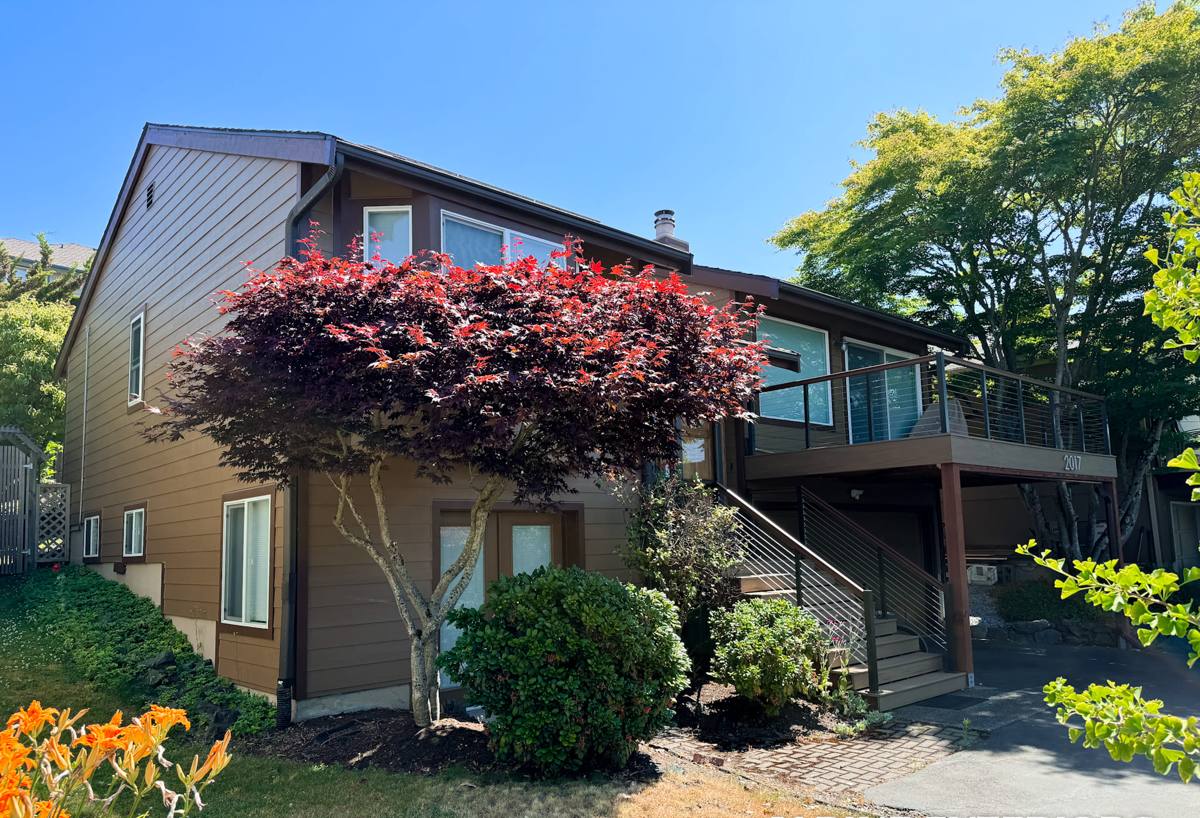
What Custer's Climate Actually Does to a Roof
Salt Air and Corrosion
Homes near the coast and the bay deal with airborne salt that settles on every exterior surface, including the roof. Salt accelerates corrosion on unprotected steel, on the wrong grade of fasteners, and on cut edges that weren't sealed properly. It's a slow process — you won't see it in year one — but it shows up as rust streaking, fastener failure, and premature finish breakdown on roofs that used the wrong materials or skipped proper edge treatment.
Driving Rain
Whatcom County storms don't always come straight down. Wind-driven rain pushes water sideways under laps, around penetrations, and into any gap in the flashing. A metal roof is only as water-tight as its weakest seam, valley, or penetration detail — the field panels themselves are rarely the problem.
Moss and Organic Growth
Long wet seasons and shaded roof sections give moss plenty of time to establish. On metal roofing, moss is less likely to take root directly on the panel than it is on shingles, but it can still build up in valleys, around chimneys, and at any spot where debris collects and holds moisture against the metal. Left alone, that trapped moisture is exactly the kind of long-term contact that undermines a finish and, over time, a fastener.
What a Correct Metal Roof Job Looks Like Here
A metal roofing job that's built for Custer's conditions gets several things right that a rushed or generic install often skips:
- Fasteners and flashing rated for coastal/marine exposure, not standard-grade hardware that corrodes faster near salt air
- A quality synthetic or self-adhered underlayment as a true second line of defense, not a bare-minimum layer
- Properly lapped and sealed seams, valleys, and penetrations — the details that actually stop wind-driven rain
- Panel and fastener spacing set to the manufacturer's specifications for our wind and rain exposure, not a generic install pattern
- Clean, sealed cut edges so bare steel isn't exposed to moisture and salt air
- Attention to roof sections that stay shaded or damp longest, where moss and debris tend to collect
Skipping any one of these doesn't usually cause an obvious problem right away. It shows up years later as a leak at a valley, a fastener that's rusted and backed out, or a panel edge that's started to corrode from underneath.
Panel Types and What They're Suited For
Not every metal roofing product performs the same way in a wet, salt-exposed climate. Part of doing this job right is being honest about which systems make sense for a given roof and budget, and which ones carry trade-offs worth knowing up front.
| Panel Type | Typical Use | Coastal/Wet-Climate Notes |
|---|---|---|
| Standing seam steel | Full roof replacement, higher-end homes | Concealed fasteners reduce penetration points; strong choice for driving rain and long-term corrosion resistance when properly coated |
| Exposed-fastener panels | Budget-conscious full roofs, outbuildings | Lower upfront cost, but exposed fasteners are the first thing to show wear near salt air — needs regular fastener inspection |
| Metal shingles/shakes | Homes wanting a traditional look with metal durability | More seams and laps than standing seam, so installation quality on overlaps matters even more here |
| Aluminum panels | Homes closest to the water or with the highest salt exposure | Naturally more corrosion-resistant than uncoated steel; worth discussing if your property is right on the water |
We'll walk through which option fits your home, your budget, and how close you are to the water — there's rarely one "right" answer, but there is usually a best fit.
Why Concealed Fasteners Matter More Here Than Most Places
Standing seam metal roofing uses hidden clips instead of exposed screws through the panel face. In a climate like Custer's, that's not just a cosmetic upgrade. Every exposed fastener is a potential entry point for water and a spot where the coating can wear through and expose bare metal to salt air. Fewer penetrations means fewer long-term maintenance items and fewer places for driving rain to find a way in. It costs more upfront than exposed-fastener systems, and we'll always give you the honest cost comparison rather than push one system for its own sake — but for homes with real coastal exposure, it's worth understanding why it's often the better long-term choice.
Our Process for Custer Homes
1. On-Site Assessment
We look at your existing roof deck, current flashing conditions, ventilation, and how exposed the home is to wind, rain, and salt air based on its position. This tells us what underlayment, fastener grade, and panel system actually make sense.
2. Straightforward Estimate
You get a clear breakdown of the panel system, underlayment, flashing, and labor — no vague allowances that turn into surprise costs later.
3. Deck Prep and Underlayment
Any deck issues get addressed before panels go on. Underlayment goes down as a real weather barrier, not an afterthought, with extra attention at valleys and eaves where water concentrates.
4. Panel Installation
Panels, seams, and fasteners are installed to manufacturer spec for our wind and rain exposure, with cut edges sealed and flashing detailed at every penetration and transition.
5. Final Walkthrough
We walk the roof with you, cover basic maintenance (especially around moss and debris in valleys), and make sure you know what a well-installed metal roof should look like going forward.
Cost Factors for Metal Roofing in Custer
| Factor | Why It Affects Cost |
|---|---|
| Panel system chosen | Standing seam with concealed fasteners costs more than exposed-fastener panels but reduces long-term maintenance |
| Roof complexity | More valleys, dormers, and penetrations mean more flashing and labor time |
| Deck condition | Existing deck repairs or full tear-off vs. install over sound decking changes the scope |
| Underlayment grade | A premium synthetic or self-adhered underlayment costs more but matters in a high-rain climate |
| Coastal-grade hardware | Marine-rated fasteners and flashing cost more than standard grade but resist salt corrosion far longer |
Broadly, metal roofing costs more upfront than asphalt shingles, but it's a long-lifespan investment — and in a climate that's hard on roofing materials, getting the coastal-grade details right the first time is what actually protects that investment.
Maintenance: What Custer Homeowners Should Actually Do
- Clear debris and moss buildup from valleys and low-slope sections once or twice a year, especially after fall leaf drop
- Do a visual check after major windstorms for lifted flashing or debris damage
- Keep gutters clear so water isn't backing up against roof edges
- Have fasteners and seams inspected periodically if your roof uses an exposed-fastener system
- Trim back overhanging branches that keep sections of the roof shaded and damp longer than the rest
None of this is heavy maintenance — metal roofing is genuinely low-upkeep compared to most alternatives. But "low-maintenance" isn't "no-maintenance," especially in a climate that stays wet as long as this one does.
Why a Crew That Already Works Custer and Lynden Matters
A metal roof installed by someone unfamiliar with this specific climate can still fail early — not because metal roofing is a bad product, but because the fastener grade, underlayment, and flashing details that work fine in a drier region aren't sufficient here. Working regularly in Custer and across Lynden and Whatcom County means we're not guessing at how much rain exposure a given roof line gets or how long moss season really runs here. We've seen what holds up and what doesn't, and we build every roof to the standard this climate actually requires — not a generic national spec.
If you're weighing metal roofing for a home in Custer or anywhere around Lynden, we're happy to take a look and give you a straightforward, no-pressure estimate — what it would take, what it would cost, and whether it's the right fit for your roof.