 Lynden Siding
 Why Bellingham Roofs Face a Tougher Climate Than Most
Bellingham sits close enough to the water that salt-laden air is a daily fact of life for anything on a roofline, and Whatcom County's weather pattern doesn't do the roof any favors either. Long stretches of driving rain off the Strait, combined with mild temperatures and heavy shade in a lot of neighborhoods, add up to one of the more demanding moss and moisture environments in Western Washington. A roofing material that works fine in a drier inland climate can struggle here, and that's exactly why metal roofing has become a popular option for homeowners who are tired of replacing shingles every 15-20 years.
This page focuses specifically on metal roofing for homes in and around Bellingham — what the local climate demands from the system, what a correctly installed metal roof actually involves, and what our process looks like from first estimate to final walk-through.
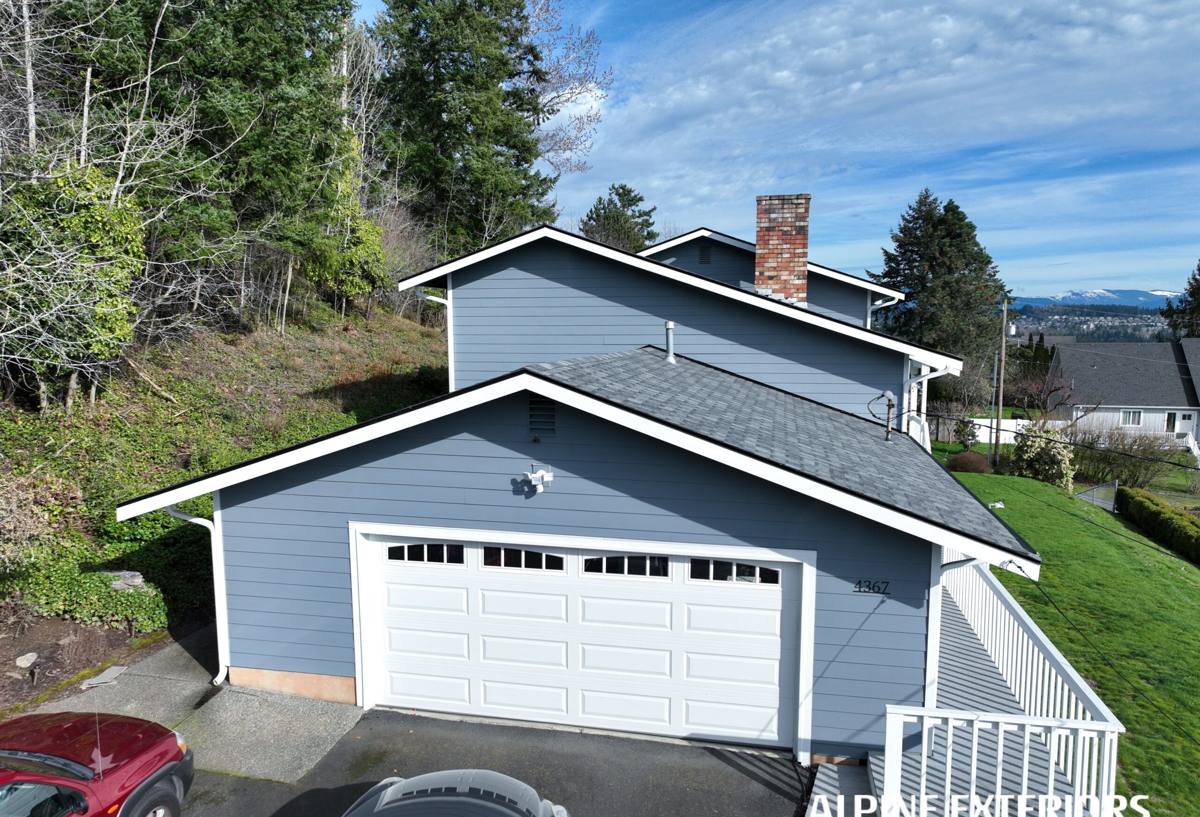
What Salt Air, Rain, and Moss Actually Do to a Roof
Understanding the damage mechanism matters, because it changes what "good installation" means in this specific area.
Salt Air
Airborne salt accelerates corrosion on any exposed metal — fasteners, flashing, gutters, and the roofing material itself if it isn't rated for coastal exposure. Bare or poorly coated steel components can start showing rust well before their expected lifespan in a salt-air environment. This is a coating and fastener selection issue as much as it is a material issue.
Driving Rain
Bellingham's rain doesn't just fall straight down — wind-driven rain pushes water sideways and upward under laps, seams, and flashing that would stay dry in a calmer climate. Underlayment quality, seam design, and flashing detail work carry more weight here than they would in a low-wind, low-rain region.
Moss
Shade, moisture, and mild temperatures are exactly what moss wants. On asphalt shingles, moss roots into the granule surface and lifts the shingle edges, trapping moisture underneath. On a properly installed metal roof, moss has almost nothing to grip — but valleys, low-slope sections, and areas where debris collects can still grow moss and algae if they're not designed to shed water and drain properly.
Why Metal Roofing Performs Well Here — With Honest Trade-Offs
Metal roofing is a strong fit for this climate, but it isn't automatically maintenance-free, and it isn't the right call for every budget or every roof. We'd rather explain the trade-offs upfront than oversell it.
- Moss resistance: the smooth, hard surface gives moss and moss spores very little to anchor to compared with shingles.
- Water shedding: steep-profile panels move driving rain off the roof quickly instead of letting it sit and work its way under laps.
- Longevity: a correctly installed and coated metal roof can outlast several shingle roof cycles, which matters if you don't want to redo this project again in 15 years.
- Trade-off — upfront cost: metal roofing costs more per square than asphalt shingles, and that's a real budget conversation, not a footnote.
- Trade-off — installation sensitivity: metal roofing rewards a crew that does it regularly and punishes one that doesn't. Panel alignment, fastener torque, and expansion allowance all matter more than they do with shingles.
- Trade-off — noise and appearance expectations: with proper underlayment and decking, rain noise is not the issue people assume it is, but it's a fair question to ask about before you commit.
Choosing the Right Metal Roofing System
Not all metal roofing is the same product wearing different colors. The system type changes how it performs against wind-driven rain and salt exposure, and it changes the price.
| System Type | How It Sheds Water | Best Fit For | Relative Cost |
|---|---|---|---|
| Standing seam | Concealed fasteners, raised interlocking seams — the strongest defense against wind-driven rain | Full re-roofs, exposed or higher-wind sites, homeowners planning to stay long-term | Highest |
| Exposed-fastener panel | Fasteners penetrate the panel face; relies on gaskets and maintenance to stay sealed | Outbuildings, budget-conscious projects, lower-exposure roof sections | Moderate |
| Stone-coated steel / metal shingle | Interlocking shingle-style panels with a granulated coating | Homeowners who want a traditional shingle look with metal's durability | Moderate to high |
For most Bellingham homes with real salt and rain exposure, we lean toward standing seam or a quality stone-coated system over exposed-fastener panels, simply because concealed fasteners and interlocking seams hold up better to years of wind-driven rain without relying on gasket maintenance.
What a Correct Installation Actually Involves
The panels themselves get most of the attention, but the parts you don't see are what determine whether the roof performs for 40+ years or starts leaking in year eight.
Underlayment
In a climate with this much sideways rain, we don't treat underlayment as an afterthought. A high-quality synthetic or self-adhered underlayment underneath the panels is the backup line of defense if wind ever pushes water past a seam.
Fasteners and Flashing
Every exposed fastener and flashing piece is a potential corrosion point in salt air. We match fastener and flashing material to the panel system so galvanic corrosion — where two dissimilar metals react against each other — isn't quietly eating away at the roof from the inside.
Ventilation
Metal roofs need proper attic and roof-deck ventilation just as much as shingle roofs do. Trapped moisture under a metal panel can condense and cause deck rot even if the roof surface itself never leaks — this is a detail that's easy to skip and expensive to fix later.
Valleys and Low-Slope Transitions
These are the spots most likely to collect debris, hold moisture, and eventually grow moss even on a metal roof. Correct valley flashing and panel overlap are what keep these areas draining instead of pooling.
Panel Expansion
Metal expands and contracts with temperature swings. Panels and fasteners need to be installed to allow for that movement — installed too rigidly, panels can oil-can, buckle, or eventually work fasteners loose.
Our Process on a Bellingham Metal Roofing Project
- On-site assessment: we look at the existing roof deck, current moss and moisture damage, ventilation, and roof exposure to wind and salt air before recommending a system.
- System recommendation: we walk through standing seam versus other options honestly, including cost and maintenance trade-offs, so the decision fits your budget and how long you plan to stay in the home.
- Deck prep: any rot, soft spots, or inadequate ventilation gets addressed before panels go on — installing a metal roof over a compromised deck just hides the problem.
- Underlayment and flashing install: the water-shedding details get built in first, not treated as trim work at the end.
- Panel installation: panels are set with correct fastener spacing, matched hardware, and allowance for thermal movement.
- Final walk-through: we go over the completed roof with you, including what routine maintenance actually looks like for your specific system.
Ongoing Maintenance in This Climate
A metal roof needs far less upkeep than a shingle roof, but "far less" isn't "none" — especially with Bellingham's moss pressure and salt exposure.
- Clear gutters and valleys of needles, leaves, and debris a couple of times a year so water keeps moving instead of sitting against panel edges.
- Check exposed-fastener systems periodically for loosened screws or worn gaskets — this is one of the reasons we lean toward concealed-fastener systems for coastal exposure.
- Look at flashing around chimneys, vents, and valleys after major storms, since these are the highest-stress points on any roof.
- Trim overhanging branches where practical to cut down on shade and debris buildup, which are the two biggest drivers of moss growth.
- Rinse visible salt residue off the roof surface and gutters if the home is closer to open water, to slow surface corrosion on fasteners and trim.
What Drives the Cost of a Metal Roof
Every roof is different, so we won't quote a number without seeing the job, but these are the main factors that move the price up or down.
| Factor | Effect on Cost |
|---|---|
| Panel system (exposed-fastener vs. standing seam) | Standing seam runs higher due to labor and material |
| Roof pitch and complexity | More valleys, dormers, and cut angles increase labor time and flashing work |
| Deck condition | Rot or soft decking found during tear-off adds repair cost before panels go on |
| Ventilation upgrades | Adding or correcting attic ventilation is a smart add-on, not always included in base pricing |
| Tear-off vs. overlay | Removing old roofing adds cost but lets us properly inspect and prep the deck |
Why It Matters to Hire a Crew That Already Works in Bellingham
Metal roofing done wrong doesn't usually fail on day one — it fails quietly, three, five, or ten years in, once a fastener corrodes or a seam that was never quite sealed right finally lets water through. A crew that regularly works Whatcom County has already seen how local salt exposure, moss patterns, and wind-driven rain play out on real roofs, not just in a manual. That local track record shows up in the small decisions: which fastener and flashing metals to pair together, how much ventilation a shaded roof actually needs, and where valleys tend to collect debris in this specific area. It's also easier to get a straight answer about maintenance and warranty coverage from a contractor who's still going to be around the corner in a few years.
If you're weighing metal roofing for a Bellingham home and want a straight answer about what it would take and what it would cost, we're glad to come take a look. There's no pressure and no obligation — just an honest assessment. Use the form below to request a free estimate.