 Lynden Siding
 Why Maple Falls Roofs Take a Different Kind of Beating
Maple Falls sits up in the Whatcom County foothills, wrapped in dense evergreen cover on the way toward Mount Baker. That setting is beautiful, but it changes what a roof has to survive compared to a roof out on the open lowlands. Instead of long stretches of direct sun and steady wind, Maple Falls roofs deal with shade that never fully burns off, storm winds that funnel and gust unpredictably through the trees, and rain that lingers on the roof deck long after a storm has technically passed. Add in Whatcom County's long, wet stretch from fall through spring, and you get a roof that rarely gets a real chance to dry out between storms.
That combination is exactly what drives moss growth, and moss season here isn't a minor cosmetic issue — it's one of the biggest long-term threats to a roof's lifespan. Meanwhile, on the coastal side of the county, homes deal more with salt-laden air working into fasteners and flashing. Maple Falls doesn't get that salt exposure directly, but the tradeoff is heavier moisture load, more debris from overhanging trees, and driving rain that finds its way under shingles that a drier roof would shrug off. Understanding which of these factors actually applies to your property is the first step in diagnosing storm damage correctly instead of guessing.
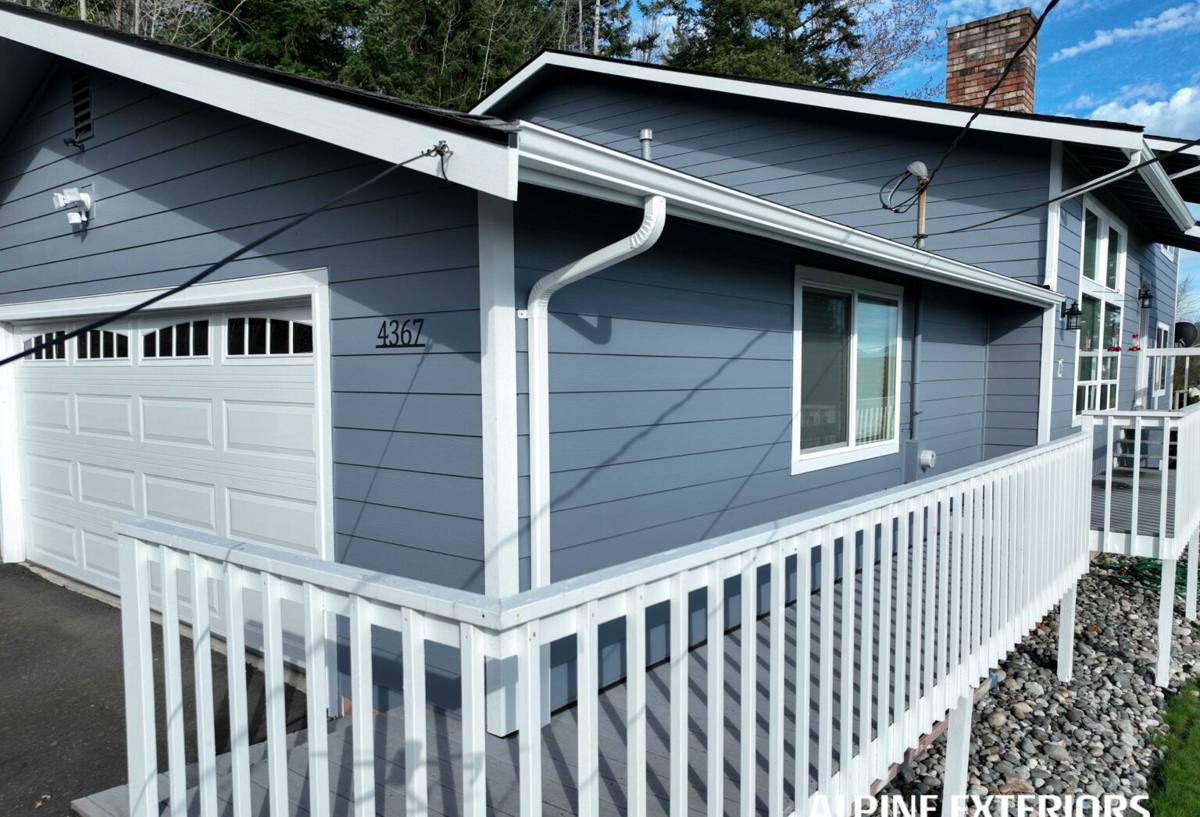
What Storm Damage Actually Looks Like on a Maple Falls Roof
Not all storm damage announces itself with a missing shingle you can spot from the driveway. In our experience working roofs in this part of the county, the damage that causes the most trouble is often the kind that's easy to miss from the ground.
- Wind-lifted or creased shingles that look intact from a distance but have broken their seal and will leak the next time rain drives at an angle
- Impact damage from falling branches or debris — punctures, cracked shingles, or dented flashing that isn't always visible without getting on the roof
- Moss colonies that have worked their way under shingle tabs, lifting them and holding moisture against the decking
- Gutter and downspout damage that causes water to back up under the roof edge instead of draining away
- Flashing that's been pried loose around chimneys, skylights, or roof valleys during high wind
- Soft or spongy decking discovered only after a leak has already reached the attic or ceiling below
Because Maple Falls sees more shaded, moisture-heavy conditions than open lowland roofs, damage here tends to progress from cosmetic to structural faster if it isn't caught. A lifted shingle that would take a season or two to become a real problem on a dry, sun-exposed roof can soak decking and start rot in a fraction of that time under heavy tree cover.
Why Ignoring Storm Damage Costs More Later
The instinct after a storm is often to wait and see — the roof isn't actively dripping into a bucket, so it can't be that bad. The problem is that roof leaks rarely start where they end up showing. Water that gets under a shingle can travel along the decking or down a rafter before it ever appears as a stain on a ceiling, which means by the time you see evidence indoors, the damage has usually been developing for a while.
In a wet, shaded environment like Maple Falls, that delay matters more than it would somewhere drier. Trapped moisture under lifted shingles or moss growth doesn't get a real chance to dry between rain events, so it keeps working on the decking, the underlayment, and eventually the framing underneath. What starts as a repair measured in a couple of hours can turn into a decking replacement, insulation removal, and interior drywall work if it sits through even one more wet season.
What a Correct Storm Damage Repair Actually Involves
A proper storm repair is more than swapping out the shingles that are obviously missing. Here's what we treat as non-negotiable on every job:
A Full Inspection, Not a Drive-By
We get on the roof and check the full field, not just the area near the reported leak. Wind and impact damage is often scattered, and a storm strong enough to cause one problem area usually caused smaller issues elsewhere too.
Decking Check Before Anything Gets Covered
Shingles are only as good as what's underneath them. If decking has softened from trapped moisture, it gets addressed before new shingles go down — covering a soft deck with new material just hides the problem for the next storm.
Matching Materials, Not Just Similar Ones
When we're repairing a section rather than a full roof, we work to match the existing shingle profile, color, and manufacturer as closely as the market allows, so the repair blends in rather than creating an obvious patch.
Flashing and Ventilation, Not Just Shingles
A lot of leaks that get blamed on shingles are actually flashing failures around valleys, chimneys, or vents. We check and reseal or replace flashing as part of the repair, and we make sure attic ventilation is working correctly — poor ventilation is a major contributor to the kind of trapped moisture that accelerates moss growth and decking rot on shaded properties like the ones common around Maple Falls.
Our Process for Maple Falls Storm Repairs
- Contact us with what you're seeing — a missing shingle, a ceiling stain, visible debris on the roof — and we'll talk through timing based on severity and weather.
- We inspect the roof in person, document what we find, and walk you through the actual cause of the damage, not just where it happens to be showing up.
- If the roof needs temporary protection before permanent repair — tarping an exposed area, for example — we handle that first to stop ongoing water intrusion.
- We provide a clear, written scope of the repair, including any decking or flashing work that's needed, before starting.
- Repair work is completed, and we check the surrounding roof one more time before calling the job done.
Repair or Replace? What Actually Drives That Decision
Not every storm-damaged roof needs a full replacement, and not every roof can be reasonably patched. The right call depends on the roof's age, how widespread the damage is, and how much moisture damage has already built up underneath the surface.
| Factor | Leans Toward Repair | Leans Toward Replacement |
|---|---|---|
| Roof age | Under 10-12 years, materials still in good shape overall | Nearing or past the expected lifespan for the material |
| Extent of damage | Isolated to one section or slope | Scattered across multiple slopes or widespread moss undercutting |
| Decking condition | Solid, no soft spots found during inspection | Soft or rotted decking discovered in more than one area |
| Material availability | Matching shingle still available for a clean blend | Discontinued material forces a mismatch on any repair |
| Storm history | First significant damage in the roof's life | Repeated storm damage on an aging roof, signaling ongoing vulnerability |
We'll give you an honest read on where your roof falls on that spectrum instead of defaulting to the more expensive option. A well-executed repair on a roof with good bones can buy you many more years of service before replacement is worth it.
Insurance Considerations Worth Understanding
Many storm damage repairs in Whatcom County end up going through a homeowner's insurance claim, since wind and impact damage are typically covered perils. We're glad to document damage clearly with photos and a written scope you can submit to your carrier, and to answer an adjuster's questions about what we found and why it needs to be addressed. What we won't do is inflate a scope of work or claim damage that isn't actually there to help pad a claim — an honest, well-documented repair estimate holds up better with an insurer than an exaggerated one, and it protects you if there's ever a follow-up inspection.
After a Storm: A Practical Homeowner Checklist
- Walk the yard and check for shingle granules, pieces of flashing, or shingle fragments on the ground — a sign something came off the roof
- Look at gutters and downspouts for debris buildup or visible sagging away from the fascia
- Check ceilings and upper closets for new stains, soft spots, or a musty smell
- Note any branches that came down near or on the roofline, even if they didn't appear to cause visible damage
- Avoid climbing onto the roof yourself, especially on wet or mossy sections — get a professional set of eyes on it instead
- Take photos of anything visible from the ground for your own records before cleanup begins
Why Hiring a Crew That Already Works in Maple Falls Matters
Storm repair work rewards local familiarity. A crew that already knows the tree-heavy, foothill conditions around Maple Falls isn't guessing at why moss keeps coming back or why a roof that looks fine from the street has soft decking underneath — they've already seen that pattern on other roofs nearby. Local crews also tend to respond faster after a widespread storm event, since they're not routing every job through a long drive across the county.
There's also a practical access side to this. Properties in and around Maple Falls often have longer driveways, more tree cover to work around, and less predictable footing than a flat suburban lot. A crew used to working these conditions plans for that instead of being caught off guard by it on the day of the job.
If you're dealing with storm damage on a Maple Falls roof, we're happy to take a look and give you a straight answer on what happened and what it will take to fix it right. Reach out for a free, no-pressure estimate using the form below.