 Lynden Siding
 Siding in Maple Falls Has a Harder Job Than It Looks
Maple Falls sits in the wetter, shadier end of Whatcom County, where tree cover is heavy, rain events are frequent and long, and siding rarely gets a full day of direct sun to dry out. That combination — moisture that lingers, shade that slows evaporation, and a moss season that stretches for months rather than weeks — is harder on exterior cladding than most homeowners realize until they're dealing with soft trim, peeling paint, or siding that's swollen at the seams. This page is specifically about James Hardie fiber cement siding for homes in this area: what the climate demands of it, what a correct installation looks like, and why we've built our whole business around installing only this product.
We don't install vinyl, LP SmartSide, Cemplank, Allura, primed spruce, or cedar. That's not a marketing line — it's a standard we hold because of what we've seen these products do, and not do, in Whatcom County's specific conditions over time. Later on this page we'll explain the reasoning honestly, including where those products get things right. But the short version is that James Hardie is the only siding system we're willing to put our name behind here.
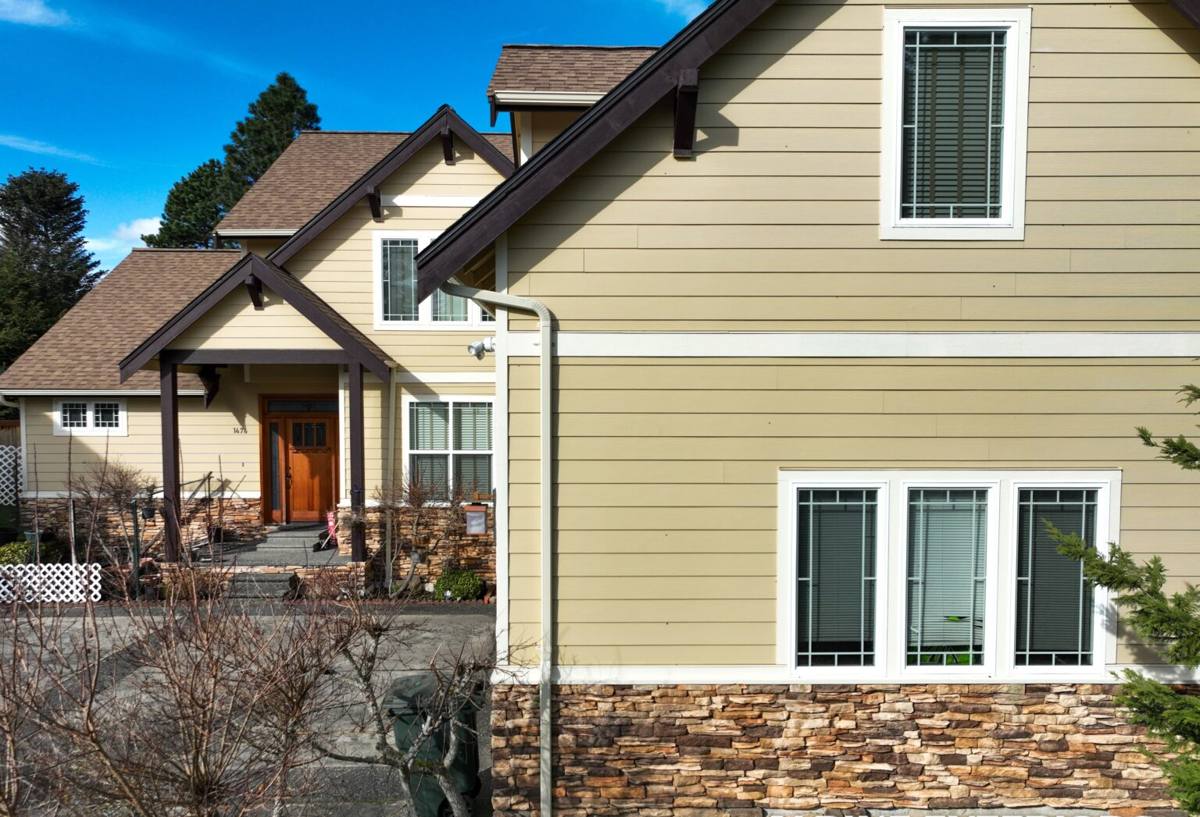
What the Local Climate Actually Does to Siding
Whatcom County's marine-influenced weather brings driving rain that gets pushed sideways by wind, not just straight down. On a heavily treed lot like a lot of Maple Falls properties, that rain lands on siding that's already shaded most of the day, so drying time stretches out for days instead of hours. Moss and algae take hold on any surface that stays damp and shaded long enough — that's a fact of the region, not a flaw specific to one siding brand. The real difference between siding materials is what happens underneath that moss and moisture over years, not whether it shows up at all.
Where Wood and Wood-Composite Products Struggle
Cedar and primed spruce are wood. Wood absorbs moisture at cut ends, fastener holes, and butt joints, and once moisture gets in, it doesn't leave quickly in a shaded, damp environment. Over repeated wet-dry cycles that leads to swelling, cupping, and eventually rot — usually starting at the bottom edges and joints, exactly where splash-back and standing moisture concentrate. LP SmartSide is an engineered wood product with a factory-applied treatment, which helps, but it's still wood at its core: if the factory seal is compromised at a cut edge or a caulk joint fails, moisture can get into the substrate the same way it does with any wood product.
Where Vinyl Falls Short Here
Vinyl doesn't rot, but it has its own problems in this climate. It expands and contracts more than fiber cement across the region's temperature swings, which can lead to buckling or gaps at the panels over time. It also doesn't hold paint, so once the color fades or a homeowner wants to update the look, the only option is full replacement. And because vinyl is thinner and more flexible than fiber cement, it doesn't stand up as well to the pressure washing that's often needed to keep moss and algae under control on a shaded lot.
Why James Hardie Is the Product We Standardize On
James Hardie fiber cement is made from cement, sand, and cellulose fiber — it doesn't rot, it's not a food source for the organisms that cause wood decay, and it's non-combustible. James Hardie also engineers its product formulations by climate zone. Homes in Northern climates like ours, with freeze-thaw cycles and sustained moisture exposure, call for the HZ5 formulation, which is built to handle that combination rather than a generic one-size-fits-all mix. That matters in Maple Falls specifically, where siding can spend long stretches of the fall and winter damp before it ever gets a real drying window.
The ColorPlus factory finish is another piece of this. Instead of field-applied paint, the color is baked on at the factory under controlled conditions, which gives it better adhesion and fade resistance than most site-applied paint jobs can match. That's relevant here because repainting siding on a home tucked under trees, with limited dry days to work with, is its own headache — a factory finish reduces how often homeowners have to deal with that.
To be fair to the products we don't install: cedar has a natural look some homeowners genuinely prefer, and LP SmartSide and vinyl are both less expensive up front. Those are real trade-offs. We just don't think the long-term maintenance burden and moisture risk are worth it in a climate like this one, and we'd rather install one product correctly and stand behind it than offer several and hedge.
What a Correct James Hardie Installation Actually Involves
Fiber cement siding fails prematurely almost exclusively because of installation mistakes, not because the material itself gave out. In a wet, shaded climate those mistakes show up faster than they would somewhere drier. Here's what we hold every job to.
Drainage Plane and Flashing First
Before a single piece of siding goes up, the wall needs a continuous weather-resistant barrier and correctly lapped flashing at every window, door, and roofline intersection. Kick-out flashing where a roofline meets a wall is one of the most commonly skipped details in this trade, and on a shaded, high-moisture lot it's also one of the fastest ways to rot sheathing from the inside out if it's missing.
Clearance and Fastening
James Hardie specifies minimum clearances from grade, roofing, and decks so that splash-back and standing water don't sit against the bottom edge of the siding. It also specifies fastener type, spacing, and how deep they're driven. Overdriven nails crack the board's fiber cement edge and create a moisture entry point; underdriven ones leave the board loose and prone to movement.
Joints, Caulking, and Cut Edges
Every cut end exposes raw fiber cement that isn't factory-sealed. Those cuts need to be primed and sealed on-site, and butt joints need to be treated with the right sealant rather than just butted together and painted over. Skipping this step is invisible on installation day and shows up as a failure point two or three winters later.
Our Process for Maple Falls Projects
- On-site assessment: We look at sun exposure, tree cover, drainage patterns, and the condition of the existing wall assembly before we quote anything.
- Sheathing and moisture check: If the current siding has been trapping moisture, we check the sheathing underneath before covering it back up with new siding.
- Product and profile selection: Lap width, texture, and trim details are chosen to match the home and the HZ5 formulation appropriate for this climate.
- Installation to spec: Flashing, clearances, fastening, and joint treatment are done to James Hardie's published requirements, not shortcuts learned from other materials.
- Final walkthrough: We inspect every joint, corner, and penetration before calling the job finished.
What Drives the Cost of a Siding Project Here
Every home is different, but the factors that move the price on a Maple Falls project are fairly consistent. We'll always give you a firm, itemized quote after seeing the house in person — this table is meant to help you understand what's behind the number, not replace it.
| Factor | Why It Matters |
|---|---|
| Tear-off vs. install over existing | Removing old siding lets us check and repair sheathing, but adds labor and disposal cost |
| Trim and accessory work | Corner boards, fascia, and trim details often need to be replaced or matched alongside the siding |
| Home size and number of stories | More wall area and taller walls both increase labor and equipment needs |
| Site access and tree cover | Dense trees and limited access common on wooded lots can slow staging and scaffolding |
| Moisture or rot repair needed | Any damaged sheathing found during tear-off has to be addressed before new siding goes on |
| Product line and texture | Lap profiles, panel systems, and shingle-style textures carry different material costs |
Keeping Your Siding Performing Long-Term
Fiber cement is low-maintenance compared to wood and more repairable than vinyl, but "low-maintenance" doesn't mean "no maintenance" — especially in a climate that grows moss on nearly anything left damp and shaded long enough.
- Rinse siding annually to remove built-up moss, algae, and organic debris before it gets a foothold
- Keep gutters and downspouts clear so water isn't overflowing directly onto walls
- Trim back vegetation and low branches that keep siding shaded and damp
- Check caulking at joints and trim every year or two and re-seal where it's cracked or pulled away
- Watch for any soft spots at the bottom edge near grade, decks, or roof intersections
- Touch up any exposed cut edges or fastener heads if paint or sealant has worn through
Why It Matters That We Already Work in This Area
A crew that's worked on homes throughout Whatcom County knows what a shaded, wooded lot near Maple Falls typically needs before they even start the assessment — how long a wall stays wet after a storm, where moss tends to build up fastest, and which flashing details get skipped most often on older homes. That experience shows up in the questions we ask before we quote a job and in the details we check before calling an installation finished. It also means we're realistic about scheduling around the region's wet stretches rather than rushing an install between rain events in a way that compromises the work.
If you're weighing a siding replacement or new construction siding for a home in Maple Falls, we're happy to walk the property with you, look at what your walls are dealing with, and give you a straight answer on what James Hardie siding installed correctly would involve and cost. There's no pressure and no obligation — just fill out the form below to schedule a free estimate.