 Lynden Siding
 Custom Decks in Maple Falls: Built for the Foothills, Not Just the Sunny Days
Maple Falls sits up in the Whatcom County foothills, close enough to Mt. Baker that the weather behaves differently than it does down in the valley. Homes here get more tree cover, more shade, and more of the moisture-heavy systems that roll in off the Salish Sea and stall out against the mountains. That combination means a deck built to a generic spec sheet doesn't hold up the way it would in a drier, more open part of the county. We build custom decks specifically for this environment, and that changes real decisions about materials, framing, and drainage before the first board goes down.
A deck in Maple Falls isn't just an outdoor living space — it's a structure that spends half the year wet, shaded, and cool enough that it doesn't dry out between rain events. That's the detail that separates a deck that lasts fifteen-plus years from one that's soft and mossy in five.
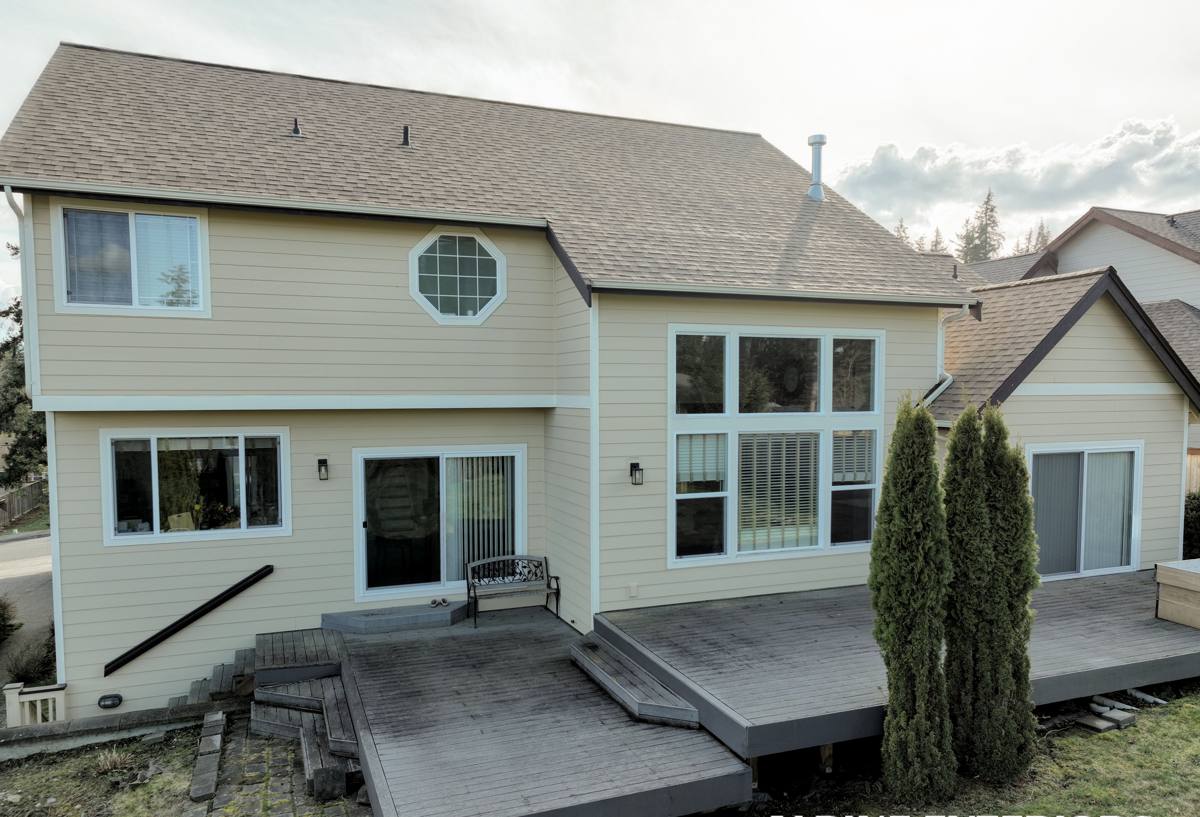
What This Climate Actually Does to a Deck
Driving Rain and Slow Drying
It's not just how much rain falls, it's how long the wood or composite stays wet afterward. Tree canopy and hillside shade around many Maple Falls properties mean decks don't get the same afternoon sun exposure that dries out a deck in an open field down near Lynden proper. Water sits in joints, under railings, and in ledger connections longer, which is exactly the condition that causes rot and fastener corrosion.
Moss and Algae Growth
Long wet seasons plus shade equal moss — on the decking surface, in the gaps between boards, and on north-facing stair treads. Moss holds moisture against the wood, and it makes a deck surface genuinely slick and dangerous, especially on stairs. This is one of the most common complaints we hear from homeowners in this area, and it's almost always a drainage and spacing problem, not just a cleaning problem.
Freeze-Thaw at Elevation
Maple Falls sits higher and colder than the lowland parts of Whatcom County, which means more freeze-thaw cycling through the winter. Footings that aren't poured to the correct frost depth, or fasteners that trap water and then freeze, will work themselves loose over a few seasons. This is a bigger factor here than it is for a deck built closer to the water or down in Lynden itself.
Debris Load
Properties surrounded by fir and cedar generate a steady drop of needles and leaves into deck gaps and under railings. Left alone, that organic debris holds water against the structure and accelerates everything above.
Design Decisions That Matter Here
Before we talk about material, the design itself has to account for the site. A few things we look at on every Maple Falls estimate:
- Board spacing: slightly wider gapping helps water and debris clear faster in a shaded, high-moisture yard.
- Joist protection: a taped or wrapped joist top sheds water instead of soaking into end grain, which is where rot starts first.
- Ledger flashing: the connection to the house is the single most common failure point on any deck, and it's the one place we never cut a corner regardless of budget.
- Footing depth: sized to actual frost depth for the elevation, not a lowland assumption.
- Under-deck drainage: on taller decks with usable space underneath, a drainage system keeps that lower area usable instead of turning it into a permanent mud and moss pocket.
- Sun exposure mapping: we walk the site to see where shade actually falls through the day, since that tells us where moss and slip risk will concentrate.
Choosing the Right Decking Material
There's no single "best" decking material — there's the right material for a specific site, budget, and how much upkeep the homeowner actually wants to do. For a shaded, wet Maple Falls lot, we weigh these differently than we would for a sunny, open yard.
| Material | How It Handles This Climate | Maintenance Reality | Relative Cost |
|---|---|---|---|
| Pressure-treated wood | Holds up structurally but needs consistent sealing to resist moss and moisture staining in shade | Annual cleaning, re-seal every 2-3 years | Lowest upfront |
| Cedar | Naturally rot-resistant and handles moisture well, but still needs finish maintenance in shaded, wet spots | Cleaning and re-oiling/staining every 1-3 years | Mid-range |
| Capped composite | Resists moisture absorption and rot well; still needs regular cleaning to keep moss from gripping the surface texture | Periodic washing, no sealing required | Higher upfront |
| PVC decking | Fully moisture-resistant, best option for shaded, high-humidity sites prone to standing moss | Occasional washing only | Highest upfront |
We'll walk you through actual trade-offs for your specific yard rather than pushing one product line. If a lower-maintenance material fits the budget, we say so. If a wood deck makes more sense because of the look you want and you're willing to do the upkeep, we say that too. Our job is to be honest about what each option asks of you five and ten years down the road, not just what it costs to install.
Our Process for a Maple Falls Deck Build
1. Site Walk and Design
We look at sun exposure, tree cover, slope, and drainage patterns specific to your lot before drawing up a design. This is where most of the long-term durability decisions actually get made.
2. Permitting
Deck permits in Whatcom County depend on size, height, and attachment to the structure. We handle the permit process and make sure footing depth and ledger attachment meet current code for the site conditions, not just the minimum.
3. Footings and Framing
Footings are set to proper frost depth for the elevation. Framing lumber is treated-rated for ground contact where it matters, and every ledger connection is flashed before decking goes down.
4. Decking and Railing Install
Board spacing, fastening pattern, and stair tread selection are chosen with slip resistance and drainage in mind, not just appearance.
5. Final Walkthrough
We go over basic care with you — what to clean, how often, and what to watch for — so the deck actually gets the maintenance it needs to hit its full lifespan.
What a Deck Costs, and What Drives the Number
| Cost Factor | Why It Moves the Price |
|---|---|
| Size and shape | Square footage and number of angles/levels directly affect labor and material |
| Height off grade | Taller decks need deeper footings, more framing, and code-required railings |
| Material choice | Pressure-treated, cedar, composite, and PVC span a wide cost range |
| Site access | Steep or wooded lots common around Maple Falls can add labor time for material staging |
| Drainage features | Under-deck drainage systems add cost but protect the space below on taller builds |
| Railings and stairs | Style, material, and number of stair runs all factor into total price |
Broad ranges for this area run from a modest, ground-level deck in the lower thousands up to a multi-level composite or PVC build well into the tens of thousands. Anyone quoting you a firm number without walking the site is guessing — we give real numbers after we've actually looked at your yard.
Maintenance That Actually Prevents Moss
Most of the "my deck is falling apart" calls we get aren't structural failures — they're years of moss and moisture damage that could have been slowed with basic upkeep. A simple seasonal routine goes a long way in this climate:
- Sweep debris out of board gaps regularly through fall, when needle and leaf drop is heaviest.
- Clean the surface at least once a year with a deck-safe cleaner, more often in heavily shaded spots.
- Check and clear gutters and downspouts that drain near or onto the deck.
- Re-seal wood decking on the schedule the finish manufacturer recommends, not just when it looks dry.
- Inspect ledger flashing and railing posts annually for softness or water staining.
- Keep planters and rugs off the deck surface for long stretches, since they trap moisture underneath.
Why a Local Crew Makes a Real Difference
A contractor who mainly builds decks in dry, open subdivisions elsewhere in the county doesn't automatically know how a shaded, wet Maple Falls lot behaves through a full year. We work Whatcom County regularly, which means we've seen how footings perform through this area's freeze-thaw pattern, how quickly moss takes hold on north-facing stairs here, and what actually needs to change in the design to get ahead of it. That's not something you can fully substitute with a generic spec sheet, no matter how good the materials are.
It also matters for permitting and inspection — knowing the local process means fewer delays and fewer surprises mid-project.
Get a Free, No-Pressure Estimate
If you're planning a new deck or replacing one that's gone soft, mossy, or unsafe, we're happy to walk the site with you and talk through what actually makes sense for your yard's sun, shade, and drainage. Use the form below to request a free estimate — no pressure, no obligation.