 Lynden Siding
 Siding Repair for Laurel Homes Near Lynden
Laurel sits in the stretch of Whatcom County between Lynden and Bellingham, close enough to the water and the foothills that homes here take on a specific kind of weather beating: long stretches of driving rain off the Sound, salt-tinged air on windy days, and a moss season that can run from October clear through April. Siding here doesn't fail from one big storm. It fails slowly, from repeated wetting and drying, shaded north walls that never quite dry out, and small gaps that let water in behind the cladding where nobody sees it until the wall starts to feel soft.
This page is about one job — siding repair — done right, for this one area. We're a Lynden-based crew that already works Laurel driveways and street layouts, so we're not learning your neighborhood's quirks on your dime.
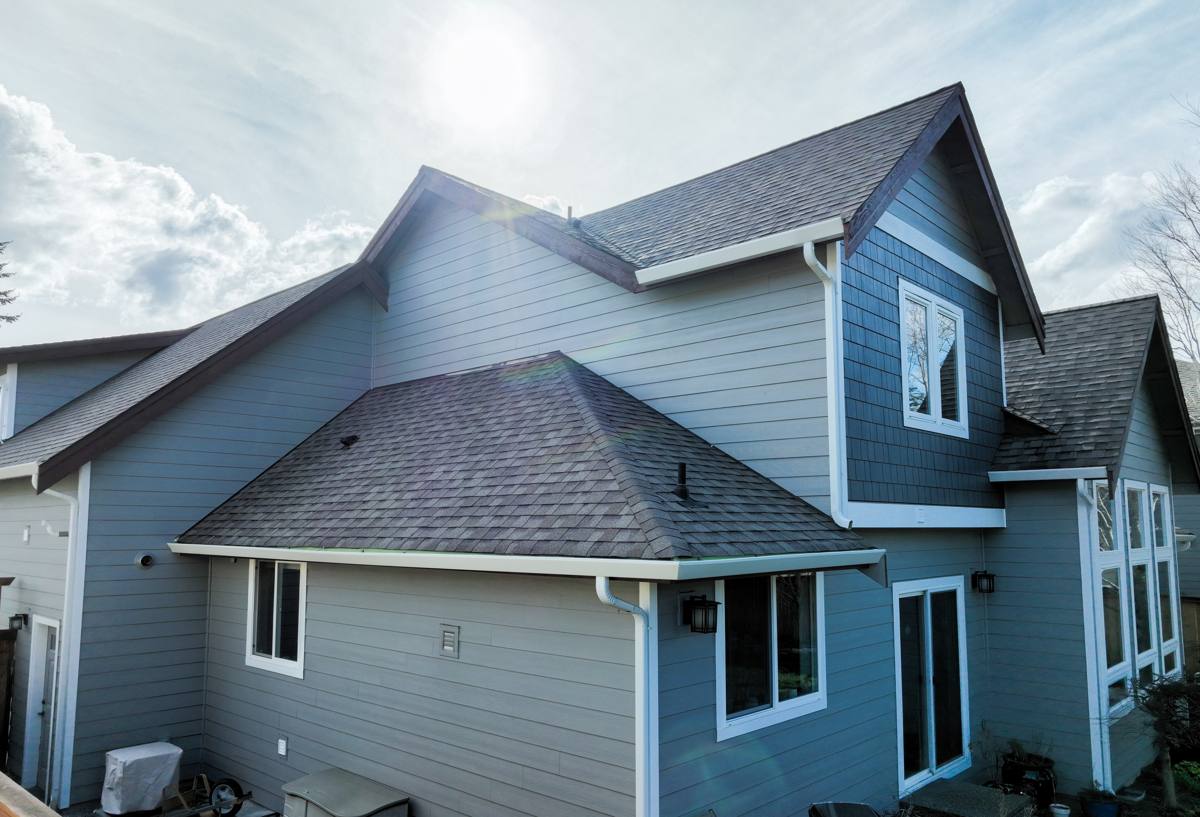
What Laurel's Climate Actually Does to Siding
Moisture that doesn't leave
Whatcom County gets a lot of rain, but the bigger problem for siding is humidity that lingers. Laurel's mix of open farmland and tree-lined lots means some walls get full sun exposure while others stay shaded and damp most of the year. Shaded siding dries slower, which means any crack, gap, or failed caulk joint stays wet longer and does more damage per rain event than the same flaw would on a sunnier elevation.
Moss and organic growth
Moss doesn't just sit on the surface — it holds moisture against the siding face and, over time, works into seams and fastener heads. On lap siding with failing caulk or on wood-based products with worn paint, that trapped moisture is what starts rot. A repair that just power-washes off the moss without addressing why it's growing there (usually shade, poor drainage, or a failed joint) is a temporary fix.
Salt air and coastal drift
Laurel isn't beachfront, but it's close enough to the Sound that homes on more exposed or elevated lots pick up salt-laden air, especially during winter storms. Salt accelerates corrosion on fasteners and metal flashing and can speed up the breakdown of caulk and paint films faster than inland areas see.
Signs Your Laurel Home Needs Siding Repair, Not Just Paint
- Soft or spongy spots when you press on the siding, especially near the bottom courses or around window trim
- Visible gaps or separation at seams, corners, or where siding meets trim
- Persistent moss or algae staining that comes back within a season of cleaning
- Paint that's peeling, bubbling, or alligatoring in patches rather than evenly across a wall
- Warping, cupping, or bowing boards, particularly on wood or engineered wood siding
- Staining or discoloration on interior walls near exterior corners — a sign water has already gotten behind the cladding
- Fastener heads that have rusted, popped, or left streaking down the siding face
Any one of these on its own might be minor. Several together, especially clustered on one elevation, usually means water has been getting behind the siding for a while and the damage is more than surface-deep.
What a Correct Siding Repair Actually Involves
A repair that just replaces the visibly damaged board and caulks the edges often fails again within a year or two, because it doesn't address what let water in. Our process starts with figuring out why the damage happened, not just where it is.
1. Diagnose before you patch
We pull back or remove the damaged section and look at what's underneath — the water-resistive barrier, the flashing, the sheathing. If the sheathing is soft or discolored, that has to be addressed before any new siding goes back on, or you're just covering up an active problem.
2. Fix the water path, not just the symptom
Most siding failures trace back to a specific entry point: a missing or failed kick-out flashing, a butt joint that was never properly lapped or sealed, trim that was caulked instead of flashed, or fasteners driven at the wrong angle. Repair means correcting that detail, not just swapping the board.
3. Match the material correctly
Patch repairs need to match not just the color and profile of the existing siding, but its behavior — mixing incompatible materials at a repair seam (for example, a different fiber cement formulation, or a wood-based product next to fiber cement) can create differential expansion and a new failure point right at the patch line.
4. Rebuild the drainage plane
Modern siding systems rely on a drainage plane behind the cladding — house wrap, flashing, and proper laps — to let any moisture that does get in drain back out. A repair that doesn't restore this correctly just sets up the next failure.
Why We Repair (and Install) James Hardie Only
We don't install or repair with LP SmartSide, vinyl, Cemplank, Allura, primed spruce, or cedar. That's a deliberate standard, not a lack of options. Here's the honest reasoning:
| Material | What it does well | Why it's not our repair standard |
|---|---|---|
| Vinyl | Low upfront cost, easy to source | Doesn't hold paint or color repairs well over time; brittle in cold snaps, which Whatcom County does get; expands/contracts noticeably |
| LP SmartSide (engineered wood) | Workable, reasonably priced | Wood-based core is more moisture-sensitive at cut edges and repair seams than fiber cement, which matters in a climate this wet |
| Primed spruce / cedar | Traditional look, natural material | Requires ongoing repainting and sealing to stay watertight; moss and moisture exposure in Laurel's shaded lots shorten the repaint cycle |
| Cemplank / Allura (other fiber cement) | Similar core material to Hardie | We standardized on one manufacturer's installation specs, warranty structure, and ColorPlus finish system so every repair matches long-term performance, not just the look on day one |
James Hardie's fiber cement is non-combustible, engineered for specific climate zones (the HZ5 product line is built for exactly this kind of wet, temperate Pacific Northwest exposure), and its ColorPlus factory finish holds color and resists moss and mildew better than field-applied paint. When we repair a section, using Hardie material means the patch performs the same as the rest of the wall for the next few decades, not just until the next wet winter.
Our Repair Process for Laurel Homes
- Inspection and diagnosis — We look at the damaged area and the surrounding wall assembly, not just the obvious spot, to find the actual water path.
- Honest scope — We tell you plainly whether this is a contained repair or a sign of a bigger issue on that elevation. We don't pad the job, and we don't downplay a real problem either.
- Remove and assess — Damaged siding and any compromised trim come off; we check the sheathing and water barrier underneath before closing anything back up.
- Rebuild the details — Flashing, house wrap laps, and fastening are corrected to code and to Hardie's installation spec, not just patched around.
- Match and finish — New Hardie material and ColorPlus finish are matched to your existing siding as closely as the product line allows.
- Walkthrough — We show you what we found and what we fixed, in plain language, before we call it done.
What a Repair Estimate Should Cost You to Get
Nothing — a proper inspection to diagnose the cause of siding damage shouldn't require you to commit to anything upfront. Repair costs vary widely depending on how much of the wall assembly needs rebuilding versus just the visible siding, which is exactly why an in-person look matters more than a phone estimate.
Why a Crew That Already Works Laurel Matters
Laurel doesn't have its own building department separate from the county, but local familiarity still matters here in practical ways: knowing which older homes in the area were built with which siding generations, knowing which lots tend to have shade and drainage issues versus open exposure, and being able to get a crew back out quickly if a repair needs a follow-up visit. A crew that's already local to Lynden and working this area regularly isn't driving in cold — we've seen how homes in this specific pocket of Whatcom County age and fail, and that shapes how we diagnose a repair the first time.
Maintaining Repaired Siding in a Wet Climate
- Keep gutters clean and downspouts directed away from the foundation — overflow is a common cause of repeat damage right at grade level
- Trim back vegetation and tree cover where it keeps a wall shaded and damp longer than the rest of the house
- Rinse moss and algae buildup before it gets thick enough to hold moisture against the surface
- Recaulk trim joints on the schedule recommended for your siding type — this is cheap insurance against a much bigger repair later
- Have any soft spots or new staining looked at promptly rather than waiting for a full season
If you're seeing moss buildup, soft spots, or water staining on a Laurel-area home, it's worth getting a straightforward, no-pressure look before it turns into a bigger repair. Use the form below to request a free estimate — we'll tell you honestly what we find.