 Lynden Siding
 Why Laurel Roofs Wear Differently Than Roofs Inland
Homes in the Laurel area sit in a stretch of Whatcom County where the weather rarely gives a roof an easy year. Moisture-laden air drifting in off the Salish Sea carries a trace of salt that settles on exposed metal and fasteners over time. Add long stretches of driving rain that comes in sideways during fall and winter storms, and a moss season that can run from late autumn straight through spring, and you have a climate that tests every layer of a roof system, not just the shingles on top.
None of this means a roof in Laurel needs to be exotic or overbuilt. It means the details that get skipped on an easy job — proper underlayment coverage, correct flashing laps, real attic ventilation — are the details that actually matter here. A replacement done right the first time will shrug off another few decades of this weather. One done with shortcuts usually shows it within a handful of years, often in the form of soft decking, granule loss, or moss creeping under the shingle tabs.
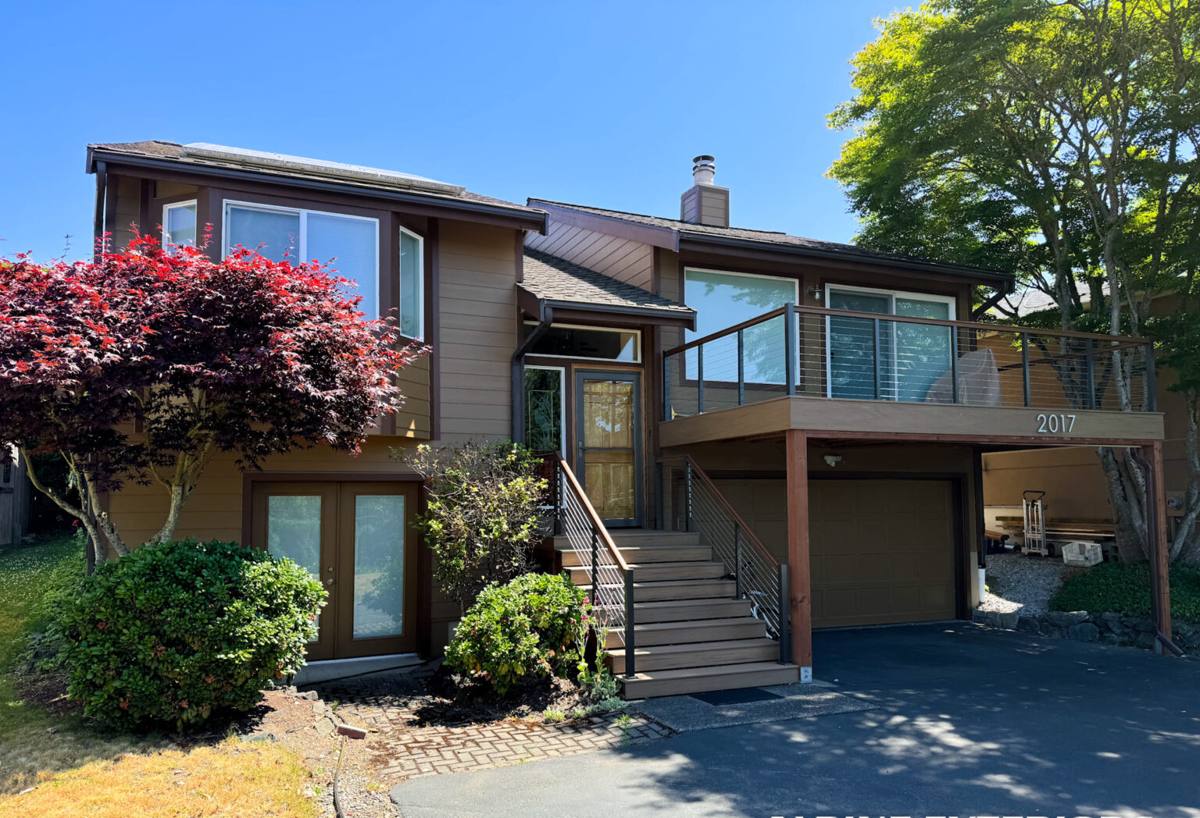
Signs Your Laurel Home Is Due for a Replacement, Not a Patch
Roof repairs have their place, but there's a point where patching a roof costs more in the long run than replacing it outright — especially on a roof that's already fighting moss and moisture on multiple fronts. Here's what we look for when we're deciding whether a repair still makes sense or whether it's time to talk replacement.
- Shingles that are curling, cupping, or losing granules in patches rather than evenly across the roof
- Moss established in mats rather than a light surface film, especially on north-facing slopes or under tree cover
- Dark streaking that keeps coming back within a season or two of cleaning
- Soft spots or noticeable give when walking the roof, which usually means the decking underneath is compromised
- Daylight, water stains, or a musty smell in the attic, particularly near valleys or roof-wall intersections
- A roof that's original to the home and is 20+ years old, regardless of how it looks from the ground
- Repeated leaks in the same general area even after past repairs
If you're seeing two or three of these at once, that's usually a sign the roof system as a whole — not just one section — is reaching the end of its service life.
Why Moss Matters More Than Most Homeowners Think
A little surface moss on a roof isn't an emergency. The problem is what moss does over a full season here: it holds water against the shingle surface long after the rain has stopped, which keeps that layer of the roof wet far more of the year than it should be. Moss also works its rhizoids under shingle tabs and granules, gradually lifting edges and breaking the shingle's seal. On a roof that's already older, that combination is often what pushes a repairable roof into replacement territory.
What a Correct Roof Replacement Involves
A roof replacement is more than stripping old shingles and nailing down new ones. In a climate that throws salt air, driving rain, and heavy moss at a roof for most of the year, the parts you don't see after the job is done are what determine whether it lasts.
Full Tear-Off and Deck Inspection
We remove the old roofing down to the decking rather than layering over it. That's the only way to actually see the plywood or plank sheathing underneath and catch soft, delaminated, or rotted sections before they're covered up again. Any decking that's compromised gets replaced — not painted over or skipped to save time.
Underlayment and Water-Entry Protection
Given how often this area sees wind-driven rain, underlayment coverage isn't a place to cut corners. Self-adhered ice-and-water barrier goes at eaves, valleys, and around penetrations — the spots where wind-driven rain is most likely to find its way under the shingle line. The rest of the deck gets a synthetic underlayment that sheds water reliably even if it's exposed to weather for a few days during the job.
Ventilation That Actually Fights Moss
A roof that breathes stays drier, and a drier roof grows moss more slowly. We check intake at the soffits and exhaust at the ridge, and correct the balance where it's missing — a common gap on older Laurel-area homes that were built before continuous ventilation was standard practice. Poor attic airflow doesn't just shorten shingle life; it's also one of the quieter causes of condensation and moisture problems inside the attic itself.
Flashing Details
Chimneys, skylights, valleys, and roof-to-wall intersections are where the vast majority of leaks originate — not the open field of shingles. We install new flashing at every one of these transitions rather than reusing old pieces, and we lap each course correctly so water is always directed down and out, never trapped or funneled sideways.
Choosing the Right Material for This Climate
There's no single "best" roofing material for every home — it depends on your budget, your roof's pitch and exposure, and how much long-term maintenance you're willing to take on. What we can tell you honestly is how each option tends to perform under the salt air, rain, and moss conditions common around Lynden.
| Material | Typical Lifespan | Moss & Moisture Behavior | Maintenance |
|---|---|---|---|
| Architectural asphalt shingle (algae-resistant) | 25–30 years | Copper/zinc-infused granules slow algae and moss growth; still benefits from periodic cleaning | Low to moderate |
| Standard 3-tab asphalt shingle | 15–20 years | No built-in algae resistance; streaks and moss establish faster | Moderate — more frequent cleaning needed |
| Standing seam metal | 40–50+ years | Smooth surface sheds water fast and gives moss little to grip; needs coastal-rated fasteners and coatings | Low |
| Cedar shake | 20–30 years with upkeep | Attractive but absorbs moisture and is one of the more moss-prone options in a wet climate without diligent maintenance | High |
For most Laurel homes, we lean toward algae-resistant architectural shingles or standing seam metal, simply because both hold up with less ongoing maintenance in a climate that stays damp for months at a stretch. We're happy to install cedar for homeowners who want that look, but we'll always walk you through the maintenance commitment it takes to keep it performing well here — it's a matter of being upfront about trade-offs, not steering you away from a legitimate product.
Our Roof Replacement Process
Homeowners generally want to know two things before a roof job starts: what's actually going to happen, and how long their house will be exposed to the weather in the meantime. Here's the sequence we follow.
- On-site assessment. We walk the roof and the attic, check the decking where accessible, and note ventilation, flashing condition, and any problem areas.
- Written proposal. You get a clear scope of work and material choice in writing before anything is scheduled — no verbal-only estimates.
- Scheduling around the weather. Given how much rain this area gets, we plan tear-off days around forecasts and stage materials so your roof is never left open longer than necessary.
- Tear-off and deck repair. Old roofing comes off, decking is inspected and repaired as needed, and any surprises are shown to you before we cover them up.
- Underlayment, flashing, and new roofing installed. Each layer goes down in the sequence that actually sheds water — not just whatever's fastest.
- Cleanup and magnetic nail sweep. We clear debris and run a magnetic sweep of the yard and driveway before we consider the job finished.
- Final walkthrough. We go over the finished roof with you, answer questions, and make sure you know what maintenance, if any, it needs going forward.
What Drives the Cost of a Laurel Roof Replacement
Every roof is priced individually, but the same handful of factors move the number up or down on almost every job we quote in this area. We'd rather walk you through these honestly than throw out a number that doesn't hold up once we're actually on your roof.
| Factor | Why It Matters |
|---|---|
| Roof size and number of layers to remove | More square footage and more existing layers mean more tear-off and disposal labor |
| Roof pitch and access | Steep or hard-to-access roofs take longer and require more safety setup |
| Decking condition | Rot or soft sheathing found during tear-off adds material and labor to replace it properly |
| Material selection | Standard asphalt, algae-resistant shingle, and metal all sit at different price points and installation times |
| Ventilation upgrades | Adding or correcting ridge and soffit venting where a home currently lacks it |
| Flashing and penetrations | Chimneys, skylights, and multiple valleys all add flashing work beyond a simple gable roof |
We won't quote a firm price without seeing the roof in person — anyone who does is either guessing or leaving room to add costs later. What we can tell you is that the roofs needing the most work are almost always the ones where moss and moisture have been allowed to sit unaddressed the longest, which is exactly why catching the signs early matters.
Why a Crew That Already Works in Laurel Makes a Difference
Roofing crews that work all over Western Washington know the region in general. Crews that actually work the Laurel area and Lynden regularly know the specifics: which streets sit under heavier tree cover and fight moss harder, how the local jurisdiction handles roofing permits and inspections, and which suppliers can get the right underlayment and flashing stock without a delay that leaves a torn-off roof exposed longer than it should be.
That local familiarity also matters after the job is done. If a question comes up two years down the road — a shingle that lifted in a windstorm, a question about moss treatment — you're calling a crew that's a short drive away and already knows your roof, not a company that only shows up in the area occasionally.
Keeping a New Roof Performing Once It's Installed
A correctly installed roof still benefits from a little upkeep in a climate like this one. None of it is complicated, but skipping it shortens the life of even a well-built roof.
- Keep gutters clear so water isn't backing up under the eaves during heavy rain
- Trim back overhanging branches that shade the roof and slow it from drying out
- Have moss growth treated or gently removed before it establishes into mats
- Walk the roofline visually after major windstorms and check for lifted or missing shingles
- Schedule a roof check every couple of years, even if nothing looks obviously wrong
If you're weighing a repair against a full replacement, or you just want an honest read on where your roof stands, we're happy to take a look. Reach out for a free, no-pressure estimate using the form below.