 Lynden Siding
 Windows Built for Laurel's Corner of Whatcom County
Laurel sits in that stretch of Whatcom County where marine air off the Salish Sea meets the open farmland east of Lynden, and that combination is hard on window assemblies in ways that don't show up right away. Salt-laden air corrodes hardware and fasteners faster than it does further inland. Driving rain, pushed sideways by wind off the water, tests every seal and flashing detail a window has. And the long moss season here — often six or more damp months a year — means anything with a horizontal ledge, including window sills and trim, stays wet longer than it should. None of this is dramatic on its own, but stacked together over a decade or two, it's exactly what turns a decent window into a soft, leaking, hard-to-open one.
We work in this specific corner of the county regularly, which matters more than it sounds like it should. A window that performs fine in a dry, sheltered lot in Bellingham's south side can fail early on a more exposed Laurel property facing prevailing weather. Knowing which orientation, which wall, and which detail needs extra attention isn't something you get from a spec sheet — it's something you learn by installing windows in this specific area, season after season.
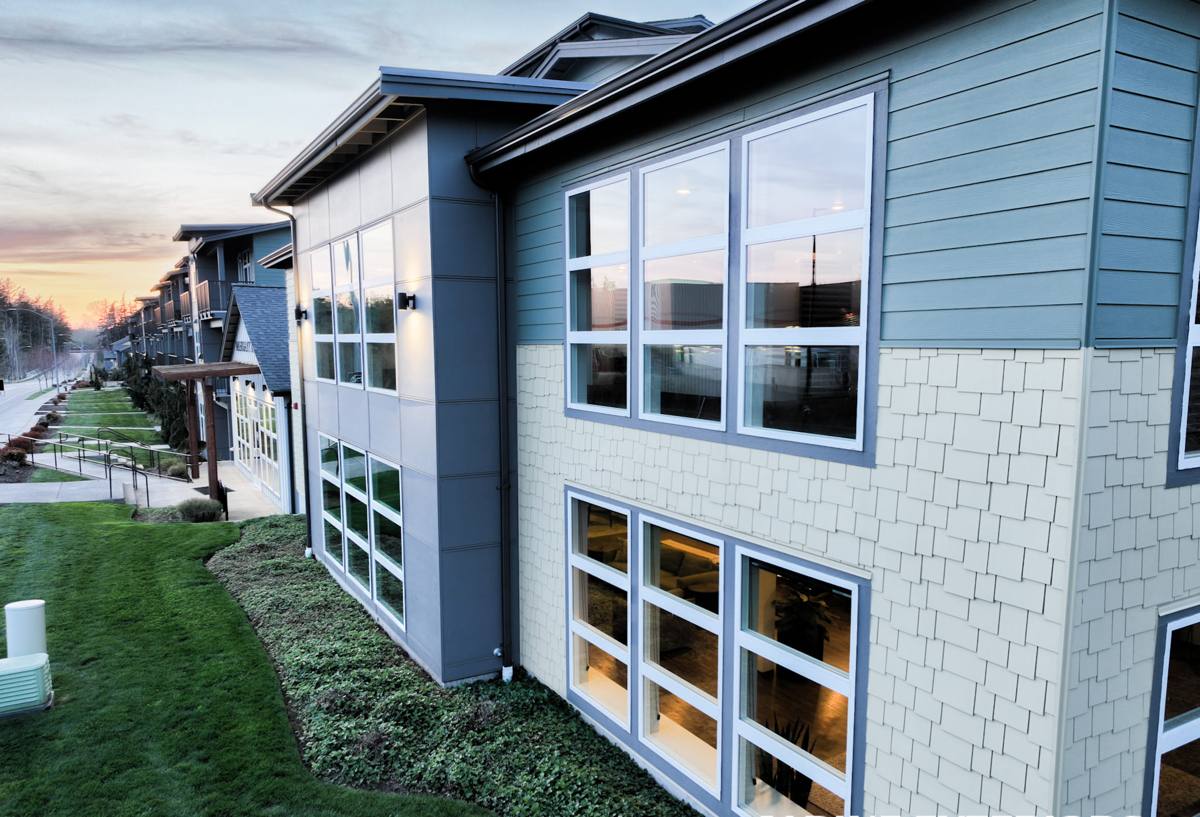
What "Custom" Actually Means on a Window Job
"Custom" gets thrown around loosely in this trade, so it's worth being precise. It doesn't mean exotic shapes or a higher price tag by default. It means the window is built to the actual opening in your house — not a stock size that gets shimmed and gapped to fit. On older Laurel-area homes, especially anything built before standardized lumber and window sizing became common, openings are rarely perfectly square or a catalog size. A custom window is measured, ordered, and flashed to that specific rough opening.
Sizing and Openings
We measure every opening in the field before ordering anything — width and height at multiple points, plus diagonal measurements to check for square. Old farmhouse framing and additions built over the years can be out of square by more than people expect, and a window that's cut to a theoretical size instead of the real one ends up requiring extra shimming, extra caulk, and extra risk of a poor seal.
Matching the House, Not Just the Opening
Custom also covers grille pattern, glass tint or low-E coating selection, frame color, and interior trim profile matching what's already on the house. On a farmhouse or older Craftsman-style home in the Laurel area, mismatched grille patterns or a frame color that doesn't relate to the trim is one of the fastest ways to make a window replacement look like exactly what it is — a patch job instead of a real upgrade.
Material Options for This Climate
There's no single "best" window material — there's a best material for your specific wall, sun exposure, and budget. Here's how the common options actually perform in a wet, salt-influenced, moss-prone climate like Laurel's:
| Material | Moisture Behavior | Maintenance | Typical Lifespan Here |
|---|---|---|---|
| Vinyl | Won't rot; seams and welds need to be quality-checked | Low — occasional cleaning | 20-30 years |
| Fiberglass | Excellent — dimensionally stable, resists warping in wet cycles | Low | 30-40+ years |
| Wood-clad | Good if cladding is intact; exposed wood interior needs monitoring | Moderate — check seals and interior finish | 20-30 years with upkeep |
| Aluminum | Conducts cold and can condensate more; clad/thermally-broken versions do better | Low | 20-30 years |
Vinyl and fiberglass are what we recommend most often for Laurel homes because they don't give moss and moisture anything to work with. Wood-clad windows can still be the right call on a home where the look matters and the owner is willing to keep an eye on the interior finish, but we're honest with clients that it's a higher-maintenance choice in a climate this wet.
Moisture and Flashing: The Part That Actually Prevents Rot
Most window failures we get called out to inspect in this area aren't glass failures or frame failures — they're flashing failures. The window unit itself did its job; the water management around it didn't. In driving rain, water gets forced sideways and upward under trim and siding in ways that gravity-only flashing details don't handle.
A correct install includes a sill pan under the opening (so any water that does get past the window has somewhere to drain, not soak into framing), properly lapped flashing tape integrated with the house wrap, and head flashing that sheds water out and away from the top of the unit. Skipping the sill pan is one of the most common shortcuts we see on prior installs — it's invisible once the trim goes back on, and it's exactly the detail that causes hidden rot two or three winters later.
Energy Performance for Whatcom County Winters and Summers
Whatcom County doesn't get extreme heat, but it does get long stretches of damp cold and wind, which makes air infiltration and U-factor more relevant to comfort than raw insulation numbers alone. A well-installed, well-sealed window with a reasonable U-factor will do more for a drafty room than chasing the lowest possible number on a spec sheet while the installation itself leaks air around the frame.
- Look for a U-factor suited to Northwest climate zones, not desert or extreme-cold-climate glass packages you don't need here
- Low-E coatings help manage the limited summer heat gain without sacrificing winter warmth
- Argon-filled double-pane glass is standard and cost-effective for this climate; triple-pane is worth discussing for north-facing or wind-exposed walls
- Proper foam or low-expansion sealant around the frame (not just caulk on the exterior) closes the air gaps that actually cause drafts
Our Installation Process
The process is straightforward, but the order and care matter more than people assume:
- Field measurement — every opening measured in person; nothing ordered off assumed stock sizes
- Removal — old unit removed carefully, opening inspected for hidden rot or framing issues before anything new goes in
- Repair if needed — any soft framing or water damage found gets addressed before a new window goes into a compromised opening
- Sill pan and flashing — water management installed and integrated with the existing wall assembly
- Set and shim — window set level, plumb, and square, then shimmed and fastened per manufacturer spec
- Seal and insulate — low-expansion foam or backer rod and sealant around the frame, exterior caulk and trim finished last
- Walkthrough — operation checked, locks and hardware tested, site cleaned up
If we find rot or damage during removal that wasn't visible beforehand, we stop and talk to you about it before moving forward — not after the fact.
Signs Your Current Windows Are Already Failing
A lot of window problems in this climate develop quietly. Worth checking for before they get worse:
- Fogging or moisture between the panes (a sign the seal has failed and the insulating gas is gone)
- Soft or discolored wood on the sill, jamb, or trim — especially on north- and west-facing walls that take the most weather
- Visible moss or dark staining building up on the sill or bottom trim
- Windows that are hard to open, don't stay up on their own, or won't latch fully
- Noticeable draft near the frame edges on a windy day
- Condensation on the interior glass regularly in cold weather
- Paint or finish peeling on the interior sill, which usually points to moisture getting in from outside
Any one of these on its own isn't an emergency. Several of them together, especially combined with visible moss or staining, usually means water has already been getting past the window for a while.
What Affects the Price
We don't publish a flat per-window number because the real cost drivers vary a lot house to house. In general terms:
| Factor | Why It Matters |
|---|---|
| Number and size of openings | Larger and more numerous windows scale materials and labor directly |
| Material choice | Vinyl is typically the most budget-friendly; fiberglass and wood-clad cost more upfront |
| Condition of existing framing | Hidden rot or damage found during removal adds repair scope |
| Access and wall height | Second-story or hard-to-reach openings take more time and equipment |
| Glass and coating package | Low-E, argon fill, and triple-pane options add cost but improve comfort |
| Trim and finish work | Matching existing wood trim or custom profiles adds labor beyond a bare install |
We give a written estimate after seeing the actual openings and condition — not a phone-quote guess — because on older Laurel-area homes, the framing condition behind the old window is often the biggest unknown until it's opened up.
Living With Windows in a Moss-Prone, Salt-Air Climate
Even a well-installed window benefits from a little seasonal attention here. Keeping sills and tracks clear of moss and debris, checking exterior caulk lines once a year for cracking, and making sure gutters and downspouts near windows aren't dumping extra water onto trim all extend the life of the install. None of this is heavy maintenance — it's the kind of five-minute check that's easy to skip and easy to catch up on once a year during a gutter cleaning.
Why Hiring a Crew That Already Works This Area Matters
A crew that regularly works Laurel and the greater Lynden area already knows which wall orientations take the worst weather locally, what typical framing looks like in homes of different eras around here, and how the Whatcom County permitting and inspection process actually runs for window replacements. That local familiarity shows up in small decisions — where to add extra flashing attention, which material holds up better on an exposed west wall versus a sheltered one — that a crew unfamiliar with the area might not think to make. It also means we're not far away if a question comes up after the job is done.
If you're weighing whether it's time to replace windows on a Laurel-area home, we're glad to take a look and give you a straight, no-pressure assessment — free estimate, no obligation, just an honest read on what your windows actually need.