 Lynden Siding
 Siding Replacement Built for Kendall's Foothill Climate
Kendall sits in the Nooksack River corridor east of Lynden, where the valley starts climbing toward the Mount Baker foothills. That location matters more than most homeowners realize when it comes to siding. You're farther from town, closer to tree cover, and exposed to a wetter, shadier microclimate than homes out on the open flats. Marine air still pushes up the valley from the Sound, carrying moisture and a faint salt influence even this far inland, and it settles against the hillsides and river bottom instead of blowing through the way it does closer to the water. The result is siding that stays damp longer after every rain, gets less direct sun to dry out, and spends a good chunk of the year growing moss and algae if it isn't built to shed water and resist organic growth.
We've worked on homes throughout this stretch of Whatcom County long enough to know that what works on a sunny arterial in Lynden proper doesn't always hold up the same way a few miles out toward Kendall. This page covers what that difference means for a siding replacement done right.
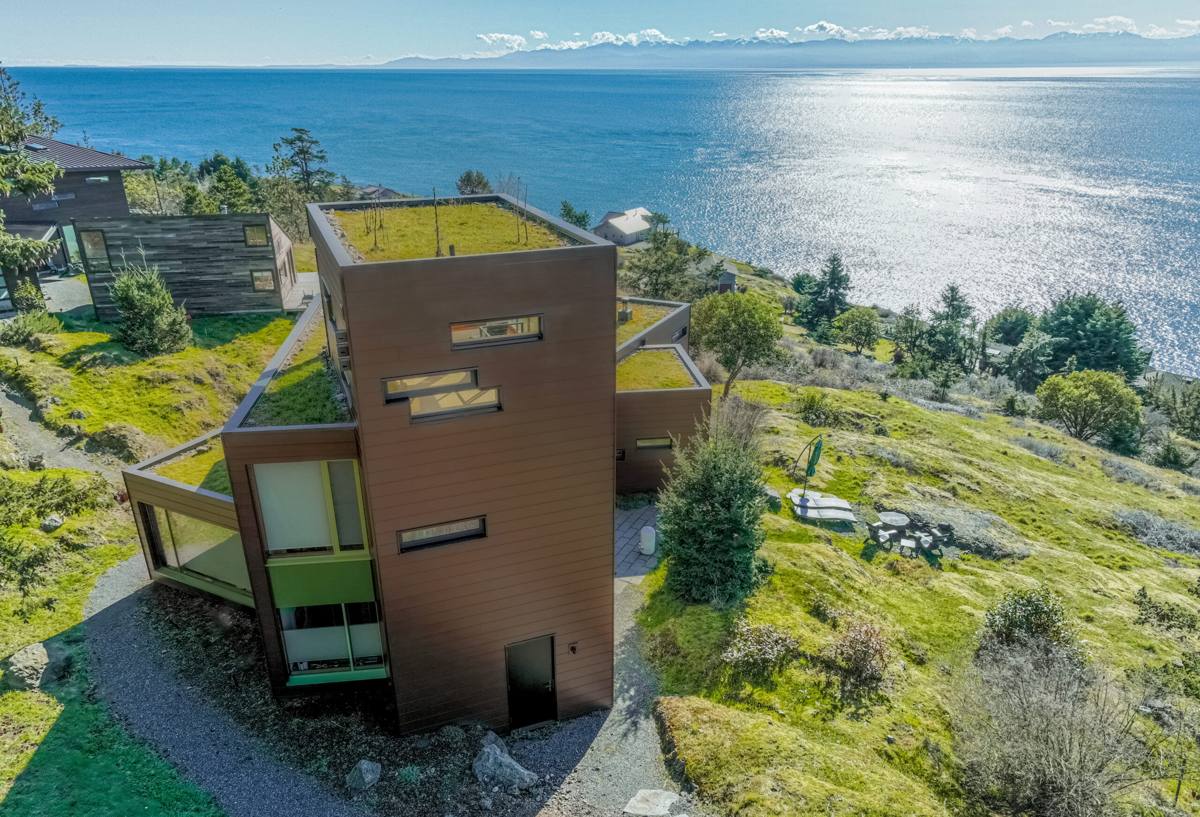
What Kendall's Setting Does to Siding
Persistent Moisture and Slow Drying
Homes tucked near the river or under tree canopy get less wind and less sun than open-field properties. Rain events that would dry off in a day elsewhere can leave siding damp for two or three days here. Any product with weak moisture resistance — or any installation with poor drainage detailing — turns that lingering dampness into swelling, delamination, or rot over time.
Moss, Algae, and Organic Growth
Whatcom County has a long moss season in general, and shaded, river-adjacent properties like the ones around Kendall get it worse. Moss and algae hold moisture directly against the siding surface, which accelerates whatever damage the substrate is already prone to. A factory-cured, dense fiber-cement surface handles this dramatically better than a wood-based or foam-core product, but even the right material still needs proper clearance from soil, plantings, and roof runoff to keep growth from taking hold.
Temperature Swings Near the Water
The Nooksack corridor sees cooler overnight lows and more fog than the open valley floor. Siding here goes through more freeze-thaw and wet-dry cycling across a given winter, which is exactly the kind of repeated stress that exposes any weakness in the material or the installation.
Why We Install Only James Hardie Fiber Cement
We standardized on James Hardie fiber cement siding for every home we side, including the ones around Kendall, and we don't install vinyl, LP SmartSide, primed wood, cedar, or other fiber-cement brands. That's not a marketing position — it's a decision based on what actually survives this specific climate without turning into a maintenance project for the homeowner.
- Non-combustible core: fiber cement doesn't feed a fire the way wood-based products can, which matters more the closer a property sits to tree cover and wildland vegetation, as many Kendall-area lots do.
- Won't swell or rot from moisture: unlike wood or wood-composite siding, Hardie's cement-based composition doesn't absorb water and expand, which is critical on a lot that stays damp longer than average.
- Factory-applied ColorPlus finish: baked-on color resists fading and chipping far longer than field-applied paint, which matters when a home is shaded most of the day and repainting crews have a harder time getting consistent dry conditions to work in.
- HZ5 engineered for the Pacific Northwest: Hardie's HZ product line is formulated by climate zone, and the versions specified for our region are built around exactly the freeze-thaw and moisture exposure this area sees.
- A warranty that transfers: Hardie's product warranty is transferable to a subsequent owner, which is worth something on a rural or semi-rural property where resale timelines can be longer than in-town listings.
We're upfront that vinyl and LP SmartSide both have real advantages — vinyl is inexpensive and low-maintenance in mild conditions, LP SmartSide installs quickly and holds paint well when it's kept dry. But vinyl can warp under sustained heat-cycling and doesn't hold up to impact the way fiber cement does, and any wood-strand product depends entirely on cut edges staying sealed and moisture staying out — a much bigger ask on a shaded, damp lot than on an open, sunny one. On a property like the ones around Kendall, we don't think that trade-off is worth making, so we don't offer those materials.
What a Correct Siding Replacement Involves Here
Tear-Off and Substrate Inspection
Every replacement starts with full removal of the old siding, not an overlay. That's the only way to find hidden rot, sheathing damage, or improperly flashed penetrations — issues that show up more often on homes that have been sitting in persistent moisture for years. Any damaged sheathing gets replaced before new siding goes up; covering it over just locks the problem in.
Weather-Resistive Barrier and Drainage Plane
A correctly installed water-resistive barrier with a drainage gap behind the siding is what actually keeps a wall assembly dry in a climate like this. This is where a lot of subpar installs fail — not because the siding itself is bad, but because water gets behind it and has nowhere to go.
Flashing at Every Penetration
Windows, doors, hose bibs, vents, and deck ledgers all need properly lapped flashing integrated with the barrier. On a shaded, slow-drying lot, a missed flashing detail doesn't just cause an eventual leak — it causes ongoing, low-grade moisture intrusion that can go unnoticed for a long time before it shows up as damage.
Correct Fastening and Clearances
Hardie siding has specific fastener spacing, clearance-from-grade, and clearance-from-roofline requirements. Maintaining proper clearance from soil, planting beds, and hardscaping is especially important here, since it's one of the main things that keeps moss and splashback moisture from sitting against the bottom courses.
Quick Reference: What to Check Before You Sign a Contract
- Is old siding fully removed, or is this a cover-over job?
- Is sheathing inspected and repaired where needed, with cost handled transparently if damage is found?
- Is a weather-resistive barrier with a drainage gap included, not just house wrap stapled flat?
- Are all penetrations individually flashed, not just caulked?
- Does the crew follow James Hardie's published fastening and clearance specs?
- Is the manufacturer's warranty registered in your name after completion?
Cost Factors for a Kendall-Area Project
Every home is different, but a few factors move the price more than others on properties out this way:
| Factor | Why It Matters Here |
|---|---|
| Access and driveway length | Rural and semi-rural lots often mean longer material staging and hauling distances than a standard in-town lot |
| Existing rot or sheathing damage | More likely on shaded, moisture-prone walls that have gone longer without inspection |
| Tree cover and drying time | Fewer workable weather windows can extend the project timeline in wetter months |
| Home size and wall complexity | Dormers, multiple gables, and varied trim details add labor regardless of location |
| Siding profile and trim selection | Lap width, trim style, and accent choices affect material cost more than the base product itself |
We give a firm, itemized quote after walking the property in person — there's no substitute for seeing the actual exposure, tree cover, and existing wall condition on your specific lot.
Timing a Project Around This Climate
Fiber cement can technically be installed in a range of conditions, but on a shaded, slower-drying lot, we plan around the driest stretches we can get, typically summer into early fall. This isn't a strict rule, but it reduces the number of weather delays and gives caulking and any touch-up work the best chance to cure properly before the wet season sets back in.
Why Local Experience Matters for This Job
A crew that only sides homes in dry, open subdivisions doesn't always think about drainage gap sizing, moss-prone clearances, or extended drying times the way a crew that regularly works properties around Kendall and the rest of the Nooksack corridor does. We size up each lot's specific exposure — how much sun it gets, how close the tree line is, how the grading drains — and build the installation details around that reality rather than treating every wall in Whatcom County the same. That's the difference between siding that looks right at handoff and siding that's still performing the way it should ten or twenty years in.
If you're planning a siding replacement on a home in or around Kendall, we're happy to walk the property, look at what your specific site is dealing with, and put together a straightforward estimate — no pressure, no obligation. Use the form below to get started.