 Lynden Siding
 Kendall's Climate Is Harder on Siding Than It Looks
Kendall sits in the part of Whatcom County where marine air off the Salish Sea meets the rise toward the foothills, and that combination is tougher on a home's exterior than most homeowners realize until something starts to fail. Salt-laden air corrodes exposed fasteners and metal trim over time. Driving rain, pushed sideways by wind more often than it falls straight down, finds every gap in a poorly detailed wall. And the long, damp stretch from fall through spring gives moss, algae, and mildew months to establish themselves on anything that stays wet and shaded. A siding system that was never engineered for this kind of exposure is working against the climate from day one.
This isn't unique to any one street or subdivision in Kendall — it's the reality for the whole corridor between Lynden and the county's northern edge. Homes here need a wall system that sheds water aggressively, resists moisture absorption at the material level, and holds its finish without constant repainting. That's the standard we install to, and it's why we're specific about the one product line we'll put on a house.
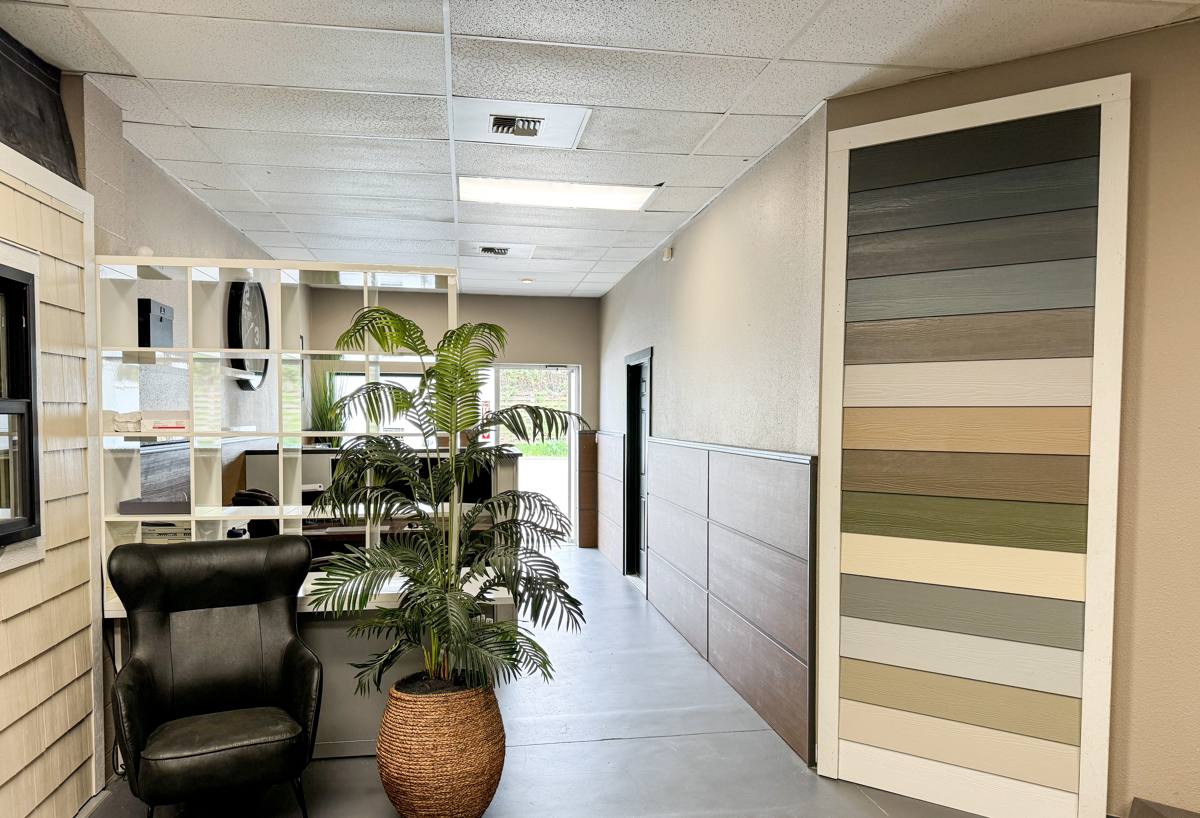
Why We Only Install James Hardie Fiber Cement
We install James Hardie fiber cement siding exclusively. We don't offer vinyl, LP SmartSide, cedar, primed spruce, or other fiber cement brands, and that's a deliberate standard, not a lack of options. Vinyl expands and contracts significantly with temperature swings and can crack or warp under the kind of wind-driven weather Kendall sees. Wood and primed wood products need consistent repainting and are vulnerable to the moisture and moss growth this climate produces almost year-round. Other fiber cement brands may perform reasonably well, but we've standardized on one manufacturer so we can guarantee consistent material behavior, a factory finish we trust, and a warranty structure we can stand behind without qualifications.
Engineered for This Specific Exposure
James Hardie makes climate-specific product lines, and the HZ5 formulation is built for regions with the kind of moisture and freeze-thaw cycling the Pacific Northwest sees. It resists moisture-related damage better than standard fiber cement or wood-based siding, and it carries a factory-applied ColorPlus finish baked on under controlled conditions rather than field-painted, which matters enormously in an area that doesn't get long dry stretches for paint to cure properly. It's also non-combustible, which is a real advantage as wildfire smoke and drier late summers become a more regular part of the Pacific Northwest's weather pattern.
What a Correct Fiber Cement Installation Actually Involves
Fiber cement siding is only as good as the installation behind it. The material can perform for decades, or it can fail early and locally around windows, corners, and the bottom courses — and the difference almost always comes down to details that aren't visible once the job is finished.
The Details That Determine Whether It Lasts
A correct installation on a Kendall home includes a properly built weather-resistive barrier with a drainage plane behind the siding, not just house wrap stapled flat against the sheathing. Every window, door, and penetration needs flashing installed in the right shingle-lap order so water is directed out and down, never trapped behind the cladding. Starter strips have to be level and set at the correct height, because everything above them follows that line. Fasteners need to hit framing at the manufacturer's specified pattern and depth — overdriven or underdriven nails are one of the most common causes of early siding failure, and it's a mistake that's invisible until paint starts cracking around the nail heads years later.
Butt joints and end cuts need factory-sealed edges or field-applied sealer, because raw, unsealed fiber cement edges will wick moisture. Gaps at trim, corners, and dissimilar materials need to be sized correctly and filled with a sealant rated for exterior movement, not just caulked over as an afterthought. None of this shows up in a finished photo. All of it shows up ten years later, either as a wall that's still tight and clean or one that's staining, cracking, and growing moss at the seams.
- Weather-resistive barrier with a functioning drainage gap behind the cladding
- Flashing at every window, door, and penetration, lapped correctly for water to shed outward
- Level, correctly positioned starter strip along the entire foundation line
- Manufacturer-specified fastener pattern, spacing, and embedment depth
- Sealed or factory-primed cut edges and joints, with movement-rated sealant at trim
- Proper clearance from grade, decks, and roof lines to keep siding out of standing moisture
Signs Your Current Siding Is Already Losing the Fight
A lot of Kendall homes are still sided in materials that were never suited to this weather, and the early warning signs are consistent. Moss and dark streaking that return within a season of cleaning usually mean the siding is staying damp longer than it should, often because of poor drainage behind it rather than just surface dirt. Paint that's chalking, peeling, or blistering — especially on the north and west-facing walls, which get the least sun and the most wind-driven rain — points to moisture getting into the material itself. Soft spots, visible swelling at seams, or corners that feel spongy when pressed are signs of wood-based or lower-grade siding absorbing water it can't dry out from. None of these are cosmetic problems by the time they're visible; they're evidence of what's happening behind the wall.
How Fiber Cement Stacks Up Against Other Siding in This Climate
Every siding material has trade-offs. The table below reflects how the main options actually perform under Whatcom County's wet, salt-influenced conditions, not just their upfront cost.
| Material | Moisture Behavior | Finish Durability | Maintenance |
|---|---|---|---|
| James Hardie Fiber Cement | Engineered climate-specific formulation; resists swelling and moisture damage when installed correctly | Factory-baked ColorPlus finish, resists fading and chalking | Occasional wash; no repainting for many years |
| Vinyl | Doesn't absorb water, but expands/contracts with temperature and can gap or crack in wind | Color molded in but fades over time; can't be repainted easily | Low, but damage often means full panel replacement |
| Cedar / Wood | Absorbs moisture readily; prone to rot and moss growth in shaded, damp areas | Field-applied finish degrades faster in this climate | Regular repainting or staining and moisture inspection |
| LP SmartSide / OSB-based | Engineered wood core; sensitive to sustained moisture exposure at seams and cuts | Field or factory finish, edge treatment critical | Moderate; edge and joint maintenance matters |
What Drives the Cost of a Kendall Siding Project
Every home is different, so we don't quote a flat price without seeing the house, but the same factors move the cost on nearly every project in this area.
| Factor | Why It Matters |
|---|---|
| Wall condition underneath | Rot, damaged sheathing, or failed house wrap found during tear-off adds repair work before new siding can go up |
| Home size and wall complexity | More corners, gables, and dormers mean more flashing, cutting, and labor time |
| Siding profile chosen | Lap width, panel style, and trim details affect material quantities and installation time |
| Access and site conditions | Slopes, landscaping, and staging space affect how efficiently a crew can work |
| Trim and accessory scope | Fascia, soffit, and trim replacement done at the same time adds cost but avoids mismatched work later |
The only way to get an accurate number is a walk-around estimate — anything given without seeing the house is a guess.
Our Process From First Call to Final Walkthrough
We keep the process straightforward and try to remove the guesswork for the homeowner:
- On-site inspection and measurement, including a check of the wall condition, not just the visible siding
- A written estimate that breaks out material, labor, and any anticipated repair allowances
- Scheduling built around Whatcom County's weather windows, since fiber cement installation and sealant curing both need reasonably dry conditions
- Tear-off and inspection of the sheathing and weather barrier before anything new goes up, with repairs addressed and documented before covering the wall
- Installation of the new drainage plane, flashing, starter strips, and James Hardie siding to manufacturer specification
- Final walkthrough with the homeowner to confirm the work before the crew leaves the site
Why Hiring a Crew That Already Works in Kendall Matters
A crew that regularly works this part of Whatcom County already knows how the local weather patterns behave through the year, how to sequence a job around the wet season instead of fighting it, and what wall conditions are common on homes of a given age in this area. That familiarity shows up in scheduling decisions, in catching moisture problems before they're covered up, and in installation details that account for how hard wind-driven rain hits a wall here compared to a drier region. It also means a crew that isn't learning the climate on your house.
A Homeowner's Checklist Before You Sign a Contract
- Ask what happens if rot or damaged sheathing is found during tear-off, and how that's priced
- Confirm which James Hardie product line and HZ zone rating will be used, and why
- Get the flashing and drainage plane details in writing, not just "siding replacement"
- Ask for the manufacturer's warranty terms and what voids them
- Confirm licensing, insurance, and who is actually on the crew doing the installation
- Get a written estimate that itemizes material, labor, and any trim or repair scope
If your Kendall home's siding is showing moss, paint failure, or soft spots — or you're planning ahead before it gets there — we're happy to take a look and walk you through what a correct James Hardie installation would involve for your specific house. The estimate is free, there's no pressure attached to it, and you can use the form below to get started.