 Lynden Siding
 Why Composite Decking Makes Sense on Kendall Lots
Kendall sits back from the water compared to the rest of Lynden and greater Whatcom County, but it doesn't escape the region's marine-influenced weather. Rain moves in off the Sound and settles into the foothills for days at a time, and the salt-tinged air that works its way inland still finds its way onto exposed wood and metal. What sets Kendall apart is the tree cover — a lot of homes out here sit under fir, cedar, and alder canopy that keeps decks shaded and damp long after the rest of the yard has dried out. That combination of shade, standing moisture, and a moss season that can run from early fall into late spring is exactly the environment where a wood deck struggles and a well-built composite deck earns its keep.
Moss, Mold, and Constant Shade
Moss and algae need three things to take hold: moisture, organic material to root into, and low light. A shaded Kendall lot supplies all three most of the year. Wood decking gives moss something to grip and feed on; composite boards, especially capped composite, have a much lower organic content and a sealed surface that gives spores far less to latch onto. That doesn't make composite immune to surface growth — nothing outdoors in this climate is — but it does mean the growth stays on the surface where a wash can remove it, instead of working into the wood grain.
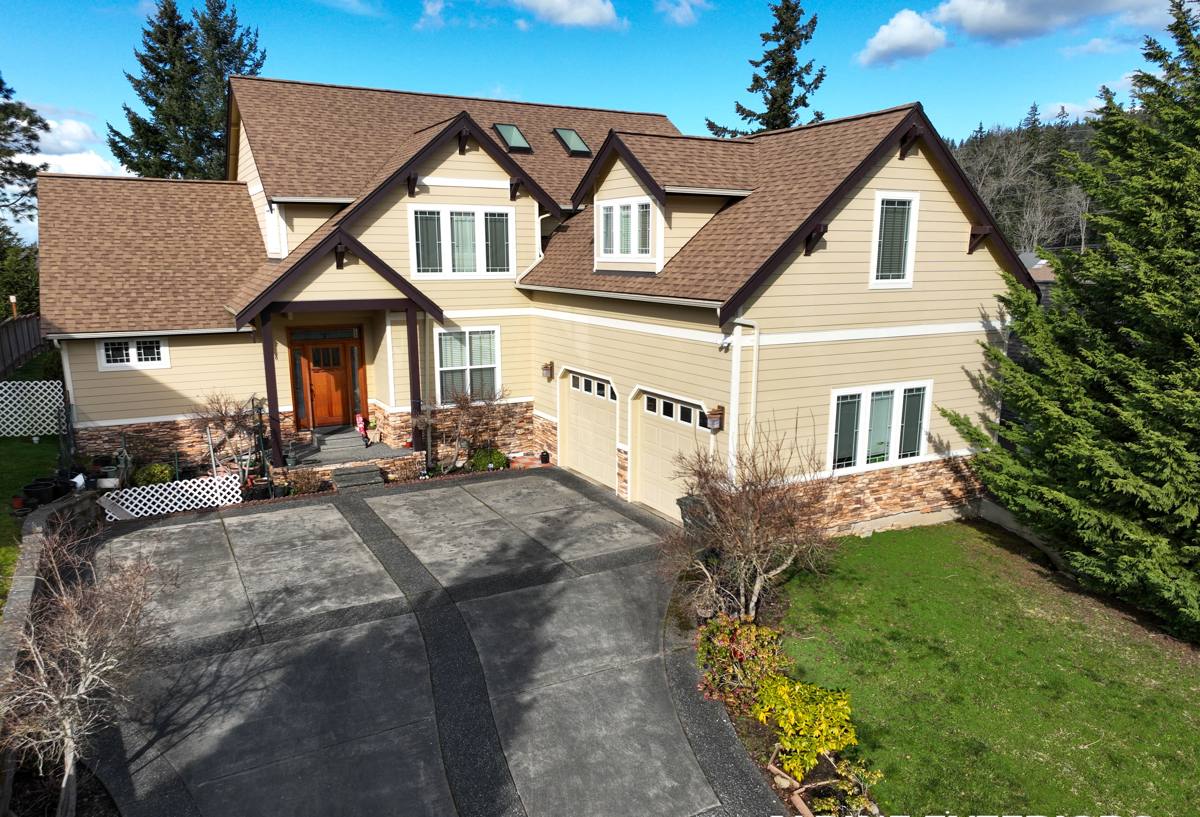
What Kendall's Wooded Lots Do to a Deck Over Time
Needles, cones, leaves, and pollen collect between deck boards all year on a tree-covered lot. Left in place, that debris holds water against the board edges and the framing underneath, which is where a lot of deck problems actually start — not on the walking surface, but in the substructure nobody looks at. Shaded ground under a deck dries slowly, so joists and beams that don't have real airflow underneath them stay damp for extended stretches, and damp untreated framing in a cold snap goes through repeated freeze-thaw cycling that accelerates rot and fastener failure. None of this is unique to composite decking — it's a wood-frame problem regardless of what's on top — but it's exactly why the substructure work matters as much as the decking material itself.
What a Correct Composite Deck Installation Involves
Substructure and Framing
Composite manufacturers generally call for tighter joist spacing than a standard wood deck build — often 16 inches on center, and closer for diagonal or picture-frame board patterns — because composite boards flex differently than solid wood under load. Every joist should get joist tape before the decking goes down, which blocks moisture from wicking up into the wood through screw penetrations. Where the deck ties into the house, the ledger board flashing has to be done correctly, full stop. That connection point is the single most common source of hidden water intrusion on any deck, and it's also exactly the kind of moisture-management detail we handle every day in siding work — flashing, water-shedding laps, and keeping water out of a wall assembly. A deck ledger is really just another penetration in the building envelope, and it should be treated with the same care.
Ventilation and Ground Clearance
Framing needs real airflow underneath it, not just legal minimum clearance. On a shaded Kendall lot where the ground stays damp longer, that clearance matters more than it would on an open, sunny site. We also pay attention to what's planted around the skirt of the deck — mulch beds and shrubs pushed right up against the framing trap moisture against wood that's already fighting shade and rain.
Fasteners and Board Layout
Hidden fastener systems are the standard for a clean composite deck surface and they avoid the face screws that can work loose and become water entry points over time. Composite boards also expand and contract with temperature more than solid wood, so gapping at butt joints and around fixed objects like posts needs to follow the manufacturer's spec, not a guess. Skipping that step is how you end up with buckled boards a year or two in.
| Material | Upfront Cost | Ongoing Maintenance | Moisture/Moss Resistance | Typical Lifespan |
|---|---|---|---|---|
| Pressure-treated wood | Lowest | Annual cleaning, periodic staining/sealing | Weakest — absorbs moisture, prone to moss and rot without upkeep | 10-15 years before major repair |
| Capped composite | Mid-to-high | Occasional washing, no staining or sealing | Strong — sealed cap resists moisture and staining | 25-30+ years |
| Uncapped composite | Mid | More frequent cleaning; can absorb surface moisture over time | Moderate — better than wood, weaker than capped | 15-20 years |
| PVC/cellular decking | Highest | Lowest — sealed surface throughout | Very strong — virtually no moisture absorption | 25-30+ years |
Choosing a Board for a Shaded, Damp Lot
For a lot like the ones common around Kendall — real tree cover, extended shade, long stretches of damp weather — we default to capped composite as our standard recommendation. The cap stock is what actually keeps moisture and organic debris from getting into the board's core, and on a shaded lot that protection does more work than it would on an open, sun-baked site. Uncapped composite costs less but gives up some of that moisture resistance, which is a harder trade-off to justify under a Kendall tree canopy than it might be elsewhere in Lynden. Color is worth thinking through too — lighter boards show pollen film and mildew haze more visibly, while mid-tone, variegated colors do a better job hiding the seasonal grime that's simply part of owning a deck under trees.
Our Process for a Kendall Deck
- On-site assessment — we look at shade pattern, drainage, tree canopy, and the condition of any existing structure before recommending anything.
- Board and layout selection based on how the space is actually used and how much shade it gets.
- Permitting through the appropriate local jurisdiction before any work starts.
- Removal of the old deck if we're replacing rather than building new.
- Framing, with joist tape, correct spacing, and proper ledger flashing at the house.
- Composite board installation with hidden fasteners and manufacturer-spec gapping.
- Final walkthrough so you know exactly what maintenance the deck actually needs going forward.
Maintenance a Composite Deck Still Needs in Kendall
Composite decking is lower-maintenance than wood, not maintenance-free — that's an important distinction on a shaded, tree-covered lot. A little seasonal attention keeps a well-built deck performing for decades.
- Sweep or blow out needles, leaves, and debris from between boards regularly during fall and again through winter storms
- Check that gutters and downspouts near the deck aren't dumping runoff directly onto the surface or framing below
- Do a soft wash (not a high-pressure blast) once or twice a year to clear pollen film and surface mildew before it sets in
- Keep mulch beds, shrubs, and planters from crowding the skirt so air can still move underneath
- Have fasteners, railings, and any structural hardware checked periodically, especially after a hard winter
Cost Factors Worth Knowing Before You Get a Quote
Every deck is priced around a handful of variables, and it helps to know them going in so an estimate makes sense.
| Factor | Why It Affects Cost |
|---|---|
| Existing framing condition | Rotted or undersized joists from an old wood deck often need replacement before new decking goes down |
| Deck size and shape | Diagonal patterns, curves, and multiple levels need tighter framing and more cutting |
| Board tier | Capped composite and PVC cost more upfront than uncapped composite or wood, but need less over the deck's life |
| Railing and stairs | Composite or aluminum railing systems add cost but match the low-maintenance goal of the decking itself |
| Site access | Wooded, sloped, or tight-access lots common around Kendall can add labor time for material staging and equipment |
Why a Crew That Already Works in Kendall Matters
A lot of what makes a Kendall deck last comes down to details that are specific to this kind of lot — how much shade a particular yard actually gets through the seasons, how the ground drains once fall rain sets in, and how tree debris behaves against a deck surface month after month. A crew that's already done work in the area has seen how these lots perform over time, not just on install day. We're also a siding contractor first, which means the flashing and moisture-management work at the ledger board — the point where a deck attaches to your house — gets the same attention we'd give any other penetration in the building envelope. That's not a small thing on a deck that's going to sit under tree cover and heavy Whatcom County rain for the next twenty-plus years.
If you're weighing a new composite deck or replacing an aging wood one in Kendall, we're glad to take a look and give you a straight answer on what your lot actually needs. Fill out the form below for a free, no-pressure estimate.