 Lynden Siding
 Why Custer's Climate Is Hard on Siding
Custer sits close enough to saltwater that homes here take on a different kind of weathering than siding just a few miles inland in Lynden or Everson. Salt-laden air corrodes exposed fasteners, dulls painted finishes, and works its way into any seam or crack a siding product leaves open. Add in Whatcom County's long stretch of driving, wind-pushed rain and the shaded, damp conditions that keep moss and algae active for most of the year, and you have a climate that finds every weak point in a siding system within a few winters.
This isn't a reason to over-build or over-spend on a house. It's a reason to be specific about what material goes on the wall and how it's installed. A siding job that would hold up fine in a drier, calmer climate can fail early in Custer if the product or the installation wasn't built for salt exposure, sustained moisture, and moss growth. That's the standard we install to on every Custer job.
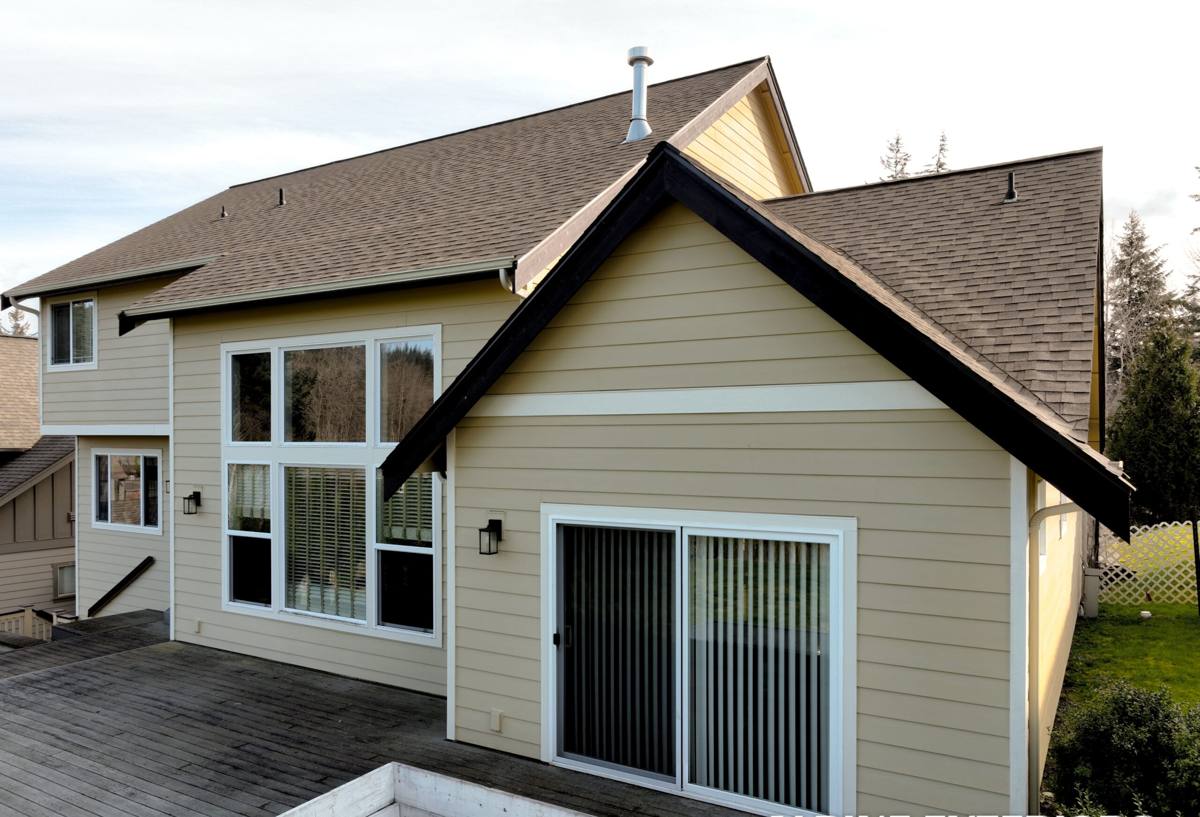
Why We Install Only James Hardie
We install James Hardie fiber cement siding exclusively. We don't install vinyl, LP SmartSide, Cemplank, Allura, primed spruce, or cedar, and that's a deliberate professional standard, not a marketing line. Each of those products has real strengths — vinyl is inexpensive, LP SmartSide is easy to work with, cedar looks great fresh off the truck — but each also comes with a trade-off that shows up over time in a climate like this one: vinyl can warp and its seams open up under repeated wet-dry cycling; wood-based products feed the moss and algae that Custer's shade and moisture already encourage; cedar needs a maintenance commitment most owners underestimate until year five or six.
James Hardie fiber cement is non-combustible, it's engineered specifically for climates like ours through Hardie's HZ5 product formulation, and it carries a factory-applied ColorPlus finish that's baked on rather than field-painted. It doesn't have the organic material that algae and moss feed on, and it holds its shape and its paint line straight through decades of wet Pacific Northwest winters. That combination is why we standardized on one manufacturer instead of offering a menu of options — we'd rather do one thing exactly right than several things adequately.
What ColorPlus Actually Buys You Here
ColorPlus finish is cured onto the board at the factory under controlled conditions, which gives it better fade and chip resistance than a coat of paint applied on-site after installation. In a salt-air environment, that matters more than it would somewhere drier — field-applied paint tends to break down faster when it's fighting salt residue and constant moisture, and repainting a house in Custer isn't a small job. ColorPlus siding is also backed by its own finish warranty separate from the substrate warranty, so you're covered on both the board and the color.
The Right Hardie Product Line for This Exposure
Not every James Hardie product is the right fit for every wall. Part of a correct installation is choosing the profile that suits the home's design and the specific exposure it faces — a wall that catches wind-driven rain off the water needs the same care in product selection as it does in flashing detail.
HardiePlank Lap Siding
The most common choice for Custer homes, HardiePlank gives you the traditional horizontal lap look in a range of exposures and textures. It's the right call for most full-house re-sides and pairs well with the region's mix of traditional and craftsman-style homes.
HardiePanel Vertical Siding
Used for board-and-batten sections, gable accents, or a full vertical treatment, HardiePanel sheds water differently than lap siding and needs its own flashing approach at the battens and panel joints. We use it selectively where it fits the design, not as a default.
Trim and Soffit
James Hardie trim boards finish out corners, window and door surrounds, and fascia in the same fiber cement material, so the whole exterior envelope — not just the field siding — gets the same moisture and salt resistance instead of leaving a wood trim weak point next to fiber cement siding.
What a Correct Installation Involves in a High-Moisture Area
James Hardie siding performs to its warranty terms only when it's installed to the manufacturer's specifications, and in a climate that pushes rain sideways for weeks at a time, the details matter more than they would somewhere drier.
- A continuous weather-resistive barrier behind the siding, with all seams properly lapped and taped
- Correct minimum overlap on lap siding courses, and proper fastening pattern and depth — over-driven nails are one of the most common causes of early failure
- Flashing at every window, door, and roofline intersection, including kick-out flashing where a roof edge meets a sidewall, which is one of the most common places we find water damage on older re-sides
- A gap maintained between the siding and any horizontal surface — decks, roofs, walkways — so water has somewhere to go instead of wicking into the board
- Butt joints and caulking limited to where Hardie's specifications actually call for them, not applied everywhere out of habit
- Proper ground clearance at the base of the wall to keep splash-back and standing moisture off the bottom course
None of this is exotic. It's the manufacturer's published installation standard, applied without shortcuts. The reason it's worth spelling out is that most of the siding failures we see on older homes in this area trace back to one of these details being skipped — not to the material itself.
Managing Moss, Algae, and Salt Air Over Time
Even a correctly installed Hardie system benefits from a little seasonal attention in a climate like Custer's. Fiber cement doesn't feed moss or algae the way wood-based siding does, but organic growth can still take hold on the surface, especially on shaded, north-facing walls that stay damp longer through the fall and winter.
A gentle rinse a couple of times a year — garden-hose pressure, not a pressure washer aimed directly at the siding — keeps salt residue and surface growth from building up. Keeping shrubs and trees trimmed back from the walls improves airflow and drying time after storms, which does more to slow moss growth than any cleaning product. Gutters that are cleared and functioning also matter more here than in a drier climate, since overflow during a heavy rain event is exactly the kind of sustained wetting that stresses any siding system over years.
Our Process for a Custer Project
- On-site inspection. We walk the exterior, check the condition of the existing siding and sheathing where it's exposed, and note exposure-specific concerns like wind direction, shading, and roof-wall intersections.
- Product and color selection. We help you choose the right HardiePlank or HardiePanel profile and a ColorPlus color that suits the home and holds up to this climate.
- Scope and estimate. You get a written estimate that spells out tear-off, any sheathing repair, siding, trim, and flashing work — no vague allowances.
- Tear-off and prep. Old siding comes off, the sheathing underneath gets inspected and repaired where needed, and a new weather-resistive barrier goes on before anything else.
- Installation to manufacturer spec. Siding, trim, and flashing go on following James Hardie's published installation guidelines, not a shortcut version of them.
- Final walk-through. We review the finished job with you, clean up the site, and make sure you have your warranty documentation.
Cost Factors for a Custer James Hardie Project
Every house is different, so a real number comes from an on-site estimate — but the factors that move the price are consistent. Knowing them ahead of time makes it easier to understand your estimate when it arrives.
| Factor | Why It Affects Cost |
|---|---|
| Home size and wall complexity | More square footage and more corners, gables, and cutouts mean more material and labor |
| Existing siding removal | Tear-off of old vinyl, wood, or a prior fiber cement job adds labor and disposal cost |
| Sheathing condition | Moisture-damaged sheathing found during tear-off needs repair before new siding can go on |
| Product mix | HardiePlank, HardiePanel, and trim work are priced differently based on profile and coverage |
| Wall exposure and accessibility | Multi-story walls, tight setbacks, or difficult access add labor time |
| Flashing and detail work | Homes with more rooflines, windows, and wall intersections require more flashing detail |
Why a Crew That Already Works in Custer Matters
A contractor who's already worked this stretch of Whatcom County knows what a wall facing prevailing wind and rain off the water actually needs versus a wall tucked on the leeward side of the same house — and that affects where extra flashing attention or a different product profile makes sense. It also means we're familiar with local permitting requirements and typical construction in the area, so there aren't surprises mid-project. And because we only install one product system, our crews aren't relearning installation specs from job to job — every Custer project gets the same attention to the details that actually determine how long the siding lasts here.
Questions Worth Asking Any Siding Contractor Before You Hire
- Are you a certified James Hardie installer, and can you explain their installation specifications for this house?
- What's your plan for flashing at roof-wall intersections and around windows and doors?
- Will you inspect and repair sheathing if it's found damaged during tear-off, and how is that priced?
- What does your written warranty cover, separate from the manufacturer's product warranty?
- Can you provide references from other Whatcom County projects?
If you're weighing a siding replacement or repair on a Custer home, we're happy to take a look and walk you through what your house actually needs. Fill out the form below for a free, no-pressure estimate.