 Lynden Siding
 Fiber Cement Siding Built for Acme's Climate
Acme sits at the edge of the Nooksack Valley, close enough to the foothills that homes here deal with a slightly different weather pattern than siding jobs we run closer to town in Lynden. You get more direct rain exposure off the surrounding terrain, heavier tree cover on a lot of lots, and long stretches of damp shade that keep siding wet longer after a storm passes. Add in the general Whatcom County mix of salt-laden marine air moving up from Bellingham Bay and a moss season that can run from October through April, and you have an environment that is genuinely hard on exterior materials — especially anything with wood content or a coating that isn't factory-cured.
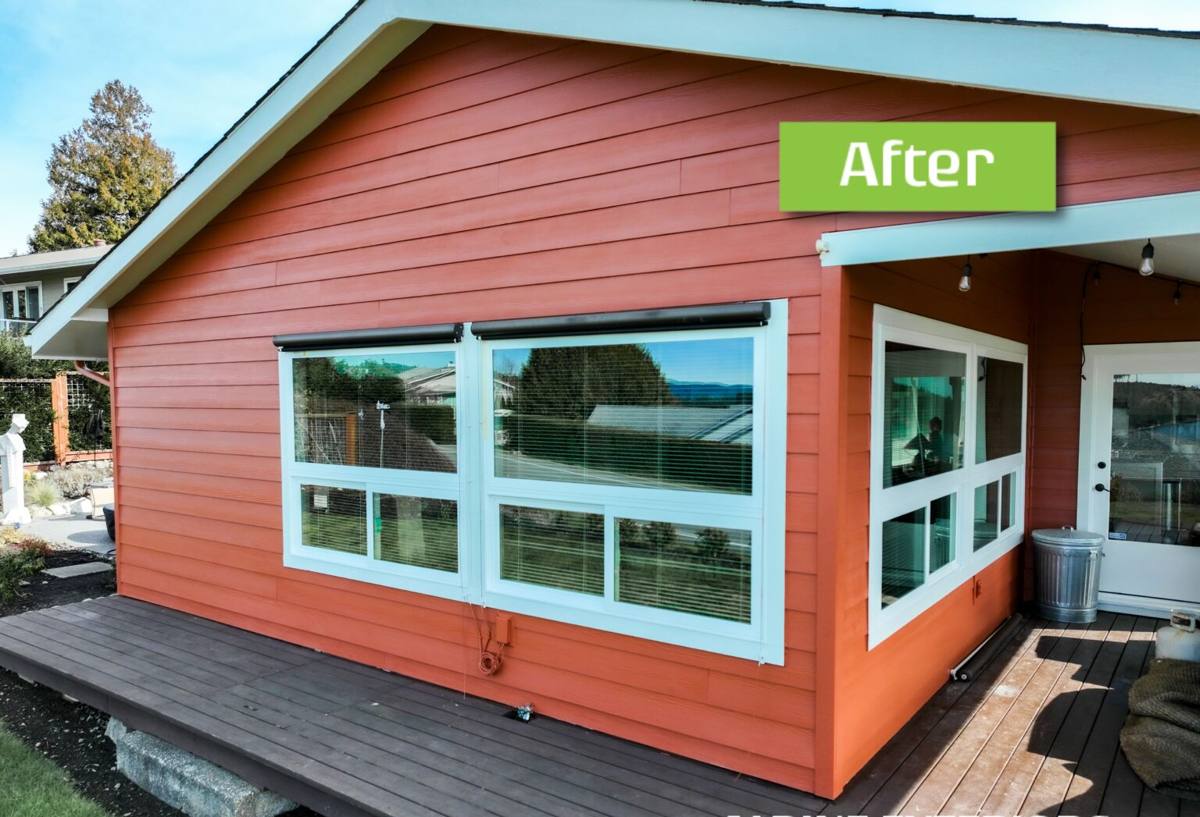
Fiber cement siding, specifically James Hardie's HZ10 product line engineered for the Pacific Northwest's cooler, wetter climate zone, is built to handle exactly this kind of exposure. We install it exclusively because it's the one product we've found that holds up to Acme's conditions without the maintenance spiral that vinyl, LP SmartSide, or untreated wood siding eventually fall into out here.
What Acme Homes Actually Need From Their Siding
Moisture Management First
The biggest threat to siding in this part of Whatcom County isn't a single big storm — it's the cumulative effect of siding staying damp for days at a time under tree canopy or on shaded north-facing walls. Materials that absorb moisture (untreated wood, some engineered wood products) swell, then dry, then swell again. Over years, that cycle telegraphs through paint, opens seams, and invites rot at butt joints and corners. Fiber cement doesn't absorb water the way wood-based products do, which matters enormously on lots with heavy shade or a lot of understory growth close to the house.
Moss and Algae Resistance
Moss doesn't just grow on roofs. On siding that stays damp — especially on the north and east elevations of homes tucked against tree lines — moss and algae can take hold in the texture of the material itself, and once established, it holds even more moisture against the wall. A dense, factory-manufactured fiber cement panel gives moss and algae less to grip onto than a rough-sawn wood surface, and Hardie's ColorPlus finish is applied and cured in a controlled factory environment specifically to resist that kind of biological growth better than field-applied paint.
Salt Air, Even This Far Inland
Acme is well inland from the bay, but Whatcom County's marine air pattern still carries salt-laden moisture further than most homeowners expect, and it compounds with agricultural dust and general valley humidity. Salt exposure accelerates the breakdown of standard paint films and corrodes fasteners that aren't rated for it. It's a slower process here than on a waterfront lot, but it's part of why we don't treat "far from the water" as a reason to cut corners on fastener spec or finish quality.
What a Correct Fiber Cement Job Involves
Fiber cement is only as good as its installation. A huge share of the siding problems we get called out to inspect on older homes in this area trace back not to the material but to how it went on. A correct job includes:
- Proper water-resistive barrier and rainscreen or drainage gap behind the siding, so any moisture that gets past the cladding has somewhere to go instead of sitting against the sheathing
- Correct fastener type, length, and spacing per the manufacturer's installation manual — not shortcuts to save time
- Factory-cut and factory-primed edges wherever possible, with field cuts properly sealed rather than left raw
- Proper clearance from grade, roof lines, and decks — Hardie specifies minimum gaps that a lot of failed installs ignore
- Correctly flashed and caulked penetrations at windows, doors, and utility fixtures, since these are the most common places we find water intrusion on older siding jobs
- Panel and joint layout that accounts for expansion and avoids trapping moisture at seams
Skipping any one of these doesn't usually cause an immediate, visible problem. It shows up three, five, or ten years later as staining, soft spots, or paint failure at specific points on the house — almost always exactly where the installation cut a corner.
Why We Install Only James Hardie
We get asked fairly often why we don't offer LP SmartSide, vinyl, or a cheaper fiber cement alternative alongside Hardie. The honest answer is that we standardized on one product because we're the ones who get the callback if it fails, and we've seen enough of the alternatives fail in this climate specifically to not want our name on them.
| Factor | James Hardie Fiber Cement | Common Alternatives |
|---|---|---|
| Moisture behavior | Non-combustible cement composite, doesn't swell or rot with sustained damp exposure | Engineered wood (LP SmartSide) can swell at edges if moisture reaches the core; vinyl doesn't rot but can warp and gap |
| Finish durability | ColorPlus factory finish baked on and warranted separately from the substrate | Field-applied paint on wood siding needs repainting on a shorter cycle; vinyl color is molded-in but fades and chalks over time |
| Moss/algae resistance | Dense factory panel resists organic growth better than rough wood-based textures | Textured wood-based sidings can hold moisture and organic growth in the grain |
| Fire rating | Non-combustible material | Wood-based and vinyl products are combustible |
| Warranty structure | Long-term transferable limited warranty on the substrate, plus a separate finish warranty | Varies widely; wood-based products often carry shorter or more exclusion-heavy warranties |
Vinyl has its place in some markets, and LP SmartSide is a legitimate product with real strengths — it's lighter and easier to handle than fiber cement. But for a climate that stays wet as long as Whatcom County's does, we'd rather install one product correctly, every time, than manage installation crews and warranty claims across several.
Our Process for Acme Projects
1. On-Site Assessment
We walk the exterior, check for existing moisture damage or rot behind current siding, note tree cover and drainage patterns specific to the lot, and identify any framing or sheathing repairs needed before new siding goes on. This matters more on shaded, tree-lined lots common around Acme than it does on an open, sun-exposed site.
2. Product and Color Selection
We help homeowners choose between Hardie's plank, shingle, and panel profiles and walk through ColorPlus color options that hold up well against Whatcom County's grey-sky months rather than just looking good on a sample chip in bright sun.
3. Prep and Weather Barrier Installation
Any needed sheathing repair happens first. We install the water-resistive barrier and drainage plane correctly before a single piece of siding goes up — this is the step that determines how the house performs in year eight, not year one.
4. Installation to Manufacturer Spec
Fastening, clearances, flashing, and joint treatment all follow James Hardie's published installation requirements. This is also what keeps the manufacturer's warranty valid — installs that skip steps can void warranty coverage even on a good product.
5. Final Walkthrough
We review the finished job with the homeowner, point out anything relevant to long-term care (like keeping vegetation trimmed back from siding, which matters a lot on wooded Acme lots), and make sure everything meets spec before we consider the job done.
Why Local Experience in This Area Matters
A crew that only works in drier or more open parts of the county can underestimate what Acme's tree cover and terrain do to a siding job. We adjust drainage planning, fastener spec, and even scheduling (working around wetter stretches rather than installing during them) based on what we've seen hold up and what hasn't on homes in this specific pocket of Whatcom County. That's not a marketing point — it's the difference between siding that still looks right at year fifteen and siding that starts showing problems at year five.
What to Check Before You Hire Anyone for This Job
- Are they installing to the manufacturer's written specifications, or their own shortcut version?
- Do they address drainage planning and rainscreen gaps, or just nail panels over the old wall?
- Can they explain why they chose the specific Hardie product line for your home's exposure?
- Will the installation keep the manufacturer's warranty intact, or does their method risk voiding it?
- Do they have experience with homes in wooded, damp-shaded settings like Acme specifically, not just open lots in town?
Getting Started
If your Acme home's siding is showing moss buildup, soft spots, peeling paint, or you're planning ahead of a remodel, we're happy to come take a look and give you a straight assessment of what's going on and what it would take to fix it right. There's no pressure and no cost to get an estimate — just a clear look at your options with James Hardie fiber cement siding built for exactly the kind of weather Acme sees.