 Lynden Siding
 Deming's Setting Puts Extra Demands on Siding
Deming sits in the North Fork Nooksack River valley, tucked under heavy tree cover as the land starts climbing toward the foothills of Mount Baker. That setting is beautiful, but it's rough on exterior building materials. Properties here tend to be larger and more wooded than in town, which means siding stays shaded for long stretches of the day, dries slowly after rain, and collects windblown needles, leaf litter, and organic debris in a way that a more open, in-town lot rarely does.
Add in the broader Whatcom County weather pattern — long stretches of driving rain, humid marine-influenced air pushing up the valley from Puget Sound, and a moss season that can run most of the year in shaded spots — and you get siding that's working harder than the same product would on a dry, sunlit wall. Moisture that lingers against a wall for weeks at a time is the single biggest factor in how long any siding material actually lasts, regardless of what the manufacturer's brochure claims.
None of this means Deming homes need something exotic. It means the replacement has to be done correctly, with the right material and the right water management details, because this location doesn't forgive shortcuts the way a drier climate might.
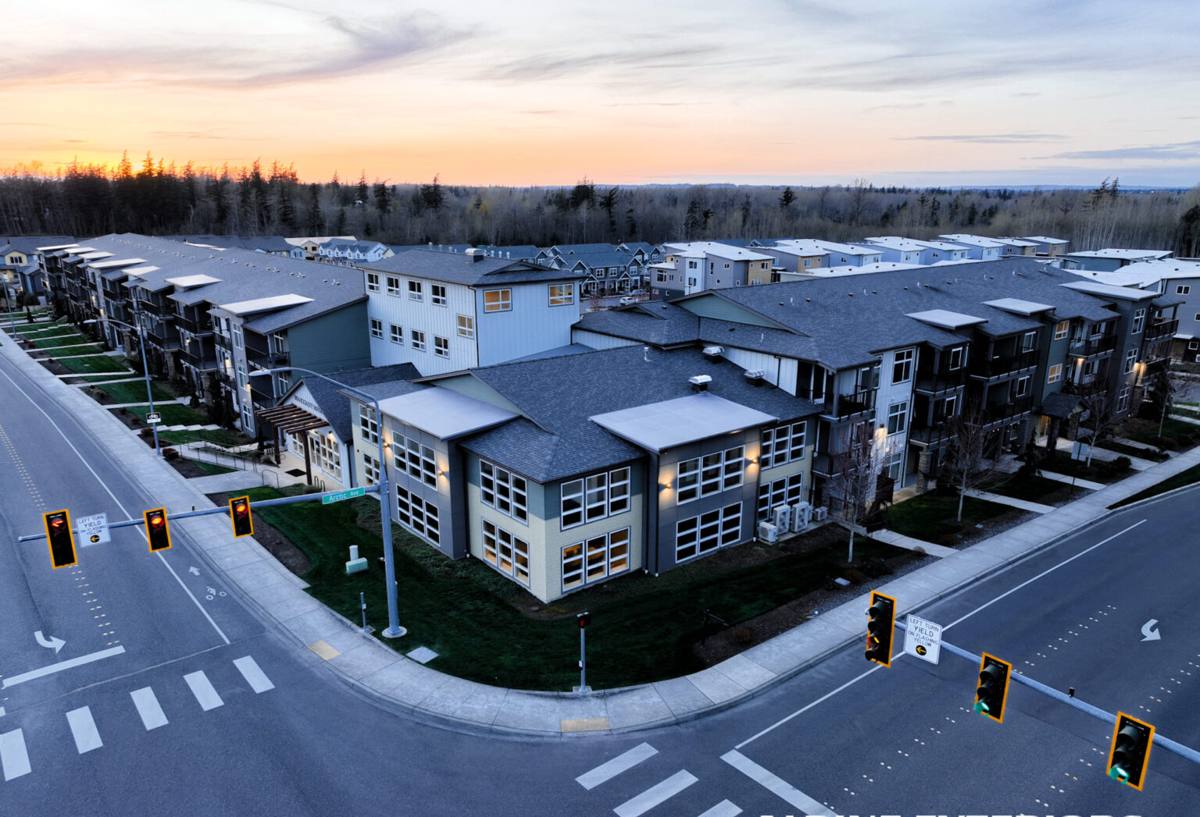
What Deming's Climate Actually Does to Siding
Shade and moss
Tree-shaded walls stay damp longer after every rain event. Moss and algae take hold first in shaded, north-facing, and tree-adjacent sections, and once established they hold moisture directly against the siding surface. On absorbent materials, that trapped moisture leads to swelling, soft spots, and paint failure. On any material, a moss-covered wall traps grime and shortens the useful life of the finish.
Driving rain and wind-driven moisture
Rain in this part of Whatcom County doesn't always fall straight down. Wind-driven rain gets pushed sideways into laps, seams, and trim intersections, which is exactly where a lot of siding failures start. Correct flashing and lap detailing matter more here than in a calmer, drier climate.
Debris and organic buildup
Properties surrounded by conifers deal with needle and debris buildup at the base of walls, behind foundation planting, and in ground-contact areas. That organic material holds water against the bottom courses of siding, which is one of the most common failure points we see on wooded lots.
Seasonal humidity and slow drying
Even on days without rain, humidity in a shaded river valley stays high. Materials that absorb moisture and release it slowly are at a disadvantage here compared to a material engineered to resist water intrusion in the first place.
What a Correct Siding Replacement Actually Involves
Siding replacement is not just pulling off old material and nailing up new panels. On a property like the ones common around Deming, the water management layer underneath the siding matters as much as the siding itself.
- Full tear-off and inspection of the sheathing underneath — this is where hidden rot from years of trapped moisture usually shows up
- Repair or replacement of any damaged sheathing before anything new goes back on
- Installation of a code-compliant weather-resistant barrier (WRB), lapped and sealed correctly
- Proper flashing at every window, door, deck ledger, and roof-to-wall intersection
- A drainage plane or rainscreen detail where the wall design calls for one, so moisture that does get behind the siding can drain and dry out
- Correct fastener type, spacing, and penetration for the specific siding product and wall assembly
- Factory-finished trim and caulking only where the manufacturer's install instructions call for sealant — over-caulking traps moisture rather than keeping it out
Skip any one of these steps and the new siding can look fine for a year or two while the same underlying moisture problem that damaged the old siding starts working on the new material.
Our Process for a Deming Siding Replacement
- On-site assessment. We walk the exterior, check shaded and moss-prone sections closely, and probe any areas showing soft spots, staining, or bubbled paint.
- Moisture and substrate check. Before quoting a number, we want to know what's happening underneath the current siding, not just what it looks like from the driveway.
- Product and color selection. We walk through the James Hardie lineup and profiles that fit the home's style and exposure, including ColorPlus factory finishes.
- Tear-off and repair. Old siding comes off, damaged sheathing gets replaced, and the water management layer goes in correctly the first time.
- Installation to manufacturer spec. Fastening, clearances, and flashing details are installed to James Hardie's published instructions, not shortcuts.
- Final walkthrough and cleanup. We review the finished work with the homeowner and clear debris from the site, including from planting beds and ground-level areas prone to organic buildup.
Why site access and tree cover change the job
Wooded, larger-lot properties around Deming often need more careful staging — protecting landscaping, managing overhead branches, and sometimes coordinating around septic fields or well equipment that don't come up on a standard in-town lot. A crew that already works this area plans for that before the trucks show up, rather than figuring it out on day one.
Why We Install Only James Hardie Fiber Cement
We don't install vinyl, LP SmartSide, primed wood, cedar, or other fiber cement brands. That's a deliberate standard, not a lack of options. In a shaded, moisture-heavy setting like Deming, the material's behavior over 10, 20, and 30 years matters more than how it looks on installation day.
| Material | Moisture behavior | Moss/algae resistance | Long-term concern in this climate |
|---|---|---|---|
| James Hardie fiber cement | Non-combustible, engineered to resist moisture-related swelling and warping | Factory finish holds up well; surface doesn't feed organic growth the way wood-based products can | Requires correct installation to spec, but the material itself is built for wet climates |
| Vinyl siding | Doesn't absorb water, but can warp, crack, or gap over time, opening paths for moisture behind it | Traps moisture behind panels if installed loosely; can grow moss/algae on the surface in constant shade | Seams and laps loosen over decades; limited repairability |
| LP SmartSide / wood-based siding | Wood-strand core is more moisture-sensitive; edge swelling is a known failure point | More prone to surface growth in prolonged shade and damp conditions | Cut edges and joints need diligent sealing and maintenance to avoid swelling |
| Cedar / primed wood | Natural material, absorbs and releases moisture; needs ongoing finish maintenance | Highly prone to moss, mildew, and algae in shaded, humid conditions | Repainting/resealing cycle is frequent in this climate |
Hardie's HZ5 formulation is engineered for climates with real moisture exposure, and the ColorPlus finish is baked on at the factory under controlled conditions, which gives it more consistent long-term performance than field-applied paint on a shaded wall that rarely gets a full day of sun to cure a fresh coat.
What Siding Replacement Costs Depend On
| Factor | Why it matters in Deming specifically |
|---|---|
| Extent of hidden sheathing damage | Wooded, shaded walls with a history of moss and trapped moisture often need more sheathing repair than a sunny in-town wall |
| Home size and wall complexity | Dormers, multiple gables, and wraparound porches common on larger rural lots add labor and trim detail |
| Siding profile and finish | Lap width, panel style, and ColorPlus color selection all affect material cost |
| Site access | Long driveways, tree clearance, and septic/well layouts can affect staging and equipment access |
| Trim and flashing scope | Full replacement of trim and flashing (recommended, not just cosmetic) adds cost but protects the new siding investment |
We give a firm, itemized number after seeing the property in person — not a phone estimate. On a wooded lot, the sheathing condition underneath the old siding can swing the number more than almost anything else, and that's not something anyone can judge from a photo.
Signs a Deming Home Needs Siding Replacement Soon
- Moss or dark staining that keeps returning within weeks of cleaning, especially on shaded or north-facing walls
- Soft, spongy, or visibly warped sections when pressed by hand
- Paint that's peeling, bubbling, or failing faster than the rest of the house
- Visible gaps opening up at seams, corners, or trim joints
- Persistent musty smell or interior wall staining near an exterior wall
- Siding that's original to a home built more than 20-25 years ago and has never been replaced
Any one of these on its own isn't necessarily an emergency, but on a property with heavy tree cover and constant shade, they tend to compound quickly once moisture gets a foothold.
Why Hiring a Crew That Already Works Deming Matters
A contractor who mainly works dry, open, in-town lots doesn't always plan for what a wooded river-valley property throws at a project — the extra drying time between rain events, the debris management around dense landscaping, or the moss patterns that show where a wall never really dries out. Crews familiar with this part of Whatcom County build that into the assessment and the install plan from the start, rather than treating it as a surprise mid-project.
It also matters for the product decision itself. A crew that's watched how different siding materials actually hold up on shaded, moisture-heavy properties in this area has real experience behind the recommendation, not just a manufacturer's marketing sheet.
If your Deming home's siding is showing moss, soft spots, or paint failure, we're happy to take a look and give you a straight assessment — no pressure, no obligation. Fill out the form below to schedule a free estimate.