 Lynden Siding
 Deming Roofs Take a Different Kind of Beating
Deming sits up the Mount Baker Highway corridor along the Nooksack River, in the wooded foothill country of Whatcom County east of Lynden. It doesn't get talked about as a waterfront community, but it sits inside the same marine-influenced weather system that soaks this whole corner of Washington: moist air pushes inland off the Salish Sea, rain comes down heavy and often sideways, and the heavy tree cover along the river keeps roofs shaded and damp long after a storm has passed. That combination of driving rain, salt-tinged coastal air moving up the valley, and a moss season that barely lets up from October through May is hard on any roof, and it's especially hard on the roofs of homes tucked under fir and cedar canopy on acreage lots, which describes a lot of Deming.
Lynden Siding Contractors sends crews out to Deming regularly for roof repair work: patch jobs, leak chases, moss and debris cleanup, flashing repairs. The patterns we see out here are consistent enough that we can tell you what to expect before we ever look at your roof.
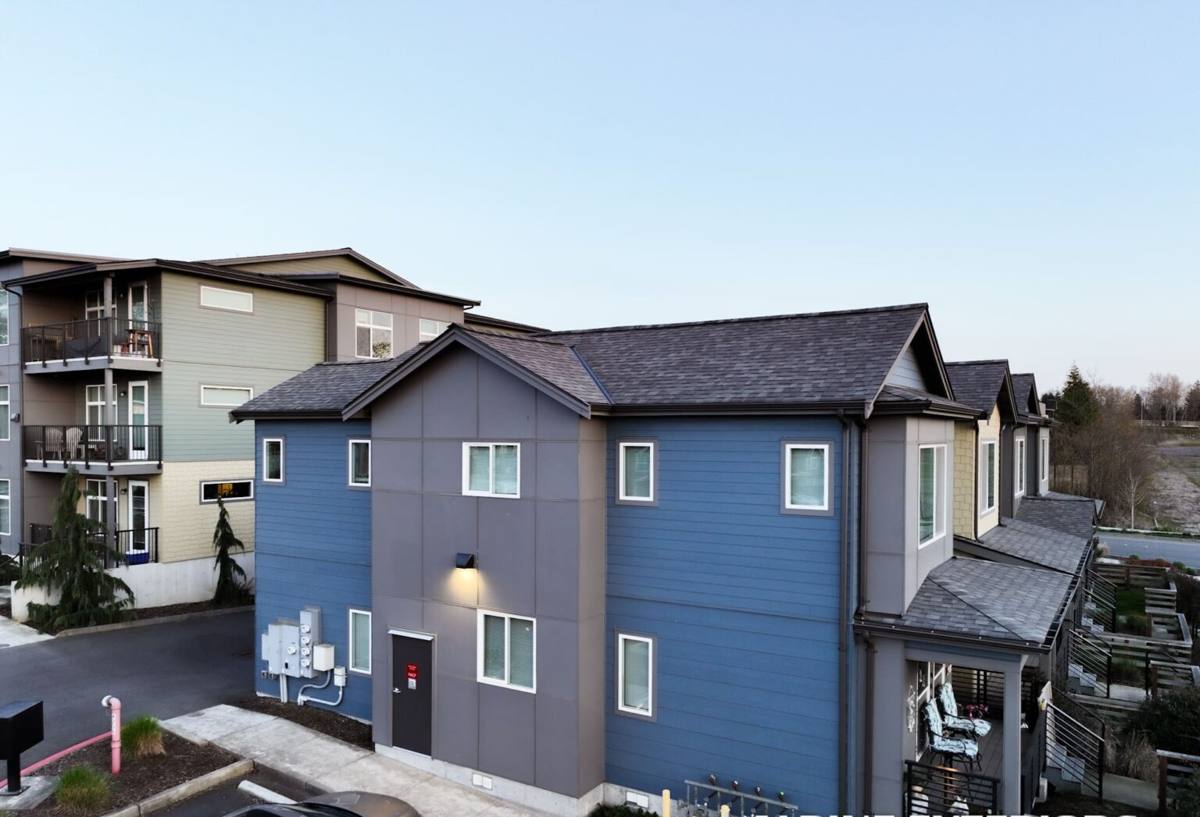
What We're Actually Repairing on Deming Roofs
Moss, Lichen, and Trapped Moisture
Any roof plane shaded by mature trees, which is most of them out here, holds moisture far longer than an open, sun-exposed roof would. Moss gets a foothold in the shaded valleys and north-facing slopes first, then spreads. Left alone, it lifts shingle edges, holds water against the roofing material, and works its way under laps where it doesn't belong. By the time moss is visible from the ground, it's usually already doing some of that damage underneath.
Flashing and Valley Leaks
Wind-driven rain doesn't fall straight down. It gets pushed sideways into roof valleys, around chimneys, and under flashing that's lapped the wrong direction or has failed sealant. Most of the mystery leaks we get called out for in Deming trace back to a flashing detail, not a shingle failure.
Debris Buildup from Tree Cover
Needles, cones, and leaf litter collect in valleys and behind chimneys faster here than on an open roof closer to town. That debris holds water against the roofing surface and clogs the path water needs to drain, which accelerates both moss growth and rot at the roof deck underneath.
Edge and Fascia Rot
Roof edges and fascia boards that stay damp for extended stretches, because they're shaded, because gutters are clogged with debris, or both, are one of the more common repair calls we get. Caught early, it's a straightforward repair. Left long enough, it becomes a decking replacement.
What a Correct Roof Repair Actually Involves
A roof repair that actually solves the problem starts with figuring out what's really going on, not just patching the spot where water showed up inside the house. Water travels along rafters and sheathing before it drips somewhere visible, so the leak point and the entry point are often not the same spot.
On every repair call, that means:
- Tracing the leak to its actual entry point, not just the spot where it showed up on the ceiling
- Checking the roof decking underneath for soft spots or rot before closing anything back up
- Re-flashing valleys, chimneys, and vent penetrations properly rather than just adding sealant over the old flashing
- Matching replacement shingles or roofing material as closely as possible so the repair doesn't stand out
- Clearing moss and debris from the surrounding area, not just the repaired section, so the same spot doesn't fail again next season
- Checking attic ventilation near the repair area, since trapped moisture from the inside can mimic or worsen a roof leak from the outside
Sealant alone is not a repair. It buys time, sometimes only a season, and it's a big part of why some patched roofs keep leaking in the same spot.
Repair or Replace? How We Make That Call in Deming
Not every roof problem calls for a full re-roof, and not every leak should be treated with a patch. The right call depends on the age of the roof, how much of it is affected, and what condition the decking is in underneath.
| Situation | Repair Usually Makes Sense | Replacement Usually Makes Sense |
|---|---|---|
| Roof age | Under 15-20 years, otherwise sound | Nearing or past expected lifespan for the material |
| Extent of damage | Isolated to one area, such as a valley, chimney, or single slope | Spread across multiple areas or slopes |
| Decking condition | Solid, no soft spots found during inspection | Soft, rotted, or delaminated in more than a small spot |
| Moss coverage | Light to moderate, treatable and removable | Heavy, long-term coverage with underlying material breakdown |
| Leak history | New or first-time leak | Repeated leaks in different spots over time |
We'll tell you honestly which category your roof falls into. If a repair will hold for several more years, that's what we'll recommend and price. We don't push replacements on roofs that don't need them.
Our Process for a Deming Repair Call
- Inspection. We get on the roof, or use a camera where the pitch or moss makes that unsafe, and look at the whole roof, not just the spot you called about.
- Straight answer. We tell you what we found, what's causing it, and whether it's a repair or something bigger, in plain terms, before any work starts.
- Written quote. You get a clear price for the actual repair, not a vague range, before we schedule the work.
- The repair itself. Flashing rework, shingle or material replacement, decking repair if needed, and moss and debris clearing in the affected area.
- Cleanup. Old material, debris, and moss removed and hauled off. We don't leave that in your gutters or yard.
Materials and Methods We Use, and Why
Moss treatment matters as much as the repair itself out here, since a repaired roof under the same tree canopy will just grow moss back if nothing changes. We install zinc or copper control strips near the ridge on repair jobs where it makes sense, since rainwater running across them carries trace metal that inhibits regrowth lower on the roof. That's a long-term, low-maintenance approach compared to relying on manual removal every year or two.
We don't pressure-wash shingle roofs. High-pressure washing strips the protective granules off asphalt shingles, and once those granules are gone, the shingle underneath degrades much faster in sun and rain. Moss and debris removal should be done with low-pressure rinsing and hand tools instead. It's slower, but it doesn't shorten the life of the roof you're trying to protect.
Flashing repairs use metal matched to what's already on the roof, or upgraded to a more corrosion-resistant option where the original has clearly failed early. In a climate this consistently damp, the flashing metal and fastener choice matters more than it would in a drier part of the state.
Between Repairs: Keeping a Deming Roof Ahead of the Weather
A repair holds longer when the roof around it is kept up. Homeowners on wooded or river-adjacent lots in Deming get more mileage out of a repair when they stay on top of a few basics between service calls:
- Clear gutters and valleys of needles and debris at least twice a year, more often under heavy fir or cedar cover
- Trim back branches that overhang the roof to reduce shade, debris, and physical abrasion during wind
- Have visible moss addressed while it's still light. It's a far smaller job than removing years of buildup
- Check that attic ventilation isn't blocked by insulation or debris, since trapped indoor moisture accelerates deck rot from underneath
- Walk the roofline after major windstorms and after the first hard freeze of the season, looking for lifted or missing shingles
Why a Crew That Already Works Deming Matters
Deming isn't a dense subdivision. It's acreage lots, gravel driveways, septic systems, and roofs with more tree cover and steeper site access than a typical in-town property. A crew that's already worked this area knows to ask about driveway clearance and staging space before showing up with a trailer, knows which parts of a property tend to stay wet longest into the season, and isn't guessing at how Whatcom County's permitting and inspection process applies to a roof repair versus a full replacement.
That familiarity shows up in small ways that save you time and money: fewer surprise return trips, a more accurate first quote, and a crew that recognizes a Nooksack valley moss problem for what it is instead of treating it like a generic call.
What Roof Repair Typically Costs in Deming
Every repair is different, but the factors that move the price are consistent. We'll always give you an exact number after inspection, not a phone estimate, but this is what drives that number up or down:
| Cost Factor | Why It Matters |
|---|---|
| Roof pitch and access | Steep roofs or limited site access, such as narrow driveways or heavy tree cover, take longer and need more safety setup |
| Extent of decking damage | Rotted plywood or sheathing underneath adds material and labor beyond the surface repair |
| Flashing complexity | Multiple valleys, chimneys, or vent penetrations mean more flashing work than a single-slope patch |
| Moss and debris severity | Heavy, long-term buildup takes more labor to clear safely than light, recent growth |
| Material matching | Older or discontinued roofing material can be harder to match, sometimes requiring a larger repair area |
Small, isolated repairs are often resolved in a single visit. Repairs involving deck replacement or extensive flashing rework take longer and cost more, and we'll walk you through exactly why before we start, not after.
If you've got a leak, a soft spot, or moss that's gotten ahead of you on a Deming roof, we're glad to take a look. Fill out the form below for a free, no-pressure estimate, and we'll tell you honestly what we find and what it'll take to fix it right.