 Lynden Siding
 Deming's Climate and What It Asks of a Siding System
Deming sits in the foothill country of Whatcom County, along the Nooksack River corridor heading toward Mount Baker. Lots out here tend to run wooded, shaded, and often close to water — which is a beautiful place to live and a hard place to keep siding looking good. Tree cover holds moisture against exterior walls long after a storm has passed, shaded north and east elevations dry slowly even on a sunny week, and the region's driving rain off Pacific storm systems finds every gap in a wall assembly that wasn't built to shed it.
Whatcom County as a whole deals with salt-laden air moving in off the Sound, which shortens the life of paint films and cheap coatings across the region. Deming is further inland than the coastline communities, so that salt exposure is less of a daily factor here than driving rain, humidity, and shade are. What Deming homeowners actually fight, season after season, is moss and algae staining, wood rot at ground-contact trim, and caulk lines that fail years before the siding itself gives out. A siding job here has to be judged on how it performs under a tree canopy in a wet climate, not on how it looks in a showroom.
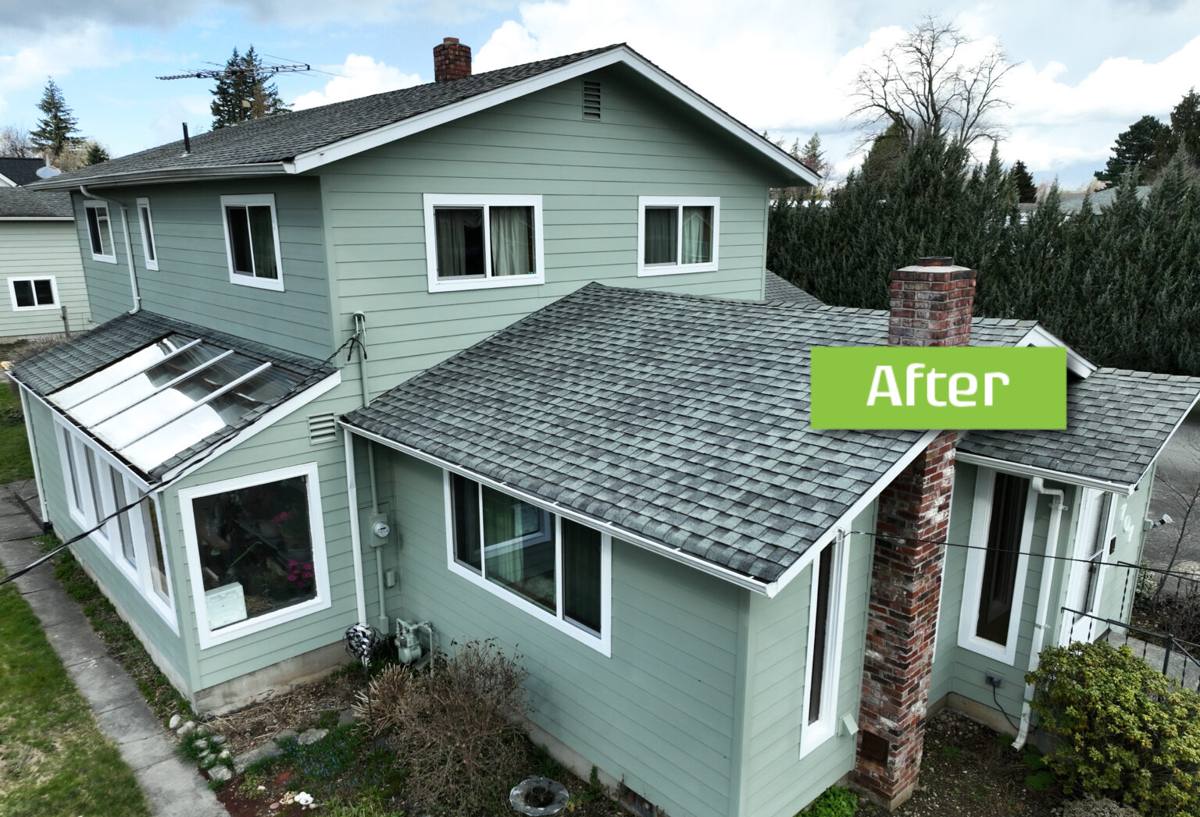
Why Fiber Cement Holds Up Where Deming's Climate Is Hardest On Siding
Moss and Algae Resistance
Shaded, wooded lots grow moss on almost anything that stays damp — roofs, decks, fences, and siding included. Fiber cement doesn't feed mold and mildew the way wood-based products can, and a factory-applied finish holds up to periodic washing far better than field-applied paint. That matters in Deming specifically, where a long moss season means siding gets scrubbed or pressure-washed more often than it would in a drier, sunnier part of the county.
Moisture and Rain Performance
Fiber cement doesn't swell, cup, or delaminate the way wood and some engineered wood products can when they take on repeated moisture. It's dimensionally stable through the wet-dry cycles that are normal for this area, which keeps joints tight and paint lines from cracking. That stability is the difference between siding that still looks straight after ten wet winters and siding that starts showing waves and seam gaps after three or four.
Non-Combustible Composition
Fiber cement is non-combustible, which matters anywhere near Whatcom County's forested foothills where wildfire risk is part of the conversation during dry summer stretches. It's a practical advantage for a rural, tree-lined community like Deming, not a marketing point.
Why We Only Install James Hardie
We install James Hardie fiber cement siding exclusively — we don't install vinyl, LP SmartSide, Cemplank, Allura, primed spruce, or cedar. That's a deliberate standard, not a lack of options. Vinyl is affordable and low-maintenance in the short term, but it can warp in temperature swings, fades unevenly over time, and offers no real fire resistance. LP SmartSide and other engineered wood products perform reasonably well when installation and maintenance are perfect, but they're wood-based at the core, meaning they're more sensitive to the exact conditions Deming has in abundance: sustained moisture, shade, and slow drying. Cedar and primed spruce look great on day one and demand real upkeep — refinishing, caulking, and moisture vigilance — to keep looking that way in a climate that doesn't give wood much of a break.
James Hardie's fiber cement system, backed by a factory ColorPlus finish and a strong transferable warranty, is what we've found holds up on real Whatcom County homes with the least amount of homeowner babysitting. We'd rather stand behind one product line we install correctly every time than offer a menu of products with different failure modes we'd have to explain later.
What a Correct James Hardie Installation Involves in Deming
Fiber cement siding is only as good as the assembly behind it. A rushed or corner-cut install can fail in this climate even with premium material on the wall. The details that matter most for a Deming home:
- A drainage gap (rainscreen) behind the siding so any moisture that gets past the surface has somewhere to go instead of sitting against the sheathing
- Correct flashing at every window, door, and roof-to-wall intersection — the single most common source of hidden rot behind siding that "looked fine" on the outside
- Proper clearance between the bottom of the siding and grade, decks, patios, and roof lines, so splash-back and standing snow or debris don't wick moisture into the plank
- Fastening pattern and nail placement matched to Hardie's published specifications for this climate zone, not a generalized approach
- A continuous, correctly lapped weather-resistive barrier underneath the entire assembly
- Field cuts and joints sealed and painted to Hardie spec so the factory finish isn't compromised at every seam
We also check the sheathing itself before anything new goes up. On wooded, shaded lots it's not unusual to find soft or discolored sheathing behind old siding that trapped moisture for years without anyone knowing. Covering that up with new siding, however good the siding is, just hides the problem for another owner to find later.
Product Lines and Colors Suited to This Area
James Hardie builds its siding in climate-engineered HZ product lines, and the Pacific Northwest falls under the wetter, milder HZ5/HZ10 designation rather than the freeze-heavy zones used elsewhere in the country. That affects the formulation and finish warranty homeowners get here. For Deming specifically, we typically talk through:
- HardiePlank lap siding — the standard choice for most homes, available in several exposure widths and textures
- HardieShingle — a good fit for homes going for a more traditional or Craftsman look common in this part of the county
- HardiePanel — often used on gable ends, accent walls, or in combination with lap siding for visual breaks
- ColorPlus finishes — factory-baked coatings that hold color and resist the fading and chalking that field-applied paint shows first, especially on the shaded elevations that dominate wooded Deming lots
Color choice matters more here than people expect. Very dark colors on a heavily shaded wall show moss growth and water streaking faster than mid-tones, simply because they never get enough direct sun to dry and self-clean between rain events. We'll walk through which finishes hold up best on a specific lot's sun exposure before anything gets ordered.
How Siding Materials Compare in Deming's Conditions
| Factor | James Hardie Fiber Cement | Vinyl | Wood / LP SmartSide |
|---|---|---|---|
| Moisture & moss resistance | High — dimensionally stable, factory finish resists staining | Won't rot, but traps moisture behind panels if installed poorly | Moderate to low — moisture-sensitive by nature |
| Fire resistance | Non-combustible | Melts and can contribute to fire spread | Combustible |
| Finish longevity | Factory ColorPlus, long warranty on finish | Color molded in but fades and chalks over time | Field-painted; repaint cycle typically every 5–8 years |
| Maintenance in shade/tree cover | Periodic wash | Periodic wash; can warp near heat sources | Regular inspection, caulking, and repainting |
| Typical lifespan when installed to spec | Multiple decades | 15–25 years before replacement | Varies widely with maintenance |
Our Process for a Deming Siding Project
- On-site walkthrough — we look at every elevation, note shade patterns, moisture history, and any soft or damaged sheathing before quoting anything
- Written scope and product selection — plank style, texture, and ColorPlus color chosen with the specific lot's exposure in mind
- Tear-off and sheathing check — old siding removed, sheathing inspected and repaired as needed before anything new is installed
- Weather-resistive barrier and rainscreen installation — the part of the job nobody sees but that determines whether the siding lasts
- Hardie installation to manufacturer spec — correct flashing, fastening, clearances, and sealed field cuts
- Final walkthrough — we go over the finished job with the homeowner before calling it done
What Affects the Cost of a Siding Job in Deming
| Cost Factor | Why It Matters Here |
|---|---|
| Extent of sheathing repair | Wooded, shaded lots see more hidden moisture damage behind old siding than sunnier areas |
| Home size and wall complexity | Gables, dormers, and multiple elevations add material and labor time |
| Plank style and texture | Shingle profiles and specialty textures run higher than standard lap siding |
| Access and site conditions | Rural lots with limited driveway access or steep grades can affect staging and labor time |
| Trim and detail work | Window and door trim, corner boards, and fascia work add scope beyond the flat wall area |
We give written, itemized estimates rather than a single lump number, so homeowners can see exactly what's driving the price before agreeing to anything.
Why a Crew That Already Works Deming Matters
Deming isn't downtown Lynden — many properties here are on well and septic, sit on larger wooded parcels, and require different staging and access planning than a standard in-town lot. A crew that's already worked this part of Whatcom County knows what to expect from long gravel driveways, tree-shaded work areas, and the permitting process that applies to unincorporated county land versus city limits. That familiarity shows up in fewer surprises mid-project and a more accurate estimate up front, because we're not guessing at conditions we've never dealt with before.
It also shows up in the material decisions themselves. A crew that only occasionally works this area might default to whatever's easiest to sell, not what actually holds up under Deming's tree cover and rain patterns. Because we install one product system and know this region's conditions well, our recommendations come from what we've seen perform here — not from a generic sales script.
If you're planning a siding project in Deming, we're happy to walk your property, look at your home's specific sun and shade exposure, and put together a straightforward, no-pressure estimate using the form below.