 Lynden Siding
 Deck Building Built for Deming's Conditions
Deming sits in the Nooksack River valley at the base of the foothills leading toward Mount Baker, and that setting shapes what a deck needs to survive here. Tall trees mean more shade on most lots, which means slower drying after every rain. Whatcom County gets a long, wet season, and a deck that isn't built with that in mind will show it within a few years — soft spots underfoot, black streaking on the boards, moss creeping across any surface that stays damp for more than a day or two.
We also build decks across the rest of Whatcom County, including areas closer to the Salish Sea where salt-laden air adds corrosion to the list of things fasteners and hardware have to resist. That regional reality is part of why we spec the same higher-grade hardware on every deck we build, Deming included — a fastener that won't rust or stain doesn't cost much more, and it's the difference between a deck that looks new at year ten and one that's already streaked with rust trails by year three.
None of this is exotic. It's the ordinary math of building outdoor structures in a wet, wooded region: manage moisture, protect the framing, choose materials that don't fight the climate, and get the details right the first time so you're not chasing repairs every spring.
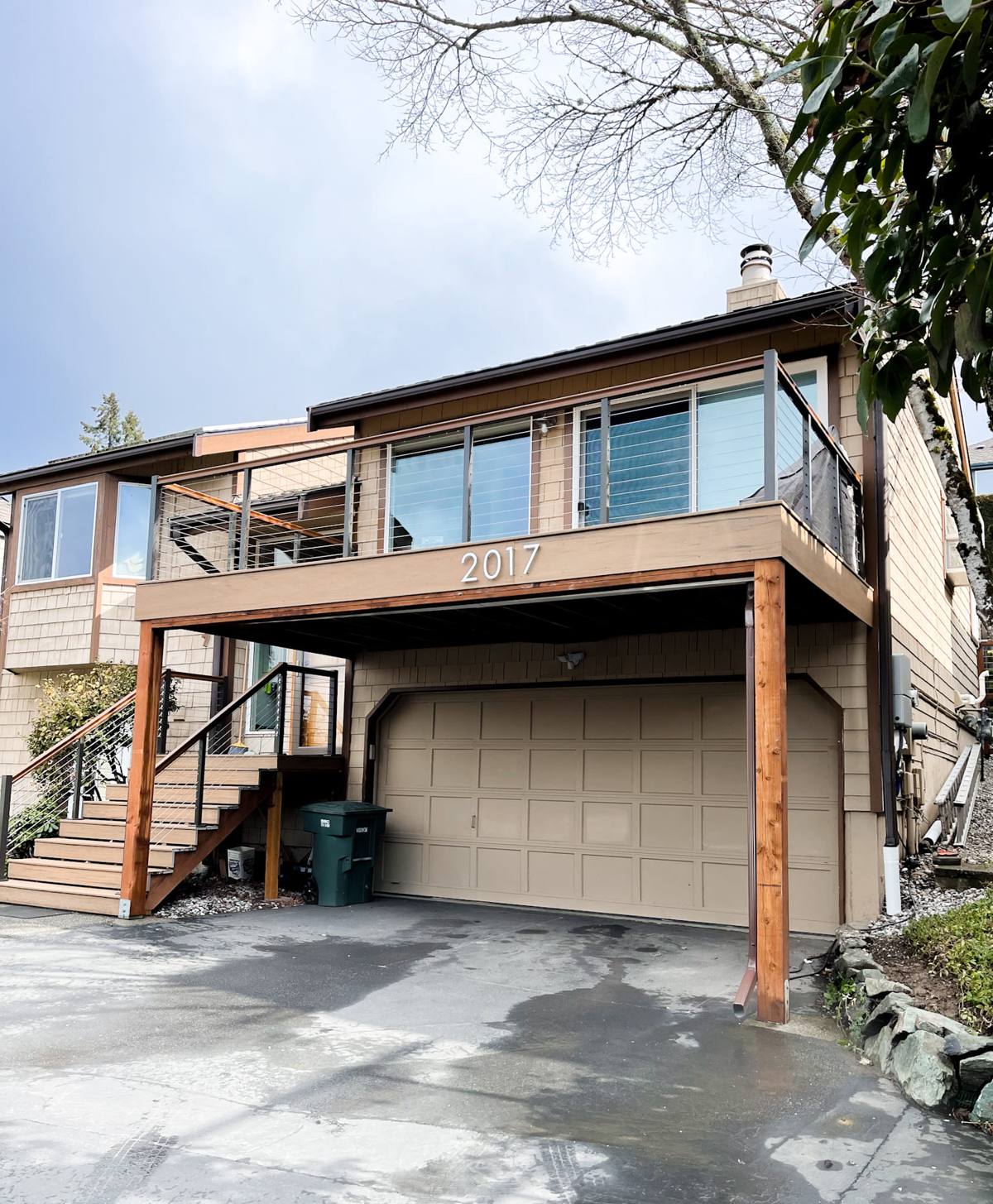
What a Correctly Built Deck Needs in This Area
Moisture Management Starts at the Ledger
Most deck failures we're called out to inspect start at the same place: the ledger board, where the deck attaches to the house. If that connection isn't flashed correctly, water works its way behind the ledger and into the house's rim joist, and by the time anyone notices, there's rot hidden behind the siding. On a shaded, damp lot like a lot of what we see around Deming, that hidden moisture has even less chance to dry out between rains. Proper flashing, correctly lapped with the house's water-resistive barrier, isn't optional here — it's the single most important detail on the whole project.
Framing That Won't Trap Water
Joists and beams need airflow underneath and around them, not just pressure-treated lumber and hope. We space framing to allow drainage and drying, use joist tape or a comparable cap on top of treated joists to keep fasteners from creating a wick point for water, and keep framing lumber off grade contact wherever the deck height allows it. On lower decks or ground-level platforms, that clearance matters even more, since airflow is already limited.
Footings Sized for Local Soil and Frost
Footing depth and sizing depend on soil conditions and frost depth, which can vary across river-valley lots more than people expect. We don't guess on this — footings are sized to the load the deck will actually carry and set to the depth the local code requires, not just poured to whatever a crew has done on the last job in a different part of the county.
Choosing Decking Material for a Shaded, Wet Lot
Material choice matters more in Deming's tree-covered, moisture-heavy conditions than it does on an open, sunny lot. Here's how the common options actually compare once you factor in shade and rain, not just sticker price.
| Material | How It Handles Shade & Moisture | Maintenance | Typical Lifespan |
|---|---|---|---|
| Pressure-treated pine | Absorbs and releases moisture readily; needs to breathe and dry between rains | Annual cleaning, periodic sealing/staining | 15-20 years with upkeep |
| Cedar | Naturally moisture- and insect-resistant, but greys and can host moss without sealing | Regular cleaning, sealing every 2-3 years | 20-25 years with upkeep |
| Composite decking | Doesn't absorb water or rot, but surface algae/moss growth still needs washing off | Periodic washing, no sealing/staining | 25-30+ years, manufacturer-warrantied |
| PVC decking | Fully moisture-resistant, best option for heavily shaded, low-airflow spots | Occasional washing | 25-30+ years, manufacturer-warrantied |
There's no universally "right" answer — it's a real trade-off between upfront cost and long-term maintenance. On a sunny, open lot, well-maintained wood can look great for decades. On a shaded lot that stays damp most of the year, composite or PVC earns its higher price tag by not caring how long the boards stay wet.
Why We're Careful About Certain Products
Some lower-grade composite boards on the market are more sensitive to installation errors than solid wood — gaps, fastening patterns, and ventilation all have to be done to spec or the warranty and the performance both suffer. We won't cut corners on install spacing or hidden fastening just to save time, because on a shaded lot that gets less drying time between storms, those details are what actually determine whether the product performs the way it's supposed to.
Our Deck Building Process
- On-site assessment. We look at sun exposure, tree cover, drainage, soil, and how the deck will tie into the house before recommending anything.
- Design and material selection. We walk through size, layout, railing style, and decking material trade-offs based on your lot's actual light and moisture conditions.
- Permitting. We handle the permit application and coordinate any required inspections through Whatcom County.
- Ledger flashing and structural framing. This is where we spend the extra time — proper flashing, correctly sized footings, and framing built for drainage.
- Decking and railing installation. Boards, fasteners, and railing installed to spec, with attention to gapping and airflow.
- Final walkthrough. We go over the finished deck with you, including what maintenance it will need and when.
Mistakes We Fix (and Avoid From the Start)
A lot of our deck calls in this area aren't new builds — they're repairs on decks that were built without the local climate in mind. The recurring problems are consistent enough to list out.
- Ledger boards attached without proper flashing, leading to hidden rot behind siding
- Framing lumber in direct ground contact with no airflow underneath
- Standard steel fasteners used instead of corrosion-resistant hardware, leaving rust streaks on decking
- Decking boards installed with tight or inconsistent gaps that trap water and debris
- No drainage path planned under low, ground-level decks, leaving standing water after storms
- Composite boards installed without following the manufacturer's ventilation and fastening spec
- Footings undersized or set above the required frost depth
Every item on that list is preventable at the framing stage. It's far cheaper to build it right the first time than to tear out decking two or three years later to fix rot underneath.
Permits, Setbacks, and Structural Requirements
Deck projects in unincorporated Whatcom County, including Deming, typically require a building permit and are subject to setback requirements from property lines, along with structural review for footing size, ledger attachment, and railing height. Requirements can shift depending on deck height, size, and whether it's attached to the house or freestanding, so we confirm the specifics for your property before finalizing a design rather than assuming the same rules apply everywhere in the county.
Maintaining a Deck Through Whatcom County's Wet Season
Whatever material you choose, a deck in a shaded, damp part of Whatcom County needs some seasonal attention to stay ahead of moss and mildew.
- Sweep leaves and needles off the deck regularly through fall — trapped organic debris is what moss and algae feed on
- Wash the surface at least once or twice a year with a deck-safe cleaner to remove moss and mildew before it stains
- Check and clear gaps between boards so water and debris keep draining instead of pooling
- For wood decks, reseal or restain on the schedule the product calls for — don't wait until it's visibly failing
- Trim back overhanging branches where possible to give the deck more light and airflow
- Inspect railings and fastener heads once a year for rust staining or loosening
Why Hire a Crew That Already Works in Deming
A deck built to a generic spec sheet can still fail here if it's not adjusted for shade, drainage, and the amount of rain a wooded river-valley lot actually sees compared to an open one across town. We work throughout Whatcom County and see the full range of conditions — from open, sunny lots to heavily shaded ones like much of what's around Deming — and we build to the conditions in front of us, not a one-size-fits-all plan. That means the right footing depth for your soil, flashing detail sized to your roofline and siding, and a material recommendation based on how much sun your specific lot actually gets, not a national average.
It also means we're not guessing at Whatcom County's permitting process or structural requirements — we handle that as a normal part of every project, so there are no surprises partway through.
Get a Free, No-Pressure Estimate
If you're planning a new deck or need an honest look at an existing one, we're happy to come out, walk the site, and give you a straight assessment — no pressure, no obligation. Use the form below to request a free estimate for your Deming deck project.