 Lynden Siding
 Deck Replacement for Nooksack-Area Homes
Nooksack sits in one of the wetter corners of Whatcom County, and decks here take a different kind of beating than decks in drier parts of the state. Long stretches of fall and winter rain, heavy morning dew off the river valley, and a moss season that can run six months or more all work on wood and hardware in ways that add up fast. If your deck is past the point of a board swap or a re-stain, a full replacement done right for this climate will outlast a patch job by years and cost less over the long run than repeating repairs every couple of seasons.
This page covers what a proper deck replacement looks like for a Nooksack-area property, what tends to go wrong with decks in this part of Whatcom County, and how we approach the job from tear-off to final walkthrough.
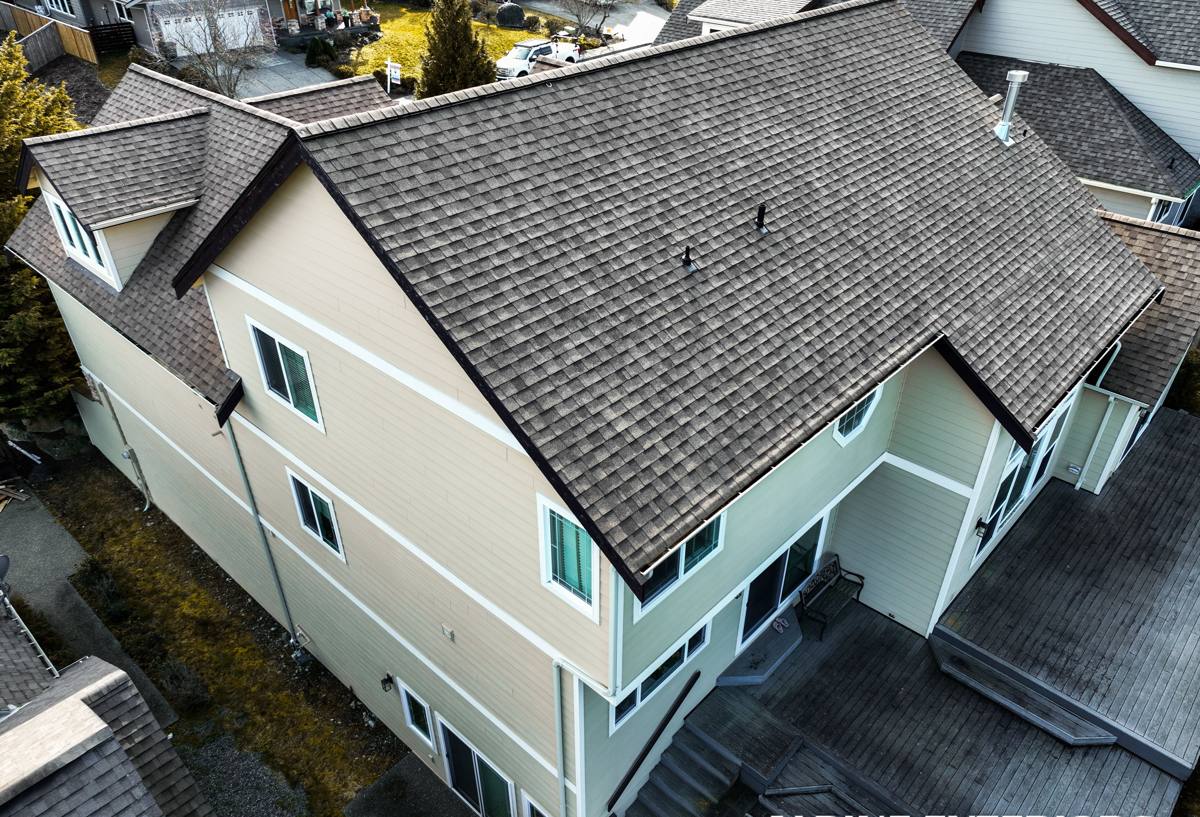
Signs It's Time to Replace, Not Repair
A lot of homeowners call us after paying for a repair that didn't hold. The honest answer is that some deck problems are surface issues, and some mean the structure underneath is compromised. Here's how to tell the difference before you spend money on the wrong fix:
- Soft, spongy, or bouncy spots when you walk across the deck — usually rotted joists or beams, not just bad boards
- Ledger board pulling away from the house, or gaps and water staining where the deck meets the siding
- Fasteners rusted, popped up, or leaving black streaks — a sign moisture has been sitting in the wood longer than it should
- Persistent moss or algae growth that comes back within weeks of cleaning, even after treatment
- Posts or footings that feel loose, shift, or show cracking at ground level
- Railings that flex or wobble under hand pressure — a safety issue, not a cosmetic one
- Boards that are cupping, splitting, or delaminating across most of the deck rather than in a few isolated spots
If it's one or two boards and the frame underneath is solid, a repair is the right call. If the frame itself is compromised or the deck is old enough that most of the surface is failing at once, replacement is usually the more honest recommendation — and the safer one.
What Whatcom County's Climate Does to Decks
Rain and Standing Moisture
Nooksack and the surrounding Lynden area get sustained rain for much of the year, not just occasional storms. Decks that don't drain well, or that trap water against the house at the ledger board, stay wet far longer than they should. That prolonged moisture is what drives rot, not any single rainstorm.
Moss and Algae
A long moss season is one of the defining features of building here. Moss holds moisture against the deck surface, breaks down fasteners and finishes faster, and makes boards slick and dangerous underfoot. Deck surfaces that face north or sit under tree cover are especially prone to it.
Freeze-Thaw and Ground Movement
Whatcom County gets enough freeze-thaw cycling through the winter to stress footings and hardware over time, especially on older decks built without proper frost-depth footings. Movement at the posts shows up as loose railings and uneven decking years before it becomes an obvious safety problem.
General Marine-Influenced Air
The broader marine-influenced climate across this part of Washington keeps humidity elevated most of the year, which is part of why untreated or poorly sealed wood ages faster here than in drier regions of the state.
Decking Material Options
Material choice matters more here than in drier climates, because whatever you install is going to spend most of the year damp. There's no single right answer — it depends on your budget, how much upkeep you want to do, and how long you plan to stay in the home.
| Material | Moisture Behavior | Maintenance | Typical Lifespan |
|---|---|---|---|
| Pressure-treated wood | Prone to cupping/splitting if not sealed regularly | Annual cleaning and re-sealing recommended | 10-15 years with upkeep |
| Cedar | Naturally moisture-resistant, still needs sealing | Periodic oiling/staining | 15-20 years with upkeep |
| Composite decking | Doesn't rot, but can trap moisture underneath if airflow is poor | Occasional washing, no staining/sealing | 25-30+ years |
| PVC/capped polymer | Fully moisture-resistant surface | Lowest maintenance of the group | 25-30+ years |
Whichever material you choose, the framing underneath matters just as much as the surface. We'll walk you through the honest trade-offs for your specific deck rather than pushing one product line — the right choice depends on your budget and how much maintenance you actually want to keep up with.
Getting the Structure Right, Not Just the Surface
Ledger Board and Flashing
Where the deck attaches to the house is the single most common failure point we see. Proper flashing at the ledger board keeps water from wicking into the house's rim joist and siding. A lot of older decks in this area were built without adequate flashing, and it's one of the first things we check on any replacement.
Footings and Posts
Footings need to sit below frost depth and bear on solid ground, not just decorative concrete blocks sitting on the surface. This is a code requirement, and it's also what keeps a deck from shifting after a hard winter.
Joist Spacing and Hardware
Correct joist spacing and coated, corrosion-resistant hardware matter more here given the moisture exposure. Using standard uncoated fasteners in a climate like this shortens the life of the whole structure, even if the decking on top looks fine.
Railings and Guards
Railing height, baluster spacing, and post attachment all need to meet current code, especially if you're replacing an older deck that was built under older rules. This isn't just a paperwork issue — loose or undersized railings are a real safety risk.
Our Deck Replacement Process
- On-site assessment — we inspect the existing deck, ledger connection, footings, and framing to confirm what's driving the failure, not just what's visible on the surface.
- Material and design conversation — we talk through decking material, railing style, and layout based on your budget and how you use the space.
- Permitting — deck replacements typically require a permit; we handle that paperwork so the finished structure is documented and code-compliant.
- Tear-off and disposal — the old deck comes down and old hardware and footings are inspected or replaced as needed.
- Framing and flashing — new footings, framing, and ledger flashing are installed to current code before any decking goes down.
- Decking and railings — surface material and railings are installed per the plan we agreed on.
- Final walkthrough — we go over the finished deck with you, including what maintenance (if any) the material you chose will need going forward.
What Drives Cost
Every deck is different, and we won't quote a number without seeing the site, but these are the main factors that move the price up or down:
| Factor | Impact on Cost |
|---|---|
| Deck size and shape | Larger and multi-level decks require more material and labor |
| Decking material | Composite/PVC costs more upfront than wood, less over time |
| Existing structural damage | Rotted framing or bad footings add work beyond a straight surface swap |
| Height off grade | Taller decks need more substantial framing, railings, and sometimes stairs |
| Access to the site | Tight lots or limited equipment access can add labor time |
| Permit requirements | Scope changes (like adding railings or altering footprint) can affect permitting cost |
As a rough starting point, straightforward wood deck replacements tend to run lower than composite or PVC installs of the same size, mainly due to material cost — but we'll give you real numbers once we've seen the deck in person.
Why a Local Crew Matters for Nooksack
A deck built for a dry climate doesn't hold up the same way here. Contractors who don't regularly work in Whatcom County can miss the flashing details, footing depth, and material choices that matter most in a wet, moss-prone environment like Nooksack and the greater Lynden area. A crew that already works this region day to day knows what tends to fail first on local decks, what inspectors here are looking for, and how to build something that's still solid in ten years, not just at the final walkthrough.
We're based in the Lynden area and do this kind of work throughout Whatcom County, including Nooksack, on a regular basis — not as an occasional out-of-town job.
Keeping Your New Deck in Good Shape
Whatever material you choose, a little seasonal attention goes a long way in this climate:
- Sweep off fallen leaves and debris regularly, especially in fall — trapped organic matter feeds moss and holds moisture
- Clean moss and algae off the surface before it builds up, rather than waiting until it's thick
- Check that drainage gaps between boards stay clear so water doesn't pool
- Inspect railings and stair connections once a year for looseness
- Re-seal or re-stain wood decking on the schedule appropriate for that product — don't wait until it's visibly failing
If you're not sure whether your current deck needs repair or full replacement, we're happy to take a look and give you a straight answer. Reach out for a free, no-pressure estimate using the form below.