 Lynden Siding
 Deck Replacement Built for Birch Bay's Coastline
Birch Bay sits close enough to the water that every deck out here lives a harder life than one ten miles inland. Salt-laden air corrodes fasteners and hardware faster than manufacturers' warranty language usually accounts for. Driving rain off the Strait finds every gap in flashing and every unsealed cut end. And Whatcom County's long, damp shoulder seasons mean moss and algae get a real foothold on horizontal wood surfaces for months at a time. A deck that was built to a generic spec, rather than to this specific environment, tends to show its age early — soft boards, rust-streaked screws, and a substructure that's wetter than it looks from the top.
Deck replacement isn't just tearing off old boards and nailing down new ones. Done right, it's a chance to fix the structural and moisture problems that caused the original deck to fail in the first place, so the new one actually lasts through Birch Bay's weather instead of repeating the same cycle in eight or ten years.
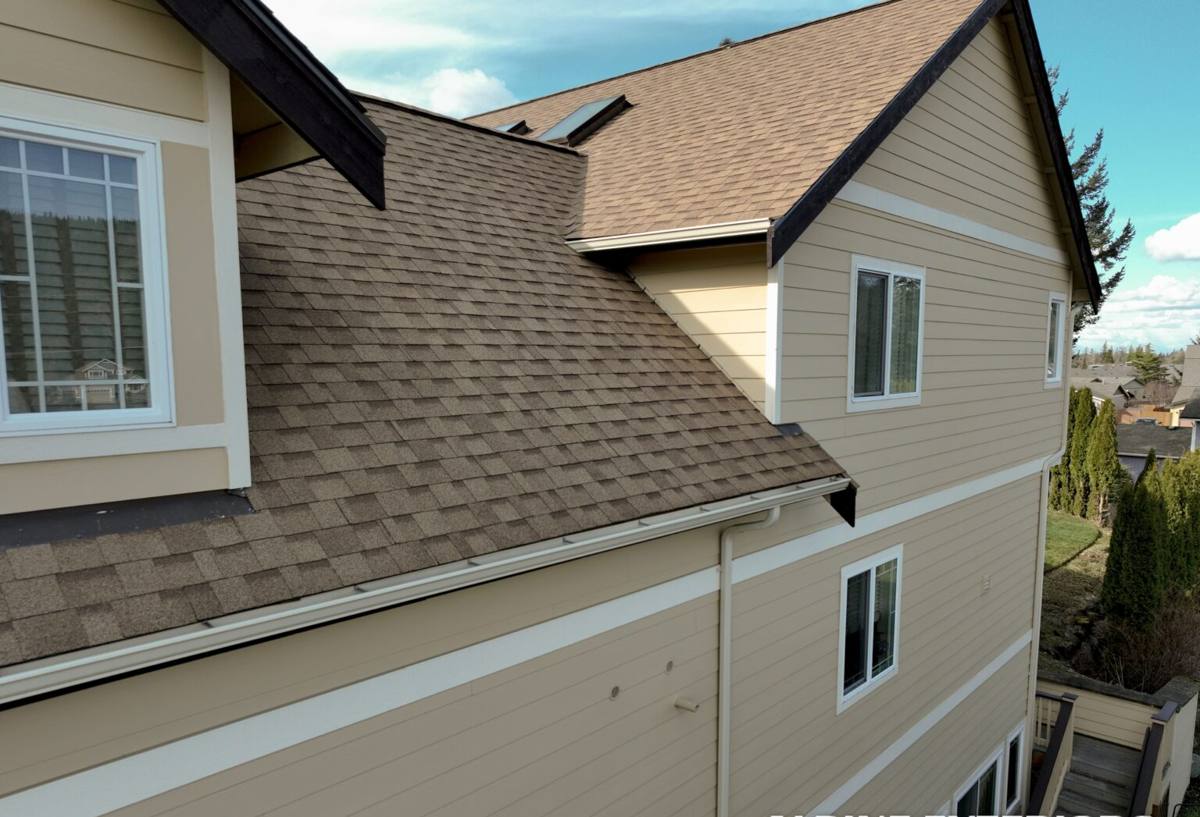
How Coastal Conditions Wear Down a Deck
Salt Air and Metal Hardware
Salt spray carries inland further than most homeowners expect, especially with the onshore winds common along this stretch of coastline. It settles on any exposed metal — joist hangers, structural screws, post bases — and accelerates corrosion well beyond what you'd see in a typical inland yard. Standard coated fasteners can start showing rust bleed through the decking within a few seasons. Once hardware starts corroding, it's not just cosmetic; joist hangers and structural connectors are what hold the deck together during a full snow load or a crowded gathering.
Driving Rain and Moisture Intrusion
Rain here doesn't always fall straight down. Wind-driven rain gets pushed sideways into ledger connections, under poorly lapped flashing, and into end grain that wasn't sealed during the original build. Once water gets behind a ledger board or into a post base, it stays wet far longer than it takes to dry — wood in shaded, poorly ventilated spots under a deck can stay damp for weeks after a storm.
Moss, Algae, and a Long Damp Season
Whatcom County's wet season stretches long, and horizontal wood or composite surfaces near the coast collect moisture and organic debris that feed moss and algae growth. Beyond looking bad, moss holds water against the decking surface, which is exactly the condition that rots wood boards and can void the finish warranty on some composite products. A deck built with the right slope, gapping, and airflow underneath sheds water and dries out between storms instead of staying saturated.
Signs a Birch Bay Deck Needs Replacement, Not Just Repair
- Soft, spongy spots in the decking boards, especially near the house or in shaded corners
- Rust streaking below screw heads or joist hangers
- Visible gaps, cracking, or separation at the ledger board where the deck meets the house
- Wobble or movement in the railing posts when pushed
- Persistent moss or algae that comes back within weeks of cleaning
- A substructure (joists, beams, posts) that feels damp or shows dark staining when you look underneath
- A deck older than 15-20 years that has never had the substructure inspected
A few of these on their own might mean a repair is enough. Several together, or any sign of a compromised ledger connection or rotted structural framing, usually mean it's time to rebuild rather than patch.
What a Correct Deck Replacement Involves
Tear-Out and Structural Assessment
We remove the old decking and railing and get eyes on the framing underneath — joists, beams, posts, and footings — before anything new goes in. This is the step that gets skipped when a deck is "resurfaced" instead of replaced, and it's the step that matters most in a coastal climate, because the framing is usually where the real damage is hiding.
Ledger Board and Flashing
The ledger board — where the deck attaches to your house — is the single most common source of water damage and structural failure on a deck. A correct replacement means proper flashing installed in the right order (behind the house wrap, over the ledger), stainless or coated structural screws rated for the load, and a gap or drainage path so water doesn't sit trapped against your home's siding or sheathing.
Framing and Fasteners
Given the salt air, hardware choice matters more here than it would ten miles inland. We use structural connectors and fasteners rated for corrosive or coastal exposure rather than standard galvanized hardware, because the cost difference is small compared to the cost of a joist hanger failing years down the road.
Footings and Post Bases
Post bases that sit directly on wet ground or trap standing water are a common weak point. Correct footings, proper drainage around them, and post bases that keep the wood post off the concrete all reduce how much moisture the structure absorbs over time.
Decking Surface Installation
Board spacing, direction, and fastening method all affect how well a deck sheds water and resists moss buildup. Hidden fastener systems, proper gapping, and attention to slope (typically a slight pitch away from the house) are what keep water moving off the surface instead of pooling.
Choosing a Decking Material for This Climate
There's no single "best" decking material — it depends on how much maintenance you want to do and what look you're after. Here's how the common options actually perform in a salt-air, high-moisture environment like Birch Bay:
| Material | Coastal Performance | Maintenance | Typical Lifespan |
|---|---|---|---|
| Pressure-treated wood | Good if sealed and re-sealed regularly; end cuts need extra sealant | Annual cleaning and re-staining/sealing | 10-15 years with upkeep |
| Cedar | Naturally moisture- and insect-resistant, but still needs sealing near salt air | Periodic cleaning and sealing | 15-20 years with upkeep |
| Composite decking | Strong moss and moisture resistance; check manufacturer's coastal/UV warranty terms | Occasional washing, no staining or sealing | 20-25+ years, per manufacturer warranty |
| PVC decking | Fully synthetic, doesn't absorb moisture, good against salt exposure | Occasional washing | 20-25+ years, per manufacturer warranty |
We install what fits the homeowner's budget and maintenance preference — we're not tied to pushing one product line. What we won't do is install a decking material in a way that ignores how it's supposed to be gapped, fastened, or ventilated for this climate, because that's how a good product ends up performing like a bad one.
Our Deck Replacement Process
- On-site assessment — we look at the existing deck, ledger connection, framing, and footings, and talk through what condition drove the replacement.
- Straightforward proposal — a written scope covering material options, structural work needed, and timeline, so there's no ambiguity about what's included.
- Permitting — deck replacements in Whatcom County typically require a permit depending on size and height; we handle that coordination as part of the job.
- Tear-out and structural repair — old decking and any compromised framing come out, and the ledger, footings, and posts get addressed before rebuilding.
- Build and finish — framing, decking, and railing installed to spec, with attention to fastener choice and drainage details suited to a coastal property.
- Final walkthrough — we go over the finished deck with you, including basic maintenance guidance for whatever material you chose.
Cost Factors for Deck Replacement in Birch Bay
Every deck is different, but a few factors consistently move the price up or down:
| Factor | Why It Matters |
|---|---|
| Deck size and shape | Larger decks and multi-level or angled layouts require more material and labor |
| Decking material | Composite and PVC cost more upfront than wood but require far less long-term maintenance |
| Structural condition | Rotted joists, damaged ledgers, or failing footings add repair scope beyond surface replacement |
| Height and railing requirements | Taller decks and code-required railings add framing and material cost |
| Fastener and hardware grade | Coastal-rated hardware costs more than standard galvanized but reduces future corrosion issues |
| Permitting | Permit requirements vary by deck size and height and can affect timeline |
We'd rather walk a Birch Bay property in person and give an honest number than guess over the phone — deck condition and site access vary enough that a general estimate isn't much use to you.
Questions to Ask Before Hiring for a Deck Rebuild
- Will you inspect the ledger board, joists, and footings, not just replace the surface boards?
- What fastener and hardware grade do you use, and is it rated for coastal or corrosive exposure?
- Do you handle the permit, or is that on me?
- What's your plan for flashing at the ledger connection?
- Can you walk me through drainage and slope so I understand how the deck will shed water?
- What does the written proposal include, and what would count as a change order?
Why Local Experience with Birch Bay Conditions Matters
A deck built to a generic, inland spec will hold up fine in a lot of places — just not reliably here. Crews that regularly work Whatcom County's coastal communities know to spec corrosion-resistant hardware without being asked, know how the moss season affects gapping and slope decisions, and know how driving rain finds its way into a poorly flashed ledger. That's not a marketing claim, it's just the difference between building for "a deck" and building for a deck that sits a few hundred yards from saltwater.
If your Birch Bay deck is showing rot, rust, or persistent moss, or you're just past the point where another round of patching makes sense, we're happy to take a look and give you a straight assessment. Reach out for a free, no-pressure estimate using the form below.