 Lynden Siding
 Deck Repair for Custer Homes
Custer sits in the northwestern reach of Whatcom County, close enough to the water to catch the same salt-tinged marine air that shapes exterior work across this whole part of the county, and close enough to Lynden that we're out this way on a regular basis. Decks here take a specific kind of beating: driving rain that comes in sideways more often than straight down, a moss and mildew season that can stretch across most of the year on shaded boards, and salt-laden air that speeds up corrosion on fasteners and hardware most homeowners never think to check. A deck built or repaired without those conditions in mind tends to show problems years before it should.
We repair decks in Custer regularly enough to know which failure points show up first in this climate and which ones get missed by a quick surface-level look. This page covers what deck repair actually involves out here, what a correct job looks like, and how we approach it.
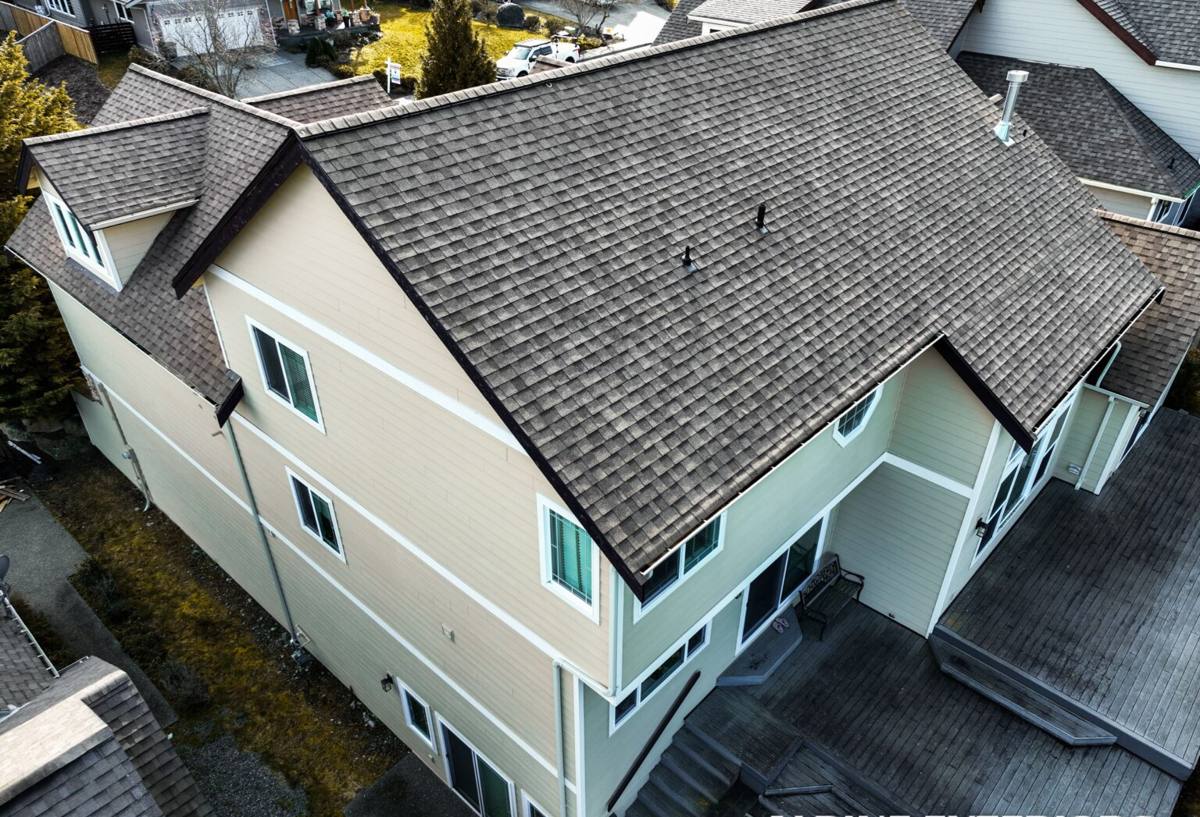
What This Climate Does to a Deck
Driving Rain and Standing Moisture
A deck is a horizontal surface, which means it holds water longer than a wall ever does. Rain that blows in at an angle settles into board gaps, ledger connections, and post bases, and in a climate where storms roll through repeatedly over the wet season, that moisture doesn't always get a real chance to dry out between rounds. Boards that look fine on top can be soft or rotting underneath, right where the framing meets the ledger board or where a post sits in or near the ground.
Moss and Organic Growth
Shaded decks, especially those under trees or on the north side of a house, grow moss and algae for most of the year in this part of Whatcom County. Beyond looking bad, moss holds moisture directly against the board surface, which accelerates rot on wood decking and can stain or degrade composite material over time. A deck that's cleaned but never actually repaired just grows the moss back on top of the same underlying problem.
Salt Air and Fastener Corrosion
Custer's proximity to the water means deck hardware here deals with more corrosion pressure than it would further inland. Nails, screws, and joist hangers that aren't rated for coastal exposure can rust, weaken, and fail well before the wood around them shows obvious damage. We see this most often on older decks where the original fasteners were standard-grade rather than corrosion-resistant.
What a Real Deck Inspection Covers
A lot of "deck repair" quotes are based on a walk-around and a guess. That's not enough in a climate that hides moisture damage under intact-looking boards. A proper inspection checks the structure, not just the surface people stand on:
- Ledger board attachment to the house — the single most common point of structural failure on older decks
- Post bases and any wood-to-ground or wood-to-concrete contact points
- Joists and beams for soft spots, splitting, or rot, especially where they're covered by decking
- Fastener condition — rust staining, loosening, or corrosion on nails, screws, and hangers
- Railing post connections, since a loose or rotted post is a safety issue, not a cosmetic one
- Drainage and grading underneath the deck, which affects how fast moisture clears out
- Board spacing and surface condition, including moss buildup and cupping or splintering
We probe suspect boards and framing rather than relying on a visual pass, because the softest wood on a deck is often the wood you can't see without lifting a board or getting underneath.
Repair vs. Rebuild: How We Make the Call
Not every deck problem means starting over, and we don't default to a full rebuild just because it's a bigger job. The honest answer depends on what the structure looks like once we're actually in it.
| Condition | Typical Fix | Why |
|---|---|---|
| A few soft or split boards, structure otherwise sound | Spot board replacement | Framing and ledger are still solid — no reason to rebuild what isn't failing |
| Rust-stained or loosening fasteners, boards intact | Hardware replacement with corrosion-resistant fasteners | Prevents the next round of failures before the boards themselves are compromised |
| Ledger board separation or rot at the house connection | Ledger repair or replacement with proper flashing | This is a structural safety issue, not cosmetic — it has to be done correctly, not patched |
| Widespread rot in joists, beams, or multiple posts | Partial or full rebuild | Repairing individual boards on a failing frame doesn't solve the underlying problem |
| Railing posts loose or rotted at the base | Post and connection repair or replacement | Railings are a fall-safety item and get fixed to code, not just tightened |
We'll tell you plainly when a full rebuild is the more honest answer, and just as plainly when it isn't. A deck with sound framing and a handful of bad boards doesn't need to be torn out to fix a real problem.
Wood vs. Composite: What We Consider on a Repair
When boards need replacing, the material choice matters more in this climate than in a drier one. Cedar and pressure-treated lumber are lower cost up front but need more consistent maintenance — sealing, staining, and moss removal — to hold up against sustained moisture and shaded conditions. Composite decking costs more initially but resists moisture absorption and moss staining better over time, which can matter a lot on a shaded Custer lot where a wood deck would need attention every year or two just to keep ahead of the climate. We'll walk through both options against your specific deck's sun exposure and your appetite for ongoing maintenance rather than pushing one material as a default.
Ledger Boards and Flashing: The Detail Most Repairs Skip
The ledger board — where the deck attaches to the house — is the most structurally important connection on the whole deck, and it's also the point most likely to have hidden rot, because it sits against the house where water can get trapped behind the decking. A correct ledger repair includes proper flashing that directs water away from the house framing, not just new lag bolts into old, possibly compromised wood. Skipping the flashing detail is a common shortcut that looks fine on install day and causes the exact same failure again in a few wet seasons.
Our Process for Custer Deck Repairs
- On-site inspection: We walk the deck, probe suspect areas, and check underneath where possible — not a visual-only estimate.
- Honest scope and pricing: You get a clear explanation of what's actually wrong, what needs fixing now, and what can reasonably wait.
- Repair or rebuild, matched to what we find: We fix what needs fixing without upselling a full rebuild on a deck that doesn't need one.
- Corrosion-resistant hardware: Given the salt air out this way, we use fasteners and hangers rated for coastal exposure, not standard-grade hardware that will just rust again.
- Proper flashing at the ledger: Any ledger work includes flashing detail, not just refastening the board.
- Final walk-through: We show you what was done and what to watch for going forward, including basic seasonal maintenance for this climate.
Signs a Custer Deck Needs Repair
- Boards that feel spongy, bouncy, or soft underfoot
- Visible gaps, splitting, or separation where the deck meets the house
- Rust staining around fasteners or hardware
- Railings or posts that wobble or flex when pushed
- Moss or algae that returns quickly after cleaning
- Water pooling on the deck surface instead of draining off
- Visible daylight or gaps at the ledger-to-house connection
If you're seeing any of these, it's worth having someone actually get underneath the deck rather than just looking at the top surface — that's usually where the real story is.
Why a Crew That Works Custer Regularly Matters
Deck problems in this climate don't announce themselves the same way a roof leak does. Rot develops quietly under intact-looking boards, fasteners corrode slowly, and moss regrows on a schedule that has nothing to do with when it was last cleaned. A crew that repairs decks across this part of Whatcom County on a regular basis has a working sense of where problems tend to start on homes with Custer's mix of coastal exposure and shaded lots, which means less time spent guessing and more time spent fixing the actual issue. That familiarity also means straight answers about what genuinely needs attention now versus what can be scheduled for later, instead of a one-size-fits-all recommendation pulled from a general price list.
If you've got a deck in Custer that's showing its age or just needs a second opinion, we're happy to take a look. Reach out for a free, no-pressure estimate using the form below — we'll walk the deck, tell you honestly what we find, and lay out real options from there.