 Lynden Siding
 Deck Building for Laurel Homes
Laurel sits in the stretch of Whatcom County between Lynden and Bellingham, where farmland, wooded lots, and quiet residential streets all share the same weather pattern: long wet winters, a short dry summer, and a lot of months in between where the air just never fully dries out. That matters more for a deck than almost any other part of a house, because a deck lives outside year-round, takes on direct weather from every angle, and gets walked on. A deck built without that climate in mind will look fine for a year or two and then start showing problems — soft spots, black streaking, rust bleed at the fasteners, boards that cup or crown. A deck built correctly for this area holds up for decades.
This page covers what we've learned building and repairing decks in this part of the county: what the climate actually does to decking materials, what a correctly built deck involves from the ground up, and how we run the job from first call to final walkthrough.
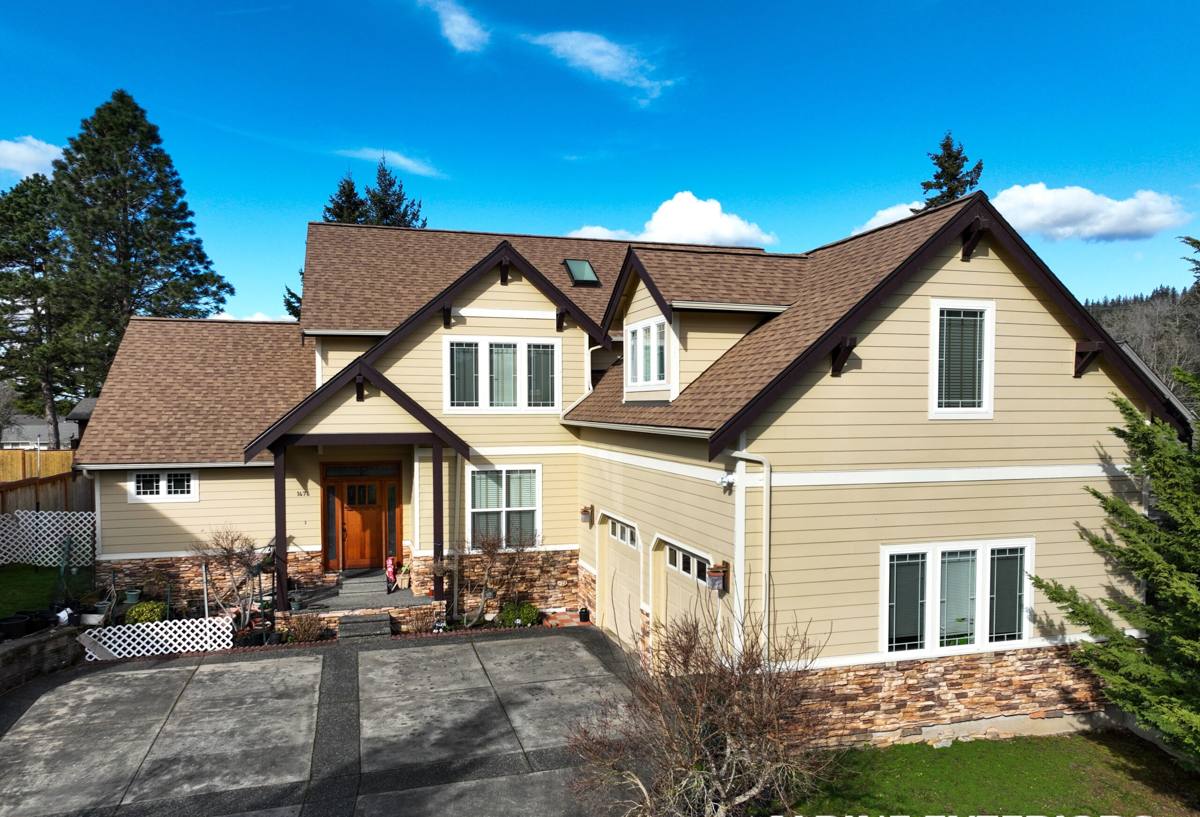
What Local Conditions Do to a Deck
Whatcom County's climate is driven by moisture-laden marine air moving in off the Puget Sound and Bellingham Bay, mixed with cooler inland conditions the further you get from the water. Laurel gets the combined effect: driving rain that comes in sideways during winter storms, long stretches of overcast damp weather that never quite lets surfaces dry, and salt-tinged air that travels further inland than most homeowners expect. None of this is unusual for the Pacific Northwest, but it does mean a deck here is under more sustained moisture stress than the same deck would be almost anywhere else in the country.
The Big Three Problems
- Moss and algae growth: Shaded decks, or decks under tree cover common on Laurel's wooded lots, stay damp for days after a rain. That's exactly what moss and algae need. Left unchecked, growth traps moisture against the wood surface and turns boards slick and dangerous underfoot.
- Fastener and hardware corrosion: Salt-influenced air accelerates rust on any hardware that isn't rated for coastal exposure — screws, joist hangers, structural connectors, and railing brackets all take the hit. Rust streaking down a deck board is almost always a sign the wrong-grade fastener was used.
- Wood movement and rot: Repeated wet-dry cycling causes untreated or poorly sealed wood to swell and shrink, which loosens fasteners and opens gaps where water collects. Once water sits in a joint or at a ledger connection, rot follows — often out of sight until it's serious.
What a Correctly Built Deck Involves
A deck is a structure first and a surface second. Most of the problems homeowners eventually call about — soft boards, sagging, rot at the house connection — trace back to shortcuts taken below the decking, not the decking itself. Building it right means getting every layer correct.
Footings and Framing
Footings need to be set below the local frost line and sized for the soil conditions on the lot — Laurel's mix of clay-heavy and sandy soils isn't uniform block to block, so we don't assume; we check. Framing lumber should be pressure-treated and rated for ground contact where it's close to grade, with joist spacing tightened up if composite decking is going on top, since composite has different flex characteristics than wood and needs more support to stay flat over time.
The Ledger Connection
Where a deck attaches to the house is the single most important — and most commonly botched — detail on the whole structure. It needs proper flashing that sheds water away from the house sheathing, correct fastener spacing rated for the load, and a gap or flashing detail that keeps water from wicking into the rim joist. Get this wrong and you're not just risking the deck — you're risking water intrusion into the house structure itself.
Fasteners and Hardware
Everything below the decking surface — joist hangers, structural screws, post bases, hurricane ties — should be rated for coastal or high-moisture exposure, not just standard exterior-grade. It costs more up front and it's the difference between hardware that lasts the life of the deck and hardware that's rusting and staining within a few seasons.
Decking Material
Both wood and composite decking work well in this climate when installed correctly — the material choice comes down to maintenance tolerance and budget, not one being objectively better.
| Factor | Wood (cedar/treated) | Composite |
|---|---|---|
| Upfront cost | Lower | Higher |
| Maintenance | Annual cleaning, periodic sealing/staining | Occasional wash-down, no sealing |
| Moss/algae resistance | Lower — needs regular cleaning in shaded areas | Higher, but not immune in constant shade |
| Long-term appearance | Weathers/grays without upkeep | Holds color longer |
| Typical lifespan here | 15-25 years with upkeep | 25-30+ years |
We install both, and we'll tell you honestly which one fits your lot, your budget, and how much upkeep you actually want to do — not which one we'd rather sell.
Design Considerations Specific to Laurel Lots
A lot of Laurel properties are on larger, tree-shaded parcels or open farmland-adjacent lots, and both extremes affect deck design. Heavily shaded decks need extra attention to airflow underneath and between boards to fight moss growth — tighter board spacing looks nice but traps moisture, while proper gapping lets a deck actually dry out between rains. On more exposed lots, wind-driven rain means railing and fastener choices matter more, since horizontal surfaces catch more direct weather. We look at sun exposure, tree cover, and prevailing wind and rain direction on your specific lot before finalizing layout — a deck design that works two streets over might not be the right call for your yard.
Maintenance That Actually Matters Here
Every deck needs some maintenance, but in this climate a few things matter more than the generic advice you'll find online.
- Clear leaves and debris from between boards and off the surface regularly, especially in fall — trapped organic matter feeds moss and holds moisture against the wood.
- Wash the deck surface at least once a year with a deck cleaner suited to your material; pressure washing wood too aggressively can damage the grain, so pressure and technique matter.
- Check fastener heads and hardware periodically for early rust staining — it's a sign to address before it spreads.
- Reseal or stain wood decking on a schedule appropriate to sun exposure — shaded areas often need it less often than sun-exposed sections, but check both.
- Keep gutters and downspouts near the deck functioning so runoff isn't dumping extra water onto or under the structure.
Our Process
1. On-Site Assessment
We walk the actual lot — sun exposure, tree cover, drainage, soil, and how the deck will connect to the house — before we talk materials or design. If it's a replacement, we also check the existing structure for hidden rot or framing issues that need to be addressed regardless of what goes on top.
2. Design and Material Selection
We talk through wood versus composite, layout, railing style, and any code requirements — height, guardrails, stair details — that apply to your specific build. You get a clear, honest recommendation based on your lot and how you'll use the space, not a upsell.
3. Permitting
Deck permitting requirements vary by scope and height, and we handle the paperwork and inspections that apply to your project so you're not chasing that down yourself.
4. Construction
Footings, framing, ledger flashing, decking, and railing — built in that order, with each layer inspected before the next goes on. This is where the coastal-grade hardware, correct fastener spacing, and proper flashing details we've talked about actually get applied, not just specified on paper.
5. Final Walkthrough
We walk the finished deck with you, check every railing and stair connection, and go over the maintenance schedule that fits the material you chose.
Why Hire a Crew That Already Works Laurel
A deck built to a generic national spec will underperform here. A crew that already works Whatcom County lots knows which fastener grade actually holds up against the local air, how much extra joist spacing composite decking needs under our moisture conditions, and which parts of a given lot are going to fight moss no matter what material you pick. That knowledge doesn't come from a manufacturer's install guide — it comes from having built and repaired decks in this specific climate long enough to see what fails and why. When we quote a job in Laurel, we're pricing it for how it'll actually perform here, not for average conditions somewhere else in the country.
Getting Started
If you're planning a new deck or need to replace one that's showing its age, we're happy to come take a look and give you a straightforward, no-pressure estimate. There's a form below — reach out and we'll set up a time to walk the site with you.