 Lynden Siding
 Building Decks for Blaine's Coastal Climate
Blaine sits right up against the water in the far northwest corner of Whatcom County, and that location shapes everything about how a deck should be built here. Salt-laden air off the bay, wind-driven rain that comes in sideways more often than straight down, and a long, damp moss season that can stretch from fall through spring all put real stress on outdoor structures. A deck that would hold up fine twenty miles inland can start showing corrosion, soft spots, or slick green growth within a few seasons out here if it wasn't built with this specific environment in mind.
We build and repair decks throughout the Lynden and Blaine area, and the difference between a deck that lasts and one that doesn't usually comes down to decisions most homeowners never see: what's under the boards, what the fasteners are made of, and how water is directed away from the structure. This page covers what a custom deck built for Blaine actually needs, what our process looks like, and what to watch for once it's built.
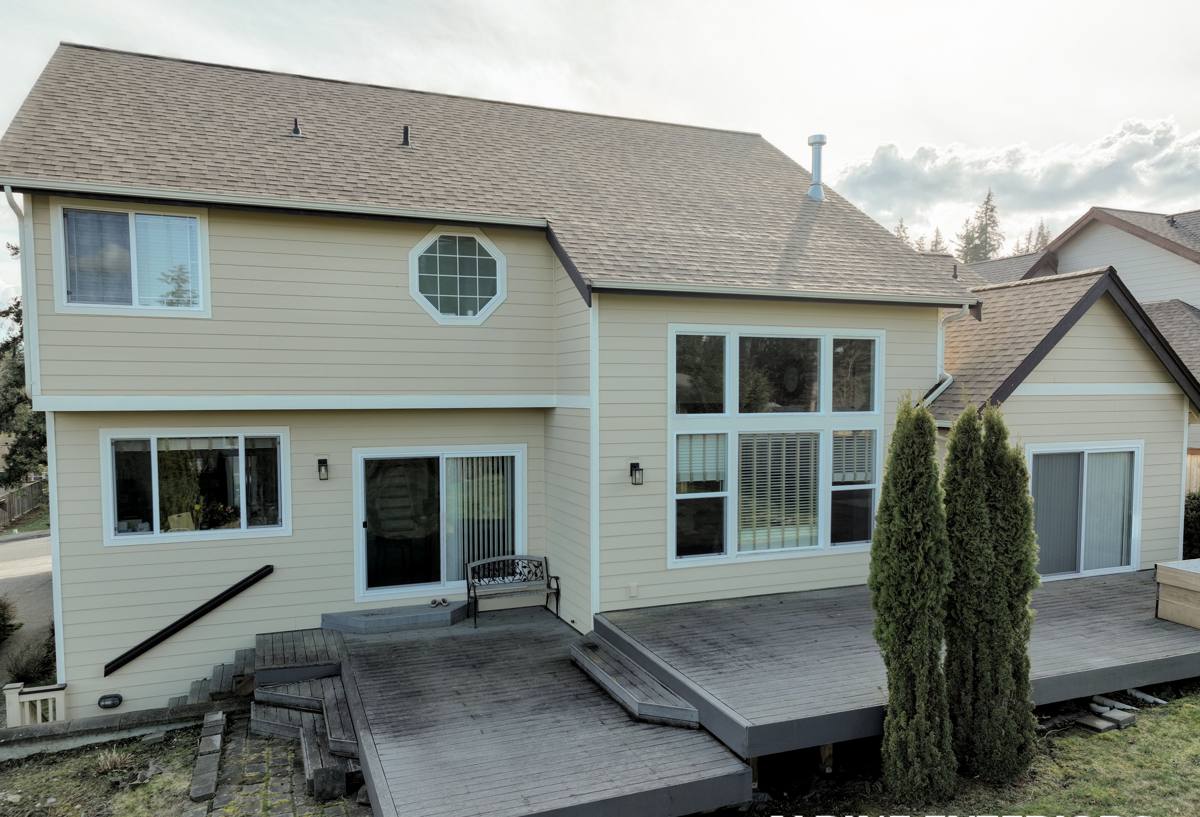
What Salt Air, Rain, and Moss Actually Do to a Deck
Each of Blaine's climate factors attacks a deck in a different way, and a good build has to account for all three at once, not just the most obvious one.
Salt Air and Corrosion
Airborne salt from the bay settles on every exposed surface, including metal. Standard galvanized fasteners and hardware can start corroding faster near the water than they would even a few miles inland. Once a fastener starts rusting, it weakens, can streak the surrounding wood or composite decking with rust stains, and eventually needs replacing — which usually means pulling boards.
Driving, Wind-Blown Rain
Rain that comes in at an angle gets pushed under railings, into ledger board connections, and behind fascia in ways that straight-down rain doesn't. If flashing and water management weren't done correctly at the point where the deck meets the house, this is where rot starts — often hidden behind trim where you won't see it until the damage is advanced.
Moss and Prolonged Dampness
Whatcom County's long wet season means deck surfaces, especially shaded or north-facing ones, can stay damp for days at a stretch. That's exactly the environment moss and algae need to take hold. Beyond being slippery and unattractive, moss holds moisture against the decking surface, which accelerates wood decay and can degrade the wear layer on lower-quality composite products over time.
What a Correctly Built Deck Needs in This Area
Given those three factors, a deck built for Blaine needs to get several things right that are easy to skip or shortcut on a lower-bid job.
- Corrosion-resistant fasteners and structural hardware rated for coastal or high-moisture exposure, not standard interior-grade galvanized
- Proper flashing at every point the deck attaches to the house, including behind the ledger board
- Footings set below the local frost line and sized for the soil conditions on the specific lot
- Consistent slope across the decking surface so water sheds instead of pooling
- Adequate airflow underneath the deck to let framing dry out between rain events
- Decking material chosen with the site's actual sun/shade exposure in mind, not a one-size-fits-all default
- Railing and baluster spacing and hardware that meet current code and won't loosen from repeated wet-dry cycling
Choosing the Right Decking Material
There's no single "best" decking material for Blaine — the right choice depends on the site's sun exposure, how much upkeep the homeowner wants to do, and budget. We walk through the honest trade-offs with every customer instead of pushing one product across the board.
| Material | How It Handles Salt Air & Moisture | Moss/Algae Resistance | Maintenance |
|---|---|---|---|
| Pressure-treated wood | Needs sealing and monitoring; end grain and fastener points are vulnerable | Low unless treated and cleaned regularly | Annual cleaning and periodic sealing |
| Cedar | Naturally decay-resistant but still needs finish maintenance in salt air | Moderate; improves with regular cleaning | Regular cleaning, occasional refinishing |
| Composite decking | Doesn't rot, but hardware and framing underneath still need attention | Varies by product; capped composites resist staining better | Periodic washing; no sealing or staining needed |
| PVC decking | Fully synthetic, handles moisture and salt exposure very well | Good with routine washing | Lowest; occasional cleaning only |
Whichever surface material a homeowner chooses, we're clear that the decking itself is only part of the equation — the framing, fasteners, and drainage underneath matter just as much for how the deck holds up in this climate.
Framing and Fastener Choices That Matter Near the Water
The structure underneath the decking boards is where a lot of long-term problems either get prevented or get built in. For framing, we use lumber rated for ground contact or exterior exposure where it's called for, and we pay close attention to any spot where two pieces of framing meet, since those joints trap moisture longer than open surfaces.
For fasteners and structural connectors, we don't rely on standard-grade galvanized hardware this close to the water. Stainless steel or coated fasteners rated for coastal and high-moisture environments cost more up front, but replacing rusted-out hardware later means tearing into finished decking — a far more expensive fix than choosing the right hardware the first time.
Our Custom Deck Process
A deck is a structural project as much as a design project, so our process is built to get the site conditions and the structure right before we ever talk about finish materials.
1. On-Site Assessment
We look at the lot's sun and shade pattern, drainage direction, soil, and how the deck will attach to the house. In Blaine specifically, we also look at wind exposure and how much direct weather the deck's location will actually take.
2. Design and Material Selection
We talk through layout, railing style, and decking material options with the honest maintenance and durability trade-offs for each, based on the site assessment — not a generic sales pitch.
3. Permitting
Most deck projects in Whatcom County require a building permit, particularly for elevated structures or anything attached to the house. We handle the permit process as part of the job so homeowners aren't left navigating it alone.
4. Footings and Framing
Footings are set to the required depth for local frost conditions, and framing is built with the fastener and hardware standards described above. This is the stage that determines how the deck performs over the next decade, even though it's the part that ends up invisible once the project is done.
5. Decking, Railing, and Finish Work
Decking is installed with proper spacing and slope for drainage, and railings are set and tested for stability. Any finish or sealant work is done according to the manufacturer's specifications for the material chosen.
6. Final Walkthrough
We walk the finished deck with the homeowner, cover basic care for the specific material installed, and answer questions before calling the job complete.
Footings, Drainage, and Whatcom County Ground Conditions
A deck is only as good as what's underneath it. Footings need to be sized and set to local code requirements, which account for frost depth and soil bearing capacity — skipping or undersizing this step is one of the most common causes of a deck that shifts, sags, or develops uneven decking over time. Grading and drainage around the footings matter too; water that's allowed to pool near a footing year after year, in a climate as wet as this one, works against the structure long before it becomes visible above ground.
For decks close to the water's edge, wind loading on railings and larger structures is also part of the design conversation, not an afterthought.
Keeping a Blaine Deck in Good Shape Long-Term
No deck, regardless of material, is entirely maintenance-free in this climate. The amount of upkeep varies by material, but a few habits go a long way toward protecting the investment.
- Clean the surface at least once or twice a year to remove moss, algae, and organic debris before it takes hold
- Keep gutters and downspouts near the deck clear so water isn't dumping onto or near the structure
- Check railings and stair connections periodically for looseness, which can signal fastener corrosion
- Clear leaves and debris from between boards and off ledger flashing, especially heading into winter
- Reseal wood decking on the manufacturer's or installer's recommended schedule — don't wait until it looks obviously weathered
- Look underneath the deck occasionally for standing water or framing that stays damp longer than the rest of the yard
Why It Matters That We Already Work in Blaine
A contractor based well inland, or one who only occasionally works near the water, doesn't always account for how differently a deck ages in a coastal, high-moss environment versus a drier or more sheltered site. Because we regularly build and service decks in and around Blaine and the rest of Whatcom County, we've seen firsthand which fastener choices, framing details, and materials hold up here and which ones cause callbacks a few years down the road. That local experience shapes every recommendation we make, from the footing depth to the hardware we spec, without needing to guess at what this climate will do to the work.
Get a Free Estimate
If you're planning a new deck or need to know whether an existing one is holding up the way it should, we're happy to take a look and walk you through honest options for your specific property. Use the form below to request a free, no-pressure estimate for your Blaine deck project.