 Lynden Siding
 Roof Repair Built for Custer's Coastal Conditions
Custer sits close enough to the water that homes here deal with a different mix of punishment than roofs just a few miles inland in Lynden proper. Salt-laden air off the Strait, near-constant winter rain, and long stretches of shade under fir and cedar canopy add up to roofs that age faster than the shingle warranty ever accounts for. If you've noticed a soft spot near a valley, a stain spreading across a bedroom ceiling, or moss creeping up from the north-facing eaves, that's not cosmetic — it's your roof telling you where water is starting to win.
We repair roofs in Custer regularly, not as a side trip from somewhere else. That matters, because the failure patterns out here aren't the same as what you'd see on a roof in a drier part of the state. We know what to check first, and we don't guess.
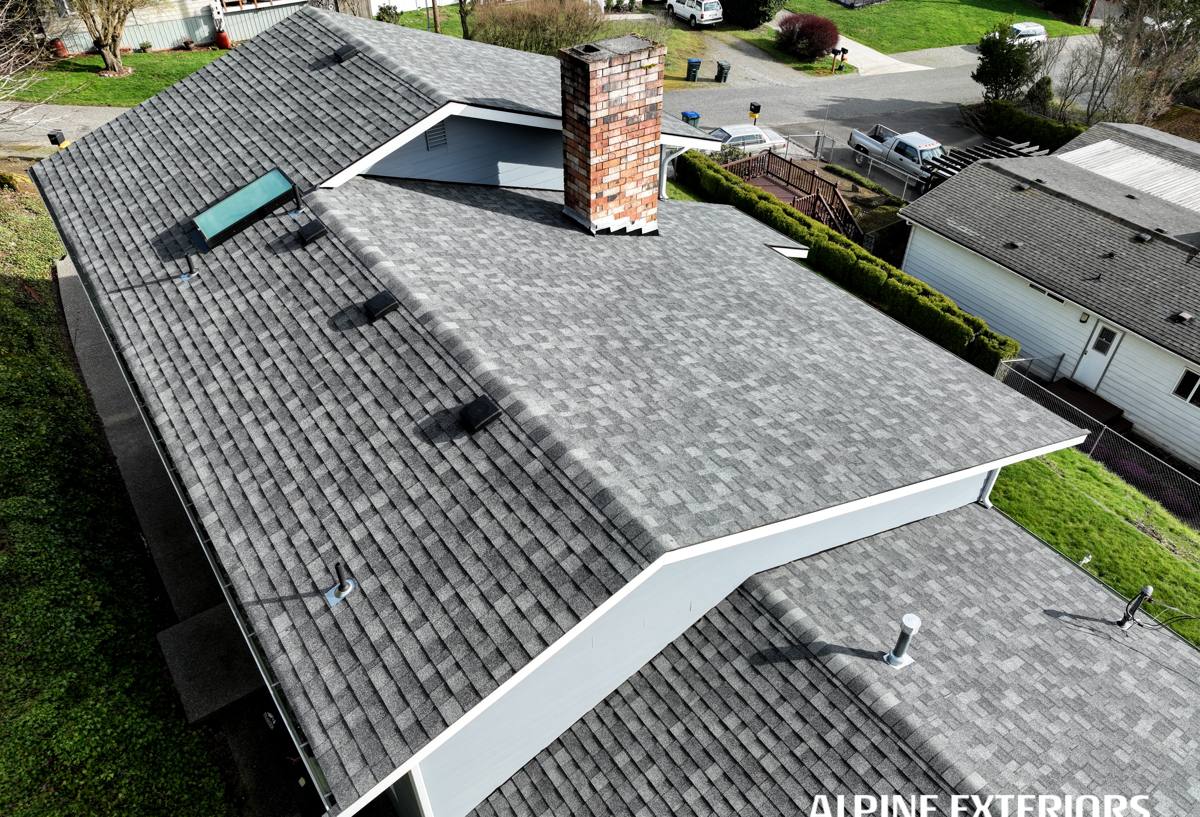
What Whatcom County Weather Actually Does to a Roof
Salt Air and Metal Fatigue
Homes within a few miles of the water pick up airborne salt that settles on flashing, fasteners, and any exposed metal on the roof. Over years, that accelerates corrosion on nail heads, drip edge, and valley metal — especially on older galvanized flashing that hasn't been upgraded. Once a fastener rusts through or a flashing seam pits and thins, it stops shedding water the way it's supposed to, and that's usually where a leak starts.
Driving Rain and Wind-Driven Moisture
Whatcom County doesn't just get rain — it gets rain pushed sideways by wind off the water. That kind of weather finds every weak point: an under-lapped shingle course, a poorly sealed pipe boot, a valley that wasn't cut wide enough. Vertical-only waterproofing details that hold up fine in calmer climates can fail here because the water isn't falling straight down, it's being forced up and under laps.
Moss, Shade, and Slow Rot
Custer's tree cover keeps a lot of roofs shaded well into the day, which means moss and algae have a long season to work with — often nine or ten months a year on north- and east-facing slopes. Moss isn't just unsightly. Its root structure lifts shingle tabs, holds moisture against the roof deck, and channels water sideways instead of letting it run off. Left long enough, that moisture works into the sheathing and you're looking at a rot repair instead of a shingle repair.
Signs a Custer Roof Needs Attention Now
- Dark streaking or thick moss growth on shaded slopes, especially near the roofline's north edge
- Granules collecting in gutters or at downspout outlets
- Curling, cupping, or lifted shingle tabs, particularly along ridge and hip lines
- Rusted or visibly pitted flashing around chimneys, skylights, and vent pipes
- Ceiling stains, especially after a windy rainstorm rather than a calm one
- Soft or spongy decking felt underfoot in the attic near valleys or penetrations
- Daylight visible through the roof deck from inside the attic
Any one of these on its own might not mean a full re-roof is coming. But ignored together, they're usually the early signature of a slow leak that's been running longer than the stain suggests.
What a Correct Repair Actually Involves
A lot of roof "repairs" in this region are just a bead of caulk or roofing cement smeared over the visible symptom. That buys a season, maybe two, and then the same spot fails again — often worse, because trapped moisture has had more time to work on the decking underneath. We do it differently.
1. Find the Real Entry Point
Water rarely leaks straight down from where it enters. It travels along the underlayment or decking and shows up somewhere else entirely. We trace the path back from the interior stain or attic moisture to the actual failure point before we touch a shingle.
2. Check What's Underneath
If moisture has been present for a while, we check the decking for soft spots, delamination, or rot — not just the shingles on top. A repair that reshingles over compromised plywood is a repair that fails again within a year or two.
3. Replace, Don't Patch, the Flashing
Valley metal, step flashing, and pipe boots that have started corroding or cracking get replaced, not resealed. Sealant is a backup, not a fix, especially in an area getting the kind of wind-driven rain Custer sees.
4. Match the Existing Roof Correctly
Shingle color and profile fade and change over the years. We do our best to source a close match so a repair doesn't stand out as an obvious patch, though on older roofs some difference is unavoidable — we'll tell you honestly what to expect before starting.
5. Clear the Moss, Address the Cause
If moss contributed to the failure, we remove it properly (not pressure-washed, which can drive granules loose and force water under shingles) and talk through longer-term moss control so it doesn't just grow back into the same spot.
Repair vs. Replacement: An Honest Read
| Condition | Repair usually makes sense | Replacement should be considered |
|---|---|---|
| Age of roof | Under 12-15 years, isolated issue | Approaching or past shingle's rated lifespan |
| Extent of damage | One or two localized spots | Multiple slopes affected, widespread granule loss |
| Decking condition | Solid, dry to the touch | Soft, delaminating, or rotted in more than one area |
| Moss/algae coverage | Limited to shaded edges | Heavy coverage across most of the roof |
| Flashing condition | Mostly sound, isolated corrosion | Widespread rust or thinning metal |
| Interior damage | None or a single small stain | Multiple rooms, insulation soaked, mold present |
We'll walk the roof and the attic with you and tell you honestly which column your home falls into. If a repair genuinely covers it, that's what we'll recommend — we don't upsell a full replacement when a targeted fix will hold.
What a Repair Costs — and What Changes the Number
Every roof and every leak is different, so we won't quote a number without seeing it. But a few factors consistently move the price:
- Access and pitch: a steep or high roof takes longer and needs more safety setup than a simple single-story slope.
- How far the damage has spread: a single flashing replacement is a much smaller job than reworking decking under three shingle courses.
- Material match: some discontinued shingle profiles cost more to source or require a wider patch area to blend in.
- Underlying rot: once we're into decking replacement, the scope — and cost — grows accordingly.
- Moss removal scope: a light clean-off is quick; years of buildup take longer to clear safely.
Most straightforward roof repairs in this region land in a broad low-hundreds to low-thousands range, but the only honest number is one based on an actual inspection of your roof.
Why a Local Crew Matters for This Kind of Work
A roofer unfamiliar with Whatcom County's coastal weather patterns can misdiagnose a Custer leak — treating it like a straightforward shingle failure when the real driver is wind-driven rain finding an under-lapped seam, or salt-accelerated corrosion nobody checked for. We work this area regularly enough to know which failure patterns show up on which roof orientations, what moss does to a north slope over a full wet season, and how the local wind pattern off the water changes where water actually gets forced.
That local knowledge shortens the diagnostic step. We're not guessing at what "usually" causes a leak somewhere else — we're checking the things that actually cause leaks on Custer roofs.
Our Repair Process, Start to Finish
- Inspection: We walk the roof and check the attic from inside, tracing stains and moisture back to their source rather than assuming the visible spot is the entry point.
- Honest assessment: You get a clear explanation of what's actually wrong, what caused it, and whether repair or replacement makes sense — with photos and specifics, not just a verbal "it needs work."
- Written estimate: A clear scope and price before any work starts, so there are no surprises once the crew is on the roof.
- The repair itself: Proper flashing replacement, decking repair where needed, correctly lapped shingle work, and moss removal — done to hold up through the next wet season, not just patch the symptom.
- Final walk-through: We show you what was done and why, and flag anything else worth keeping an eye on.
Preventing the Next Leak
A repair fixes what's broken today. A few habits keep the next one from showing up in the same place:
- Keep gutters and downspouts clear so water isn't backing up under the eaves
- Trim back tree limbs that keep a slope shaded and damp longer than it needs to be
- Have moss removed before it establishes a heavy root mat, not after
- Get an attic check after any major windstorm, even if nothing looks wrong from the ground
- Address small flashing corrosion early, before it becomes a full leak
None of this eliminates the need for repairs eventually — every roof in this climate needs attention over time — but it stretches the interval between them considerably.
Let's Take a Look
If you're seeing moss buildup, a ceiling stain, or just want a second opinion before a small problem becomes a bigger one, we're glad to come out to your Custer home, walk the roof, and give you a straight answer. There's no pressure and no obligation — just an honest look and a clear estimate, using the form below.