 Lynden Siding
 Asphalt Shingle Roofing for Custer Homes, Built for This Coastline
Custer sits close enough to the water that homes here deal with a different set of roofing problems than houses ten or fifteen miles inland. Salt-tinged air, wind-driven rain off the Strait, and a moss season that can run eight or nine months out of the year all put extra demands on an asphalt shingle roof. A shingle system that's installed correctly for this stretch of Whatcom County looks a lot like one installed anywhere else in Western Washington on the surface, but the details underneath — the underlayment choices, the flashing, the fastener spec, the ventilation — need to account for what this specific area throws at a roof year after year.
This page is about one job, done right, in one area: asphalt shingle roofing for Custer properties. Not a general overview of every roofing option we offer — just what matters if you own a home here and you're trying to figure out whether your roof needs attention, or you're planning a replacement and want to know what a correct job actually involves.
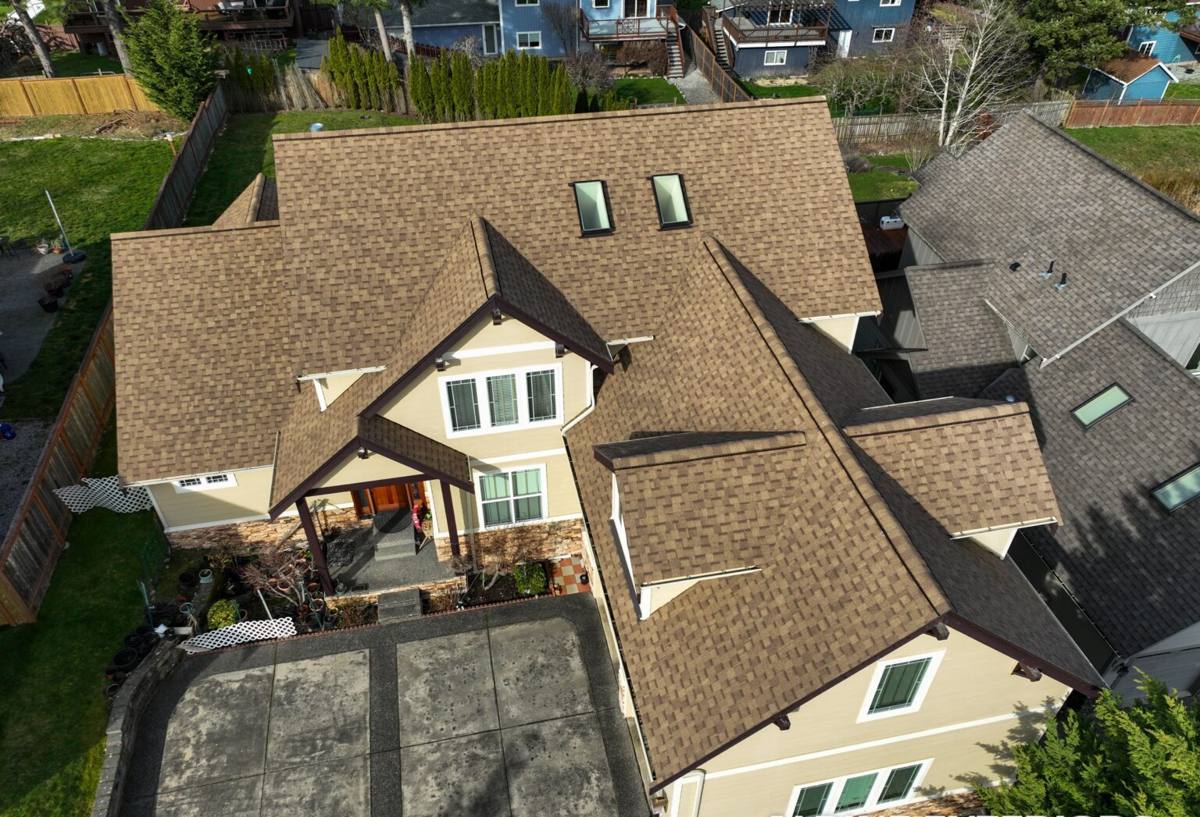
What Salt Air, Driving Rain, and Moss Actually Do to a Roof Here
Salt Air
Airborne salt doesn't rot shingles the way it corrodes metal, but it does two things worth knowing about. First, it accelerates corrosion on any exposed metal on the roof — nail heads, flashing edges, vent housings — if that metal isn't properly coated or if fasteners aren't sealed. Second, salt-laden moisture tends to sit on roof surfaces a little longer than plain rainwater in areas that get regular onshore air, which feeds the next problem.
Driving Rain
Rain that comes in sideways during a winter storm doesn't behave like a steady vertical downpour. It gets pushed up under shingle edges, into valleys, and around anything that penetrates the roof plane — vent pipes, chimneys, skylights. A roof that's fine in a normal rain can still leak in a wind-driven event if the underlayment, flashing, and shingle overlap weren't detailed for that condition specifically.
Moss Season
Whatcom County's wet, mild winters and shaded lots (especially on tree-lined properties common around Custer) create ideal moss conditions for most of the year. Moss holds moisture against the shingle surface, works its way under shingle tabs as it grows, and can lift edges enough to let water in. Left unmanaged for a few seasons, it also accelerates granule loss, which shortens the life of the shingle underneath it.
Signs a Custer Roof Needs Attention
- Moss buildup concentrated on the north- or shade-facing slopes
- Granules collecting in gutters or at downspout outlets
- Shingle tabs that look lifted, curled, or cupped at the edges
- Dark streaking that doesn't wash off with light rain (algae staining, not just dirt)
- Rust bleeding from nail heads or flashing seams
- Soft spots or sagging when walked on, especially near valleys
- Daylight visible through the roof deck from inside the attic
- Interior water stains on ceilings after a windy rainstorm specifically
Any one of these on its own isn't necessarily an emergency, but a few of them together usually means the roof is past routine maintenance and into repair-or-replace territory.
Choosing the Right Shingle for This Climate
Not every asphalt shingle product is a good match for a marine-influenced, moss-prone area. We steer Custer homeowners toward shingles with a few specific traits: algae-resistant (AR) granules, a wind rating suited to gusty winter storms, and a manufacturer warranty that actually covers algae staining rather than excluding it. Cheaper, older-style shingle lines often skip the AR treatment entirely, which means the algae and moss problem shows up faster and the warranty won't help when it does.
| Shingle Type | Typical Lifespan Here | Moss/Algae Resistance | Wind Rating Fit |
|---|---|---|---|
| Standard 3-tab | 15–20 years | Low unless AR-rated | Adequate, lower ceiling |
| Architectural (dimensional), AR-rated | 25–30 years | Good — built-in algae resistance | Higher wind ratings available |
| Premium/designer architectural | 30+ years | Very good | Highest ratings in the shingle category |
For most Custer homes, a mid-to-upper architectural shingle with AR granules is the sensible middle ground: real moss resistance, a wind rating that holds up to winter storms off the water, and a warranty structure that's still meaningful a decade or two out.
What a Correct Installation Actually Involves
The shingle itself is only part of the system. A roof that holds up here depends just as much on what's underneath and around it.
Underlayment and Water Barrier
We use synthetic underlayment across the full deck as a baseline, with self-adhering ice-and-water shield at the eaves, valleys, and around every penetration — the spots wind-driven rain is most likely to exploit. This isn't optional upgrade material in a driving-rain climate; it's the difference between a roof that sheds a sideways storm and one that lets water find a seam.
Flashing
Step flashing at walls and chimneys, proper valley metal, and sealed vent boots all matter more in salt-air conditions because corroded or poorly lapped flashing is usually where leaks actually start — not through the shingle field itself. We use flashing materials and fasteners chosen to resist corrosion rather than the cheapest available option.
Ventilation
Balanced intake and exhaust ventilation keeps the attic deck dry and temperature-stable, which does double duty here: it extends shingle life and it reduces the moisture buildup that helps moss and algae take hold from underneath as well as on top.
Nailing and Fastening
Manufacturer-specified nailing patterns, correct nail length for the deck thickness, and corrosion-resistant fasteners throughout. Under-nailing or using the wrong fastener is one of the most common causes of premature shingle failure in windy coastal-adjacent areas, and it's invisible until a storm pulls shingles loose.
Our Process, Start to Finish
- Roof assessment — we inspect the existing roof, deck condition, ventilation, and any moss or algae patterns before quoting anything
- Written estimate — clear scope, shingle options, and pricing with no vague allowances
- Deck inspection during tear-off — any soft or damaged decking is flagged and replaced, not covered up
- Underlayment and flashing installation — full synthetic underlayment, ice-and-water shield at vulnerable areas, new flashing where needed
- Shingle installation — correct exposure, nailing pattern, and valley/edge detailing for wind and rain exposure
- Ventilation check — intake and exhaust balanced for the attic size and roof shape
- Site cleanup — magnetic nail sweep and full debris removal before we consider the job done
- Final walkthrough — we go over the finished roof with the homeowner before wrapping up
Moss Prevention After the New Roof Goes On
A new roof installed correctly resists moss much better than an older one, but it isn't immune, especially on shaded slopes common around Custer's tree cover. A few habits keep a new shingle roof looking and performing the way it should:
- Keep overhanging branches trimmed back to reduce shade and debris buildup
- Clear gutters and valleys of needles and leaves at least once a year, more often under fir or cedar trees
- Have zinc or copper control strips installed near the ridge if moss has historically been a heavy problem on the property
- Avoid pressure washing shingles directly — it strips granules and shortens shingle life faster than the moss it removes
- Schedule a soft wash or manual moss removal on a multi-year cycle rather than waiting for heavy buildup
What Affects the Cost of a Custer Roofing Job
| Factor | Why It Matters Here |
|---|---|
| Roof pitch and access | Steeper roofs and limited access add labor time and safety measures |
| Number of penetrations | More vents, skylights, and chimneys mean more flashing detail work |
| Deck condition | Moisture-damaged decking found during tear-off adds material and labor |
| Shingle tier chosen | AR-rated architectural shingles cost more upfront but resist moss/algae longer |
| Ventilation upgrades | Adding or correcting intake/exhaust vents is easier to price during a full tear-off |
| Existing moss/algae damage | Heavier existing damage sometimes reveals deck issues that weren't visible from the ground |
We don't quote a job without seeing the roof in person first — a phone estimate on a shingle roof in this climate almost always misses something that changes the number.
Why a Crew That Already Works This Area Matters
A roofing crew that regularly works Custer and the surrounding Whatcom County communities already knows which slopes tend to hold moss longest, what wind exposure looks like on properties closer to the water versus further inland, and which underlayment and flashing choices hold up under this specific combination of salt air and driving rain — instead of relying on a generic install spec written for a drier climate. That local pattern recognition shows up in fewer callbacks, not in anything flashy on the invoice. It also means shorter response times if a storm causes damage that needs a quick tarp or repair before it turns into something bigger.
If your roof is showing moss, granule loss, or you're just planning ahead for a replacement, we're happy to come take a look. The estimate is free, there's no pressure to sign anything on the spot, and you'll get a straight answer about whether you need a full replacement or just targeted repairs. Use the form below to get started.