 Lynden Siding
 Why Blaine Roofs Wear Differently Than Roofs Inland
Blaine sits right on the water, close enough to Drayton Harbor and Semiahmoo Bay that salt-laden air is a daily fact of life, not an occasional weather event. Add in Whatcom County's long, wet fall-through-spring stretch and the shaded, slow-drying conditions that let moss take hold on north-facing slopes, and you've got a roofing environment that's genuinely tougher than what a shingle warranty is written for on paper.
None of this means a roof in Blaine has to fail early. It means the installation details matter more here than they would in a drier, inland part of the state. Fastener choice, flashing metal, underlayment type, and attic ventilation all need to be selected with salt exposure and sustained moisture in mind, not just picked from a standard spec sheet.
The Three Local Stressors We Design Around
- Salt air — accelerates corrosion on exposed metal (nails, flashing, vent stacks, gutter hardware) faster than it would a few miles inland.
- Driving rain — wind-driven storms off the water push water sideways and upward under shingle edges, valleys, and around penetrations, which is where most roof leaks actually start.
- Long moss season — shaded, north-facing, and low-slope sections stay damp for months at a time, giving moss and algae the time they need to establish and start lifting shingle edges.
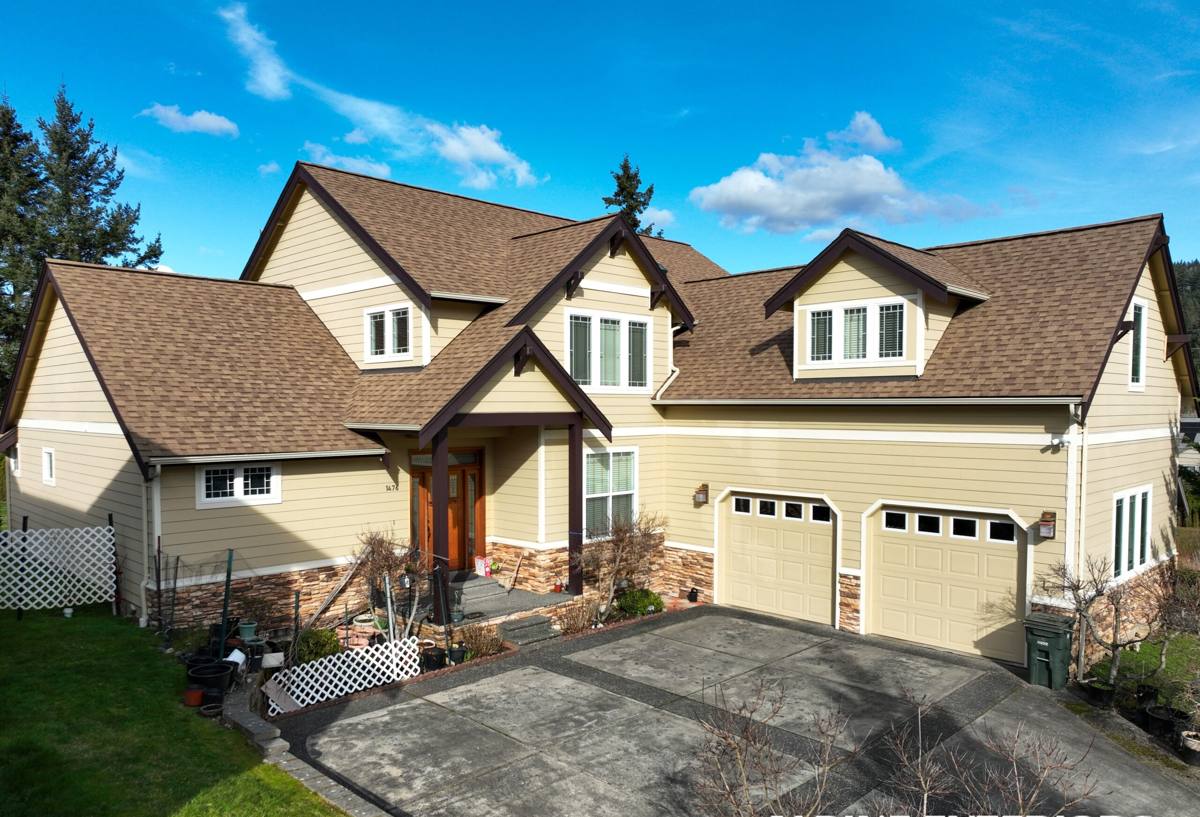
What a Correct New Roof Installation Actually Involves
A new roof is more than shingles nailed to plywood. In a coastal Whatcom County setting, the layers underneath the shingles do most of the real work of keeping water out over the next 20-30 years.
Decking Inspection and Repair
Before anything new goes down, the old roofing comes off and the deck gets inspected board by board. Soft, delaminated, or water-stained sheathing gets replaced — covering over bad decking is one of the most common shortcuts that leads to early failure, and it's not something you can catch after the fact once shingles are on.
Underlayment
Given how much sustained rain Blaine sees, we install synthetic underlayment rather than old-style felt across the field, with self-adhered ice-and-water membrane at eaves, valleys, and any low-slope transitions where wind-driven rain is most likely to work its way underneath.
Flashing
Flashing around chimneys, skylights, sidewalls, and vent penetrations is where most leaks originate on an otherwise sound roof. We use corrosion-resistant metal and step-flash sidewalls properly rather than relying on caulk or sealant as the primary defense — sealant fails; correctly lapped metal doesn't.
Ventilation
Balanced intake and exhaust ventilation keeps the attic temperature and moisture level in check, which matters twice over here: it reduces the moisture that feeds moss and roof-deck rot, and it protects the shingles themselves from the underside.
Fasteners
In a salt-air environment, we spec corrosion-resistant fasteners rather than standard galvanized nails wherever code and manufacturer requirements allow it. It's a small cost difference up front and a meaningful difference in how the roof holds up over 15-20 years.
Choosing a Roofing Material for a Blaine Home
There's no single "best" roofing material — the right choice depends on your home's exposure, roof pitch, budget, and how much long-term maintenance you're willing to take on. Here's how the common options actually compare for a coastal Whatcom County property.
| Material | How it handles salt air | How it handles driving rain | Moss resistance | Typical lifespan |
|---|---|---|---|---|
| Architectural asphalt shingle | Good with corrosion-resistant fasteners and flashing | Very good when properly underlaid and flashed | Fair — improved with algae-resistant granules | 25-30 years |
| Standing-seam metal | Excellent with the right coating/finish spec | Excellent — sheds water fast, few seams | Very good — sheds moisture, little to hold moss | 40-50+ years |
| Cedar shake | Fair — needs regular maintenance near salt air | Good when properly installed and ventilated | Poor without regular treatment/cleaning | 20-30 years with upkeep |
| Composite/synthetic shake | Good | Very good | Good | 30-50 years |
We don't push cedar shake in this area unless a homeowner specifically wants the look and understands the maintenance commitment — the combination of salt exposure and a long damp season is exactly the condition that shortens a cedar roof's life and drives up upkeep. That's our honest professional read, not a knock on the material itself; cedar performs fine in drier climates with regular care.
Our New Roof Installation Process
- On-site inspection. We walk the roof, check the attic from inside, and look at exposure direction, existing ventilation, and any moss or water staining already present.
- Written estimate. You get a clear breakdown of material, labor, and any decking repair contingencies — no vague allowances buried in the fine print.
- Tear-off. Old roofing is removed down to the deck so we can actually inspect the sheathing, not installed over.
- Deck repair. Any damaged sheathing is replaced before underlayment goes down.
- Underlayment and flashing. Synthetic underlayment field-wide, ice-and-water membrane at vulnerable areas, new flashing at every penetration and transition.
- Roofing installation. Material installed to manufacturer spec, with attention to nailing pattern and exposure — both of which affect wind and rain performance more than most homeowners realize.
- Ventilation check. Intake and exhaust venting confirmed or upgraded so the finished roof has balanced airflow.
- Cleanup and final walkthrough. Site cleared of debris and nails, roof reviewed with you before we consider the job done.
What Drives the Cost of a New Roof
Every roof is priced on its own specifics, but the same handful of factors move the number up or down on almost every job we quote in this area.
| Factor | Why it matters |
|---|---|
| Roof size and pitch | Steeper roofs take longer to work safely and use more material for the same footprint |
| Number of layers to remove | Tear-off of multiple old layers adds labor and disposal cost |
| Decking condition | Rotted or soft sheathing found during tear-off requires replacement before roofing can proceed |
| Material choice | Asphalt, metal, and composite shakes carry different material and labor costs |
| Roof complexity | Valleys, dormers, skylights, and chimneys all add flashing work and time |
| Access and site conditions | Tight lots, tree cover, or difficult staging affect crew efficiency |
We'd rather walk you through these variables during the inspection than quote a number over the phone that changes once we're on the roof.
Signs a Blaine Home May Need a New Roof
- Shingles that are cupping, curling, or missing granules in patches
- Visible moss or dark algae streaking, especially on north-facing or shaded slopes
- Soft spots or noticeable sagging when walked on or viewed from the ground
- Daylight visible through the attic roof boards
- Water stains on interior ceilings or attic sheathing after heavy rain
- Rusted or deteriorating flashing around chimneys, vents, or skylights
- A roof that's approaching or past the manufacturer's expected lifespan for its material
Any one of these on its own isn't necessarily an emergency, but a few together are worth a professional look before the next wet season sets in.
Why It Matters That We Already Work in Blaine
A roofing crew that treats Blaine the same as any inland job in Whatcom County is going to miss the details that actually matter here — the fastener spec that resists salt corrosion, the flashing detail that holds up against wind-driven rain off the water, the ventilation setup that keeps moss from taking hold on shaded slopes. We work throughout Whatcom County, including Lynden, Blaine, and the surrounding areas, so these aren't theoretical concerns — they're what we plan for on every coastal job before the first shingle comes off.
Local familiarity also means a straighter process: we know what permitting and inspection typically looks like in this area, we're not learning the region's weather patterns on your roof, and we're a known, reachable crew if a question comes up after the job is finished — not a name from an out-of-town lead-generation site.
After Installation: Keeping a New Roof Performing
A correctly installed roof still benefits from basic upkeep, especially in a moss-prone, salt-air environment:
- Keep gutters clear so water isn't backing up under the roof edge
- Trim back overhanging branches to reduce shade and debris on damp-prone slopes
- Have moss physically removed rather than pressure-washed, which can damage granule coverage
- Schedule a visual roof check every year or two, particularly after major storms
We're glad to explain warranty coverage for both materials and workmanship as part of any estimate, so you know exactly what's covered and for how long before work starts.
If your Blaine home needs a new roof or you're not sure whether it does, we're happy to take a look. Fill out the form below for a free, no-pressure estimate — we'll walk the roof, answer your questions honestly, and give you a clear picture of what the job actually involves.