 Lynden Siding
 Why Decks Fail Faster in Blaine
Blaine sits right on Boundary Bay, a few minutes from the Canadian border, and that waterfront location is part of what makes it such a great place to live — and part of what makes it hard on an outdoor deck. Salt-laden air moves off the water and settles into everything on a property, including fasteners, flashing, and any exposed metal hardware under a deck. Add in Whatcom County's long, wet fall-through-spring stretch and a shady, damp yard grows moss on decking boards almost as fast as you can clean it off. None of that is unusual for this part of Washington, but it does mean a deck built with generic, big-box materials and standard fastener choices tends to show its age here faster than the same deck would in a drier inland town.
When we replace a deck in Blaine, we're not just swapping old boards for new ones. We're building for the specific combination of salt exposure, near-constant moisture, and moss pressure that this stretch of Whatcom County deals with every year.
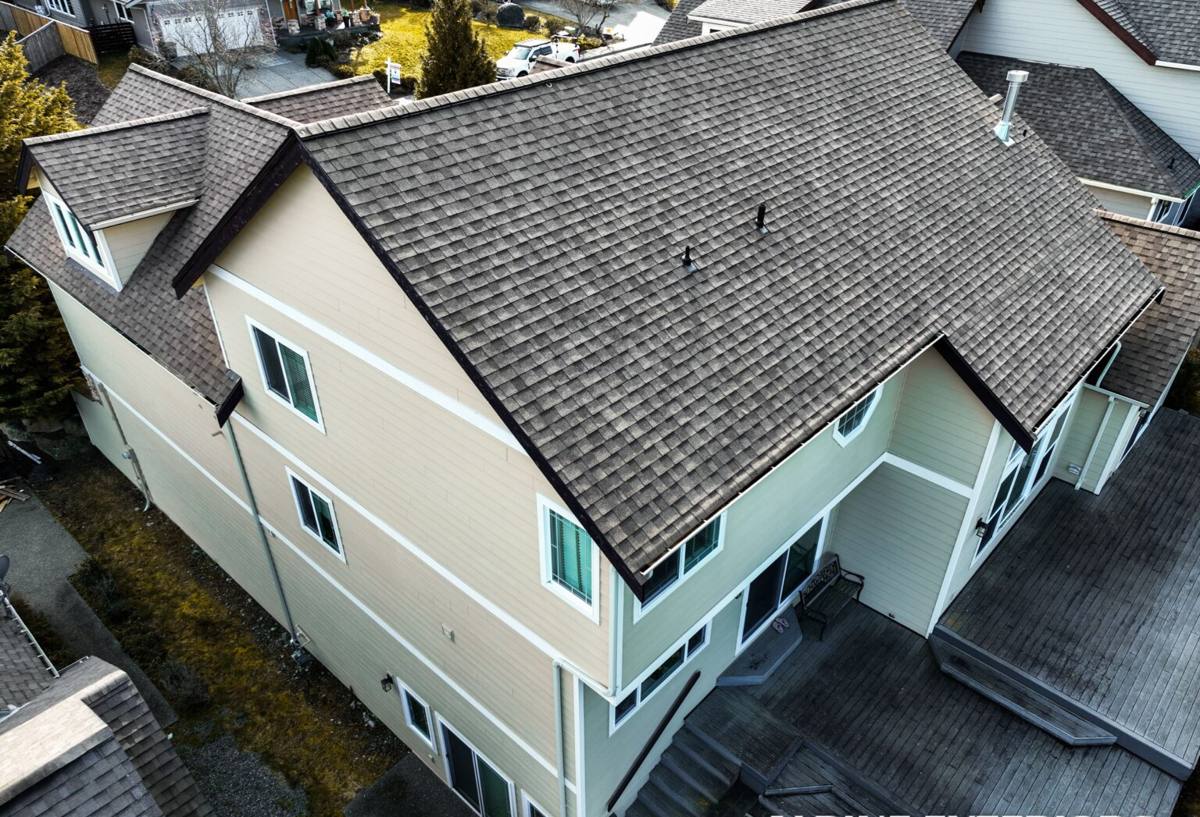
How Salt Air, Rain, and Moss Actually Damage a Deck
Salt Air and Hardware Corrosion
Standard galvanized screws and joist hangers can start corroding years earlier near the water than they would a few miles inland. Once fasteners weaken, boards start to cup, rail posts loosen, and the structural connections that hold the deck to the house — the parts you can't see — are the ones actually failing.
Driving Rain and Trapped Moisture
Rain that comes in sideways off the bay gets up under railings, behind fascia boards, and into any gap where old flashing has failed. Wood that stays wet for days at a time, rather than drying out between storms, is what leads to soft spots, rot at the ledger board, and delamination in lower-grade composite products.
Moss and Surface Buildup
Shaded decks, north-facing decks, and anything under overhanging trees will grow moss here almost every winter. Beyond looking bad, moss holds moisture against the deck surface and turns boards slick and dangerous underfoot — a real slip hazard on stairs and ramps.
Signs a Blaine Deck Needs Replacement, Not Just Repair
Not every tired-looking deck needs a full teardown. But there's a point where patching boards is throwing money at a structure that's already compromised. Look for:
- Soft, spongy, or springy spots anywhere in the decking, especially near the house
- Rust staining running down from screws or bolts
- A ledger board (where the deck attaches to the house) that's dark, swollen, or separating from the siding
- Railing posts that wiggle or have visible rot at the base
- Persistent moss or algae that comes right back within weeks of cleaning
- Stair stringers that feel uneven or have visible checking and splitting
- A deck older than 15–20 years that has never had a structural inspection
If you're seeing two or more of these, it's worth having someone look at the framing underneath, not just the surface boards.
What a Correct Deck Replacement Involves
A deck replacement done right in this climate isn't just cosmetic. It starts underneath and works up.
Structure First
We check footings, posts, beams, and joists before anything else. In a lot of older Blaine homes, the original deck was built to a lighter standard than current code requires, especially around ledger attachment and post spacing. Any structural member that's undersized, rotted, or improperly connected gets addressed before new decking ever goes down.
Ledger and Flashing
The ledger board connection to the house is the single most common failure point on decks in wet climates. We install proper flashing that directs water away from the house sheathing rather than letting it wick in behind the ledger — a detail that's easy to skip and expensive to ignore.
Fasteners and Hardware
Given the salt exposure this close to the water, we favor corrosion-resistant fasteners and connectors rated for coastal or treated-wood use, rather than the cheapest hardware on the shelf. It costs a little more up front and saves the headache of hardware failure years down the road.
Decking Surface and Drainage
Board spacing, ventilation underneath the deck, and grading so water sheds away from the house all matter more here than in a dry climate. A deck that can't dry out between rainstorms is a deck that stays vulnerable to rot and moss year-round.
Choosing Materials for Blaine's Climate
There's no single "best" decking material — it depends on budget, maintenance tolerance, and how much sun or shade the deck gets. Here's how the common options actually perform in this environment:
| Material | Salt Air / Moisture Resistance | Moss Resistance | Maintenance | Typical Lifespan Here |
|---|---|---|---|---|
| Pressure-treated pine | Good if properly sealed and re-sealed | Moderate — needs regular cleaning | Annual staining/sealing recommended | 10–15 years |
| Cedar | Naturally moisture-resistant, but softer | Moderate — same, needs upkeep | Periodic sealing, more sensitive to standing water | 12–18 years |
| Composite decking | Excellent — doesn't absorb moisture like wood | Good, but still needs occasional washing | Low — occasional cleaning, no sealing | 25+ years (product-dependent warranty) |
| PVC decking | Excellent — fully moisture-resistant | Good with routine cleaning | Lowest — wash as needed | 25+ years (product-dependent warranty) |
We'll walk through these trade-offs honestly during your estimate. Composite and PVC cost more upfront but reduce the ongoing maintenance burden that wood decking carries in a wet, moss-prone climate like Blaine's. Wood costs less initially but only holds up if someone stays on top of sealing and cleaning every year — a real commitment for a lot of homeowners.
Our Deck Replacement Process
- On-site assessment: We inspect the existing deck, footings, and ledger connection, and check for any moisture or rot in the framing.
- Honest recommendation: We tell you what actually needs replacing versus what can be left alone, and walk through material options for your budget and sun/shade exposure.
- Permit handling: We pull the required permits with the City of Blaine or Whatcom County, depending on your property, so the work is inspected and documented correctly.
- Demolition and structural repair: Old decking, railing, and any compromised framing come out. Footings, posts, and beams are repaired or replaced to current code.
- Flashing and fastening: Proper ledger flashing and corrosion-resistant hardware go in before a single board is installed.
- Decking, railing, and stairs: New surface material is installed with attention to spacing and drainage, along with code-compliant railing and stair construction.
- Final walkthrough: We go over the finished deck with you, including care and maintenance guidance specific to whatever material you chose.
Permits and Code in Whatcom County
Most deck replacements that involve structural changes — new footings, a raised deck, or work that changes the size or height of the structure — require a permit from either the City of Blaine or Whatcom County, depending on where the property sits. Railing height, stair rise and run, and guard spacing all have code requirements that matter for safety and for resale. Skipping the permit process might save a little time up front, but it can create real problems later if you sell the home or if an uninspected deck fails. We handle the permit process as part of the job so you don't have to navigate it yourself.
Maintaining a New Deck in a Salt Air, High-Moss Climate
Whatever material you choose, a little seasonal attention goes a long way in this climate:
- Sweep or blow off leaves and debris regularly, especially in shaded areas prone to moss
- Rinse salt residue off railings and hardware periodically if the deck faces open water
- Check and re-seal wood decking on the manufacturer's recommended schedule, typically annually
- Keep gutters and downspouts clear so runoff isn't draining directly onto the deck
- Trim back overhanging branches to let sunlight and airflow reach damp areas
- Inspect fasteners and connections once a year for early signs of rust or loosening
Why It Matters to Hire a Crew That Already Works in Blaine
A contractor who mostly works drier, inland jobs may not think twice about standard hardware or skip extra flashing detail that doesn't matter as much elsewhere. Out here on the water, those shortcuts show up early — as rust streaks, soft ledger boards, or moss that never really goes away. We work throughout Whatcom County, including Blaine and Lynden, and we build decks with this specific coastal, moss-prone climate in mind from the footings up. That's not a marketing line — it's the difference between a deck that needs attention again in five years and one that holds up the way it's supposed to.
If your deck in Blaine is showing rot, rust, chronic moss, or just isn't safe to stand on anymore, we're happy to take a look and give you a straightforward, no-pressure estimate on what a proper replacement would involve. Use the form below to get started.