 Lynden Siding
 Deck Repair Built for Blaine's Coastal Conditions
Blaine sits right on Semiahmoo Bay, which means decks here take a different kind of beating than decks ten miles inland in Lynden. Salt-laden air corrodes fasteners and hardware faster than it does further from the water. Driving rain off the Strait finds every gap in flashing and every crack in a board. And Whatcom County's long, wet moss season keeps deck surfaces damp for months at a time, which is exactly the environment wood rot and slick, degraded decking need to take hold. A deck that looks fine from the porch door can have soft joists, rusted-out hardware, or a ledger board separating from the house — problems that start small and get expensive fast if they're ignored.
We're a Lynden-based crew that works Blaine regularly, so we're not guessing at what the coastal exposure does to a deck. We see the same failure patterns often enough to know where to look first, what's worth repairing, and what's actually a safety issue that needs to come off the house now.
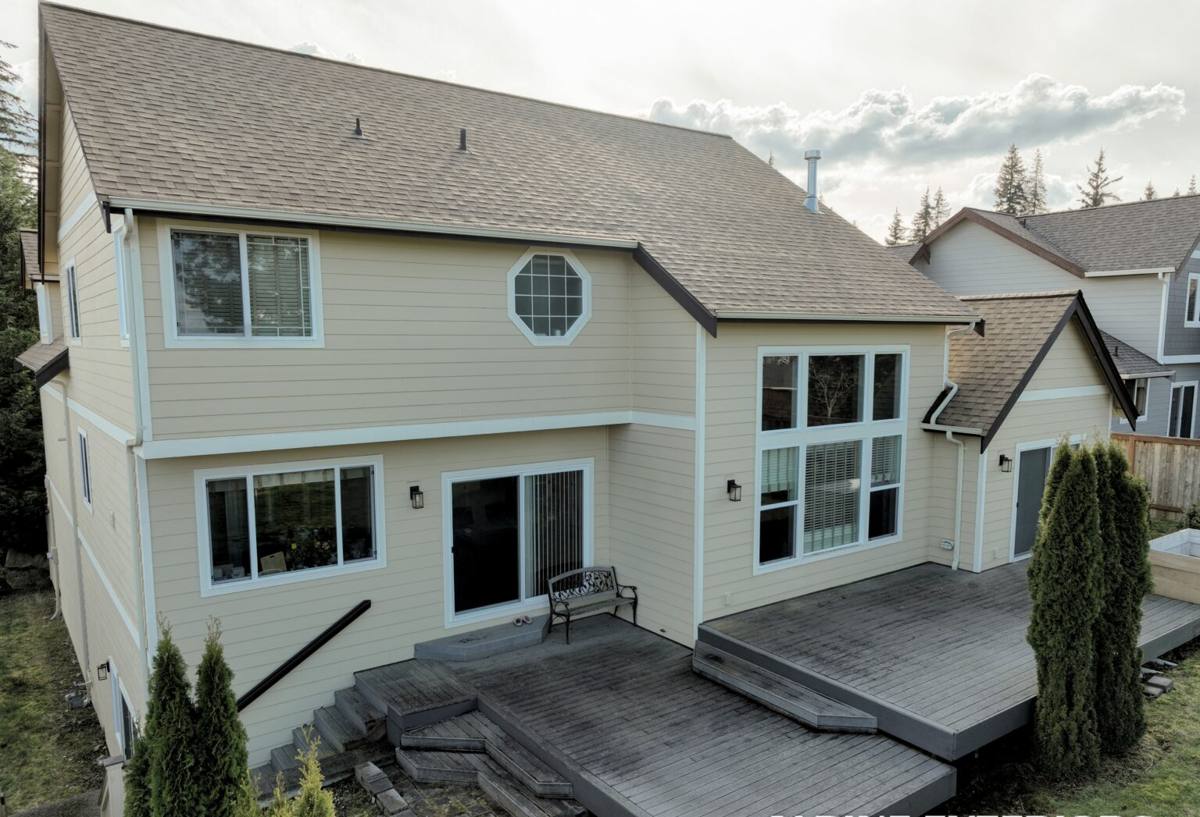
What Blaine's Climate Actually Does to a Deck
Salt Air and Metal Hardware
Every deck depends on hardware you can't always see — joist hangers, structural screws, bolts holding a ledger board to the house, post bases anchoring support posts to footings. In a salt-air environment like Blaine's, standard hardware corrodes faster than the wood around it. By the time rust stains start showing up on the decking surface, the hardware underneath has often been losing strength for a while. This is one of the most common things we find during an inspection that the homeowner had no way of knowing about from the surface.
Driving Rain and Water Intrusion
Wind-driven rain off the water doesn't just fall straight down — it gets pushed sideways into ledger boards, under flashing, and into any seam that isn't sealed correctly. The ledger board connection (where the deck attaches to the house) is the single most safety-critical point on most decks, and it's also the point most exposed to wind-driven moisture. Improper or aging flashing here is a leading cause of both deck failures and hidden water damage to the house's rim joist and siding behind it.
Moss Season and Surface Degradation
Whatcom County's wet season keeps horizontal wood surfaces damp for extended stretches, and decks — being flat, outdoor, and shaded in spots by the house itself — are prime real estate for moss and algae growth. Beyond making a deck slippery and unattractive, sustained moisture trapped under moss accelerates wood rot in real wood decking and can degrade the surface layer on some composite products over time. Boards that stay wet longest — under railings, in corners, near the house — are usually the first to show real damage.
Signs Your Blaine Deck Needs Repair, Not Just Cleaning
- Soft or spongy spots when you walk across the decking
- Boards that have visibly cupped, split, or separated at the ends
- Rust streaks below joist hangers, screws, or other hardware
- A ledger board with a visible gap, dark staining, or soft wood where it meets the house
- Railings or posts that wiggle more than they should when pushed
- Persistent moss or black staining that comes back within weeks of cleaning
- Stairs that feel uneven, bouncy, or have a stringer pulling away from the frame
Any one of these is worth a professional look. Several at once usually means the deck's problems go deeper than the surface.
What a Correct Deck Repair Actually Involves
A lot of deck "repairs" amount to swapping a few obviously rotten boards and calling it done. That approach might look fine for a season, but if the underlying structure — framing, hardware, ledger connection — wasn't inspected, the same failure just reappears somewhere else. Our approach starts underneath, not on top.
Structural Inspection First
Before we replace a single board, we get under the deck where possible and check the framing: joists, beams, posts, footings, and the ledger connection to the house. This is where we find the problems that actually matter for safety — soft or rotted framing members, corroded or undersized hardware, and ledger attachments that were never flashed correctly in the first place.
Hardware and Fastener Upgrades
Given Blaine's salt-air exposure, we typically recommend upgrading to corrosion-resistant hardware rated for coastal or treated-lumber contact whenever we're opening up a structural connection anyway. It costs more up front than standard hardware, but replacing hardware again in a few years because it rusted out is a worse outcome for everyone.
Flashing and Water Management
If the ledger board or any other water-entry point is involved in the repair, we address the flashing and water diversion, not just the wood. Repairing rotted wood without fixing the water path that caused the rot just means a repeat repair down the road.
Decking and Railing Work
Boards, balusters, stair treads, and railing components get replaced to match the existing deck as closely as possible, whether that's real wood or composite. We'll walk you through matching options honestly, including where an exact match isn't realistic and what the reasonable alternatives look like.
Repair vs. Replacement: How We Help You Decide
Not every deck with problems needs to be torn out. The decision usually comes down to how much of the structure is still sound versus how much has been compromised by moisture and time.
| Factor | Leans Toward Repair | Leans Toward Replacement |
|---|---|---|
| Framing condition | Joists and beams solid, isolated soft spots | Widespread rot or repeated hardware corrosion throughout |
| Ledger connection | Sound, properly flashed, no water staining | Rotted, unflashed, or showing long-term water damage |
| Age of deck | Under 10-15 years, built to a reasonable standard | Original construction unclear or decades old with no upgrades |
| Extent of damage | Limited to a few boards, a rail section, or stair treads | Damage spread across most of the deck surface and structure |
| Code compliance | Railings, spacing, and attachment already meet current standards | Undersized railings, missing guardrails, or non-compliant spacing |
We'll give you a straight answer on which side of that table your deck falls on, along with the reasoning, so the decision is yours to make with real information rather than a sales pitch.
Our Process for Blaine Deck Repairs
- Inspection: We look at the deck from above and below where access allows, checking framing, hardware, ledger connection, and surface condition.
- Honest assessment: You get a plain explanation of what's failing, why, and what it means for safety and longevity — not just a list of boards to swap.
- Written estimate: A clear scope of work and price range before anything starts, including options if there's more than one reasonable path forward.
- Repair work: Structural fixes first, then hardware upgrades, flashing corrections, and finally decking, railing, and stair work.
- Final walkthrough: We go over what was done and what to watch for going forward, particularly around moss control given the local climate.
Why a Lynden Crew That Works Blaine Regularly Matters
Blaine's proximity to the water changes the math on deck durability compared to inland Whatcom County. A crew that mostly works drier, inland properties may not automatically think to check hardware corrosion or ledger flashing as carefully as the coastal exposure actually requires. Because we work Blaine as part of our regular service area alongside Lynden, we go into every inspection already knowing what salt air and driving rain tend to do to decks in this specific corner of the county — which means fewer surprises mid-project and a repair that's built for the conditions it actually has to survive, not generic conditions.
Maintaining Your Deck After Repair
A good repair holds up longer with basic upkeep, especially given how long moss season runs here.
- Sweep debris and standing water off the deck surface regularly during wet months
- Keep gutters and downspouts near the deck clear so runoff isn't draining directly onto it
- Address moss growth early with an appropriate cleaner rather than letting it establish
- Check hardware and railings for looseness once a year, particularly after winter storms
- Reseal or refinish real wood decking on the schedule the product calls for — coastal exposure shortens the interval compared to inland homes
Get an Honest Look at Your Deck
If your Blaine deck is showing soft spots, rust stains, stubborn moss, or just doesn't feel as solid as it used to, it's worth having someone who knows this climate take a real look before it becomes a bigger repair. We offer free, no-pressure estimates — fill out the form below and we'll get back to you with a straight assessment of what your deck actually needs.