 Lynden Siding
 Why Birch Bay's Coastline Changes the Metal Roofing Equation
A roof spec that holds up fine a few miles inland in Lynden doesn't automatically hold up on the water. Birch Bay sits right at the edge of the Strait of Georgia, and that proximity to salt water changes what a roof is actually up against day to day. Airborne salt settles on every exposed surface, wind off the water drives rain sideways instead of straight down, and Whatcom County's long wet season keeps roofs damp for months at a stretch. None of that is unusual for this part of Western Washington, but it does mean a Birch Bay roof earns its keep differently than one set back from the shoreline.
Metal roofing handles this environment better than most materials when it's specified and installed correctly. It does not handle it well when it's treated like any other roof on any other street. The difference comes down to material choice, fastener choice, and detail work at the seams, valleys, and penetrations — the parts of the roof that don't show up in a photo but decide whether it lasts twenty years or forty.
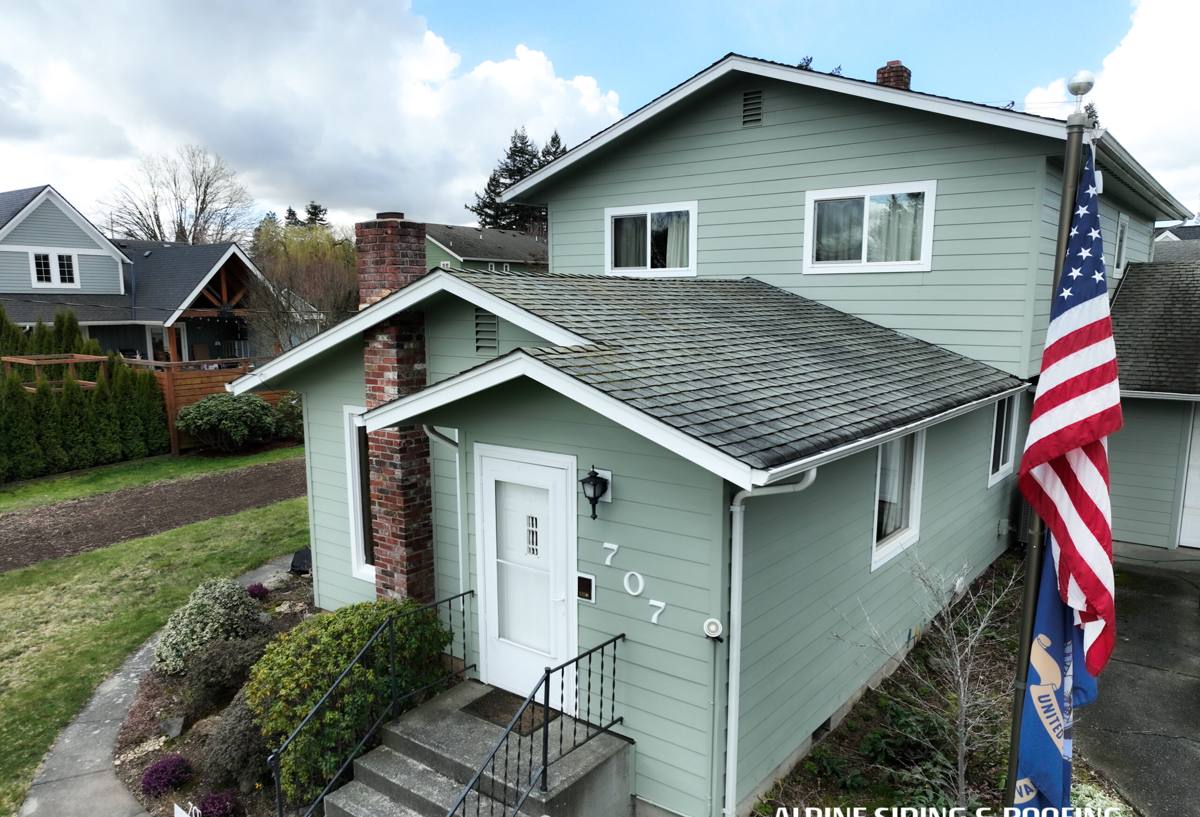
What a Metal Roof Has to Handle in Birch Bay's Conditions
Salt Air and Corrosion
Salt in the air isn't just a coastal cliché — it's a slow, steady source of corrosion that settles on fasteners, flashing, and cut edges. Left unaddressed, it accelerates rust at any spot where the protective coating has been scratched, drilled through, or left unsealed. It also creates a real risk of galvanic corrosion, which happens when two dissimilar metals touch in the presence of moisture — copper flashing set against a steel panel, or the wrong grade of fastener driven into the wrong panel material. One metal corrodes faster to protect the other, and on a coastal home that reaction happens faster than most people expect.
Wind-Driven Rain
Rain coming off the water rarely falls straight down. Wind pushes it sideways and, at roof edges and low-slope transitions, even upward under laps and flashing. A roof that only sheds water moving in one direction will eventually leak in this kind of exposure. That's why underlayment quality, seam design, and how the panels are fastened matter more here than they would on a sheltered, inland roof.
A Long Moss Season
Whatcom County's wet stretch runs long — roughly fall through spring — and that's plenty of time for moss and algae to take hold anywhere organic debris collects: north-facing slopes, shaded valleys, and areas under overhanging trees. Metal roofing has a real advantage here because there's no organic mat like an asphalt shingle's surface for spores to root into. But metal isn't immune. Valleys, low-slope sections, and spots where needles and leaves pile up still need clear drainage paths and periodic clearing, or moss will find a foothold even on a metal surface.
Choosing the Right Metal Panel System
Not all metal roofing is the same product wearing different colors. The two systems homeowners in Birch Bay usually weigh against each other are standing seam and exposed-fastener panels, and the right call depends on exposure, budget, and how long you want to go before any maintenance is needed.
| Factor | Standing Seam | Exposed-Fastener Panels |
|---|---|---|
| How it attaches | Concealed clips under raised seams — no exposed screws in the field of the panel | Screws driven through the panel face into the deck or purlins |
| Wind-driven rain performance | Stronger — no exposed penetrations for wind to work water into over time | Adequate when installed well, but each screw is a point that can loosen or weep eventually |
| Maintenance over time | Minimal — no fastener heads to re-seat or reseal | Fastener washers and gaskets should be checked periodically and occasionally replaced |
| Upfront cost | Higher material and labor cost | Lower upfront cost |
| Best fit | Homes with direct water exposure or a long ownership horizon | Secondary structures, budget-driven projects, or more sheltered lots |
For a home directly exposed to wind off the bay, we generally steer people toward standing seam. It's not that exposed-fastener panels are a bad product — they're a reasonable, widely used system — but every exposed screw is a maintenance item, and maintenance items are harder to stay on top of on a coastal roof than an inland one.
What a Correct Metal Roof Installation Includes
Deck Prep and Underlayment
Before any panel goes down, the deck needs to be sound — no soft spots, no trapped moisture from a prior roof. In this climate, we treat a high-quality synthetic or self-adhered underlayment as non-negotiable, especially at eaves, valleys, and anywhere wind-driven rain is most likely to find a way under a lap. Skipping this step to save a day of labor is the single most common shortcut that turns into a callback a few winters later.
Flashing and Penetrations
Metal roofs succeed or fail at their details, not their flat panel runs. Valleys, chimney penetrations, vent boots, and wall transitions all need flashing profiles built for the specific panel system, lapped correctly with the water flow, and installed so sealant is a backup layer rather than the only thing keeping water out. Sealant that's doing the primary work will fail eventually — it's a matter of when, not if.
Fasteners and Panel Attachment
Fasteners and flashing need to be compatible with the panel metal to avoid galvanic corrosion, and concealed-clip systems need to allow the panel room to expand and contract with temperature swings without binding. Mixing metals or fastener grades to save a trip to the supplier is exactly the kind of shortcut that shows up as staining and rust streaks a few years down the road.
Our Process for Birch Bay Metal Roofing Projects
- On-site inspection: we walk the roof, check the deck condition, note exposure direction, tree cover, and existing trouble spots like valleys or chimney flashing.
- System recommendation: we talk through standing seam versus exposed-fastener based on your home's exposure, roof pitch, and budget — not a one-size answer for every house.
- Detail plan: valleys, penetrations, and transitions get planned out before installation starts, not improvised on the fly.
- Installation: deck prep, underlayment, and panel attachment done to the standard the panel manufacturer and this climate actually require.
- Walkthrough and cleanup: we go over the finished roof with you, sweep the site for stray fasteners and debris, and make sure you know what routine upkeep looks like going forward.
Maintaining a Metal Roof in Salt Air and Moss Season
A well-installed metal roof in Birch Bay is low-maintenance, not no-maintenance. A short annual routine goes a long way toward getting the full lifespan out of it.
- Rinse accumulated salt spray off panels and exposed fasteners periodically, especially on homes closest to the water
- Keep gutters, valleys, and any low-slope areas clear of needles and leaves so water has a clear path off the roof
- Check shaded, north-facing slopes and valleys for early moss growth and remove it gently — never with a pressure washer, which can drive water under seams and strip protective coatings
- Touch up any scratched or chipped paint promptly; a small bare spot is where rust starts
- Have flashing and sealant at penetrations checked every couple of years, since sealant is a backup layer that ages faster than the metal around it
- Keep overhanging tree limbs trimmed back to reduce debris buildup and constant shade on any one section of roof
Cost Factors for Metal Roofing in Birch Bay
Every roof is priced from a site visit — anyone quoting a number without seeing your roof is guessing. But the factors that move the price up or down are consistent, and it helps to know what they are before you get quotes.
| Factor | Effect on Cost |
|---|---|
| Roof pitch and complexity (valleys, dormers, multiple planes) | Higher — more cutting, more flashing detail, more labor time |
| Panel system (standing seam vs exposed-fastener) | Standing seam runs higher in materials and install labor |
| Tear-off vs installing over existing roofing | Tear-off adds cost but is often the right call on an aging or damaged deck |
| Amount of flashing and penetration work | More chimneys, vents, and wall transitions increase detail labor |
| Site accessibility | Steep lots or limited staging area can add setup and safety costs |
| Coating and finish level | Higher-grade corrosion-resistant coatings cost more upfront but reduce long-term maintenance |
Why Hire a Crew That Already Works in Birch Bay
A contractor who's worked roofs along this stretch of Whatcom County knows which valley details tend to leak first in a direct wind-driven rain event, which slopes hold onto moss the longest through a wet winter, and which fastener and coating combinations actually hold up a few hundred feet from salt water versus a few miles inland in Lynden. That's not something you get from a spec sheet — it's something you get from having done the work here before and having gone back to see how it aged.
It also matters for the boring-but-important parts of the job: knowing the local permitting process, having working relationships with suppliers who stock the corrosion-resistant fasteners and coatings this climate calls for, and being straightforward about which shortcuts aren't worth taking on a roof that's going to spend the next few decades a stone's throw from the water.
If you're weighing a metal roof for a Birch Bay home, we're happy to take a look and walk you through what your specific roof needs — no pressure, no upsell, just a straight answer. Use the form below to request a free estimate.