 Lynden Siding
 Why Birch Bay Siding Work Is Different From the Rest of Whatcom County
Birch Bay sits right on the water, and that changes what siding has to survive. A few miles inland in Lynden, siding mostly has to shed rain and handle temperature swings. On the Birch Bay shoreline, siding also has to stand up to salt-laden air moving off the Strait of Georgia, wind-driven rain that hits walls sideways instead of falling straight down, and long stretches of damp, shaded weather that keep moss and algae growing on north-facing walls most of the year. Those are three separate stresses, and a siding job that only accounts for one or two of them tends to show problems within a few years — chalky or pitted finishes, streaking, soft spots at trim, or green-black growth that keeps coming back no matter how often it's cleaned.
This page is about one product, in one place: James Hardie fiber cement siding installed on Birch Bay homes. We don't sell or install vinyl, LP SmartSide, or wood lap siding, and we're not going to pretend those products perform the same way this close to saltwater. What follows is what we've learned installing and specifying siding for this stretch of coastline, and what a correctly done Hardie job actually involves here.
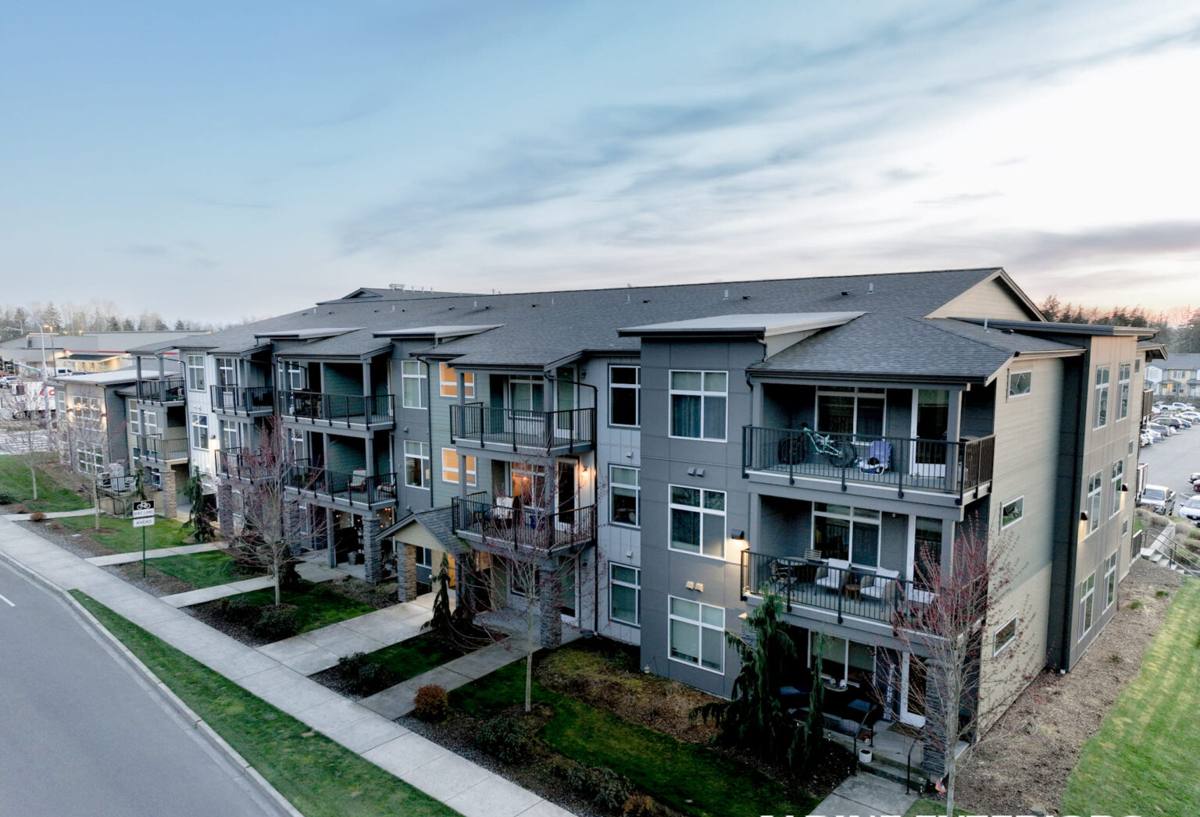
What Salt Air Actually Does to a House
Salt air isn't just "humid air." Airborne salt is corrosive, and it settles on every exterior surface — siding, trim, fasteners, flashing — in a fine film that gets reactivated every time it rains or the morning fog rolls through. Over years, that steady low-level corrosion attacks the weak points in a siding system faster than it would a few miles inland:
- Exposed or undersized fasteners rust and streak the siding face
- Untreated cut edges on fiber cement or wood swell and absorb moisture
- Cheaper vinyl can become brittle and discolor faster in salt-air UV exposure
- Metal flashing and trim corrode if it's the wrong alloy or coating for a marine-influenced environment
James Hardie's fiber cement doesn't corrode — it's cement, sand, and cellulose fiber, not metal or petroleum-based plastic. But the system around it still matters. Fastener choice, flashing material, and how cut edges get sealed determine whether a Hardie installation actually gets the salt-air resistance the product is capable of, or just looks right for the first year or two.
HZ5 and Why Climate-Rated Product Lines Exist
James Hardie engineers its siding in different formulations for different exposure zones, and the HZ5 line is built for the wetter, harsher parts of the Pacific Northwest — the zone Whatcom County's coastline falls into. It's not a marketing label; the formulation and factory finish are adjusted for the moisture cycling and freeze-thaw pattern this climate produces. Specifying the correct HZ line for a Birch Bay property, rather than a generic version of the product, is one of the simplest things a contractor can get right or wrong before a single board goes up.
Driving Rain and Wind-Driven Moisture
Birch Bay gets weather straight off the water, and storms here don't always fall straight down — wind pushes rain sideways into wall assemblies, which puts far more stress on flashing, laps, and seams than a calm vertical rain does. A siding installation that would hold up fine on a sheltered inland lot can leak within a few seasons on an exposed Birch Bay elevation if the water-management details weren't built for that kind of exposure.
The parts of the assembly that matter most in wind-driven rain:
| Detail | What It Does | Why It Matters Here |
|---|---|---|
| Weather-resistive barrier | Secondary drainage plane behind the siding | Catches and redirects water that gets past the siding face during storms |
| Rainscreen gap / furring | Small air gap behind the siding panel | Lets any moisture that gets in drain and dry instead of sitting against sheathing |
| Window and door flashing | Directs water around openings | Openings are the most common leak point in wind-driven rain events |
| Butt joint and corner treatment | Seals or laps board ends correctly | Horizontal seams are where sideways-driven rain finds its way in |
| Bottom clearance and kickout flashing | Keeps siding off grade, decks, and roof-wall intersections | Splashback and roof runoff are constant near the water |
None of this is unique to James Hardie — it's basic building science. But it's also exactly the kind of detail that gets rushed or skipped on a job priced and crewed for a calmer, drier site. On a Birch Bay home, we treat every one of these as non-negotiable, not optional upgrades.
Moss, Algae, and Long Damp Seasons
Whatcom County's moss season runs long, and Birch Bay's shaded, north-facing walls and tree-lined lots keep siding damp for extended stretches even between storms. Moss and algae don't just sit on the surface — sustained growth traps moisture against the wall, and on materials that absorb water, that moisture cycling is what eventually causes swelling, cracking, or paint failure.
Where Hardie's Finish Actually Helps
James Hardie's ColorPlus factory-applied finish is baked on under controlled conditions, which gives it more consistent adhesion and UV resistance than field-applied paint — and a finish that's bonding well resists the kind of surface breakdown that gives moss and algae something to grab onto. It doesn't make a wall moss-proof; nothing does in this climate. But a well-adhered finish on a non-absorptive substrate is easier to keep clean and holds up longer between washes than a porous or poorly sealed surface.
What We Do Differently on Shaded Elevations
- Confirm adequate clearance from landscaping and grade so airflow can reach the wall
- Pay closer attention to caulking and joint sealing on north- and shade-facing sides
- Flag drainage and gutter issues that keep a wall wetter than it needs to be, since siding can't outperform bad water management around it
What a Correct James Hardie Installation Involves
A lot of what separates a siding job that lasts from one that doesn't happen in details a homeowner will never see once the wall is closed up. On a Birch Bay project, the ones we hold to without exception include:
- Correct fastener type and spacing — corrosion-resistant fasteners, placed per Hardie's fastening schedule for the exposure and substrate, not just "close enough"
- Factory-cut edges sealed at every field cut — any board trimmed on site gets a sealed edge before it goes up, protecting the cut face from moisture intrusion
- Proper gapping — small clearance gaps at butt joints and trim, per manufacturer spec, so the material can expand and contract without cracking the finish
- Flashing integrated correctly with the weather-resistive barrier — layered so water is shed outward at every horizontal transition, not trapped behind it
- Rainscreen or drainage gap behind the siding — especially important on this coastline given the volume of wind-driven rain
- Caulking limited to where it belongs — sealant isn't a substitute for correct flashing and gapping; overusing it usually signals a shortcut elsewhere
Our Process on a Birch Bay Project
1. On-Site Assessment
We walk the property and look specifically at exposure: which elevations take direct salt air and wind-driven rain, which stay shaded and damp longer, where drainage and grading might be working against the siding already in place.
2. Product and Detail Spec
We confirm the correct Hardie product line and profile for the exposure, and map out flashing, fastening, and drainage details before crews start — not as a generic template, but for that specific house and lot.
3. Prep and Tear-Off
Old siding comes off, sheathing and framing get checked for hidden moisture damage (common on older coastal homes), and any repairs happen before new material goes up — covering a problem with new siding never actually solves it.
4. Installation
Weather-resistive barrier, flashing, and drainage gap go in first, followed by Hardie panels or lap siding installed to the fastening and gapping spec, then trim and caulking last.
5. Final Walkthrough
We go over the finished work with the homeowner, including basic maintenance expectations for a coastal property — what to watch for and what's normal weathering versus something to call us about.
Why a Crew That Already Works This Coastline Matters
Birch Bay siding work isn't the same job as a Lynden or Sumas siding job, and a crew that mostly works inland can miss details that only show up in coastal conditions — under-specified flashing, the wrong HZ formulation, fastener choices that looked fine on paper but corrode faster than expected near salt air. A crew that regularly works Birch Bay and the surrounding Whatcom County coastline already knows the exposure categories, the weather windows that actually allow for correct installation, and which details can't be shortcut here even if they'd pass on a calmer inland site.
What Drives Cost on a Coastal Siding Job
| Factor | Why It Affects Price |
|---|---|
| Existing wall condition | Hidden moisture or rot behind old siding adds repair scope before new siding goes on |
| Exposure level | Direct waterfront and wind-exposed elevations need more robust flashing and drainage detailing |
| Home size and complexity | Corners, dormers, and trim details all add labor |
| Product line and profile | HZ5 formulations and certain Hardie profiles cost more than base product |
| Access and site conditions | Waterfront lots, slopes, and limited staging area can slow crew productivity |
We give a firm number after seeing the actual house, not a phone estimate — coastal exposure and hidden wall condition vary enough house to house that a generic range isn't useful to you.
Maintenance Checklist for Birch Bay Homeowners
- Rinse siding periodically to clear salt film buildup, especially on ocean-facing walls
- Keep gutters and downspouts clear so water isn't sheeting down the wall face
- Trim back landscaping that's shading a wall and keeping it damp longer than necessary
- Check caulking at trim and openings yearly for cracking or separation
- Address moss or algae growth early with gentle cleaning rather than pressure-washing, which can damage the finish
- Watch for soft spots, streaking, or discoloration at fastener heads and report them promptly
If you're planning a siding project on a Birch Bay home, we'd rather walk the property and give you a straight answer than guess over the phone. Reach out for a free, no-pressure estimate — we'll look at your specific exposure and walls and tell you what it actually needs.