 Lynden Siding
 Why Birch Bay's Waterfront Climate Is Harder on Siding Than Inland Lynden
Birch Bay sits right on the water in Whatcom County, and that changes what a siding job has to survive. A few miles inland in Lynden, siding deals with the normal Pacific Northwest mix of rain and humidity. On the Birch Bay waterfront, you add salt-laden air, near-constant wind off the water, and enough shade and dampness in places to keep moss going most of the year. Any siding product installed here has to handle all three at once, not just one.
Salt Air and Corrosion
Airborne salt settles on siding, trim, and fasteners and speeds up corrosion on anything not built or finished to resist it. Cheap or exposed metal fasteners, unsealed cut edges, and finishes that aren't rated for marine exposure all break down faster in Birch Bay than they would a few miles inland. This is one of the biggest reasons product choice and installation detail matter more here than on a typical Whatcom County job.
Wind-Driven Rain
Storms coming off the water don't just drop rain straight down — they push it sideways, into laps, joints, and anywhere a seam isn't tight. A siding system that's fine in a sheltered inland yard can leak at a Birch Bay home if the flashing, gaps, and caulking weren't detailed for wind-driven exposure. This is a water-management problem as much as a materials problem.
The Long Moss Season
Shaded north and west walls near the water stay damp longer into the season than drier inland lots, which gives moss and algae a longer window to take hold. Moss holds moisture against the siding surface, and over time that constant dampness is what damages products that aren't built to resist it — long before the moss itself is the real problem.
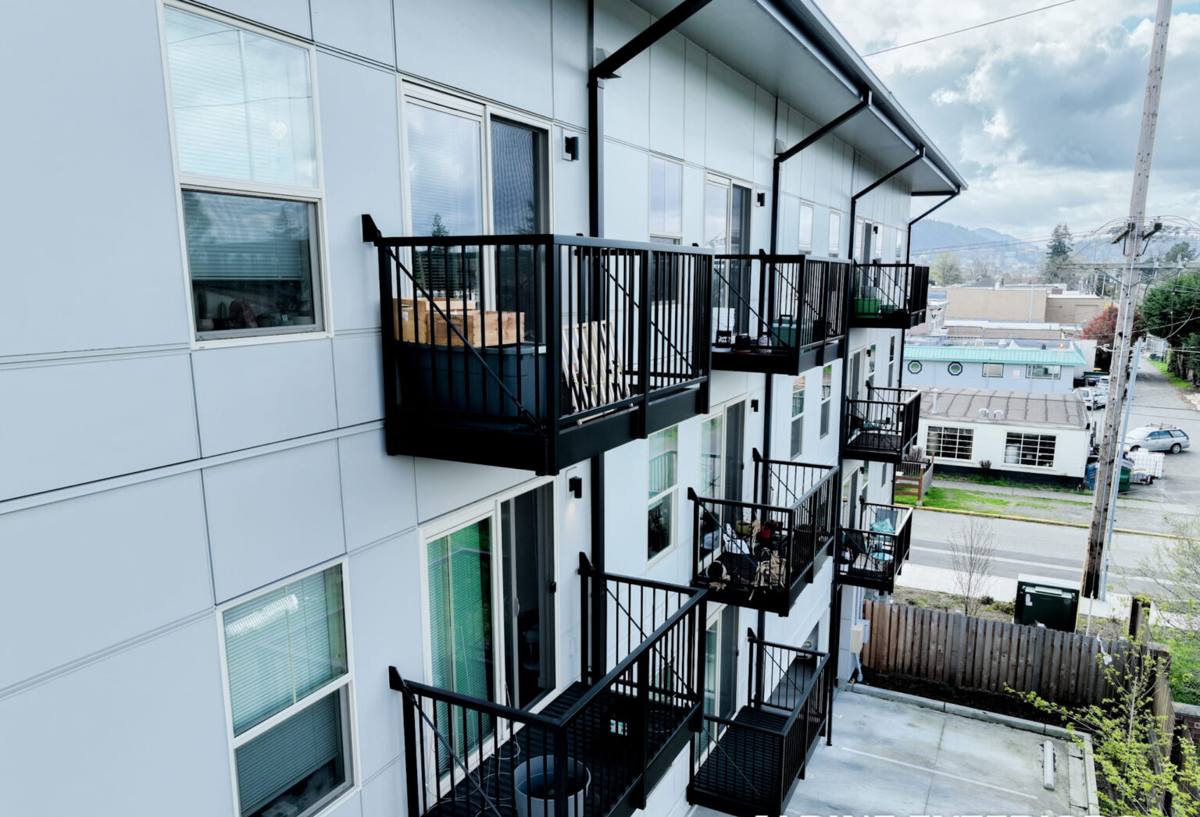
What Fiber Cement Needs to Do Differently on a Coastal Home
Moisture Management Behind the Siding
Good fiber cement performance in Birch Bay isn't just about the panel — it's about what's happening behind it. A drainage plane, correctly lapped weather-resistive barrier, and enough of a gap for water to escape are what keep wind-driven rain from turning into trapped moisture in the wall assembly. Skip these details and even the best siding material on the market will eventually show problems, usually where you can't see them until they're expensive.
The Right Product Line for the Exposure
James Hardie builds different HardieZone (HZ) formulations for different climate demands, and homes with direct salt-air and wind exposure — like much of Birch Bay's waterfront — get engineered and detailed differently than a sheltered lot a few blocks off the water. Matching the product line, fastener spec, and finish to the actual exposure a home faces is part of getting this right, not an upsell.
Why We Only Install James Hardie Fiber Cement
We don't install LP SmartSide, vinyl, Cemplank, Allura, or bare cedar or spruce siding — on Birch Bay homes or anywhere else we work. That's a standard, not a sales pitch. Fiber cement as a category performs well against fire, moisture, and pests, but not all fiber cement is engineered or finished the same way, and vinyl and wood carry their own trade-offs in a salt-air, high-moisture environment that we're not willing to put our name on.
James Hardie is the one system we've found consistently backs up its engineering with a factory-applied ColorPlus finish (rather than field paint that has to hold up to salt air and UV on its own), a strong transferable warranty, and climate-specific product lines built for exactly the exposure conditions Birch Bay homes face. Non-combustible fiber cement also matters to a lot of homeowners here given regional wildfire seasons, even though the coastal concerns on this stretch of Whatcom County are mostly about water and salt, not fire.
What a Correct Installation Involves in Birch Bay
The material is only half the job. On a coastal home, installation detail is where jobs succeed or fail over the following ten to twenty years.
| Siding Option | Salt Air Resistance | Wind-Driven Rain Behavior | Moss/Algae Resistance | Our Position |
|---|---|---|---|---|
| James Hardie fiber cement (HZ-matched, ColorPlus) | Strong when installed to spec | Manages well with correct flashing/drainage | Factory finish resists staining | What we install |
| Vinyl siding | Can become brittle and fade faster in salt/UV exposure | Prone to water intrusion behind panels if not detailed carefully | Surface can stain and hold grime | Not installed by us |
| Bare/primed wood or spruce siding | Vulnerable without diligent, ongoing maintenance | Absorbs moisture at seams and end grain | High — organic material moss favors | Not installed by us |
| Non-Hardie fiber cement (e.g. Cemplank, Allura) | Varies by product line and finish quality | Depends on the specific system's engineering | Varies by finish | Not installed by us |
Whatever the product, a correct install in this environment means: a properly lapped weather-resistive barrier, a real drainage gap behind the siding, flashing at every window, door, and roof intersection, fastener spacing and type matched to the manufacturer's coastal/high-wind requirements, and sealant only where the manufacturer actually calls for it — not as a substitute for proper flashing.
Our Process for Birch Bay Projects
Every job starts with an on-site look at the specific exposure that wall or home faces — direct waterfront wind, partial shelter, or a shaded, moss-prone side — because that changes the product line and detailing we recommend, not just the color.
- Inspection and assessment: we check the existing siding, sheathing, and any trapped moisture or moss buildup before quoting anything.
- Tear-off and sheathing check: old siding comes off and we confirm the sheathing underneath is sound before covering it back up.
- Weather barrier and drainage plane: installed and lapped correctly for water to shed down and out, not in.
- Flashing at every penetration: windows, doors, and roof lines get flashed before siding goes on, not caulked after the fact.
- Hardie panel or plank installation: fastened and gapped to manufacturer spec for the HZ line and exposure involved.
- Final walkthrough: we check seams, corners, and trim before calling the job done.
Maintaining Fiber Cement Siding in a Salt-Air, Moss-Prone Environment
Correctly installed Hardie siding is low-maintenance, not no-maintenance — especially this close to the water. A little attention once or twice a year catches problems while they're still cheap to fix.
- Rinse salt residue and grime off the siding surface periodically, especially on walls that face the water directly.
- Check shaded, damp-prone walls for early moss or algae growth and clean it gently before it spreads or holds moisture against the surface.
- Inspect caulking at trim, window, and door edges yearly — caulk is a maintenance item, not a permanent seal.
- Look at fastener heads and any exposed metal trim for early rust or corrosion.
- Keep gutters clear and downspouts directed away from the wall so runoff isn't adding to the siding's moisture load.
- Trim back vegetation that keeps a wall section shaded and damp longer than the rest of the house.
Cost Factors for a Birch Bay Fiber Cement Project
Pricing on any siding job depends on the specifics of the home, but a few factors move the number more in a coastal setting like Birch Bay than they would on a typical inland Whatcom County house.
| Factor | Why It Affects Cost Here |
|---|---|
| Wall exposure to wind and salt | Direct waterfront walls may need more detailed flashing and fastening than sheltered sides |
| Existing moisture or moss damage | Sheathing repair adds cost if long-term dampness has already caused damage |
| Home height and access | Multi-story waterfront homes and tighter lots affect staging and labor time |
| Trim and detail complexity | Corners, window trim, and transitions all take more flashing and labor on a home with lots of articulation |
| Product line and finish selected | HZ product line and ColorPlus color selection affect material cost |
Why Hiring a Crew That Already Works Birch Bay Matters
A contractor who mostly works drier, more sheltered inland sites can still do a technically fine install and have it underperform on a Birch Bay waterfront wall — not because the crew is careless, but because they haven't had to plan for salt exposure, wind-driven rain, and a longer moss season as the default condition instead of the exception. Crews that already work this stretch of Whatcom County build habits around it: heavier attention to flashing details, fastener choices suited to salt exposure, and product-line selection that matches the wall's actual exposure rather than a one-size-fits-all spec. That local pattern-recognition is hard to fake on a first job.
If you're considering fiber cement siding for a home in Birch Bay, we're happy to walk the property, look at the specific exposure your walls face, and put together a straightforward, no-pressure estimate. Use the form below to get started.