 Lynden Siding
 Why Window Installation in Bellingham Is Its Own Job
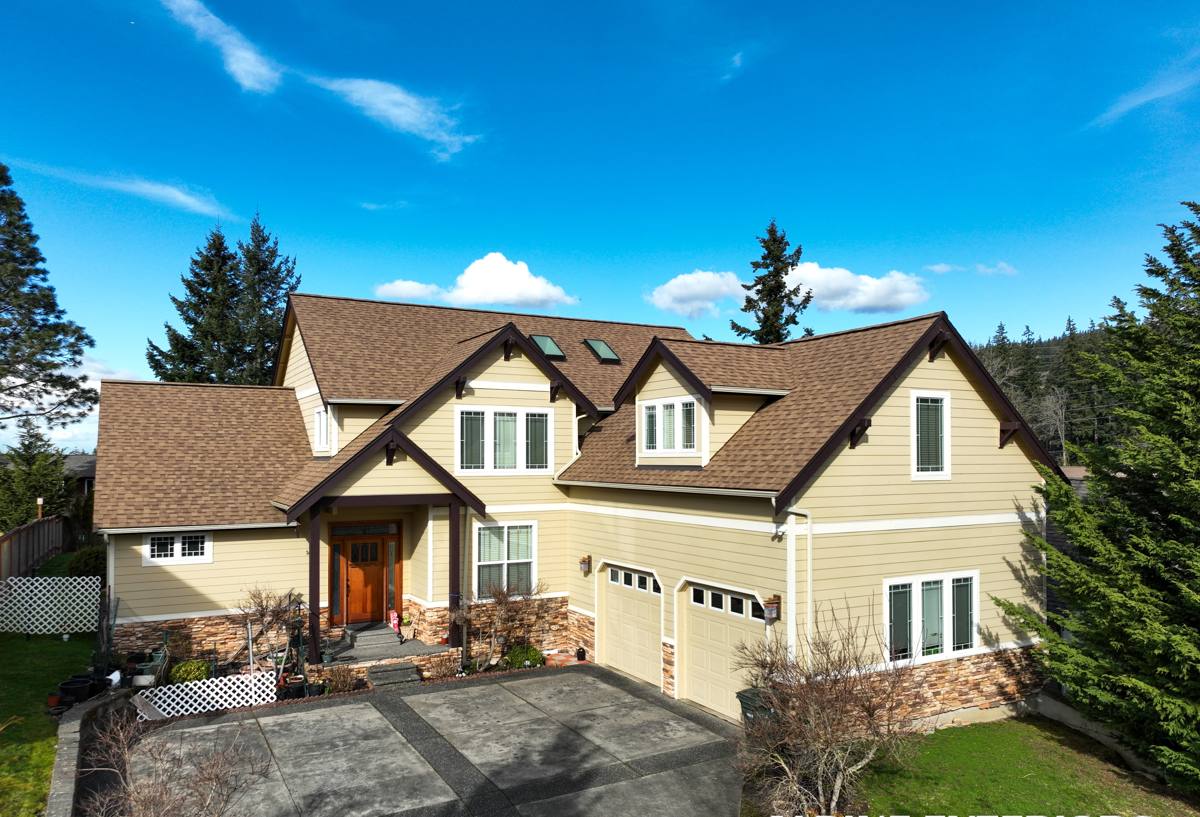
Bellingham sits close enough to the water that salt-laden air, wind-driven rain, and a moss season that can stretch from October into May all put real, measurable stress on window assemblies. A window installed the same way you'd install one in a dry inland climate will often fail early here — not because the product is bad, but because the installation didn't account for what this specific exposure does to glass, frames, flashing, and the wall behind them. Window installation in Bellingham needs to start from the climate, not from a catalog page.
We work Whatcom County regularly, which means we're not guessing at how a house near the bay behaves differently than one a few miles inland in Lynden or Everson. The wind direction, the rain intensity, and the moss pressure on a north-facing wall all change how a window should be selected, flashed, and sealed. That's the difference between a window that looks fine on install day and one that still looks fine in year twelve.
What Bellingham's Climate Actually Does to a Window
Salt Air and Slow Corrosion
Homes closer to Bellingham Bay pick up airborne salt that settles on window hardware, screen frames, and any exposed fasteners. Over years, this accelerates corrosion on lower-grade hardware, pits aluminum components, and can discolor or degrade certain finishes faster than the manufacturer's inland test data would suggest. It's rarely dramatic — it's a slow, cumulative wear pattern that shows up as stiff locks, streaking, and hardware that needs replacing well before the glass itself is a problem.
Driving Rain and Water Intrusion
Storms coming off the water don't just fall — they push. Wind-driven rain hits window assemblies at an angle, which means water gets forced sideways and upward into gaps that would stay dry in a calmer climate. If the flashing, sill pan, and sealant weren't detailed for that kind of pressure, water finds its way behind the trim and into the wall assembly long before anyone notices a leak inside the house.
Moss, Algae, and Trapped Moisture
Whatcom County's long wet season keeps north- and west-facing surfaces damp for months at a stretch. Moss and algae take hold on window sills, tracks, and exterior trim wherever water sits instead of draining. Beyond the cosmetic issue, trapped moisture under moss growth keeps wood trim and lower-grade composite sills wet far longer than they're designed to tolerate, which is a direct path to rot at the sill and jamb.
Signs Your Windows Are Losing That Fight
Most window failures in this climate don't show up as a shattered pane — they show up as small, easy-to-dismiss symptoms that add up over a season or two. Worth checking before winter:
- Fogging or a visible film between panes of double-pane glass — the seal has failed and the insulating gas is gone
- Soft or discolored wood at the sill, especially on the exterior face where moss or debris has been sitting
- Drafts you can feel with a hand near the frame on a windy day, even with the window latched
- Locks or cranks that have gotten stiff, gritty, or corroded compared to a year ago
- Condensation forming on the inside of the glass regularly, not just after a shower or on the coldest mornings
- Visible gaps or cracked caulking where the frame meets the siding or trim
- A noticeable jump in heating costs without a change in how the house is used
Frame Material: Matching the Product to the Exposure
Not every frame material handles this climate the same way, and the right call depends on the wall's exposure — a sheltered wall under a deep eave has an easier life than an exposed wall facing prevailing weather.
| Frame Material | Salt Air / Corrosion | Moisture Handling | Maintenance | Best Use |
|---|---|---|---|---|
| Vinyl | Good — no corrosion-prone metal parts on the frame itself | Handles standing moisture well; won't rot | Low — occasional cleaning | Most Bellingham homes, all exposures |
| Fiberglass | Very good — dimensionally stable, resists pitting | Excellent; very low expansion/contraction | Low | Exposed walls, larger openings, higher wind loads |
| Aluminum-clad wood | Fair — cladding protects wood but seams need attention | Good if detailed correctly; wood core is the risk point | Moderate — seams and interior wood need periodic checks | Homes prioritizing a wood interior look, sheltered locations |
| Bare wood | Poor — highest maintenance burden in salt air and long wet seasons | Requires diligent upkeep to avoid rot | High — regular painting/sealing | Historic restoration where matching original material matters |
We'll walk through this table against your actual walls during the estimate — a west-facing wall that catches storm wind off the water gets a different recommendation than a covered porch on the lee side of the same house.
What a Correct Installation Actually Involves
The Opening, Not Just the Window
A window is only as good as the opening it sits in. Before a new unit goes in, the rough opening needs to be checked for level, square, and — critically in this climate — for any existing rot or moisture damage from the old installation. Installing a new window into a wet or compromised opening just traps the same problem behind new trim.
Flashing and Water Management
This is where most long-term failures actually start, and it's also where corner-cutting is hardest to spot after the fact. A correct installation includes a sloped sill pan so any water that does get past the window drains back out instead of pooling, properly lapped flashing tape integrated with the house's weather-resistive barrier (not just caulked over it), and head flashing that sheds water out and away from the top of the frame. Done right, the water management continues past the window itself and ties cleanly into the surrounding siding — which is exactly where a siding-and-window crew has an advantage over an installer who only ever touches the window.
Sealant and Insulation
Low-expansion foam or mineral wool around the frame keeps the perimeter insulated without bowing the frame out of square — over-filling with the wrong foam is a common mistake that causes windows to bind or operate poorly. Exterior sealant needs to be a product rated for the temperature swings and UV exposure this climate delivers, applied at the right joints — not everywhere, since some gaps are meant to stay open as drainage paths.
Glass Package for This Climate
Whatcom County's energy code expectations call for a fairly efficient glass package as a baseline, and for homes with more direct sun or more shade, the low-E coating and gas fill can be tuned slightly differently. We'll talk through U-factor and solar heat gain coefficient in plain terms during the estimate rather than just quoting numbers off a spec sheet.
Our Installation Process
- On-site assessment of each opening, noting exposure, existing damage, and how water currently drains around that wall
- Product and glass package recommendation matched to that specific wall's exposure, not a one-size answer for the whole house
- Accurate measurement and order, with a written scope covering flashing details, trim, and interior finish
- Careful removal of the old window, checking the opening for hidden rot or moisture before anything new goes in
- Sill pan, flashing, and weather-resistive barrier tie-in, sequenced so water always has a path out
- Setting the new window plumb, level, and square, with proper shimming and low-expansion insulation at the perimeter
- Exterior trim, sealant, and siding tie-in, followed by interior trim and touch-up
- Final walkthrough — operation check, lock function, and a look at the exterior seal together with you before we call it done
What Drives Cost on a Bellingham Window Project
Two houses with the same number of windows can land at very different totals once exposure and existing condition are factored in. Here's what actually moves the number:
| Factor | Why It Matters Here |
|---|---|
| Frame material | Fiberglass and higher-tier vinyl cost more up front but hold up better against salt air and wind exposure |
| Existing rot or water damage | Damaged framing found once the old window is out needs to be repaired before the new one can go in correctly |
| Wall exposure and height | Upper-story or hard-to-access openings on exposed walls take more time to flash and seal properly |
| Full-frame vs. insert replacement | Full-frame replacement (removing trim and flashing entirely) costs more but is often the right call when the original flashing is failing |
| Glass package | Upgraded low-E coatings and gas fills add cost but reduce condensation and energy loss over time |
| Siding tie-in | Matching or repairing siding disturbed during the swap keeps the water management continuous, not patched |
Permits, Energy Code, and Older Bellingham Homes
Window replacement in Whatcom County generally needs to meet current Washington State Energy Code minimums for U-factor, and many jurisdictions require a permit for like-for-like replacement past a certain scope, with stricter rules if the opening size is changing. Bedrooms also have egress requirements that matter if you're changing a window's size or type. For homes built before 1978, replacement work that disturbs painted surfaces falls under lead-safe work practice rules — something we plan for up front rather than treating as an afterthought once work has started. We handle the permit conversation as part of the estimate so there are no surprises mid-project.
Why a Crew That Already Works Bellingham Matters
Anyone can install a window on a calm, dry day. The real test is whether that window is still performing after three or four winters of wind-driven rain off the bay and a full moss season working on the sill. A crew that installs windows across Whatcom County regularly has already seen which details hold up on exposed walls near the water and which corner-cuts show up as callbacks two years later. We're not learning this climate on your house — we're applying what we've already confirmed works on homes with the same exposure, whether that's a place a few blocks from Bellingham Bay or a farmhouse further out toward Lynden.
That local familiarity also means we're realistic about timelines and weather windows — we don't schedule exterior tie-in work during the stretch of the year when it's least likely to go well, and we plan around the rain instead of fighting it.
If you're seeing drafts, fogged glass, or moss creeping onto your sills, we're glad to take a look and give you a straight, no-pressure estimate — just fill out the form below and we'll set up a time to come out.