 Lynden Siding
 Why Bellingham's Climate Is Hard on Windows
Bellingham sits right on the water, and that changes what a window has to survive compared to a house even twenty miles inland. Salt-laden air off Bellingham Bay works on metal hardware, screws, and unprotected trim year-round, not just during storms. Add Whatcom County's long stretch of driving rain each fall and winter, wind that comes straight off the water on exposed lots, and a moss and algae season that can run eight or nine months out of the year, and you have a climate that finds every weak point in a window system. It doesn't have to be dramatic to cause damage — it's the slow, constant exposure that does it.
Older Bellingham housing stock, from craftsman bungalows near the core neighborhoods to mid-century homes on the hillsides, was often built with window openings and flashing details that made sense for the building codes and materials of their era. Decades of that marine weather later, a lot of those original openings are no longer keeping water where it belongs. Custom windows aren't just about looks here — they're about matching the unit and the installation to conditions that generic, big-box sizing and standard installation practices weren't built for.
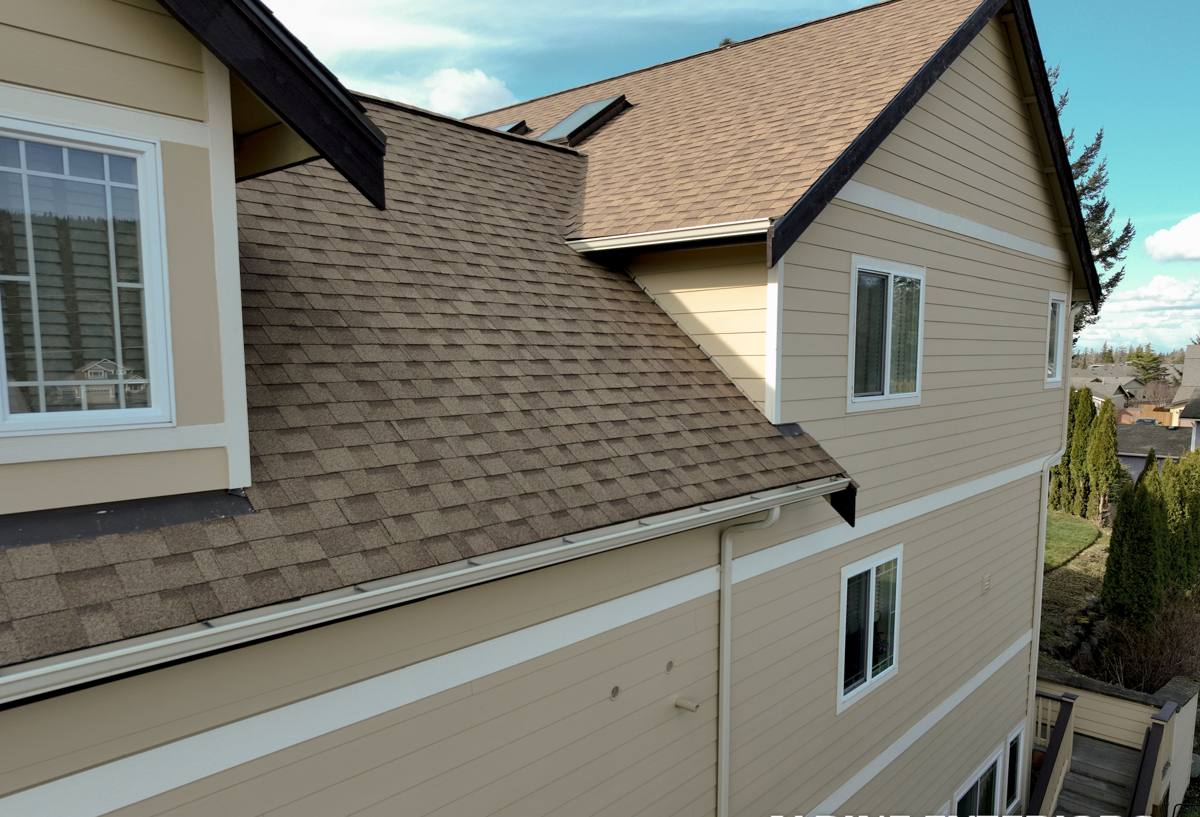
Signs a Bellingham Home Needs Custom Window Work
Most homeowners don't think about their windows until something goes wrong. In this climate, the warning signs tend to show up gradually, which is exactly why they get ignored until the damage spreads into the wall framing.
- Wood trim or sills that feel soft, spongy, or show dark staining, especially on walls facing the prevailing weather
- Condensation building up between panes, or persistent fogging on the inside glass during our wet months
- Drafts you can feel near the frame even when the window is fully latched
- Visible gaps, cracked caulk, or paint failure around the window perimeter
- Difficulty opening, closing, or locking a window that used to operate smoothly
- Moss or dark streaking building up on the sill or lower frame faster than on the surrounding siding
- Rising energy bills without any other obvious cause
Any one of these on its own might be minor. Several together, especially on the side of the house that takes the worst of the wind and rain, usually means the window and its flashing have been letting moisture in for a while.
What "Custom" Actually Means for a Retrofit
It's Not Just a Bigger Catalog
"Custom" gets used loosely in this trade. For us it means the window is built to the actual, as-measured opening in your home — not the nearest stock size with shims and extra caulk to make up the difference. Most Bellingham homes, especially anything built before the last couple of decades, have openings that are slightly out of square or sized to dimensions that don't match modern stock lines. Forcing a stock window into an opening that doesn't quite fit is one of the most common causes of the leaks and drafts we get called out to fix.
New Construction vs. Retrofit (Insert) Windows
There are two honest ways to replace a window, and which one is right depends on the condition of the existing frame and sheathing:
- Retrofit (insert) windows fit inside the existing, sound frame. Less disruption to interior trim and exterior siding, and usually the faster, less expensive option when the surrounding wood is still solid.
- New construction (full-frame) windows replace the frame down to the rough opening, including the flashing. This is the right call when there's any rot, when the opening needs to be resized, or when we find moisture damage once the old window comes out — which happens more often in this climate than homeowners expect.
We don't decide which approach to quote until we've actually looked at the opening. A retrofit quoted over the phone without eyes on the wall is a guess, and in a marine climate that guess can leave hidden rot behind the new window.
Materials and Glass for a Wet, Salt-Air Climate
Every window material has trade-offs. In Bellingham's conditions, some of those trade-offs matter more than they would in a drier inland climate.
| Material | How it handles salt air & moisture | Maintenance | Where it fits |
|---|---|---|---|
| Vinyl | Won't rot or corrode; performs consistently in wet, salty conditions | Low — occasional cleaning | Most retrofit and budget-conscious replacements |
| Fiberglass | Very stable in temperature and moisture swings; resists warping | Low | Larger openings, coastal exposure, longer-term ownership |
| Wood-clad | Interior wood warmth with an exterior shell, but any cladding breach lets moisture reach the wood core | Moderate to high — depends on cladding integrity | Homes prioritizing interior wood look and willing to maintain seals |
| Bare wood | Most vulnerable to our rain and humidity without diligent upkeep | High — regular painting/sealing | Historic-accuracy projects only, with eyes open on upkeep |
We install vinyl and fiberglass on the large majority of Bellingham jobs for a simple reason: they hold up to constant damp and salt exposure with the least ongoing maintenance. We'll still install wood-clad windows when a homeowner wants that look or is matching a historic detail — but we're upfront that it comes with a maintenance commitment this climate doesn't forgive if it's skipped.
Glass Packages Worth Discussing
Double-pane, low-E glass with argon fill is the practical baseline here — it cuts heat loss during our long cool season and helps with the condensation issues that come up on older single-pane windows. Given how many gray, overcast days Whatcom County gets, we also talk through glass coatings with homeowners rather than defaulting to the darkest, most heat-reflective option — some coatings cut usable daylight more than they need to for our climate. The right glass spec depends on which direction the window faces and how exposed it is to wind-driven rain.
The Installation Details That Actually Keep Water Out
The window unit itself is rarely what fails first in this climate — the installation around it is. We've opened up plenty of window openings where a perfectly good window was let down by flashing that was missing, reversed, or taped over instead of properly lapped.
Flashing, Sequenced Correctly
Water-resistive barrier and flashing need to be layered so that any water that gets behind the siding is directed out and away from the rough opening, never trapped behind it. That means sill pan flashing at the bottom, side flashing that laps over it, and a top flashing or head flashing that laps over the sides — installed in that order, every time, not shortcuts stacked in whatever order is fastest.
Sealing Without Trapping Moisture
It's tempting to think more caulk equals a more watertight window. In practice, sealing the wrong spots can trap moisture inside the wall assembly instead of letting it drain. We seal the interior air barrier tightly while leaving the exterior detailed to shed and drain water — a distinction that matters a lot more in a climate that gets this much sustained rain than it would somewhere dry.
Fastening and Shimming for Wind
Bellingham's exposed lots, especially anything with a clear line to the bay, see real wind loads during winter storms. Proper shimming keeps the frame square so the window operates and seals correctly for years, and fastening follows the manufacturer's schedule rather than "enough screws to hold it up" — under-fastened windows are a common cause of leaks and premature failure we see on wind-exposed homes.
Our Process, Start to Finish
- On-site assessment. We look at each opening, check for existing rot or moisture damage, and measure the actual dimensions rather than quoting off guesswork.
- Honest recommendation. We tell you whether a retrofit or full-frame replacement fits the opening's condition, and what we found if there's hidden damage.
- Written estimate. Clear pricing by window, materials specified, and a realistic timeline — no vague allowances.
- Removal and inspection. Once the old window is out, we check the framing and sheathing before anything new goes in. If there's rot, we address it before installing, not after.
- Flashing and installation. Sequenced flashing, correct shimming, and fastening to spec.
- Interior and exterior finish work. Trim, sealing, and cleanup so the job looks finished, not just functional.
- Final walkthrough. We check operation, seals, and answer questions before we consider the job done.
What Custom Windows Typically Cost
Pricing depends on size, material, glass package, and whether the opening needs full-frame work versus a retrofit. Rough factors that move the number:
| Factor | Effect on cost |
|---|---|
| Retrofit vs. full-frame replacement | Full-frame costs more due to added labor, trim, and siding work |
| Material (vinyl, fiberglass, wood-clad) | Vinyl is typically the most affordable; fiberglass and wood-clad cost more |
| Glass package (low-E, argon, tempered where required) | Upgraded glass adds cost but improves comfort and efficiency |
| Hidden rot found during removal | Repair work adds cost but prevents a bigger problem later |
| Window size and configuration | Large openings, bays, or custom shapes cost more than standard sizes |
We won't quote a firm number without seeing the openings — anyone who does is either padding the estimate to cover surprises or setting you up for a change order once the old window comes out.
Why a Bellingham-Familiar Crew Matters
A contractor who works this area regularly already knows what to expect before the first window comes out: which sides of a house typically take the worst weather, how common hidden rot is in homes of a certain age here, and how to sequence work around Whatcom County's wet season instead of getting caught mid-installation by a storm rolling in off the water. That familiarity shows up in fewer surprises, tighter scheduling around the weather, and installation details that are built for this climate rather than a generic national spec sheet.
If you're weighing whether your Bellingham home needs a few replacement windows or a full custom window package, we're glad to take a look and give you a straight answer — including telling you if a repair is enough for now. Reach out for a free, no-pressure estimate and we'll walk the openings with you in person.