 Lynden Siding
 Why Bellingham Roofs Wear Differently Than Roofs Inland
A roof in Bellingham does not age the same way a roof forty miles inland does. Being close to Bellingham Bay and the Salish Sea means homes here deal with a mix of conditions that don't show up together in most climate zones: salt-laden air, wind-driven rain that comes in sideways off the water, and long stretches of the year when shaded roof slopes barely dry out between storms. Any one of those on its own is manageable. Combined, over years, they're what separates a shingle roof that looks tired at ten years from one that's still doing its job at twenty-five.
Salt Air and Metal Components
Most homeowners think of salt air as a coastal-city problem for cars and outdoor furniture, but it works on a roof too — specifically on the metal parts. Flashing, drip edge, nail heads, and vent stacks are all exposed to airborne salt, and lower-grade or poorly coated metal will corrode faster here than the same material would forty miles from the water. Once flashing starts to pit or rust, it stops shedding water the way it's supposed to, and that's usually where a leak starts — not through the shingles themselves.
Driving Rain and Wind Exposure
Storms coming off the water tend to push rain at an angle instead of straight down. That matters because a roof system built only to shed water downhill can still let water in sideways, through lap joints, exposed nail heads, or wherever the underlayment and flashing weren't detailed for wind-driven moisture. This is also why shingle wind rating and fastening pattern matter more here than in a sheltered inland neighborhood.
Moss Season and Shaded Slopes
Western Whatcom County's moss season runs long — mild, damp winters and shaded, tree-covered lots are ideal growing conditions. Moss isn't just cosmetic. It holds moisture against the shingle surface, works its way under shingle tabs as it grows, and can lift edges enough for wind and rain to get underneath. A roof with poor ventilation or slopes that stay shaded most of the day will grow moss faster than one that gets more sun and airflow, regardless of how new the shingles are.
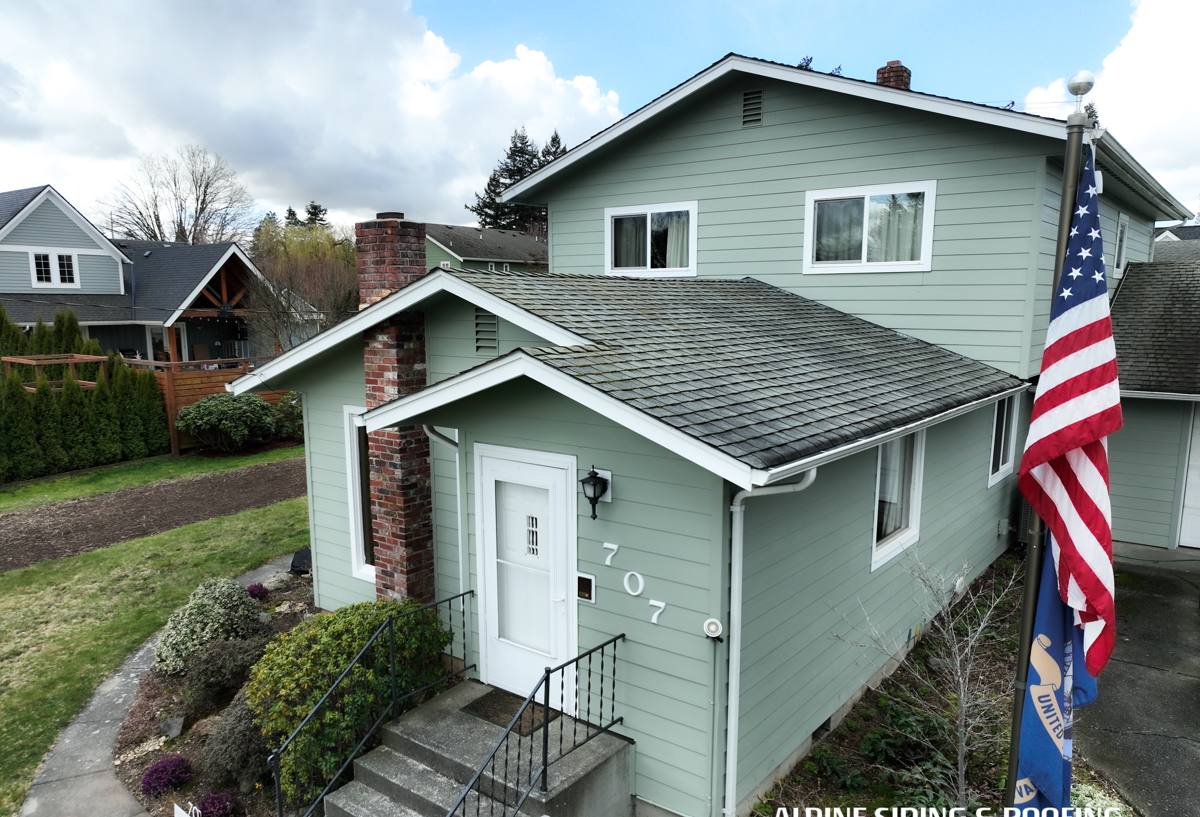
What a Correctly Built Asphalt Shingle Roof Needs Here
Asphalt shingle roofing is a system, not just a layer of shingles. In a climate like Bellingham's, skipping or downgrading any one part of that system is where problems start — usually years after the crew that cut the corner is gone.
| System component | Why it matters in this climate |
|---|---|
| Ice-and-water shield at eaves and valleys | Backs up the shingles where wind-driven rain and moss buildup are most likely to force water backward under the shingle edge |
| Synthetic underlayment (full deck coverage) | A secondary water barrier that keeps the deck dry even if wind pushes rain past the shingle surface |
| Corrosion-resistant flashing and fasteners | Salt air accelerates rust on standard-grade metal; stepped and valley flashing take the most exposure |
| Balanced attic ventilation (intake and exhaust) | Reduces trapped moisture under the deck, which slows both rot and the conditions moss and algae thrive in |
| Shingle wind rating matched to exposure | Homes on more open or elevated lots near the water see higher sustained wind and gusts during winter storms |
| Correct nailing pattern and nail placement | Improperly placed fasteners are a leading cause of shingle blow-off in wind events, regardless of shingle quality |
None of these are exotic upgrades — they're standard components of a properly installed shingle roof. The difference in a climate like ours is that skipping any of them shows up faster and costs more to fix later, because moisture and salt air don't give a marginal installation much room for error.
Signs a Bellingham Roof Needs a Closer Look
Most shingle roof failures don't start as a dramatic leak — they start small and get overlooked because they're easy to miss from the ground. Worth checking, or having us check, if you notice any of the following:
- Dark streaking or green-black growth concentrated on shaded or north-facing slopes
- Granules collecting in gutters or at the base of downspouts
- Shingle tabs that look curled, cupped, or lifted at the edges
- Rust staining below vent stacks, chimney flashing, or valleys
- Daylight visible through the attic roof deck, or damp insulation near the eaves
- Moss thick enough that you can't see the shingle surface underneath it
- Missing or torn shingles after a windstorm, even just one or two
- Soft or spongy spots when walking the roof (if it's safe to do so)
Any one of these on its own isn't necessarily an emergency, but they're all worth a professional look before the next wet season rather than after.
How Our Asphalt Shingle Roofing Process Works
Whether it's a full replacement or a repair, we run the same disciplined process on every Bellingham roof:
- Inspection and assessment. We look at the deck, existing flashing, ventilation setup, and how much sun or shade each slope gets — not just the shingles.
- Written scope and estimate. You get a clear breakdown of what's being done and why, with no vague line items, before any work starts.
- Deck prep. Old shingles come off, the deck is inspected for soft spots or rot, and any damaged sheathing is replaced before anything new goes down.
- Underlayment and ice-and-water shield installation. Full coverage, with reinforced protection at eaves, valleys, and penetrations — the parts of the roof that take the most water.
- Flashing replacement. Corrosion-resistant flashing at all valleys, walls, chimneys, and penetrations, sized and lapped correctly for this climate's wind-driven rain.
- Shingle installation. Installed to the manufacturer's specified nailing pattern and exposure — not a shortcut pattern that voids the warranty or weakens wind resistance.
- Ventilation check. Intake and exhaust airflow confirmed or corrected so the attic isn't trapping the moisture that feeds moss and rot.
- Final walkthrough. We go over the finished roof with you, including care and moss-prevention notes specific to your property's sun exposure.
Choosing the Right Shingle for Salt Air and Moss
Not every asphalt shingle is built the same, and in a coastal, moss-prone climate the differences matter more than they would somewhere drier and sunnier.
Algae- and Moss-Resistant Granules
Many shingle lines from established manufacturers — GAF, CertainTeed, and Owens Corning among them — offer versions with copper- or zinc-infused granules designed to slow the growth of the black algae streaking and moss common in the Pacific Northwest. For a shaded, damp roof slope, this is a meaningful upgrade rather than a marketing add-on.
Architectural vs. Three-Tab Shingles
Architectural (dimensional) shingles are heavier, carry higher wind ratings, and generally hold up better to the driving rain and gusts this area sees in winter storms. Three-tab shingles are lighter and less expensive but have lower wind ratings and a shorter service life — a trade-off worth understanding rather than a product we'd steer you away from without explanation.
Warranty Structure
Manufacturer warranties on shingles are typically written for a full installed system — shingle, underlayment, starter strip, and ventilation components from the same manufacturer line, installed by a certified contractor. Mixing components or cutting installation steps can reduce or void that coverage even if the shingles themselves are fine. We install manufacturer systems as designed specifically so the warranty on your roof is worth something if you ever need it.
Why a Crew That Already Works Bellingham Matters
Roofing work in Whatcom County isn't identical from one property to the next. Lots near the water see different wind exposure than lots further inland. Tree cover varies block to block, which changes how much moss pressure a roof faces. A crew that already does this work regularly in Bellingham and the surrounding area has a working sense of which slopes on which types of lots need extra ventilation, where salt air makes upgraded flashing worth the cost, and how to plan installation around this region's wet-season weather windows so materials aren't installed in conditions that compromise the seal. That's not something a crew unfamiliar with the area picks up on the first job.
Working out of Lynden also means we're a short drive away for follow-up, whether that's a warranty question, a post-storm check, or routine maintenance — not a crew that has to be scheduled weeks out from somewhere across the region.
Maintenance That Actually Extends Roof Life Here
A correctly installed roof still benefits from basic upkeep in a climate this damp. None of this requires a contractor visit every time — most of it is simple homeowner maintenance:
- Keep gutters and downspouts clear so water isn't backing up under the shingle edge
- Trim back overhanging branches to reduce shade and debris on moss-prone slopes
- Have moss physically removed rather than just treated, since chemical treatments alone don't stop it from returning if shade and moisture stay the same
- Check attic ventilation isn't blocked by insulation or debris
- Schedule a professional look after any major windstorm, even without visible damage from the ground
What Affects the Cost of an Asphalt Shingle Roof
We don't think broad price ranges mean much without context, since two roofs of the same size can cost very different amounts depending on condition and complexity. What actually drives the number on your estimate:
| Cost factor | How it affects the price |
|---|---|
| Roof size and number of layers to remove | More square footage and tear-off of old layers both add labor and disposal cost |
| Roof pitch and accessibility | Steeper or harder-to-access roofs take longer and require more safety setup |
| Deck condition | Rotted or soft sheathing found during tear-off needs replacement before shingles go on |
| Shingle grade chosen | Three-tab, standard architectural, and algae-resistant premium lines carry different material costs |
| Flashing and ventilation upgrades | Replacing undersized or corroded flashing and adding proper ventilation adds cost but reduces future risk |
| Number and type of penetrations | Chimneys, skylights, and multiple vent stacks each need individual flashing work |
We walk through each of these with you during the inspection so the estimate reflects your actual roof, not a generic per-square number that doesn't hold up once tear-off starts.
Get a Straightforward Estimate
If your Bellingham home's roof is showing moss buildup, granule loss, or you just want an honest read on how many years it has left, we're glad to take a look. Fill out the form below for a free, no-pressure estimate — we'll tell you what we actually see, not just what sells a job.