 Lynden Siding
 Asphalt Shingle Roofing Built for Abbotsford, BC Weather
Abbotsford sits right at the edge of the same weather system that soaks Whatcom County — long wet winters, damp spring and fall stretches, and just enough summer heat to bake a roof that was installed wrong. Homes here don't fail because asphalt shingles are a bad choice. They fail because the roof underneath the shingles — the underlayment, the flashing, the ventilation — wasn't built for this specific climate. We're a Lynden-based crew that already works Abbotsford roofs regularly, and we know exactly which details matter here and which ones get skipped by crews passing through.
Asphalt shingles remain the most practical roofing material for the vast majority of homes in this region. They're proven, repairable, reasonably priced, and available in enough styles to match almost any house. The difference between a shingle roof that lasts its full rated life and one that needs premature repairs almost always comes down to installation quality and a handful of climate-specific choices we'll walk through below.
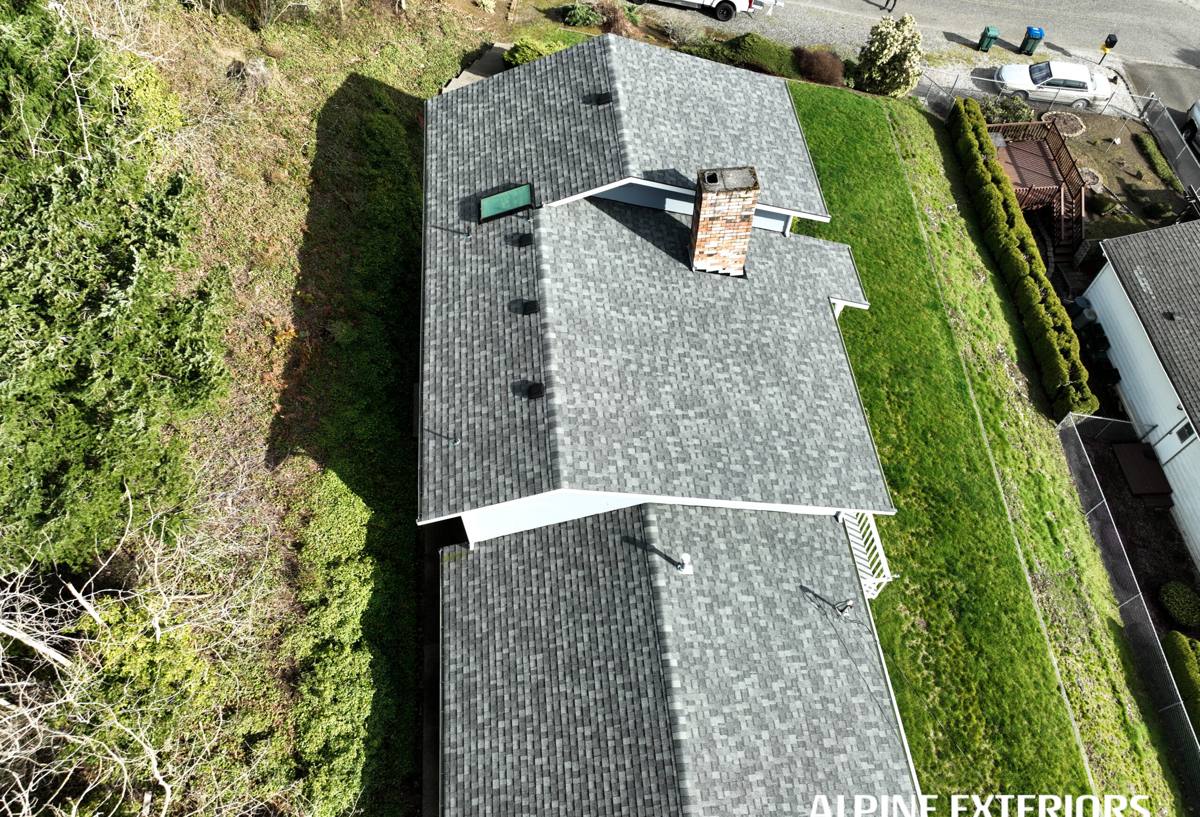
What Abbotsford's Climate Actually Does to a Roof
Abbotsford and Lynden share a climate that's more demanding on a roof than it looks from the ground. A few specific mechanisms cause most of the shingle roof problems we see in this area:
- Driving rain: Wind-driven rain off the Fraser Valley pushes water sideways under shingle tabs and around flashing, not just straight down. Roofs designed for calm-weather rainfall alone tend to leak first at valleys, chimneys, and wall intersections.
- Extended moss season: The combination of shade, moisture, and moderate temperatures gives moss a long growing window here — often eight months or more. Moss holds water against the shingle surface, lifts tabs, and works its way under the granule layer over time.
- Salt-tinged coastal air: Proximity to the Salish Sea means metal flashing, fasteners, and vents corrode faster than they would further inland. Cheap or mismatched metal is often the first thing to fail on an otherwise sound roof.
- Freeze-thaw cycling: Winters here aren't brutally cold, but the repeated freeze-thaw swings around freezing are hard on trapped moisture, ice-damaged fasteners, and any underlayment that wasn't rated for it.
None of this means asphalt shingles are the wrong material for Abbotsford. It means the roof has to be built to handle these specific conditions, not a generic installation copied from a drier region.
What a Correct Asphalt Shingle Installation Involves Here
Underlayment and Ice/Water Protection
Given the driving rain we see in this region, we don't treat underlayment as an afterthought. Self-adhered ice-and-water membrane belongs at eaves, valleys, and around every roof penetration — chimneys, skylights, plumbing vents — anywhere wind-driven water is most likely to find a way in. Synthetic underlayment across the rest of the field holds up better than old-style felt against the moisture this climate throws at it.
Flashing That Won't Corrode
Step flashing at wall intersections, counter-flashing at chimneys, and valley metal all need to be a metal that tolerates coastal moisture and salt air over decades, not just years. We match flashing metal to the building's other exposed metal where possible, and we never reuse old, pitted flashing just to save a step — reused flashing is one of the most common causes of "mystery" leaks after a reroof.
Ventilation That Matches the Attic
A shingle roof with poor attic ventilation traps moisture underneath, which shortens shingle life and can rot the deck itself before the shingles even show wear. In a climate this damp, balanced intake and exhaust ventilation isn't optional — it's part of what keeps the warranty valid and the roof dry from both sides.
Fastening for Wind
Correct nail placement and count matter more here than in calmer inland climates. We fasten to the shingle manufacturer's high-wind specification as standard practice, not as an upgrade, because Fraser Valley wind events are common enough that under-fastened tabs are a predictable failure point.
Moss and Debris: The Ongoing Maintenance Reality
Because Abbotsford's moss season runs long, a shingle roof here needs a different maintenance rhythm than one in a drier climate. This isn't a defect of asphalt shingles — it's true of any roof material in this region, some more than others. A few practical points:
- Zinc or copper control strips near the ridge reduce moss regrowth over time by releasing trace metal ions with every rain — a passive, low-maintenance defense.
- Overhanging branches should be trimmed back from the roofline where practical; shade and trapped moisture are what let moss take hold in the first place.
- Moss should be treated and gently removed, never pressure-washed off — aggressive pressure washing strips granules and shortens shingle life faster than the moss itself would.
- Gutters clogged with needles and leaves back water up under the eave edge, which is one of the most common causes of soffit and fascia rot we see on older homes in this area.
Choosing a Shingle for This Climate
Not every asphalt shingle product is a good match for a wet, moss-prone, coastal-influenced climate. Architectural (laminated) shingles generally outperform older three-tab styles here because of their thicker profile, better wind ratings, and longer effective lifespan. Algae-resistant shingles — ones treated with copper-infused granules — are worth the modest upcharge in this region specifically, since they slow the black streaking and moss growth that plain granules invite.
| Factor | 3-Tab Shingles | Architectural Shingles |
|---|---|---|
| Typical lifespan (this climate) | 15-20 years | 25-30+ years |
| Wind resistance | Lower rating | Higher rating, better for Fraser Valley gusts |
| Moss/algae resistance option | Limited availability | Widely available |
| Appearance | Flat, uniform | Dimensional, shadow-line look |
| Upfront cost | Lower | Moderate premium |
We'll walk through the specific product lines and warranty terms available for your roof during the estimate — the right choice depends on your home's exposure, roof pitch, and budget, not a one-size answer.
Repair vs. Full Replacement
Not every roofing call in Abbotsford ends in a full tear-off. We look at a few honest factors before recommending either path:
- Age relative to material lifespan — a 10-year-old architectural shingle roof with isolated damage is usually a repair candidate; a 22-year-old roof showing granule loss across the field is not.
- Extent of the damage — a handful of wind-lifted or cracked shingles in one area can often be matched and replaced. Widespread curling, brittleness, or moss undermining multiple sections points toward replacement.
- Underlayment condition — if we open up a repair area and find the underlayment failing or the deck showing moisture damage, patching the shingles alone just delays the real problem.
- Insurance and storm damage — after a significant wind event, we document damage clearly enough to support a claim, whether the outcome is a repair or a full replacement.
Our Process for Abbotsford Roofing Jobs
- On-site inspection: We walk the roof (or use a drone where pitch or access makes that safer) and check the attic from inside, since ventilation and moisture issues often show up there first.
- Honest assessment: We tell you plainly whether you're looking at a repair or a replacement, and why — no upselling a full reroof when a targeted repair will genuinely hold.
- Written estimate: Material options, labor scope, and timeline in writing, with no vague allowances.
- Installation: Tear-off (if needed), deck inspection and repair as required, underlayment, flashing, shingles, and ventilation — installed to manufacturer spec for wind and moisture in this climate.
- Final walkthrough: We review the finished roof with you before we consider the job done, including gutter and debris cleanup.
Why a Crew That Already Works Abbotsford Matters
Roofing crews that mainly work drier inland regions sometimes underbuild for what this area actually gets — less ice-and-water membrane than the driving rain calls for, standard-grade flashing that pits within a few winters, or ventilation sized for a milder climate. We're based out of Lynden and already service homes on both sides of the border in this stretch of Whatcom County and the Fraser Valley, so the underlayment coverage, flashing metal, and ventilation choices described above are our default, not an upsell. That familiarity with the local weather pattern is what keeps a roof performing for its full rated lifespan instead of needing attention again in five years.
Get a Free, No-Pressure Estimate
If your Abbotsford, BC home needs a new asphalt shingle roof, a repair, or just an honest inspection to see where things stand, we're happy to take a look. Use the form below to request a free estimate — no pressure, no obligation, just a straight answer about what your roof actually needs.