 Lynden Siding
 Windows Built for the Aldergrove Climate, Not Just the Aldergrove Look
Aldergrove sits close enough to the water and to Whatcom County's own weather patterns that homes here take the same beating our Lynden customers deal with every year: long stretches of driving rain pushed in off the coast, a salt-tinged air that never fully leaves even a few miles inland, and a moss season that can run from October clear through April. Windows are one of the few parts of a house where all three of those forces converge — on the frame, on the seals, and on the hardware. A window that looks fine in a showroom in a dry climate can start failing here within a few seasons if it wasn't built or installed with this specific weather in mind.
Custom windows aren't about fancy shapes or unusual sizes, though we do plenty of that too. For most Aldergrove homes, "custom" means the window is sized, framed, and sealed to fit an opening that has settled, shifted, or was never quite standard to begin with — which describes a large share of the older farmhouses and rural properties in this part of the Fraser Valley.
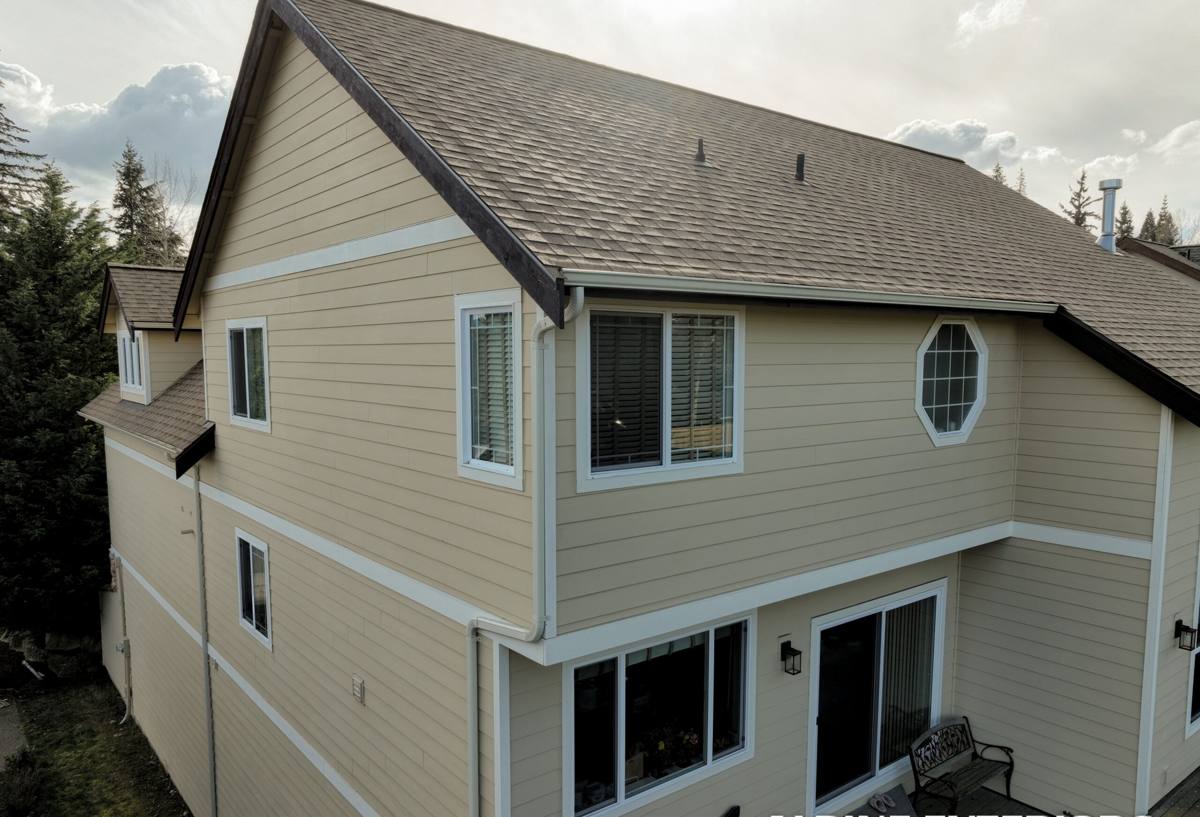
What Driving Rain and Salt Air Actually Do to a Window
Driving Rain
Wind-driven rain doesn't fall straight down — it hits window assemblies at an angle, which means it finds its way into gaps that a vertical rain would never reach. Over time this shows up as water staining on interior sills, soft spots in the wood trim around the frame, or a musty smell that comes and goes with the weather. The fix isn't a better window alone; it's correct flashing and drainage behind the window, done in the right order, every time.
Salt Air
Even well inland from the strait, salt-carrying air corrodes exposed metal faster than a dry climate would. Window hardware, screen frames, and unprotected fasteners are the first things to show it — sticking locks, pitted hinges, streaking on light-colored frames. This is one reason we're careful about hardware selection and finish quality on every custom order, not just the glass package.
Moss and Prolonged Dampness
A long moss season means wood trim, sills, and any horizontal surface near a window stays damp far longer than in a drier climate. Moss and algae hold moisture against the surface, which accelerates rot in untreated wood and can degrade caulk and sealant faster than the manufacturer's warranty assumes. Window trim in shaded, north-facing spots is usually the first place we see this on an inspection.
Signs Your Current Windows Are Losing the Fight
- Fogging or a permanent haze between the panes — the seal has failed and the gas fill (if any) is gone
- Wood trim that's soft, discolored, or has visible moss/algae growth right at the sill
- Windows that are hard to open, close, or lock — often a sign of hardware corrosion or a frame that's swollen from moisture
- A cold draft near the frame on windy days, even with the window fully latched
- Visible daylight or a whistling sound around the frame during a storm
- Interior condensation on the glass that wasn't there a few years ago
Any one of these can usually be repaired. Two or more together, especially on a window over ten or fifteen years old, is usually a sign the window itself — not just the caulk — needs to be replaced.
Frame Materials: What Actually Holds Up in This Climate
There's no single "best" window material for every home — it depends on your budget, the style of the house, and how exposed that particular wall is to weather. Here's how the common options perform against the conditions Aldergrove homes deal with:
| Frame Material | Moisture Resistance | Maintenance | Typical Fit |
|---|---|---|---|
| Vinyl | Very good — won't rot, minimal corrosion risk | Low — occasional cleaning | Most homes, best value |
| Fiberglass | Excellent — very stable in wet/dry cycling | Low | Higher-end replacements, larger openings |
| Wood (clad exterior) | Good if the cladding is intact; interior wood needs protection | Moderate — watch cladding seams | Older or heritage-style homes |
| Aluminum | Fair — prone to condensation and corrosion near salt air unless thermally broken | Moderate | Specific architectural uses, not our default recommendation here |
For most Aldergrove properties we're steering people toward vinyl or fiberglass, simply because they shrug off the wet-dry cycling and salt exposure with the least ongoing upkeep. Wood-clad windows can still be the right call on a farmhouse or heritage-style property where the look matters — we just make sure the cladding and sealant details are done right so the wood underneath stays protected.
What a Correct Custom Window Job Actually Involves
The window unit itself is maybe a third of what determines whether the job holds up. The rest is in the details most homeowners never see:
- Accurate measurement of the actual opening — not the nominal size, since older openings are rarely square or true
- Removal of the old unit and inspection of the framing behind it for rot, soft wood, or prior water damage before anything new goes in
- Repair of any damaged framing or sheathing uncovered during removal — this is the step that gets skipped most often on a rushed job, and it's the one that causes callbacks two years later
- Proper flashing installation, integrated with the existing house wrap or building paper so water is directed out and down, not trapped behind the new window
- Setting the window level, plumb, and square, then securing it per the manufacturer's fastening schedule
- Sealing with the correct sealant for the substrate — not every caulk bonds well to every material, and this is a common source of premature seal failure
- Interior and exterior trim work finished to match the home
- A final operational check — every window opens, closes, and locks smoothly before we call the job done
Why a Crew That Already Works Aldergrove, BC Matters
Aldergrove sits right at the border, and that changes the practical side of a window project more than most homeowners expect. Material orders, delivery scheduling, and crew logistics all have to account for crossing — a crew that does this regularly builds that into the timeline from the start instead of discovering it mid-project. It also means we've seen how the same weather system that hits Whatcom County plays out just a few miles north, so we're not guessing about how a given window assembly will hold up on an Aldergrove property.
Working both sides of the border also means we're used to matching our approach to the home in front of us rather than a one-size-fits-all install. Rural Aldergrove and Langley Township properties often have older openings, custom sizes, or architectural details that a big-box, standard-size approach doesn't handle well — which is exactly the kind of job custom window work is meant for.
Cost Factors to Expect
| Factor | Why It Moves the Price |
|---|---|
| Number of windows | Per-unit pricing drops somewhat on larger orders, but each opening still needs individual attention |
| Frame material | Vinyl is typically the most budget-friendly; fiberglass and clad-wood cost more upfront |
| Glass package | Double-pane vs. triple-pane, and low-E coatings, add cost but also long-term energy savings |
| Custom vs. standard sizing | Non-standard openings require made-to-order units, which take longer to source and cost more than stock sizes |
| Condition of existing framing | Rot or water damage found during removal adds labor and material to fix properly before the new window goes in |
Energy Efficiency: More Than a Marketing Term Here
In a climate with as much sustained damp cold as this one, the energy performance of a window isn't just about the utility bill — it's also about condensation control. A poorly insulated window creates a cold interior surface, which is exactly where interior condensation and, eventually, mold at the sill tends to start. Double-pane windows with a low-E coating and argon fill are the standard baseline we recommend for most Aldergrove homes; triple-pane makes sense on north-facing walls, exposed elevations, or for homeowners specifically prioritizing noise and heat retention over the added cost.
Maintaining Custom Windows Once They're In
New windows still need basic upkeep in this climate — it's a fraction of the work old, failing windows require, but skipping it shortens the life of even a well-installed unit.
- Rinse frames and sills periodically to keep salt residue and grime from building up on hardware
- Clear moss or algae from sills and trim before it spreads to the sealant lines
- Check and lightly lubricate locking hardware once or twice a year
- Inspect exterior caulk lines annually, especially after a hard winter, and re-seal any cracked sections promptly
- Keep gutters and downspouts clear so runoff isn't sheeting directly down over window heads
- Test that screens and weep holes at the sill track are clear so water can drain as designed
Get a Straightforward Estimate
If your windows are showing their age or you're planning a renovation, we're glad to come take a look and give you an honest read on what's worth replacing versus repairing. There's no pressure and no obligation — just a clear estimate based on what your home actually needs. Fill out the form below to get started.