 Lynden Siding
 Building Decks for a Wet, Mossy Corner of the Northwest
Aldergrove sits just across the border from Lynden, in the same stretch of lowland Fraser Valley and Whatcom County terrain that gets soaked most of the year. A deck built here isn't just an outdoor living space — it's an exterior structure that has to survive months of standing moisture, shaded ground cover, and salt-tinged marine air blowing in off the Strait of Georgia. We build and repair decks for homes on both sides of that border, and the same climate problems show up again and again: rot at the ledger board, corroded fasteners, and moss creeping across boards that never fully dry out between storms.
This page covers what a deck actually needs to hold up in the Aldergrove and Lynden area, what separates a correctly built deck from one that looks fine for a season and then starts failing, and how we handle the job from design through final walkthrough.
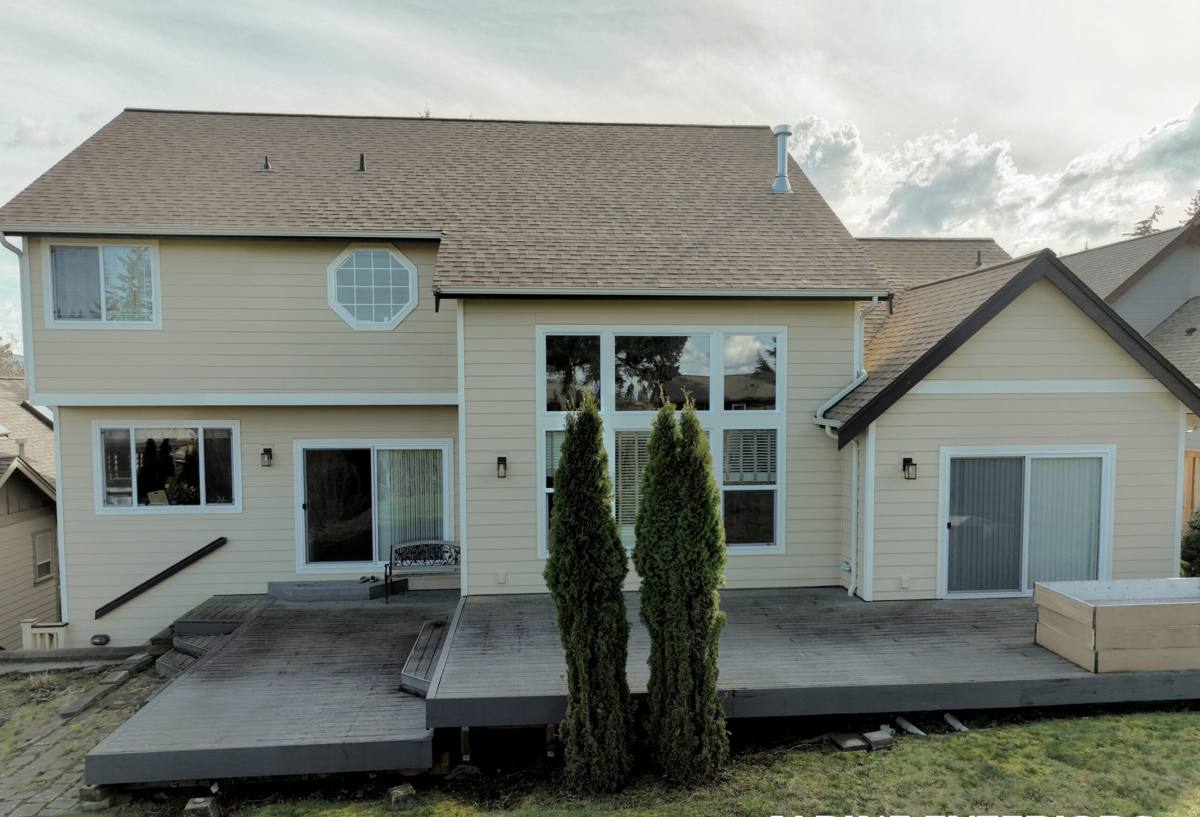
What This Climate Does to a Deck
Most deck failures we get called out for aren't dramatic — they're slow. Wood loses its finish, fasteners weep rust stains, and the frame stays damp long after the surface looks dry. Understanding why helps explain why some of our choices cost a bit more up front.
Driving Rain and Ledger Rot
The ledger board — where the deck attaches to the house — is the single most common failure point on decks in this region. Wind-driven rain gets pushed sideways and up under poorly flashed ledgers, and once water gets behind the siding at that connection, it can sit there for years before anyone notices. A deck that's structurally failing at the ledger is a safety issue, not a cosmetic one.
Moss and Standing Moisture
Long, cool, wet stretches with limited direct sun let moss and algae take hold on decking surfaces, especially under trees or on the shaded side of a house — common on lots in and around Aldergrove and Lynden. Moss holds moisture against the board surface, which accelerates rot in untreated wood and makes any decking surface slick and dangerous underfoot.
Fastener and Hardware Corrosion
Marine air moving inland carries enough salt content to corrode standard fasteners, joist hangers, and structural screws over time. Once a fastener starts rusting, it loses holding strength long before it looks obviously bad. We spec coated or stainless hardware rated for this kind of exposure rather than whatever's cheapest at the yard.
Decking Material Comparison
There's no single "correct" material for every deck — it depends on budget, how much maintenance you're willing to do, and how exposed the deck is to sun, shade, and moisture. Here's how the common options compare for this climate specifically.
| Material | Moss/Moisture Resistance | Maintenance | Typical Lifespan |
|---|---|---|---|
| Pressure-treated lumber | Fair — needs sealing to perform | Annual cleaning and re-sealing | 15–20 years with upkeep |
| Cedar | Good natural rot resistance | Regular sealing to hold color and repel moisture | 15–25 years |
| Capped composite | Excellent — moisture doesn't penetrate the cap | Periodic washing, no sealing | 25–30+ years |
| PVC decking | Excellent — fully synthetic, no wood fiber | Occasional washing | 25–30+ years |
Pressure-Treated Lumber
The most affordable option and a reasonable choice for framing regardless of what you put on top. As a surface material, it needs a real maintenance commitment — cleaning and sealing on a schedule, not just when it starts looking gray. Skip a year or two in this climate and moss gets a foothold fast.
Cedar
Cedar has natural oils that resist rot better than most softwoods, and it looks the part. It still needs periodic sealing to keep that resistance working for you, especially on horizontal surfaces where water sits rather than sheds.
Composite and PVC
Capped composite and PVC boards cost more upfront but essentially remove the wood-decay problem from the equation, since there's no exposed wood fiber for moisture to get into. For a shaded, moss-prone lot, this is often the lower-hassle choice over the life of the deck — the tradeoff is a higher initial cost and, on some composite lines, a surface that can still get slick with algae film if it's never washed.
What a Correctly Built Deck Actually Involves
The parts of a deck you can see — the boards, the railing — are the easiest to get right. The parts that determine whether it lasts are underneath and out of sight.
- Ledger board flashed correctly at the house connection, with a water-resistant barrier behind it — not just caulk
- Joist tape or a comparable moisture barrier on top of every joist to stop water from soaking into the end grain
- Corrosion-resistant or stainless structural fasteners, hangers, and screws sized for this climate, not just what's on the shelf
- Footings set below the frost line and sized for the actual load, not guessed at
- Proper slope and gapping in the decking surface so water sheds instead of pooling
- Railing and stair construction that meets current code for height, baluster spacing, and load
- Ventilation underneath the deck so the frame can actually dry out between rain events
Any one of these done wrong won't show up as a problem in year one. They show up in year five or eight, usually as soft spots, rust streaks, or a railing that's gone spongy at the post base.
Permits and Building Code — Both Sides of the Border
One thing that makes deck work in this specific service area different from most: Aldergrove falls under the Township of Langley and BC building code, while Lynden and the surrounding area fall under Whatcom County and Washington state code. The two systems aren't identical — permit requirements, inspection steps, and railing/guard specifications can differ depending on which side of the line the property sits on. We handle the permit and code requirements for wherever your project actually is rather than assuming one set of rules covers both, and we'll tell you upfront what's required for your specific address before any work starts.
Our Process
- On-site consultation. We look at your existing structure or site, sun and shade exposure, drainage, and how the deck will actually get used before recommending anything.
- Design and material selection. We walk through the tradeoffs above in plain terms — budget, maintenance appetite, and how exposed the deck is to rain and shade — so you pick a material you won't regret in five years.
- Permitting. We identify what's required for your jurisdiction and handle the paperwork and inspections that go with it.
- Build. Framing, flashing, and fastener choices follow the same standards regardless of which decking surface you choose — the parts you can't see get built to last as long as the parts you can.
- Final walkthrough. We go over the finished deck together, including what maintenance (if any) it needs and on what schedule.
Keeping a Deck Ahead of Moss and Moisture
Whatever material you choose, a little seasonal attention goes a long way in this climate. Homeowners who stay ahead of it rarely deal with the slick, green, rotting deck problem that shows up on ones that get ignored.
- Sweep off leaves and debris regularly, especially in fall — trapped organic matter feeds moss and holds moisture against the boards
- Wash the surface at least once a year to remove algae film before it gets established
- Reseal wood decking on the manufacturer's recommended schedule, not just when it looks faded
- Check underneath periodically for soft spots, rust streaks at fastener heads, or gaps in flashing at the ledger
- Keep gutters and downspouts near the deck clear so roof runoff isn't dumping extra water onto or under the structure
Why Hire a Crew That Already Works Aldergrove and Lynden
A deck built to a generic spec sheet from a drier climate will underperform here. We already know which details matter for wind-driven rain, which fasteners hold up against marine air corrosion, and how to spec a deck that won't turn into a moss farm by its third winter. We also already understand the permit and inspection differences between working on the BC side versus the Washington side of this service area, which saves time and avoids surprises mid-project. That local knowledge is the difference between a deck that needs real work again in five years and one that's still solid in twenty-five.
If you're planning a new deck or need an honest look at one that's showing its age, we're happy to come take a look. Reach out for a free, no-pressure estimate using the form below.