 Lynden Siding
 Windows in Acme Face a Different Kind of Weather
Acme sits in the wetter, greener stretch of Whatcom County east of Lynden, tucked against the foothills where storms roll in off the Sound and stall against the mountains. That means more rain days per year than most of Washington sees, humidity that lingers in the shoulder seasons, and the same salt-laden marine air that works its way inland across the county and slowly attacks anything metal or poorly sealed. Add in a moss season that can run eight or nine months out of twelve, and you have a climate that is genuinely hard on windows — not because any single storm is dramatic, but because the exposure never really stops.
Windows take the brunt of this in ways that aren't always obvious from inside the house. Driving rain finds its way behind poorly flashed trim. Constant damp keeps wood sashes and sills wet longer than they can dry between storms. Moss and algae take hold on north-facing sills and lower sashes where sun never quite reaches. None of this is a reason to panic about your windows — it's just the baseline you're designing and installing against if you want a window that still works correctly in fifteen years instead of five.
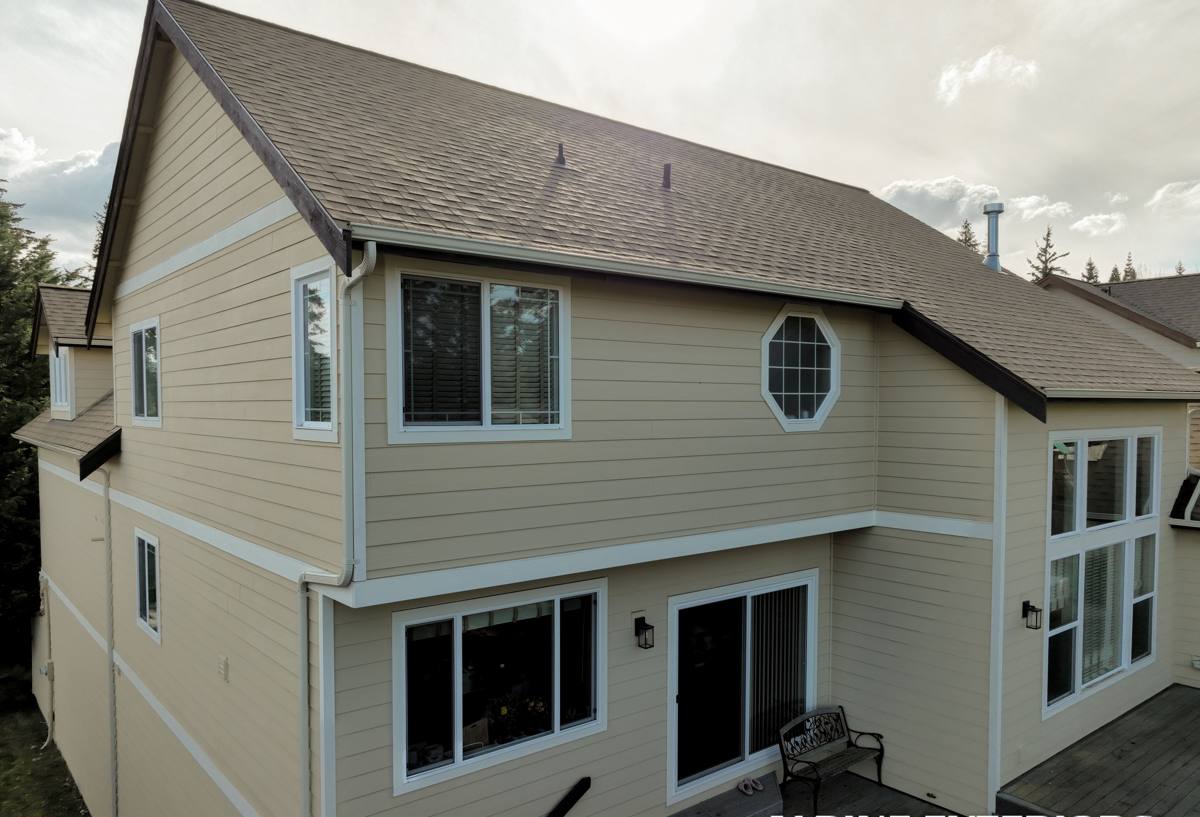
Signs a Window Is Losing the Fight
Most window failures in this area don't show up as a cracked pane. They show up as slow water intrusion, fogging, or drafts that get worse every winter. Homeowners in and around Acme should watch for:
- Fogging or a hazy film between the panes of a double-pane window — the seal has failed and the gas fill is gone
- Soft or discolored wood trim around the window frame, especially at the bottom corners
- Visible moss or dark green-black staining building up on sills and lower sashes
- A noticeable draft or cold spot near the window even when it's fully latched
- Windows that are hard to open, close, or lock — frames swelling from trapped moisture
- Paint or caulking that's cracked, peeling, or pulling away from the frame
Any one of these on its own might just mean a caulking touch-up. Several at once, especially on the same window, usually means water has been getting behind the frame for a while and the fix needs to go deeper than the surface.
What a Correct Installation Actually Involves
A window is only as good as the opening it sits in. In a climate like this, the installation details matter more than the window brand — a mid-range window installed correctly will outperform a premium window installed carelessly, every time.
Flashing and Water Management
Water has to be directed out and down, never allowed to pool or wick inward. That means a sloped sill pan under the window, flashing tape properly lapped so upper layers shed water over lower ones (never the reverse), and a drainage path that lets any water that does get past the exterior cladding find its way back out instead of soaking into the framing. This is the single most common shortcut we see on failed installs in wet climates — flashing that's missing, reversed, or taped in a way that traps water instead of moving it.
Air Sealing and Insulation
The gap between the window frame and the rough opening needs to be sealed with a proper low-expansion foam or backer rod and sealant — not stuffed with fiberglass insulation alone, which does nothing to stop air movement and can actually hold moisture against the frame. Done right, this stops drafts and also keeps humid indoor air from condensing inside the wall cavity during our cold, damp winters.
Level, Plumb, and Properly Fastened
A window that's out of square will bind, won't seal fully at the corners, and puts stress on the frame every time it's operated. Shimming correctly and fastening through the manufacturer's specified points keeps the window operating smoothly and keeps warranty coverage intact — most manufacturers will not honor a warranty claim if the installation wasn't done to spec.
Choosing the Right Window for an Acme Home
There's no single "best" window — the right choice depends on your home's exposure, your budget, and how much upkeep you want to take on. Here's how the common frame materials compare for this climate specifically:
| Frame Material | Moisture Resistance | Maintenance | Best For |
|---|---|---|---|
| Vinyl | Excellent — won't rot or corrode | Low; occasional cleaning | Most homes; best value for the climate |
| Fiberglass | Excellent, very dimensionally stable | Low | Larger openings, homes wanting a paintable frame |
| Wood | Requires diligent upkeep; vulnerable if finish fails | High — repaint/reseal on a schedule | Historic or period-specific homes where wood is called for |
| Aluminum | Prone to condensation and corrosion near salt air | Moderate | Limited use; generally not our first recommendation here |
We steer most Acme-area homeowners toward vinyl or fiberglass, simply because the maintenance burden of solid wood or bare aluminum is a tough match for this much rain and humidity. If you have a home where wood windows are the right architectural fit, we'll say so honestly — but we'll also be upfront that they need a real maintenance schedule to hold up here.
Glass Package
Double-pane, low-E glass is the standard for this climate and handles our temperature swings and heat retention well. Triple-pane adds cost and weight for a modest efficiency gain — worth discussing if you're on a particularly exposed or noisy site, but not a default recommendation for every home.
New Construction vs. Replacement Windows
These are two different jobs, and it matters which one your project actually is.
Full-Frame (New Construction) Installation
The old window and its frame come out entirely, exposing the rough opening down to the framing. This lets us install a proper sill pan and flashing system from scratch — the right approach when a window has failed due to water damage, when siding is already off for other work, or when we're changing the window's size or style.
Insert (Pocket) Replacement
The new window is installed inside the existing frame, which stays in place. It's faster and less invasive, and it's a legitimate option when the existing frame is sound, square, and free of water damage. The trade-off is a slightly smaller glass area and the fact that any existing flashing problems stay hidden behind the new unit. We'll always check the condition of the old frame before recommending this route rather than defaulting to it because it's quicker.
How We Approach a Window Install in Acme
We work this end of Whatcom County regularly, which means we're not guessing at how a house here typically weathers — we've opened up enough old installations to know where problems usually hide. Our process on a typical project:
- On-site assessment of each window opening, including a check for hidden water or rot damage before we quote the job
- Accurate measurement and window ordering — no stock sizes forced into openings they don't fit
- Careful removal of the old window with attention to protecting existing siding and interior finishes
- Inspection of the rough opening and any needed framing or sheathing repair before the new window goes in
- Sloped sill pan and properly lapped flashing tape, sequenced correctly with the house wrap
- Window set level and plumb, shimmed at manufacturer-specified points, fastened per spec
- Low-expansion foam or backer rod and sealant around the full perimeter — no gaps left to guess about
- Interior and exterior trim finished, hardware tested, and a final walk-through with you before we call it done
Why Local Experience Matters Here
Acme doesn't have the same exposure profile as downtown Lynden or the more open stretches of the county — tree cover, elevation, and how a particular lot sits relative to prevailing weather all change how hard rain and moss actually hit a given house. A crew that's worked this area knows to look harder at north- and west-facing openings, knows which older homes in this stretch tend to have flashing shortcuts from past renovations, and isn't learning the local climate on your project. That experience shows up less in what you can see and more in what doesn't go wrong five years down the road.
After Installation: Keeping Windows Performing
A correctly installed window in this climate is genuinely low-maintenance, but "low" isn't "none." A quick rinse of sills and tracks a couple of times a year keeps moss and grime from building up, and an annual look at the exterior caulking catches small cracks before they become water paths. Keep gutters and downspouts clear and directing water away from window openings below — a surprising number of window leaks in this area actually start as an overflowing gutter, not a failed window.
If your Acme-area home has windows that are drafty, fogged, hard to operate, or just old enough that you're wondering whether it's time — we're happy to take a look and give you a straight, no-pressure estimate. Use the form below to get started.