 Lynden Siding
 Siding Built for Acme's Corner of Whatcom County
Acme sits in a part of Whatcom County that asks more of a home's exterior than most siding products are built to handle. Homes here deal with a long wet season, heavy timber cover that keeps moisture and moss pressure high, and the kind of driving rain that finds every gap in a poorly flashed wall. Add in the salt-tinged air that moves inland off the Salish Sea on a west wind, and you have a climate that is genuinely tough on cladding. We install James Hardie fiber cement siding exclusively, and this page is about what that looks like specifically for homes in and around Acme — not a generic overview of the product.
We are not going to tell you every siding failure in this area is dramatic. Most of what we see is slower and quieter: paint that chalks and peels years early, panels that swell at the bottom edge, moss establishing itself in seams and never fully going away, and trim that rots from the inside before anyone notices from the road. Those are the problems a correctly installed Hardie system is designed to resist, and they're the problems we plan around on every Acme job.
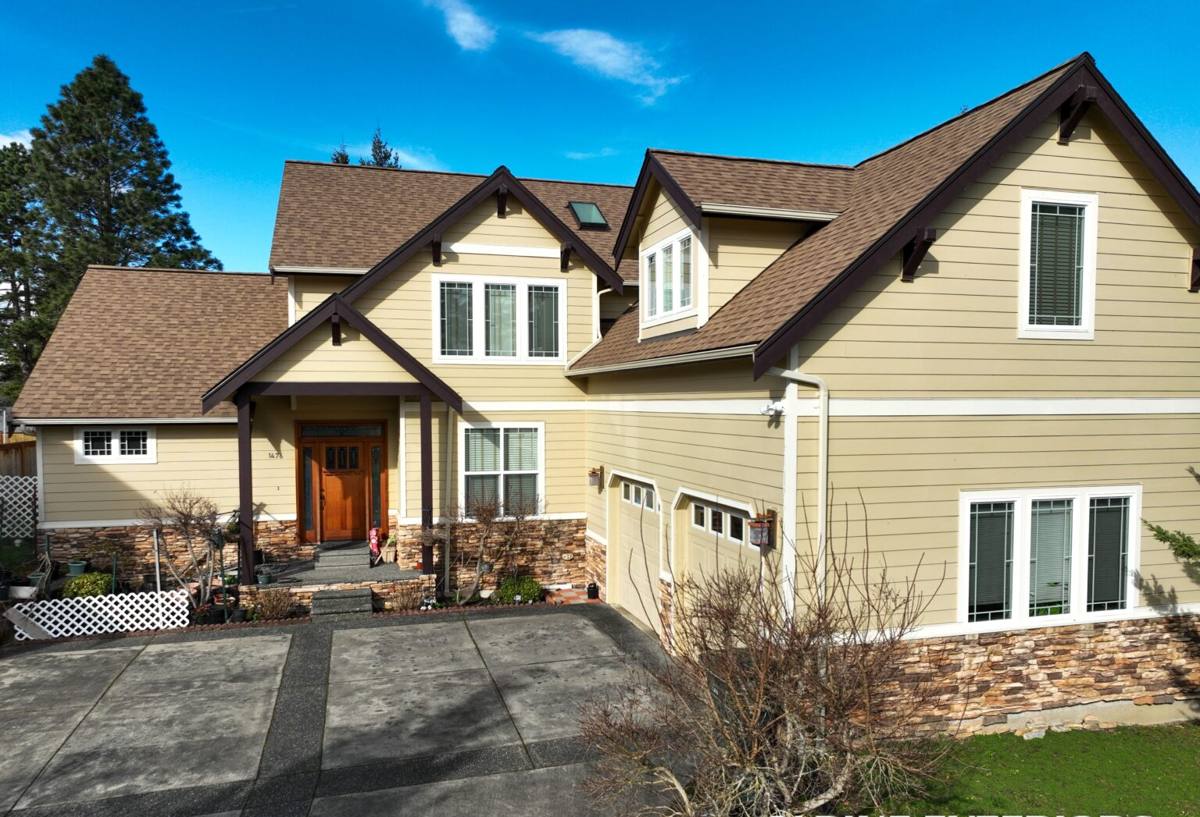
What Acme's Climate Actually Does to Siding
Driving Rain and Wind-Driven Moisture
Acme's terrain and tree cover don't stop wind-driven rain the way a dense urban block might. Rain here often comes in sideways, which means it's not just your roof and gutters doing the work — it's every seam, joint, and penetration on your walls. Siding that relies on face-sealing (caulk alone, without proper flashing behind it) fails here faster than it would in a drier, calmer climate, because the caulk is under near-constant load.
Moss and Sustained Dampness
The tree cover and humidity around Acme create long stretches where siding surfaces simply don't dry out between rain events. That's exactly the environment moss and mildew want. On wood-based siding, sustained dampness eventually means softening and rot, especially at butt joints and lower courses. On fiber cement, moss is a cosmetic issue you clean off — it doesn't feed on the material or compromise it structurally, which is a meaningful difference in a place where moss season can run half the year.
Salt-Influenced Air
Homes closer to the water or exposed to a steady westerly pull inland see a slow, cumulative effect from salt-laden air — it accelerates the breakdown of lower-grade paint finishes and can be tougher on certain fasteners and trim details over the decades. It's not the dominant factor for every Acme property, but for homes that catch that airflow, it's another reason a factory-cured finish and correct fastener selection matter more than they would somewhere drier and more sheltered.
What This Adds Up To
- Siding needs to shed water actively (proper lap, flashing, and drainage), not just resist it passively
- Finishes need to hold color and seal integrity through a long wet season without early chalking or cracking
- Material needs to tolerate sustained dampness and moss contact without softening or rotting
- Fastening and trim details need to account for both moisture cycling and, near the water, mild salt exposure
Why We Only Install James Hardie Here
We made a decision as a company to install James Hardie fiber cement and nothing else, and Acme's climate is a good illustration of why. Vinyl siding is affordable and low-maintenance in mild climates, but it can warp under sustained heat-cold cycling and its seams rely heavily on lap fit rather than a bonded, factory-sealed surface — not ideal when wind-driven rain is a regular event. LP SmartSide and other wood-strand products perform reasonably when detailing is perfect and maintenance never slips, but they're wood at the core, and wood-based products lose that argument fast in a climate where surfaces stay damp for extended periods. Primed spruce and raw cedar look great on day one and require the homeowner to stay on top of refinishing on a schedule most people don't keep, especially somewhere with this much annual rainfall.
James Hardie fiber cement is non-combustible, dimensionally stable across wet-dry and hot-cold cycles, and — with the ColorPlus factory finish — comes with a baked-on finish that resists the chalking and fading that shortens the life of field-applied paint. It won't rot, and moss on its surface is a cleaning task, not a structural one. That combination is why it's the only product we put on homes, including in Acme.
The HZ5 Product Line and Why It Fits This Region
James Hardie engineers its siding for specific climate zones, and Whatcom County — including Acme — falls into the HZ5 zone, built for regions with significant moisture exposure and freeze-thaw cycling. HZ5 panels are engineered with moisture management properties suited to exactly the wet, marine-influenced conditions this area sees year-round. Using the correct zone-engineered product isn't a marketing detail — it affects how the panel performs against moisture absorption and expansion over its lifespan. We use HZ5 product on every install in this area for that reason.
What a Correct Installation Involves
The siding material is only part of the equation. Most premature siding failures we get called out to look at, on any brand, trace back to installation shortcuts rather than the product itself. For Acme homes specifically, we treat the following as non-negotiable:
| Detail | Why It Matters in Acme's Climate |
|---|---|
| Weather-resistive barrier, correctly lapped | Backstops the cladding when wind-driven rain gets past the siding face, which happens regularly here |
| Flashing at every penetration and horizontal trim | Redirects water outward instead of letting it collect against sheathing during long rain events |
| Proper panel clearance from grade, decks, and roof lines | Keeps lower courses from sitting in splash-back and standing moisture, a common moss and rot starting point |
| Correct fastener type, spacing, and penetration depth | Prevents panel movement and gapping that opens seams to driving rain over time |
| Factory-cut and factory-primed edges kept intact | Field-cut edges left unsealed absorb moisture faster; this matters more in a high-humidity climate |
| Caulking used as a secondary seal only, never primary | Caulk alone degrades under Acme's sustained moisture load; flashing has to do the real work |
Any one of these done wrong won't necessarily show up in year one. It shows up in year five or eight, as a soft spot at a butt joint, a streak of moss that won't wash off because water is trapped behind the panel, or paint failure concentrated on one wall that takes the worst of the weather. Correct installation is slower and more deliberate than a quick nail-up job, and it's the difference that actually matters over the life of the siding.
How We Approach an Acme Job
1. Walk the Site and Read the Exposure
Every Acme property has a different exposure profile depending on tree cover, which walls take the prevailing weather, and how close the home sits to low, damp ground. We walk the exterior and identify the walls and details that need the most attention before we ever talk product or price.
2. Check What's Underneath
On tear-off jobs, we inspect sheathing and framing for existing moisture damage before installing anything new. Covering up rot with new siding just hides the problem and shortens the life of the new install — we address what we find rather than skip past it.
3. Install to Manufacturer Spec, Not Just to Code
Code minimums and manufacturer installation instructions aren't always the same thing, and following Hardie's actual instructions — on fastening, clearances, and flashing — is what keeps the warranty valid and the performance real. We follow the manufacturer spec as the floor, not the ceiling.
4. Detail the Trouble Spots First
Inside corners, window heads, deck ledgers, and lower wall courses are where most siding failures start in this climate. We treat those details with the most care rather than the least, since they're the areas doing the most defensive work against Acme's rain and moss pressure.
Signs Your Current Siding Is Already Losing the Fight
- Paint that's chalking, peeling, or fading unevenly, especially on one exposure
- Moss or algae that returns within weeks of cleaning
- Soft or spongy spots near the bottom courses or around trim
- Visible gapping or warping at panel seams
- Rising energy bills with no other explanation, suggesting compromised wall assembly
Color, Finish, and Fitting In With the Area
ColorPlus finishes are baked on at the factory under controlled conditions, which gives a more even, longer-lasting result than field-applied paint — a real advantage in a climate where paint gets tested hard by sun, rain, and humidity swings in the same season. Acme's setting tends to favor siding colors and textures that read well against a wooded, semi-rural backdrop, and Hardie's lap, shingle, and panel profiles give enough range to match that without sacrificing the performance side of the equation.
What This Costs and Why It Varies
We don't publish flat per-square-foot pricing because Acme homes vary enough in size, wall complexity, and existing condition that a number without context is misleading. What we can tell you is what actually drives the cost on a real project:
| Cost Factor | Why It Moves the Price |
|---|---|
| Tear-off vs. new construction | Removing and disposing of existing siding, plus any sheathing repair, adds labor and material cost |
| Wall complexity | More corners, dormers, and trim details mean more cutting, flashing, and labor time |
| Siding profile chosen | Lap, shingle, and panel styles carry different material and install costs |
| Existing moisture or structural damage | Sheathing or framing repair found during tear-off is priced separately from the siding itself |
| Access and site conditions | Tree cover, slope, and setbacks common in Acme's more rural lots can affect staging and labor time |
The only reliable way to get an accurate number is a walk-through of your specific home, which is exactly what we offer.
Why a Crew That Already Works This Area Matters
A crew that regularly works Acme and the surrounding parts of Whatcom County has already seen how this specific climate treats siding over time — which walls fail first, where moss actually causes problems versus where it's cosmetic, and which older homes in the area were built with detailing that needs extra attention during a re-side. That's knowledge you don't get from a crew installing siding in a fundamentally drier or milder region and applying the same playbook here. We install exclusively for the exposure this county gets, on every job, and that consistency is part of what you're hiring when you bring us in.
If you're considering new siding for a home in or around Acme, we're happy to take a look and give you a straightforward, no-pressure estimate based on what your specific house actually needs.