 Lynden Siding
 Deck Repair Built for the Acme Area's Climate
Homes in the Acme area east of Lynden sit closer to the foothills, which means more rain, longer shade cover from surrounding trees, and a moss season that stretches well past what folks in town deal with. Decks out here take a beating that a lot of generic repair advice doesn't account for. Salt-tinged marine air moving in off the Sound, combined with driving rain and slow-drying shade, creates conditions where wood decks fail faster than homeowners expect, and where the failure often starts in places you can't see from a casual walk-around.
We've repaired decks throughout the Lynden and greater Whatcom County area long enough to know that a deck built or repaired without local conditions in mind is a deck you'll be calling someone about again in three or four years. Our approach to Acme deck repair starts with understanding how moisture actually moves through a structure in this specific environment, not with a generic checklist.
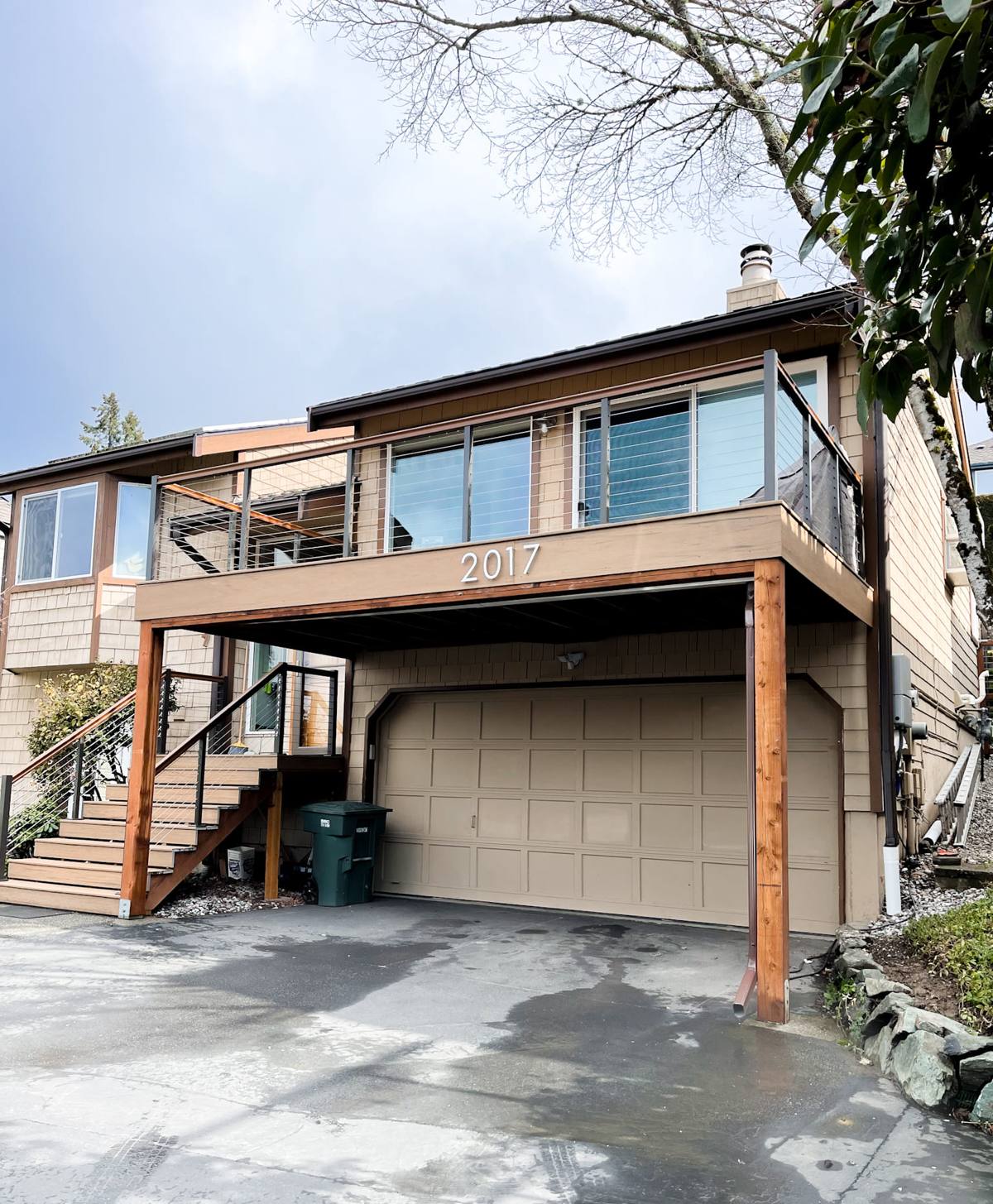
Why Acme Decks Wear Differently
Moss and Organic Buildup
Moss doesn't just sit on top of a deck looking unsightly. In the Acme area's shaded, moisture-heavy microclimate, moss and algae hold water against the wood surface for days after a storm has passed. That constant dampness softens wood fibers, feeds rot fungi, and turns board surfaces slick and dangerous long before the structure itself is compromised. A deck that looks green and neglected is often further along in decay than one that looks weathered but bare.
Driving Rain and Wind-Driven Moisture
Whatcom County's rain doesn't always fall straight down. Wind-driven storms push moisture sideways into ledger boards, under railings, and into joints and fastener holes that were never designed to shed water from that angle. This is where we find the worst hidden damage: not on open deck boards, which dry reasonably well, but at the house connection, around posts, and at any spot where two pieces of wood meet.
Long Dry-Out Windows
A deck near the water or in an open, sunny yard might get wet and dry out within a day. Decks tucked under mature trees or facing away from the sun, common throughout Acme's more wooded lots, can stay damp for a week or more after a single rain event. That extended wet window is what separates a deck that lasts fifteen years from one that needs structural repair by year eight.
What a Correct Deck Repair Actually Involves
A lot of deck "repair" in this region amounts to replacing a few obviously rotten boards and calling it done. That fixes what you can see. It does nothing for what caused the rot in the first place, which means the same failure shows up again a season or two later, usually worse. We treat every repair as a chance to find and address the underlying moisture problem, not just the symptom.
What we check on every repair visit
- Ledger board attachment and flashing where the deck meets the house — the single most common source of hidden rot
- Joist condition underneath the decking, checked by probing, not just visual inspection
- Post bases and any wood-to-concrete contact points where moisture wicks upward
- Fastener condition — corroded or failing screws and nails are often the first sign of a bigger moisture issue
- Railing post connections, which take structural load and are frequently under-built to begin with
- Moss, algae, and organic buildup patterns, which tell us where water is sitting longest
- Gaps between boards that have closed up from swelling, trapping debris and moisture
- Stair stringers and treads, which see concentrated foot traffic and water runoff
Once we know what's actually going on, the repair plan reflects the real cause. Sometimes that's straightforward board replacement. Sometimes it means correcting flashing details or improving drainage so the same spot doesn't rot out again in a few years.
Board Replacement vs. Structural Repair vs. Full Rebuild
Not every deck problem calls for the same level of work. Here's how we think about the three tiers of deck repair and what typically pushes a job from one category to the next.
| Repair Level | What It Addresses | Typical Signs |
|---|---|---|
| Surface board replacement | Individual deck boards that are cracked, splintering, or soft on top but sound underneath | Localized soft spots, splitting, visible weathering on isolated boards |
| Structural repair | Joists, ledger board, posts, or railing connections compromised by moisture or age | Bounce or give when walking, soft framing under boards, rust streaking at fasteners, railing that wiggles |
| Full rebuild | Widespread rot affecting the framing system, or a deck that was undersized or under-engineered from the start | Multiple structural issues found together, deck age past typical lifespan, repeated past patch repairs failing |
Most decks we're called out to in the Acme area fall into the surface or structural repair categories. A full rebuild is usually only necessary when structural problems have been ignored for years, or when the original build didn't account for how much water this area actually sees.
Wood Species and Material Choices for This Climate
What a deck is built from matters as much as how it's maintained. In a high-moisture, moss-prone environment like Acme's, some material choices hold up better than others, and it's worth understanding the trade-offs rather than just picking whatever's cheapest at the yard.
Pressure-treated lumber
Still the most common decking and framing material in this region, and for good reason — it's affordable and the treatment resists rot reasonably well when properly maintained. The trade-off is that it still needs regular cleaning and periodic sealing to perform well here; skip that maintenance in a shaded, moss-heavy yard and you'll see accelerated wear.
Cedar
Naturally rot-resistant and a good fit for the Pacific Northwest, but it's a softer wood that dents and weathers faster underfoot on high-traffic decks. It also needs UV and moisture protection maintained over time, or it grays and loses some of its natural resistance.
Composite decking
A reasonable option for board replacement in particularly moisture-heavy or shaded sections, since it doesn't absorb water or feed rot the way wood does. The trade-off is upfront cost and the fact that composite still needs cleaning to keep moss and algae from building up on the surface — it resists rot, but it doesn't resist grime.
We don't push one material over another as a blanket rule. The right call depends on how shaded your specific lot is, how much maintenance you're realistically going to keep up with, and what's already in place structurally.
Our Repair Process
- On-site assessment — We walk the full deck, probe suspect areas, and check the ledger, posts, and railing connections, not just the visible boards.
- Honest scope of work — You get a clear picture of what's cosmetic, what's structural, and what can reasonably wait versus what shouldn't.
- Root-cause correction — Where moisture intrusion or drainage is the real issue, we address that alongside the visible repair so the problem doesn't resurface.
- Repair or replacement — Matching materials and fastening methods appropriate to what's already there, or recommending an upgrade where it genuinely makes sense.
- Follow-up guidance — Straightforward advice on cleaning schedule and moss prevention specific to your yard's sun and shade pattern.
Simple Maintenance That Actually Prevents Repairs
- Sweep debris off the deck regularly, especially in fall when leaf litter traps moisture against boards
- Clean moss and algae buildup at least once a year, more often on heavily shaded sections
- Check that gaps between boards haven't closed from swelling, which traps water and debris
- Inspect railing posts for movement at least once a season
- Keep gutters and downspouts clear so runoff isn't dumping directly onto or near the deck
- Re-seal or re-stain wood decking on the manufacturer's recommended schedule, not just when it looks bad
Why Local Experience with Acme Homes Matters
A repair crew that hasn't worked this specific area doesn't know that a deck facing north under mature trees in the Acme area behaves completely differently than one on an open lot closer to town. They don't know which framing details tend to fail first in Whatcom County's wet, shaded conditions, or how long a board actually needs to dry between rain events before it's safe to seal. That local pattern recognition is what keeps a repair from becoming a repeat visit.
We've seen how salt air, driving rain, and moss combine on decks throughout this region, and we bring that experience to every job, whether it's a handful of boards or a full structural repair.
Get an Honest Look at Your Deck
If your deck in the Acme area is showing soft spots, persistent moss, or just doesn't feel as solid as it used to, it's worth having someone take a real look before small problems become expensive ones. We offer free, no-pressure estimates — fill out the form below and we'll walk you through what we find and what it would take to fix it right.